A Candle Studio's Palmarosa Scent Trial: Notes From Six Batches
Every few months, a candle maker asks the same question in our inbox: does palmarosa essential oil actually hold up in wax? It's a fair question. Palmarosa has a bright, rosy-green profile that smells wonderful straight from the bottle, but candle wax is a different environment than a diffuser or a roll-on blend. Heat, wax chemistry, and wick draw all change how a scent behaves. So we partnered with a small candle studio to run a structured palmarosa wax fragrance trial: six batches, six variables, one oil. This is a write-up of what they found, framed as a set of observations rather than a verdict, since candle scent performance depends on so many studio-specific factors.
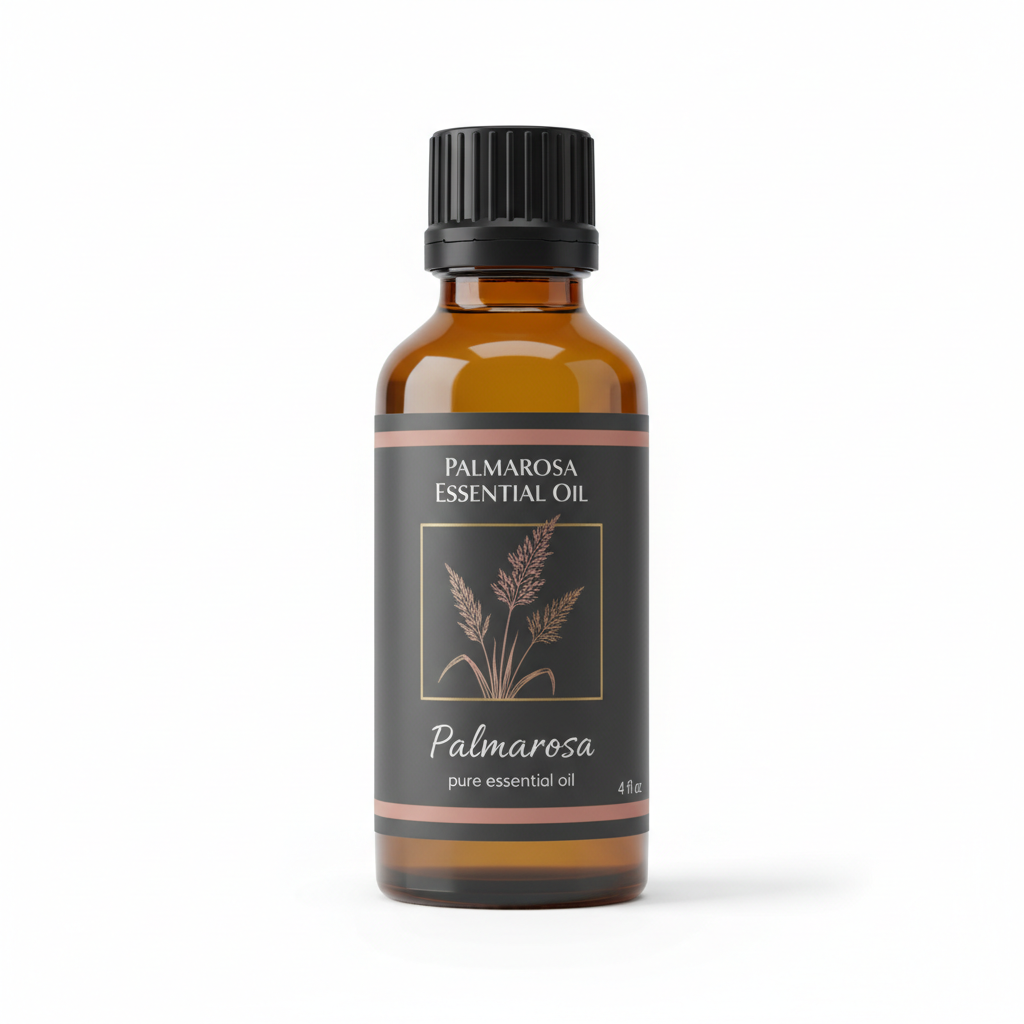
Palmarosa Essential Oil
Our own Palmarosa Essential Oil, in sizes from 0.5 oz to bulk.
From $9.99
Shop Now →Why the Studio Wanted to Test This
The studio, a small-batch operation that works mostly in soy and coconut wax blends, had built its catalog around synthetic fragrance oils. Customers kept asking for something more botanical: a candle that used real essential oil rather than a lab-formulated fragrance blend. Palmarosa kept coming up in their research because of its unusual scent profile. It reads as rosy and slightly green, with a soft citrus lift, and it's considerably more affordable than rose otto, which made it an attractive option for a studio watching cost per unit.
But affordability doesn't answer the practical question: does palmarosa essential oil in candles actually throw scent the way a synthetic fragrance oil does? Essential oils are volatile, complex mixtures, and some of them burn off before they ever reach a nose across the room. The studio wanted real data from their own equipment before committing to a production run, so they built a small internal trial rather than relying on general candle-making forums.
Setting Up the Six-Batch Trial
The approach was intentionally simple: hold most variables constant and change one thing at a time. They used a single lot of palmarosa essential oil across all six batches, sourced from the same supplier, to rule out batch-to-batch oil variation as a factor. Each candle was poured in a 9-ounce glass jar with a cotton wick sized for that jar's diameter.
| Batch | Wax Base | Fragrance Load Rate | Wick |
|---|---|---|---|
| 1 | Soy wax | 6% | CD-12 |
| 2 | Soy wax | 10% | CD-12 |
| 3 | Coconut-soy blend | 6% | CD-12 |
| 4 | Coconut-soy blend | 10% | CD-14 |
| 5 | Soy wax | 8%, poured at lower temperature | CD-12 |
| 6 | Soy wax | 10%, blended with a small amount of geranium oil | CD-14 |
Fragrance load rate is the percentage of oil by weight relative to the wax. Most synthetic fragrance oils are formulated to perform well between 6 and 10 percent, so the studio used that range as a starting point rather than assuming palmarosa would need less or more. They logged cold throw (the scent strength of an unlit candle) at 24 and 48 hours after pouring, and hot throw (the scent strength while burning) after a one-hour burn test on day three, then again after the candle had cured for two weeks.
What They Noticed Batch by Batch
The results were not uniform across the six batches, which the studio found useful in itself. A few patterns stood out.
Cold Throw Was Modest at Standard Load Rates
At 6 percent, both the soy and coconut-soy versions (batches 1 and 3) had a noticeably quiet cold throw. Standing next to the unlit jar, the scent was there but faint, more of a suggestion than a clear presence. The studio's candle maker described it as "nice if you're already close to it, but it won't announce itself across a room." This tracks with something the studio had read elsewhere: essential oils tend to have a lighter, less persistent cold throw than synthetic fragrance oils, which are often engineered specifically for shelf presence.
Higher Load Rates Helped, But With a Ceiling
Batches 2 and 4, poured at 10 percent, had a more noticeable cold throw and a clearer hot throw during the burn test. The improvement wasn't dramatic, though, and it came with a tradeoff: at 10 percent, batch 4's wick struggled to stay lit consistently, producing a small amount of mushrooming on the wick tip. The studio's read was that pushing fragrance load rate higher doesn't scale linearly with scent strength, and past a certain point it starts working against the burn quality instead. This lines up with general candle-making guidance that treats 10 percent as close to the practical ceiling for most home fragrance oils, essential oils included.
Pour Temperature Seemed to Matter
Batch 5, poured at a lower temperature than the others (around 115°F instead of the studio's usual 135°F), showed a slightly stronger cold throw after 48 hours compared to batch 1, despite using a similar load rate. The studio's working theory is that pouring cooler may reduce how much of the oil's more volatile top notes burn off during the pour itself, though they were careful to note this was one comparison in one trial, not a controlled study with repeated trials. They plan to test pour temperature more rigorously before drawing firm conclusions.
Blending Softened the Sharper Edges
Batch 6, which paired palmarosa with a small amount of geranium oil, was the one the studio's team liked best from a pure scent-profile standpoint. Geranium's rounder, more floral character seemed to smooth out palmarosa's slightly sharper green top note, and the blend read as more complex without losing the rosy quality that made palmarosa appealing in the first place. Anecdotally, the small team doing the smell testing described this batch as the most "finished" of the six, though personal scent preference obviously varies from person to person, and a different panel might rank it differently.
What Fragrance Load Rate Actually Changed
Looking across all six batches, fragrance load rate had the most consistent effect on cold throw, and a more modest effect on hot throw once the candle was actually burning. That gap matters for anyone planning a production run. A candle that smells strong in the jar but goes quiet once lit isn't solving the problem most customers care about, which is scent while the candle is in use. The studio's notes suggest that for palmarosa specifically, something in the 8 to 10 percent range delivered the best balance of throw and burn quality, with 10 percent being close to the point where wick performance started to suffer in their coconut-soy blend.
It's worth flagging that these numbers are specific to this studio's wax, wick sizing, and jar geometry. A different wick brand, a paraffin base, or a wider jar diameter could shift where that balance point lands. Anyone running a similar palmarosa wax fragrance trial in their own studio should expect to do their own wick testing rather than importing someone else's load rate directly.
Key Learnings for Other Candle Makers
- Cold throw and hot throw don't move together. Judge a candle by burning it, not by sniffing the unlit jar. Batches that seemed underwhelming cold sometimes performed better once lit, and vice versa.
- Higher load rate has diminishing, and eventually counterproductive, returns. Past roughly 10 percent, the studio saw wick issues before they saw meaningful scent gains.
- Pour temperature is worth its own trial. The single comparison here was suggestive rather than conclusive, but it's a low-cost variable to test further.
- Blending can round out palmarosa's profile. Pairing it with a complementary oil, like geranium in batch 6, changed the character of the scent in a way some testers preferred, though this is a matter of personal scent preference rather than a performance improvement.
- Wick sizing needs to track load rate. The studio's CD-14 wick handled the 10 percent batches better than CD-12 did, a reminder that fragrance load and wick choice aren't independent decisions.
A Note on Safety While Testing
Anyone running their own trial should handle undiluted essential oil with care. Palmarosa oil is concentrated, and direct skin contact during pouring or blending should be avoided; wear gloves and work in a ventilated space. If you're testing scented wax melts or handling poured candles with bare hands regularly, consider a patch test on a small area of skin first and watch for any reaction over 24 to 48 hours before more extended contact. People with known sensitivities to plant-derived oils, and anyone pregnant or nursing, should check with a qualified healthcare provider before working with concentrated essential oils in an ongoing way. None of the observations in this trial are a substitute for that kind of individualized guidance, and burn testing should always happen in a space with working smoke detectors and away from flammable materials.
Where This Leaves the Studio
The studio came out of the six-batch trial leaning toward a blended approach for their production line: palmarosa as the lead note, a small percentage of geranium for roundness, poured around 9 percent in their coconut-soy blend with a CD-14 wick. They're planning a second round of testing before finalizing anything, this time varying pour temperature more systematically and testing across a couple of jar sizes to see whether the load rate findings hold at different diameters.
For candle makers considering their own palmarosa essential oil in candles project, the biggest takeaway from this trial isn't a single magic number. It's that palmarosa behaves like most essential oils in wax: it rewards testing in your own equipment more than it rewards following someone else's spec sheet. The oil itself has a distinctive, well-liked scent profile, but getting a satisfying scent throw out of it is a matter of small, deliberate adjustments across wax, wick, and pour method, tracked carefully batch by batch.