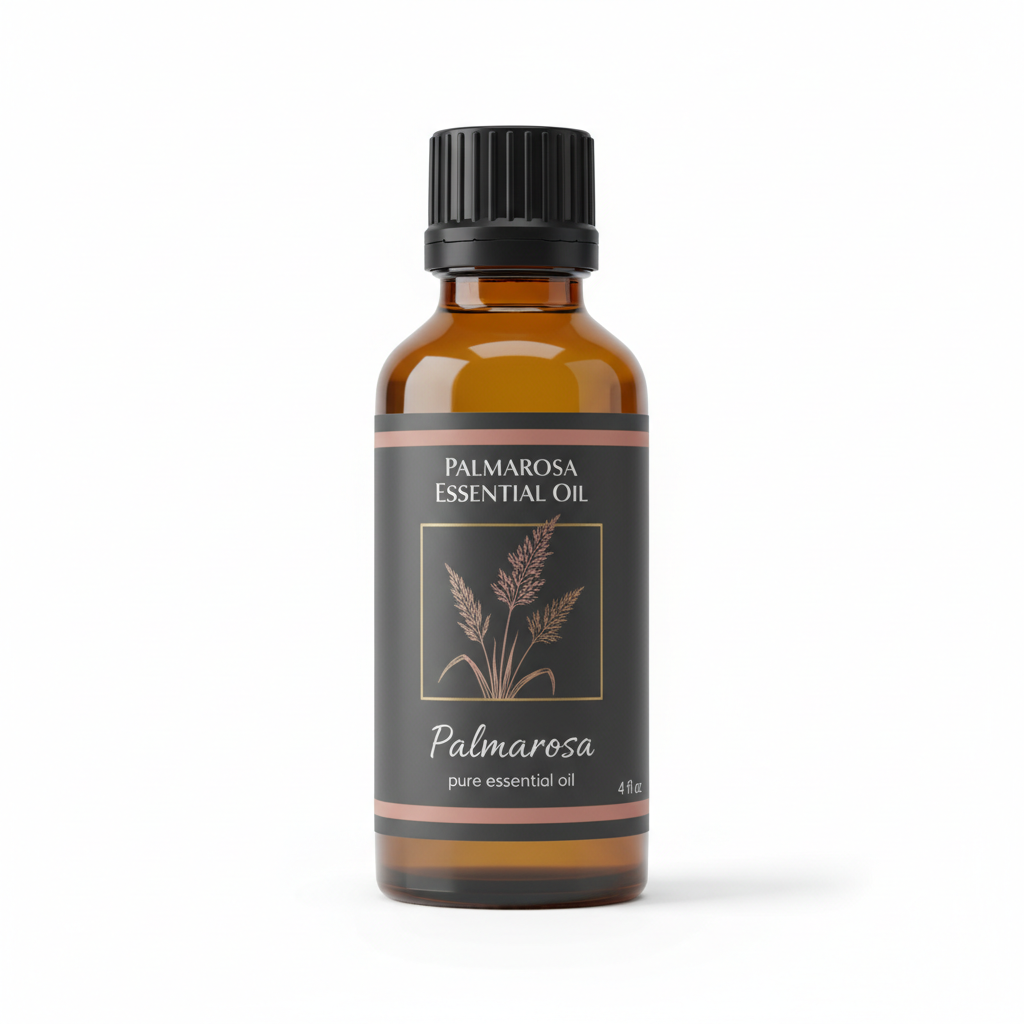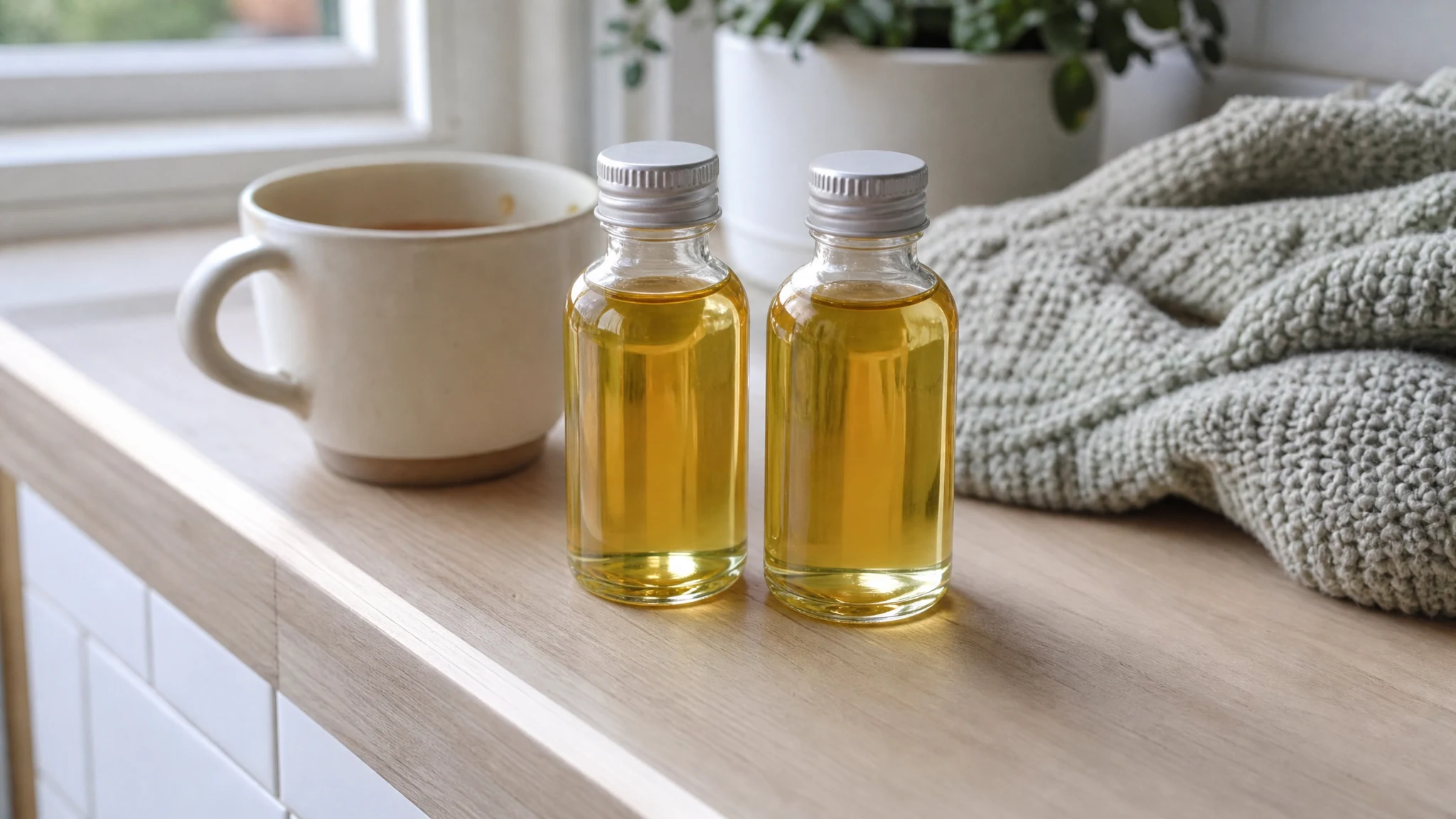
Has Your Palmarosa Oil Gone Off? How to Tell
An old bottle at the back of the cupboard is not automatically spoiled. A nose-and-eye check for palmarosa oil, and what to do with a doubtful bottle.
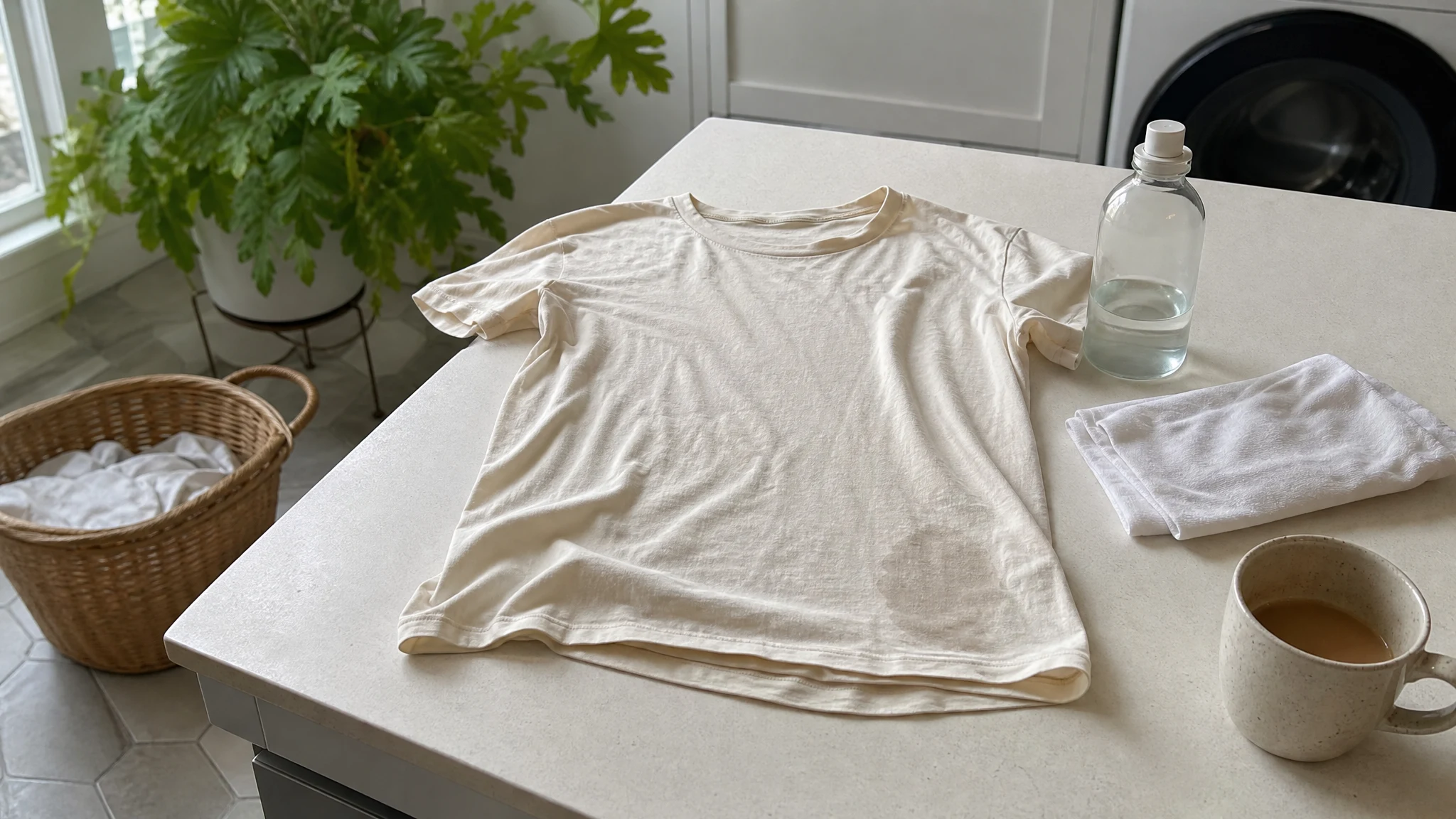
Does Palmarosa Oil Stain Fabric? What to Do If It Does
A drop of palmarosa on a cotton tee leaves an oily mark, not a dye. Here is how to treat it, when to wash, and which fabrics belong with a professional.
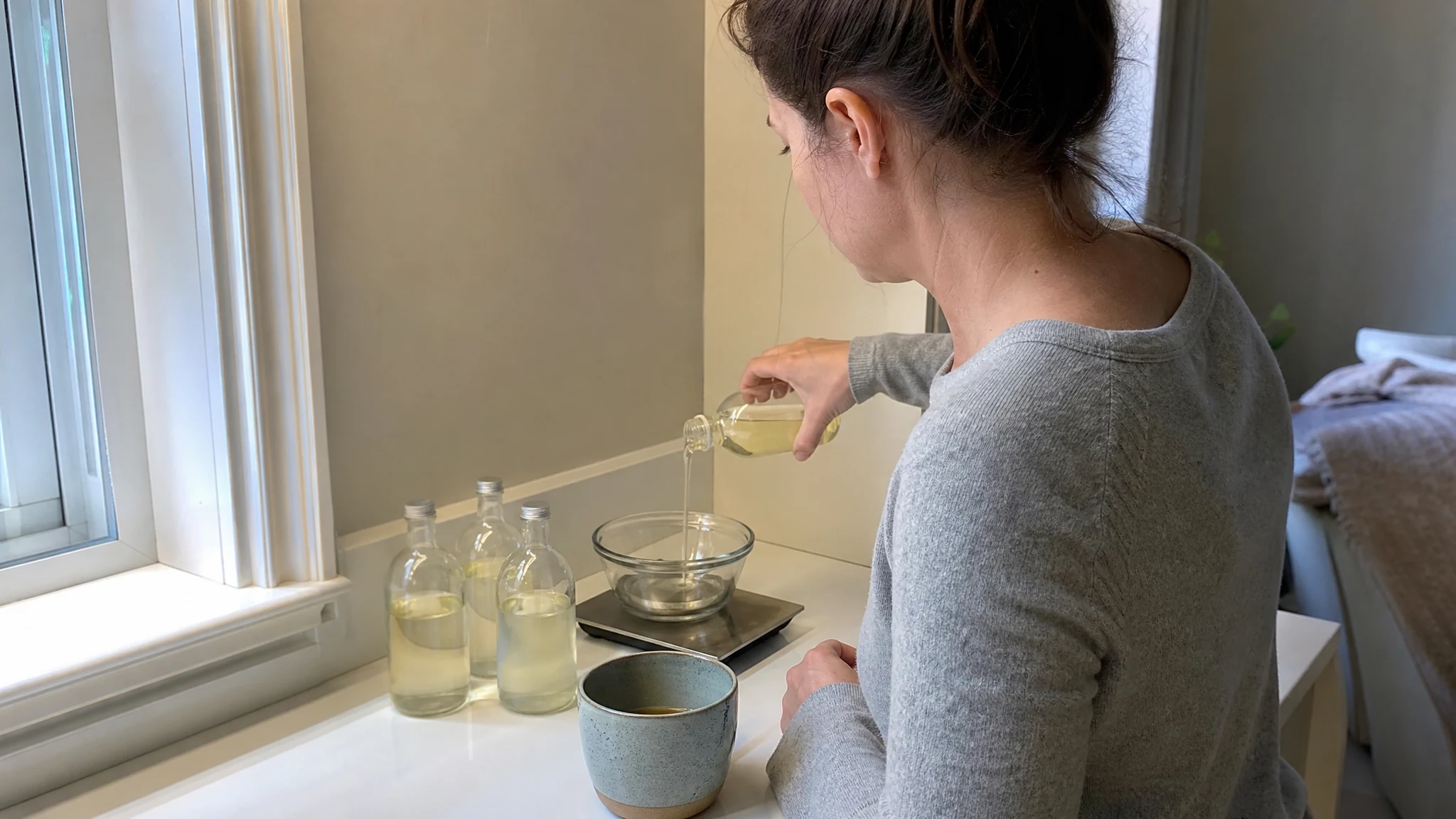
How to Blend Palmarosa Oil: Proportions That Work
Palmarosa is easy to overdo. Work in parts, count percent for the whole blend, and tally geraniol across your oils. A worked example for a 30 ml bottle.
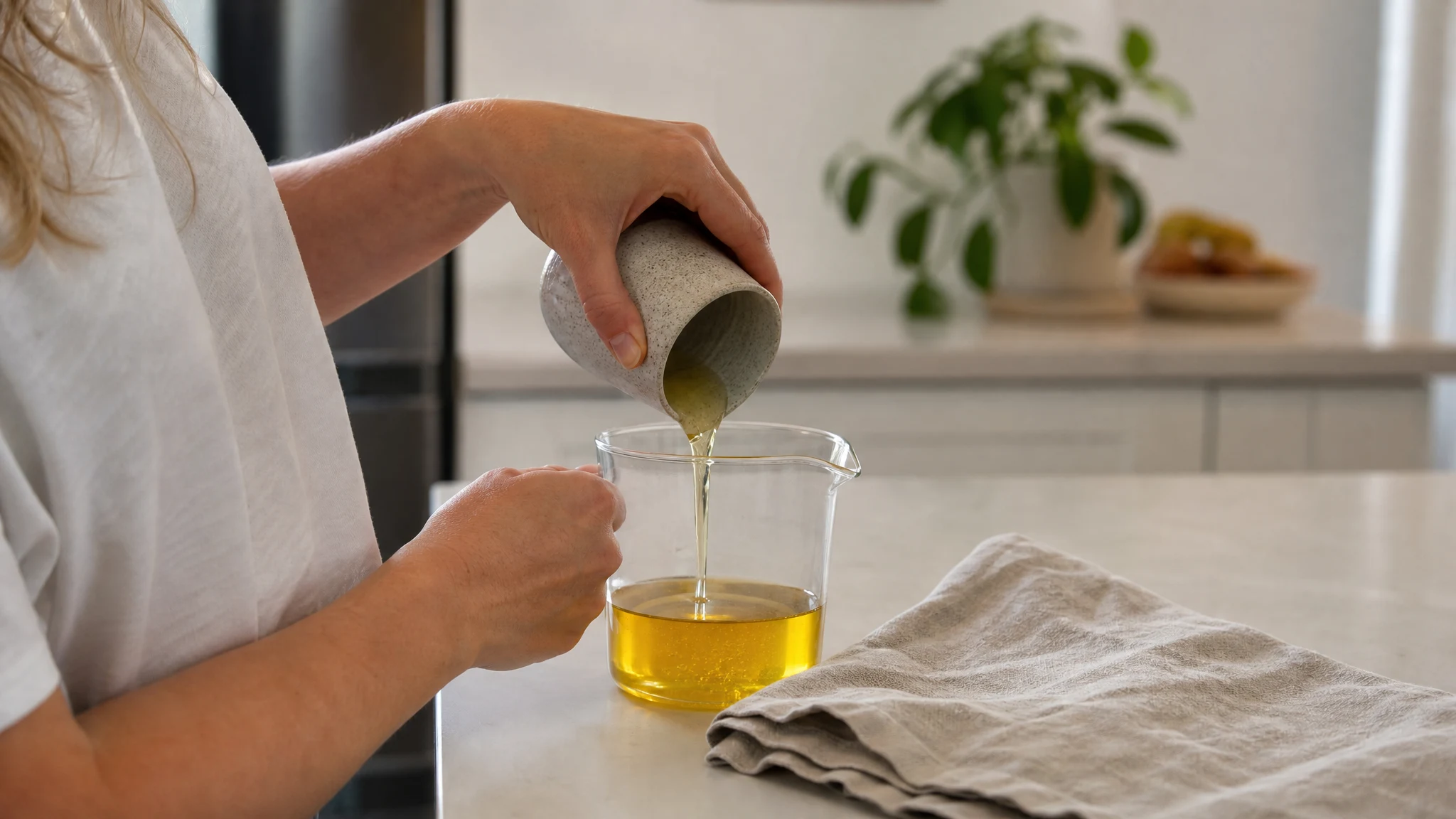
Palmarosa Dilution Chart: How Much Oil per Ounce?
Percentages beat drop counts. A palmarosa dilution chart in ml, drops and grams, set beside Tisserand ranges and IFRA geraniol ceilings.
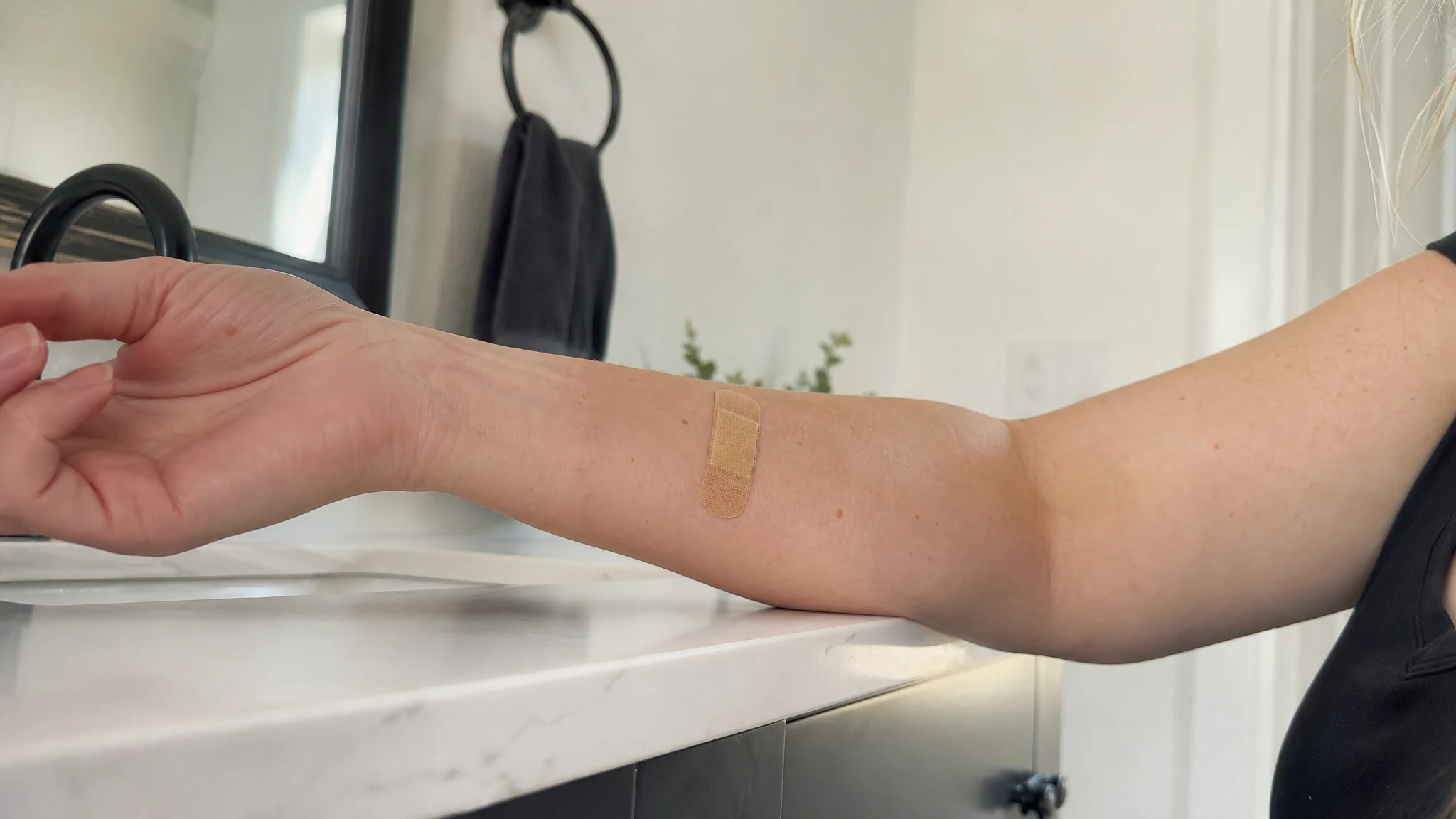
How to Patch Test Palmarosa Oil at Home
A clean spot test is a good sign, not a certificate. Learn why geraniol earns a careful test, how to run one at home, and when to see a professional.
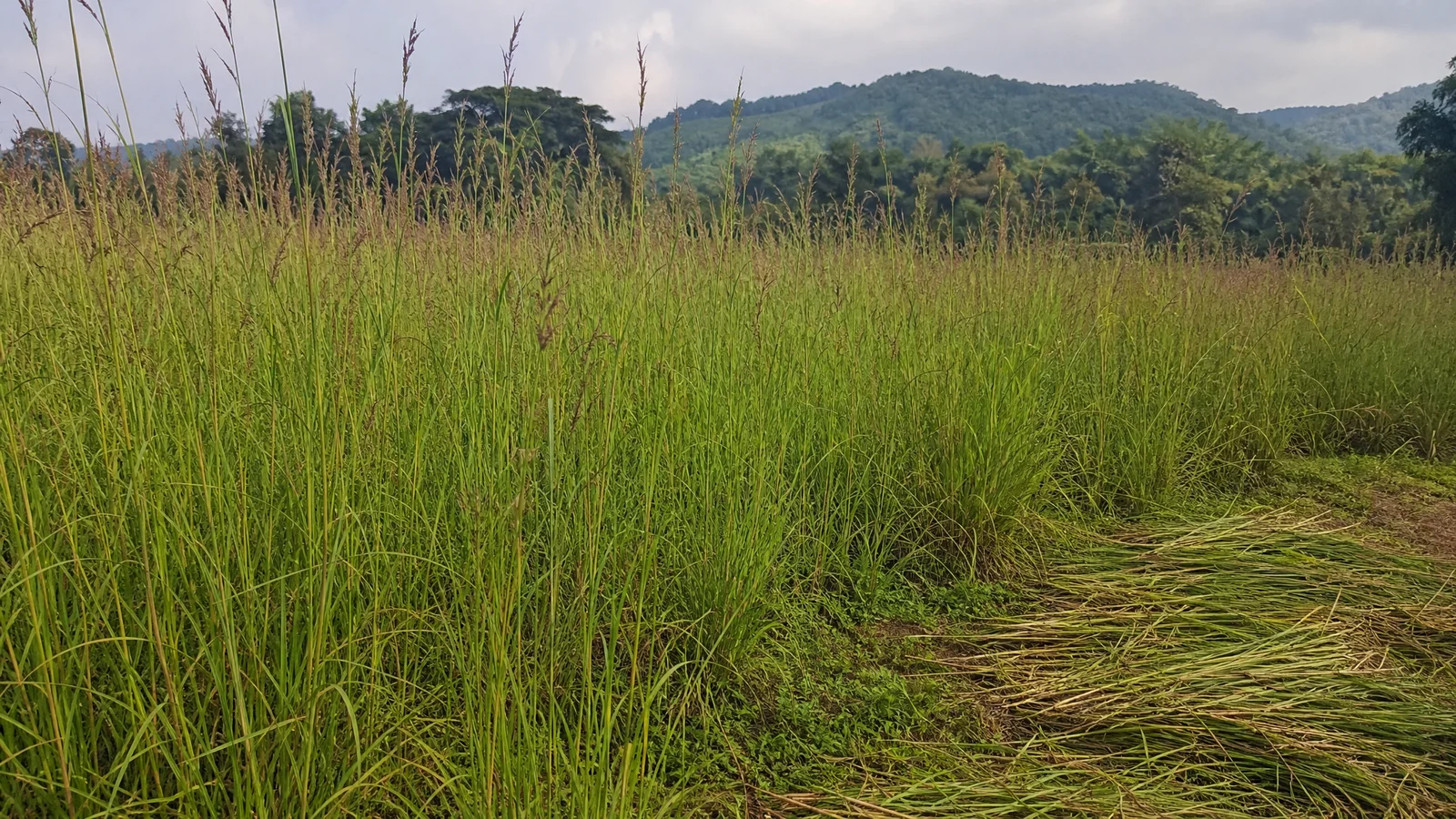
How Palmarosa Oil Is Made: From Grass to Bottle
Cut, wait, steam, stop: the four decisions that shape palmarosa oil, with real distillation numbers and what they mean when you choose a bottle.
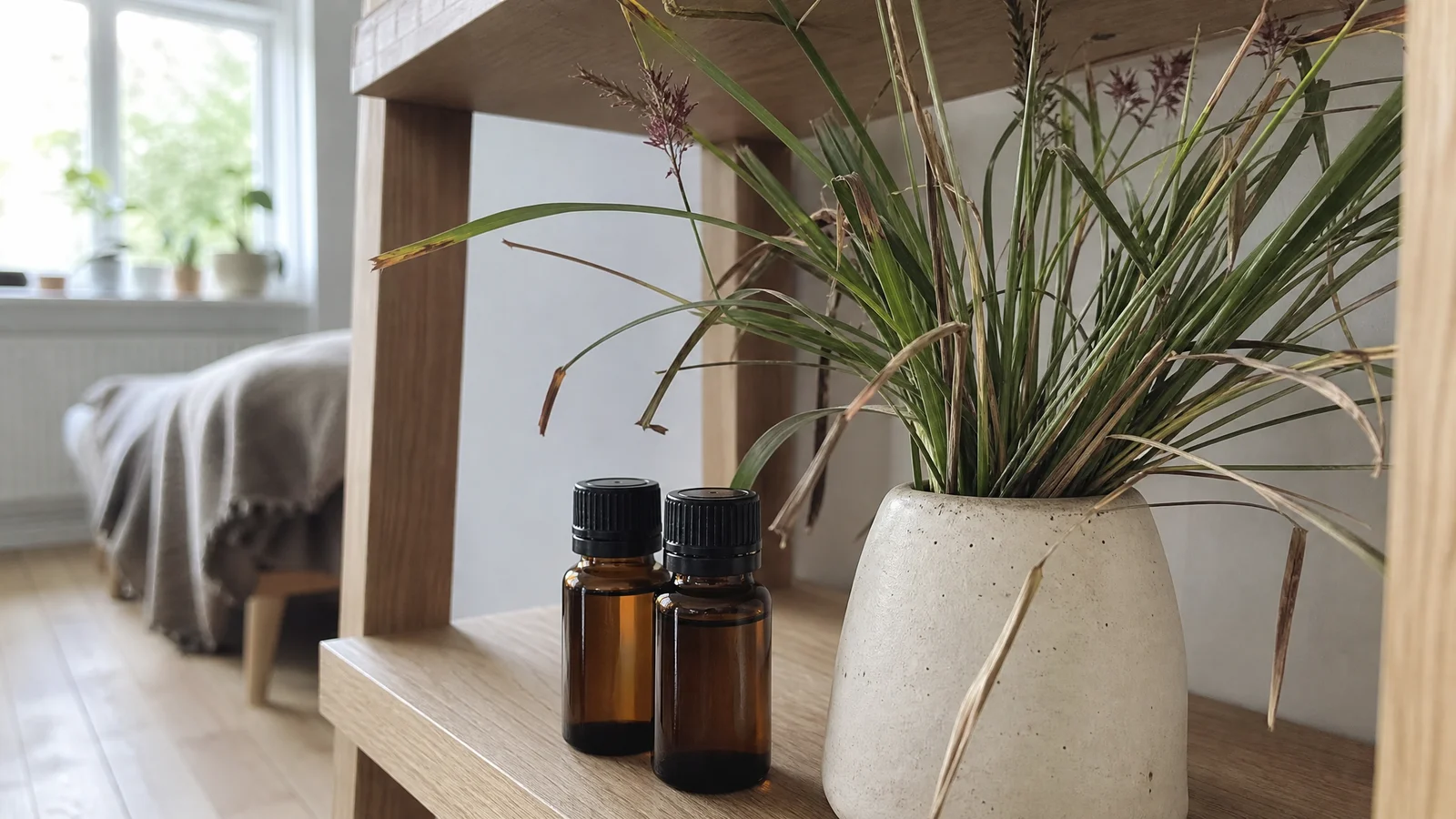
How to Store Palmarosa Oil So It Stays Fresh
Palmarosa is mostly geraniol, and geraniol reacts with air. Simple habits keep a bottle fresh, and an older one still makes a lovely room scent.
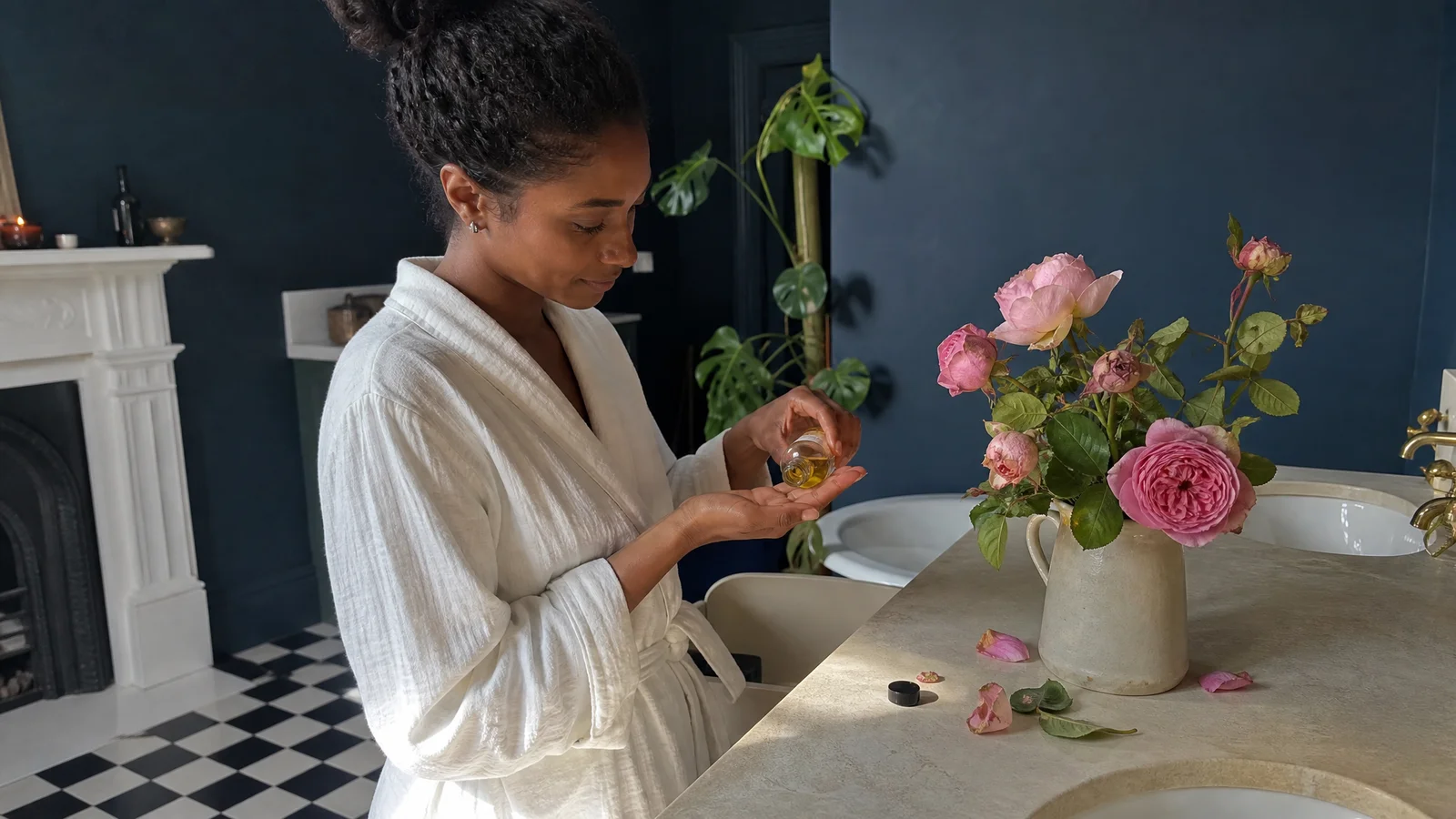
Adding Palmarosa to Face Oil and Body Cream
A rosy touch for face and body products, kept within IFRA geraniol limits. See how much fits, how to test, and how to add it one step at a time.
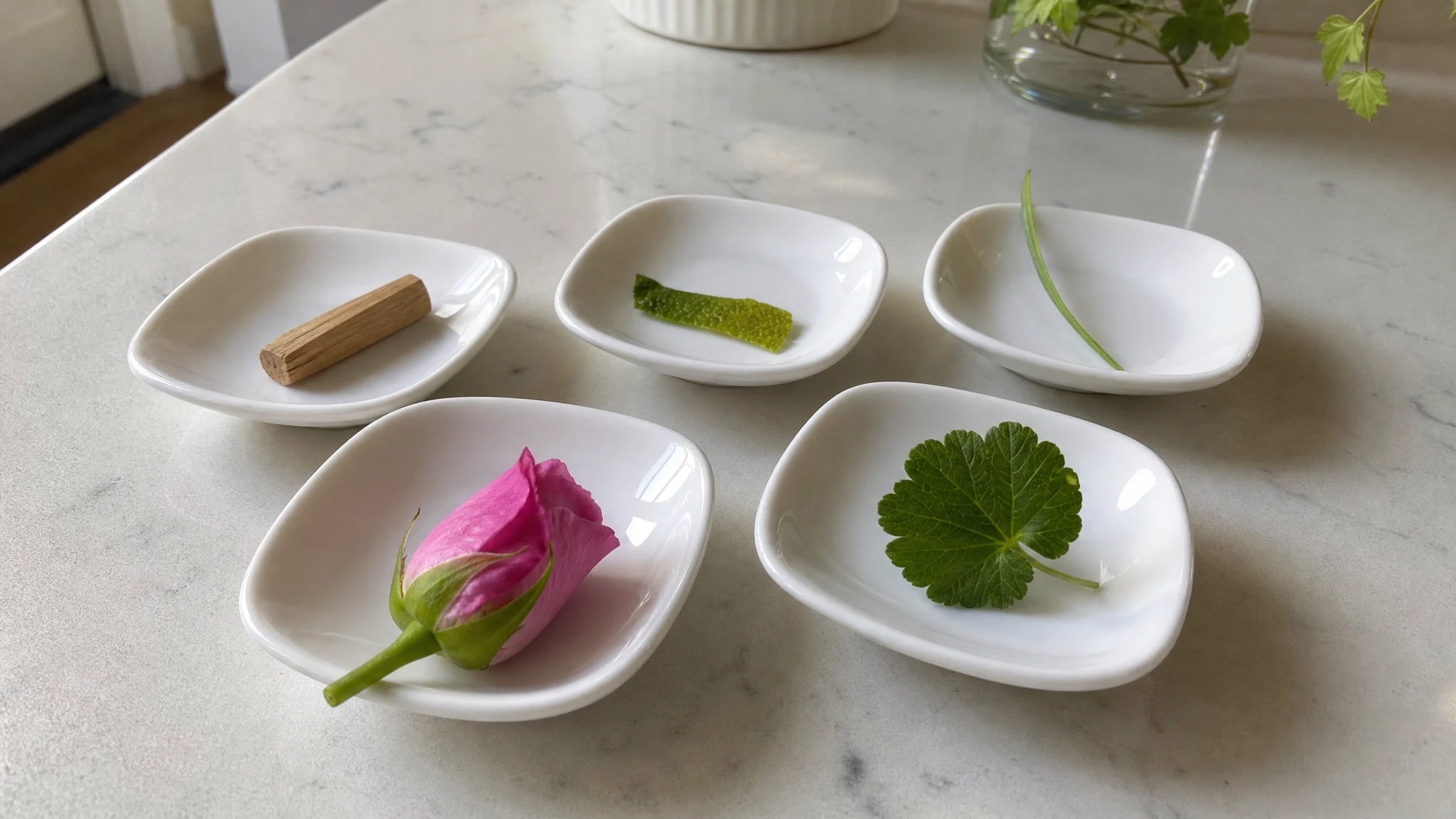
What Blends With Palmarosa Oil? Six Partners to Try
Geranium, bergamot, ylang ylang, sandalwood, lavender or patchouli: what each adds to palmarosa, plus the simple sum that keeps a skin blend balanced.
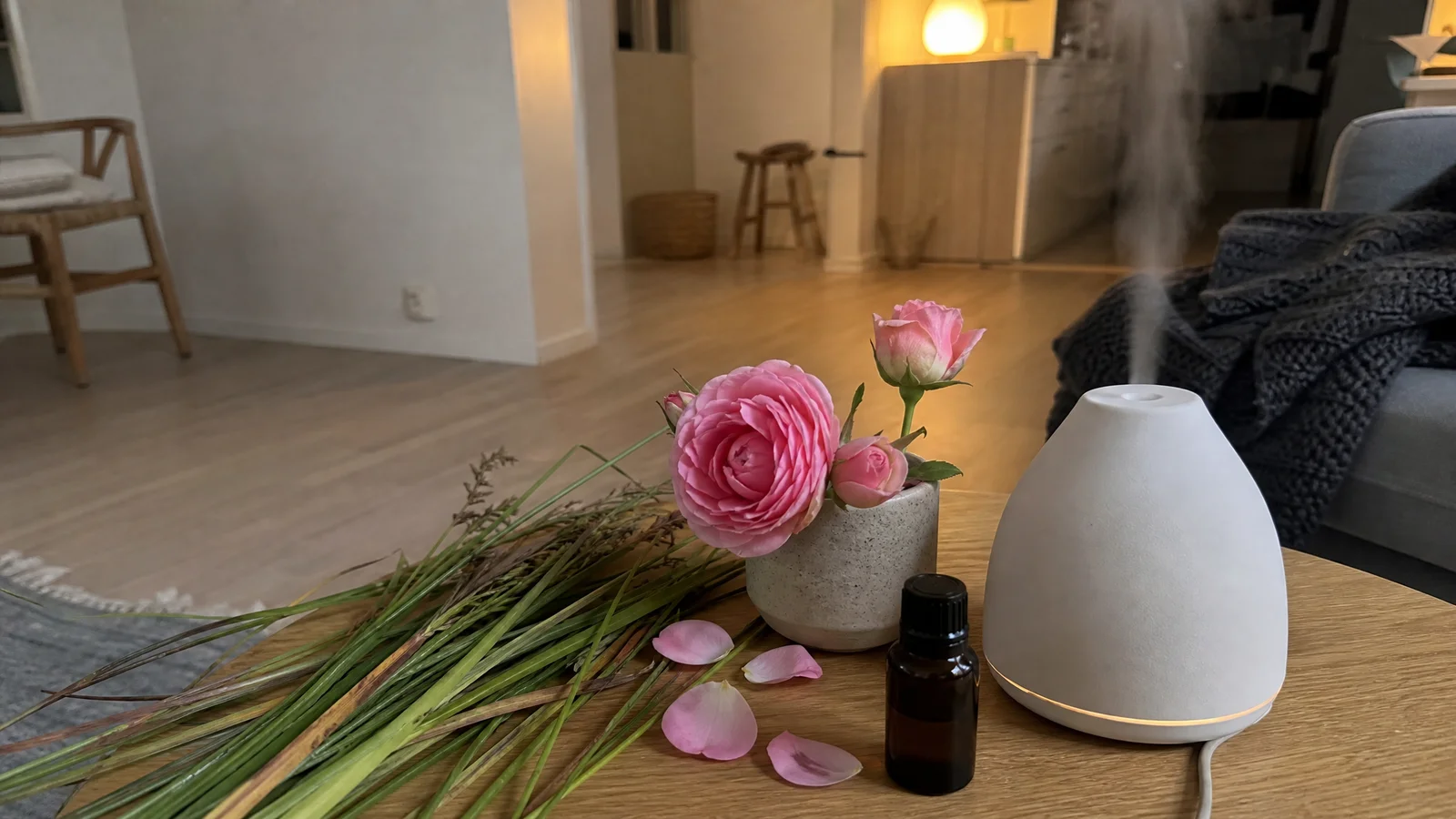
Palmarosa Diffuser Guide: Drops, Timing and Blends
Palmarosa oil floats instead of dissolving in the tank, so extra drops add little. See why short cycles, fresh air and a light hand work better.
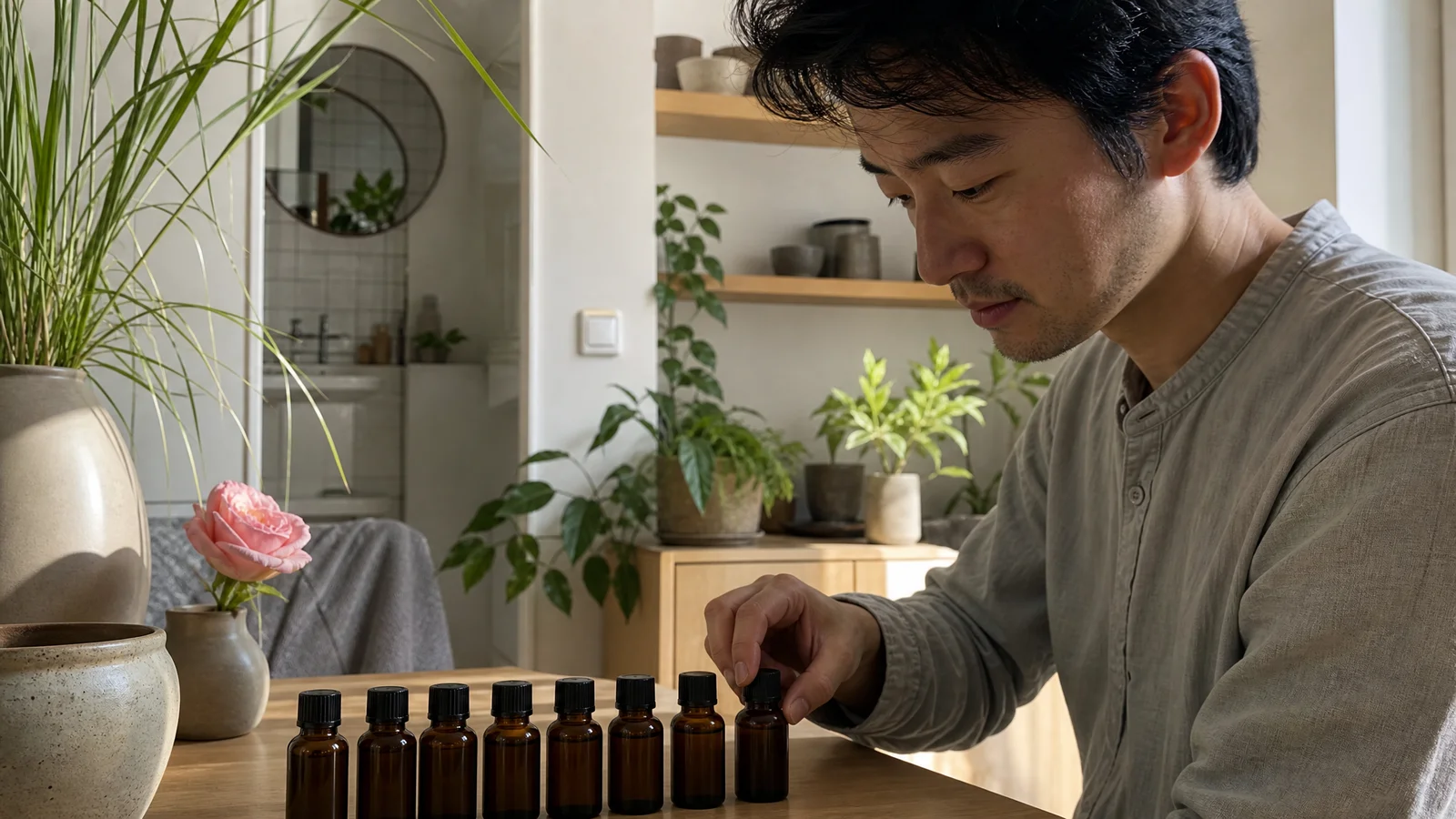
Palmarosa in Natural Perfume: Using the Rosy Heart Note
Palmarosa gives perfume a rosy heart note, and its geraniol sets how much fits. Worked IFRA arithmetic for an alcohol spray and a perfume oil.