Palmarosa Diffuser Guide: Drops, Timing and Blends
Most people reach for more drops when a diffuser smells faint. With palmarosa, the more interesting thing to understand is what happens to those drops once they hit the water, because it explains why a short, light cycle often makes more sense than a heavy hand.
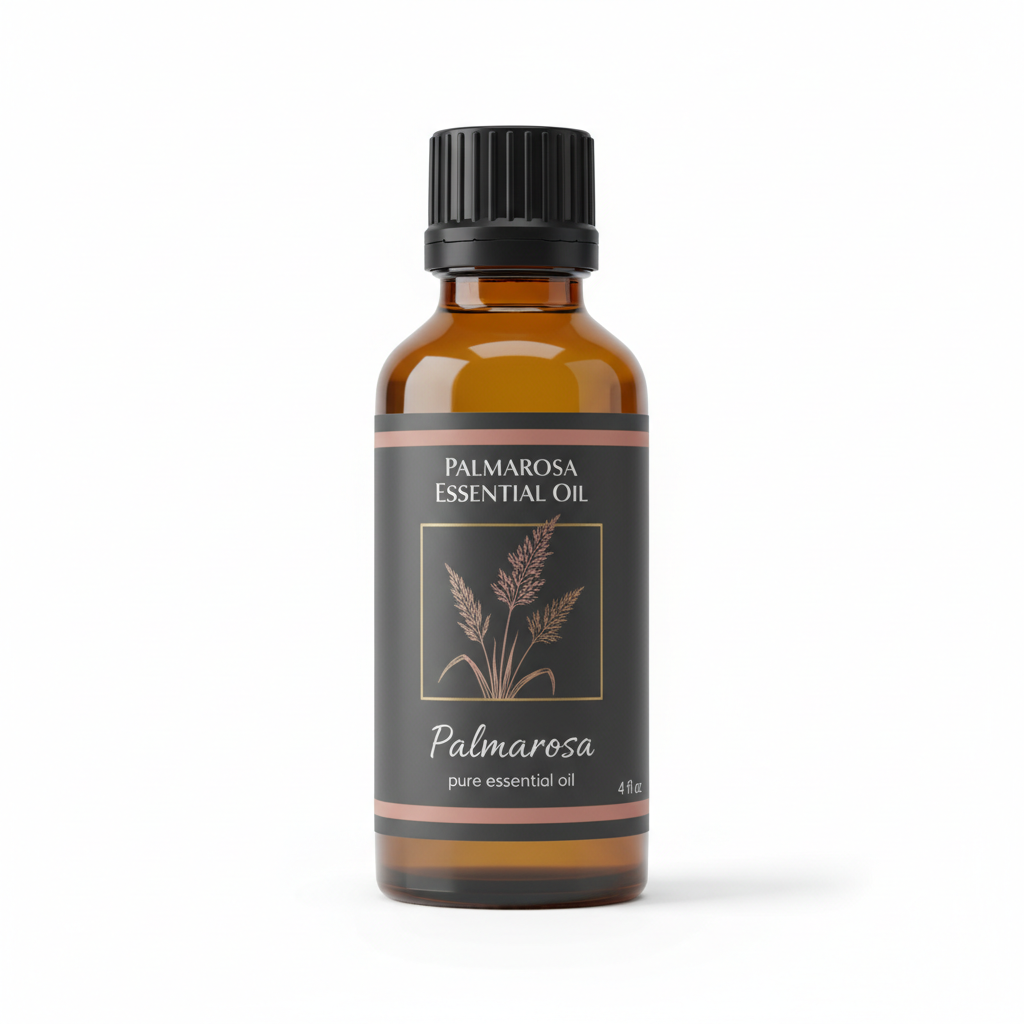
Palmarosa Essential Oil
Our own Palmarosa Essential Oil, in sizes from 0.5 oz to bulk.
From $10.99
Shop Now →Where the oil goes in the tank
Palmarosa is mostly geraniol, which IFRA lists at a typical 82.4% for the oil (Annex on contributions from other sources to the IFRA Standards). Geraniol dissolves in water only slightly: PubChem's record gives 100 mg per litre at 25 C, while it dissolves readily in ethanol and most fixed oils (PubChem, Geraniol, solubility).
Here is the arithmetic for a 100 ml tank. It rests on three assumptions: about 20 drops to a millilitre, which is a rough convention since droppers vary; the density of 0.888 on the Certificate of Analysis we publish for one batch; and the typical geraniol share.
| Quantity | Amount |
|---|---|
| 3 drops of oil | 0.15 ml, about 133 mg |
| Geraniol in those drops | about 110 mg |
| Geraniol 100 ml of water can hold | about 10 mg |
So three drops carry roughly eleven times more geraniol than the water can take in. This is reasoning from the main component, not a measurement of any particular machine, but it fits what you see: the oil floats as a film, stirring does not turn it into a solution, and extra drops mostly add extra film. Start with fewer drops than the maker's instructions allow and add one at a time.
Short cycles beat all-day scent
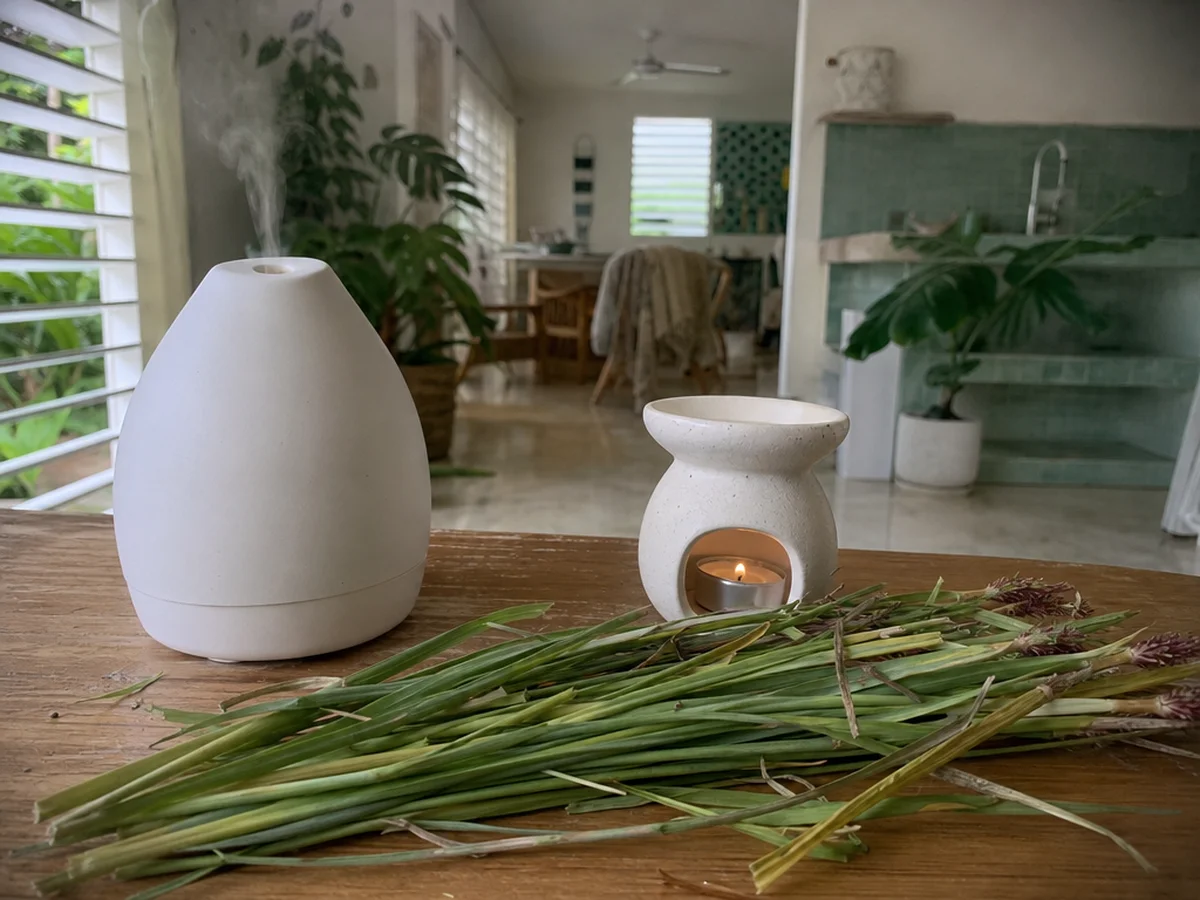
The Tisserand Institute suggests diffusing for 30 to 60 minutes on, then 30 to 60 minutes off, and letting some fresh air into the room. It also explains that the 15 to 20 minute limit on direct, intensive inhalation, such as steam inhalation, is not meant for oils drifting through room air (Tisserand Institute, How to Use Essential Oils Safely). Our recommendation follows directly: set a timer, crack a window, and let the room rest between rounds. It also keeps the scent fresh to your nose, since a smell you have lived in for hours fades into the background.
The same guidance says people with asthma should talk with a doctor or suitable practitioner before using essential oils, so we would not diffuse in a room where someone with asthma sleeps without that conversation. Keep the bottle capped and out of children's reach, away from open flames, and wipe spills from varnished or plastic surfaces straight away.
Cleaning and caring for the unit
Tip out any leftover water at the end of the session and wipe the tank dry with a soft cloth, since oil leaves a film that can build up. Follow the maker's instructions for cleaning, rinse well and let the tank air-dry. A clean tank keeps the scent true, so the next round smells like palmarosa and not like yesterday's blend. Keep the unit on a stable, wipeable surface, away from fabrics, wood finishes and electronics.
Where to put it
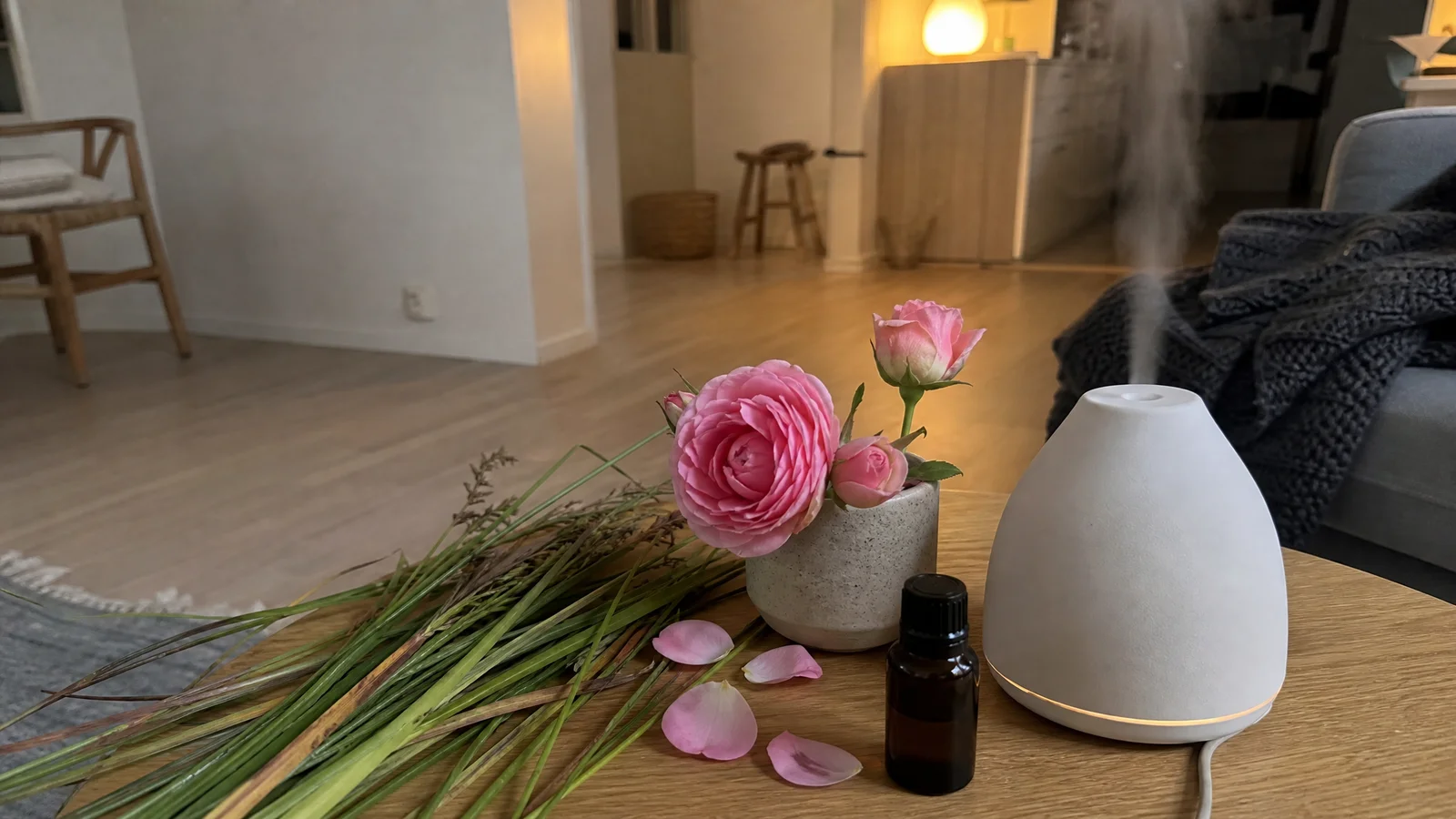
Place the diffuser at about table height, a little way from where you sit, so the scent drifts to you rather than hitting you head-on. A hallway or an open-plan room carries a light rose well; a very small, closed room can feel stuffy quickly, so use fewer drops there. Switch it on, step out for a few minutes and walk back in. That return is when you can truly judge it, because your nose will have reset. If it still smells strong, leave the unit off for a while and open a window before the next round.
Reed diffusers are a different animal
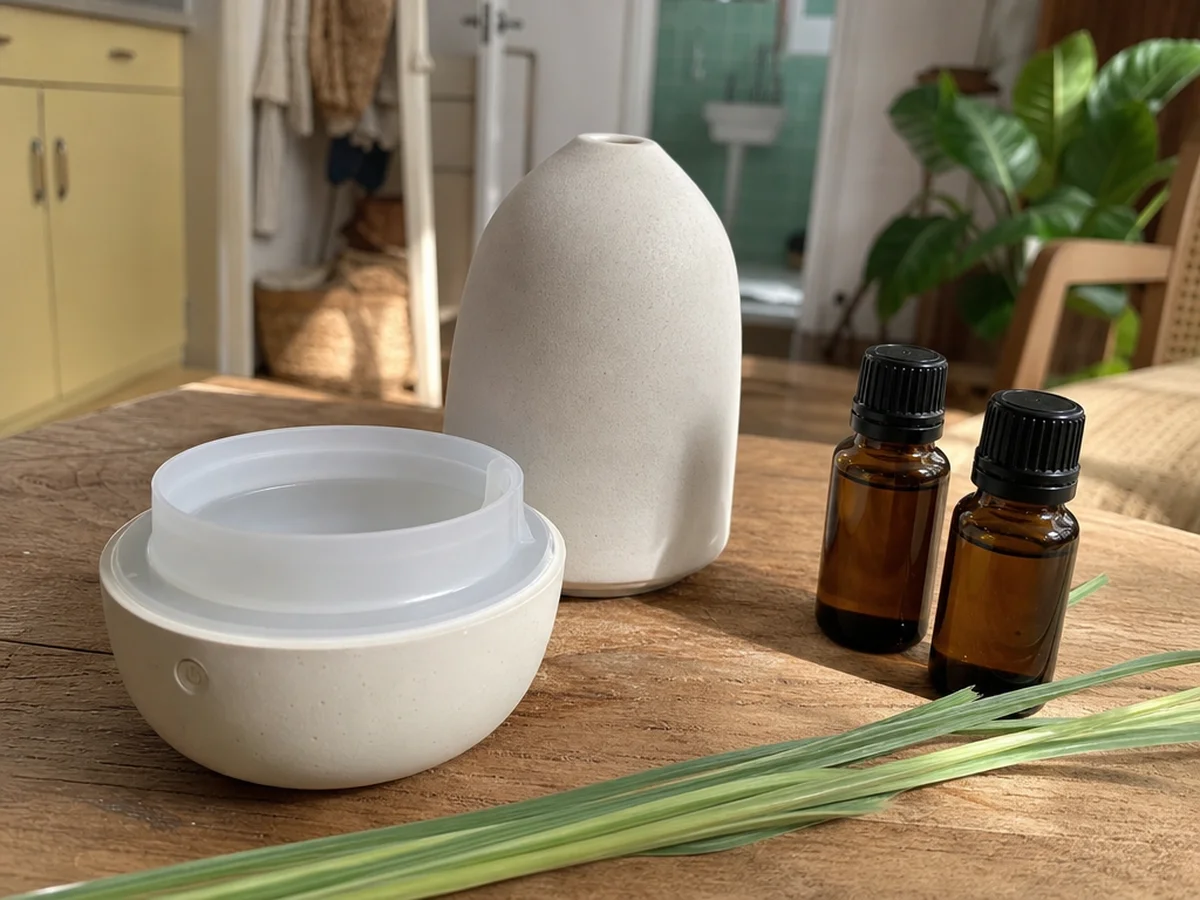
Reed diffusers and lamp-ring oils sit in IFRA category 10A, because people handle and flip the soaked reeds. The geraniol cap there is 1.1% of the finished product (IFRA Standard: Geraniol, Amendment 51). Dividing by 0.824 gives about 1.33% palmarosa in the reed liquid, roughly 1.3 g of oil in 100 g, which is our arithmetic from a typical value. Plug-ins and other automated air fresheners fall in category 12 with no geraniol limit, and the guidance lists aromatherapy applications as outside the scope of the standards, so the common water-tank unit has no IFRA line to quote (Guidance for the Use of IFRA Standards). A reed diffuser also needs a solvent base, which you will find at a craft or candle-supply shop; we sell only the oil.
Building a blend around a strong rose
We list geranium, bergamot, ylang ylang, sandalwood, lavender and patchouli as good partners for palmarosa, and you will find those at an aromatherapy or craft supplier. Palmarosa's rosiness is strong enough that a heavy hand will dominate a blend. A simple method needs no scent chart: count your total drops and give palmarosa a third to a half, then adjust by single drops. If a blend later goes onto skin in a roller or lotion, remember that the skin limits are far tighter than the air ones, and our dilution chart covers that step. Our posts on pairings and pets are worth a look before you settle on a routine.
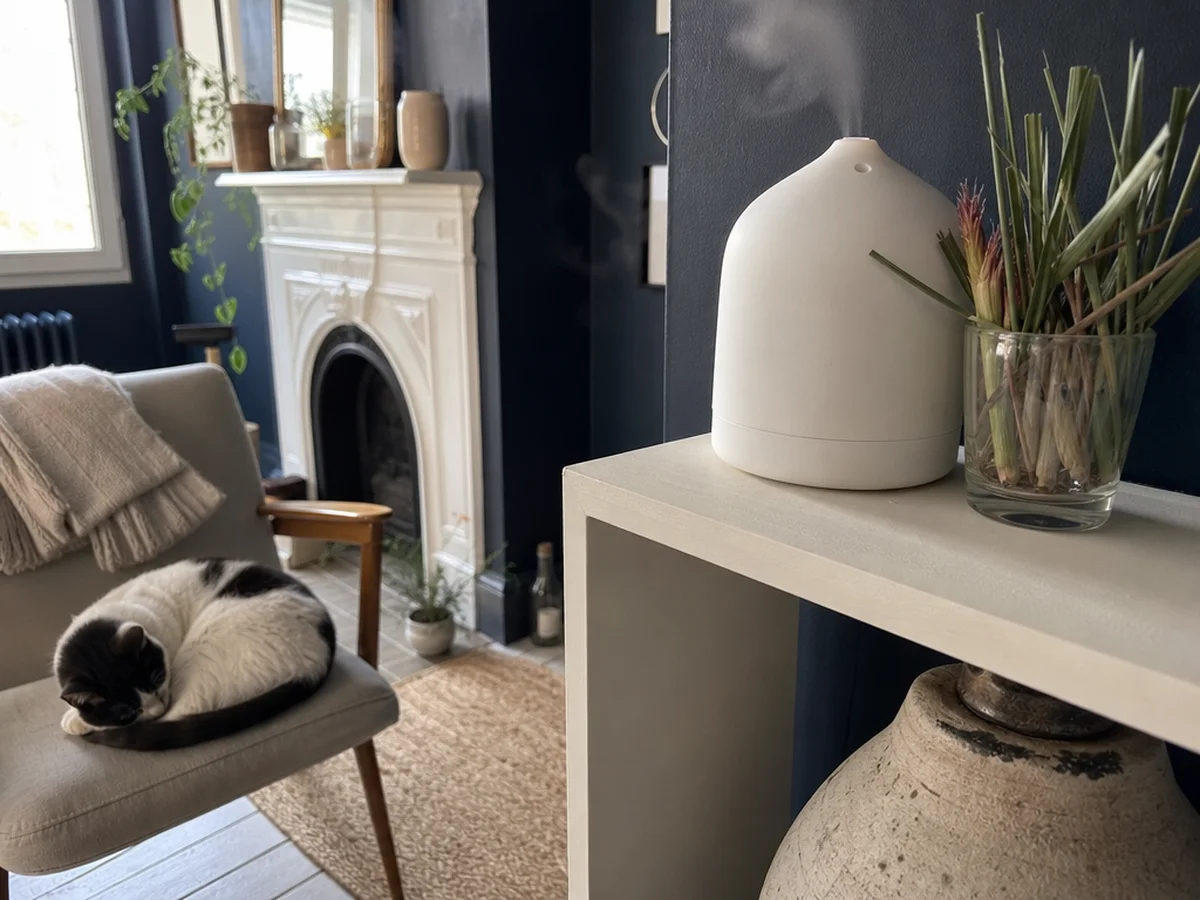
An evening diffuser is, in the end, about the scent you enjoy. Run it in short rounds, keep the room aired, and let palmarosa's sweet, rosy, gently green character do the work with a light touch.
Palmarosa Essential Oil
Palmarosa Essential Oil from our own shop, in sizes from 0.5 oz to bulk.
From $10.99
Shop Now →Sources & Further Reading
- Tisserand Institute. How to Use Essential Oils Safely. tisserandinstitute.org
- IFRA. IFRA Standard: Geraniol (Amendment 51), 2023. IFRA_STD_037.pdf
- IFRA. Guidance for the Use of IFRA Standards, 51st Amendment, 2023. ifra-51st-amendment-guidance.pdf
- IFRA. Annex on contributions from other sources to the IFRA Standards, 51st Amendment. ifra-51st-amendment-annex.xlsx
- PubChem. Geraniol (CID 637566), solubility record. pubchem.ncbi.nlm.nih.gov