How to Patch Test Palmarosa Oil at Home
A clean 48-hour spot test is a good sign, not a certificate. Palmarosa oil is rich in geraniol, a fragrance ingredient with a long patch-test record, and allergic reactions can take days to appear. The test is still worth doing; it just works best when you know what it can and cannot tell you.
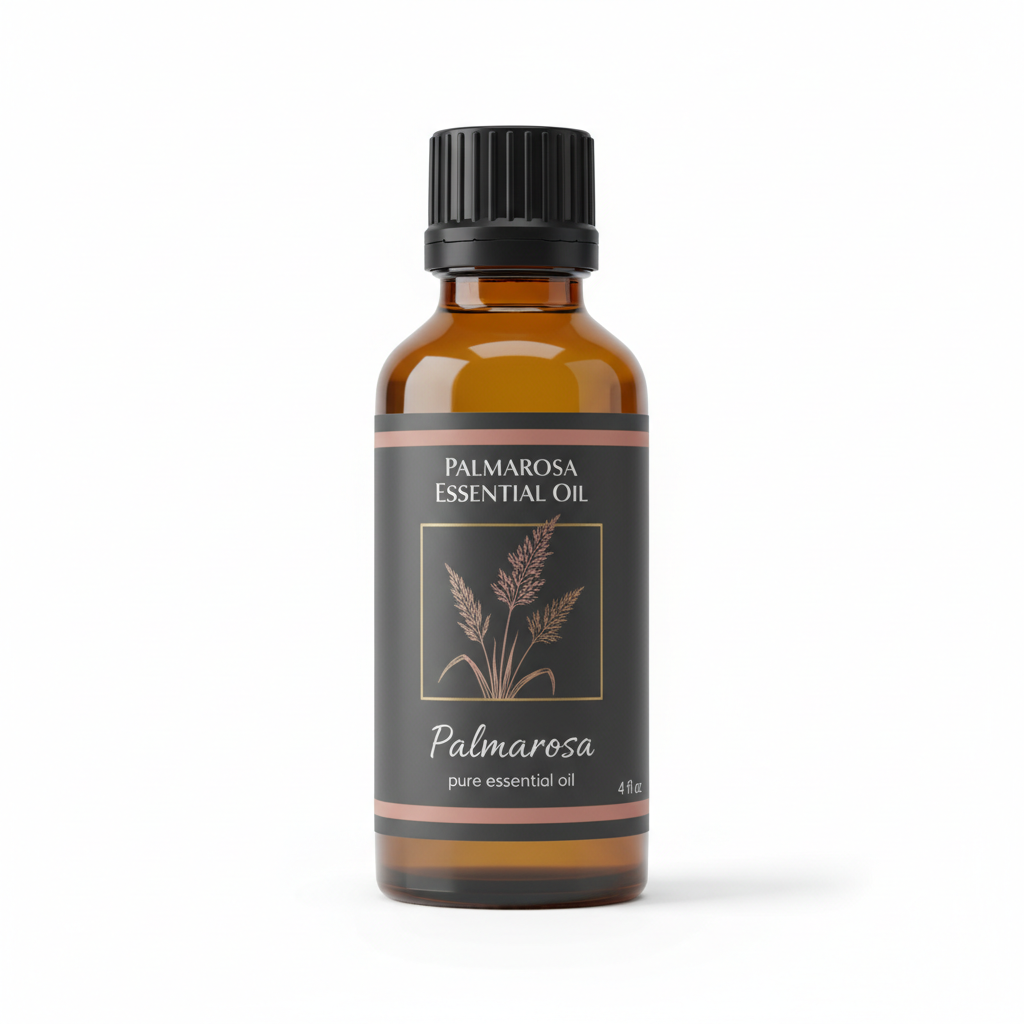
Palmarosa Essential Oil
Our own Palmarosa Essential Oil, in sizes from 0.5 oz to bulk.
From $10.99
Shop Now →Why geraniol earns a careful test
IFRA lists palmarosa oil at a typical 82.4% geraniol (Annex on contributions from other sources to the IFRA Standards). The Certificate of Analysis we publish for our oil covers density, refractive index and optical rotation for one batch and carries no constituent figures, so we cannot give you a number for ours, but our shop copy describes the high natural geraniol content that gives this grass its rose-like character.
Regulators treat geraniol as a known fragrance allergen. In the European Union it is among 26 allergens that must be named on a cosmetic label above 0.001% in leave-on products and 0.01% in rinse-off products, and the list is being widened to 82 substances (New fragrance regulation in cosmetics, AGES). By our arithmetic, palmarosa oil at 0.5% with a typical 82.4% geraniol is about 0.41% geraniol, roughly 400 times that leave-on threshold. US labels work differently: under US regulations, fragrance ingredients can be listed simply as "Fragrance" (Fragrances in Cosmetics, FDA), so a label may not tell you geraniol is present. A 2024 review also describes geraniol as both a prehapten and a prohapten, meaning it can become an allergen after oxidation or activation (Sukakul et al., Fragrance Contact Allergy - A Review Focusing on Patch Testing).
The IFRA geraniol standard names dermal sensitization as one of the two properties behind its limits (IFRA Standard: Geraniol, Amendment 51). By our arithmetic those limits correspond to about 0.95% palmarosa oil in a face moisturizer and 1.46% in a body lotion, which is why we suggest the lower end of our 0.5% to 2% range, as the dilution chart shows.
Air makes the difference
Swedish researchers found that geraniol reacts with oxygen along two routes, forming mainly hydrogen peroxide and the aldehydes geranial and neral. In a mouse skin test the air-exposed samples were moderate sensitizers, while fresh geraniol differed markedly (Hagvall et al., Fragrance compound geraniol forms contact allergens on air exposure). That study used the pure compound and mice, so it does not describe a particular bottle of palmarosa, but it supports habits we already like: keep the cap tight, keep the bottle cool and dim, and give an older bottle a fresh test. We cover this in our storage article.
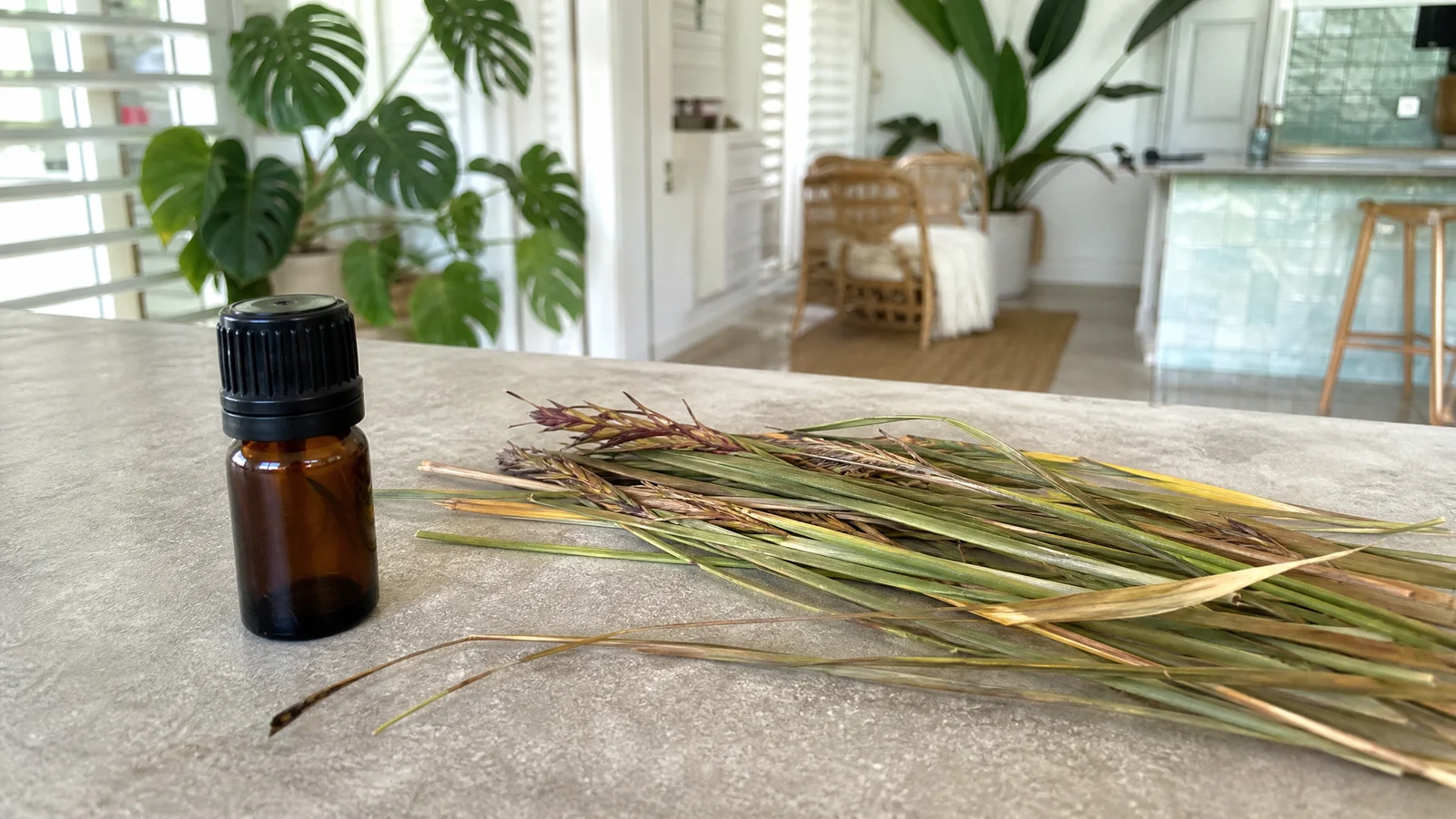
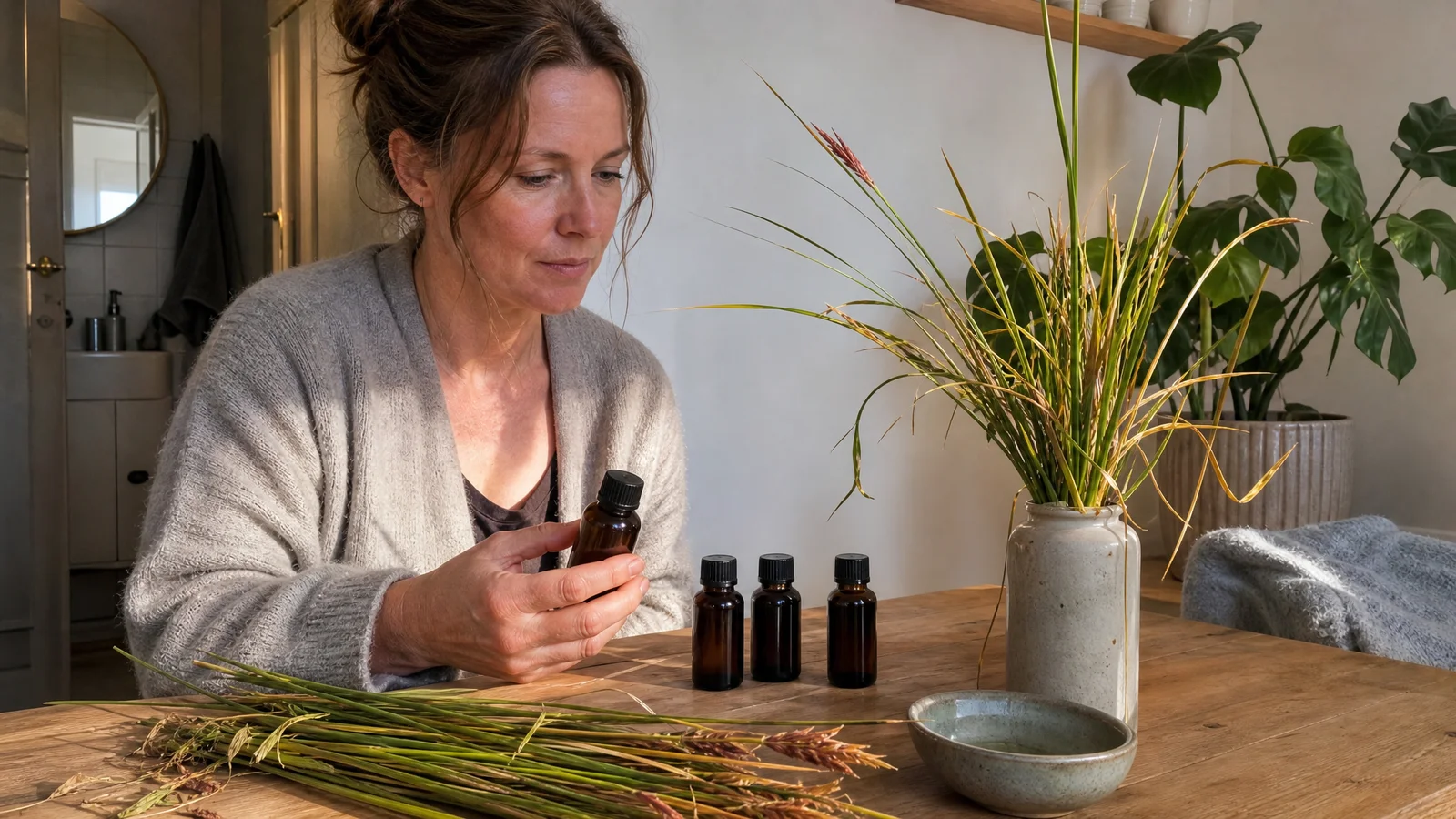
When you retest an older bottle, smell it before anything else. Open it and notice whether it still reads as sweet, rosy and gently green, or whether it has gone flat or sharp. A change in scent is worth noticing, though a lovely smell is no proof that a bottle is gentle on skin, so the test still goes ahead.
A home spot test, step by step
The American Academy of Dermatology describes a clinic patch test like this: patches stay on your back for 48 hours, and you return to the dermatologist after 4 to 7 days because an allergic reaction can take time to develop. Loosening or wetting the patches gives inaccurate results (Patch testing can find what's causing your rash, AAD). A home test is cruder, and the routine below is our recommendation built on those timings.
- Test the blend you plan to use, such as 0.5% for the face or 1% for the body, never the neat oil. Put a dab of plain carrier beside it to separate a carrier reaction from an oil reaction.
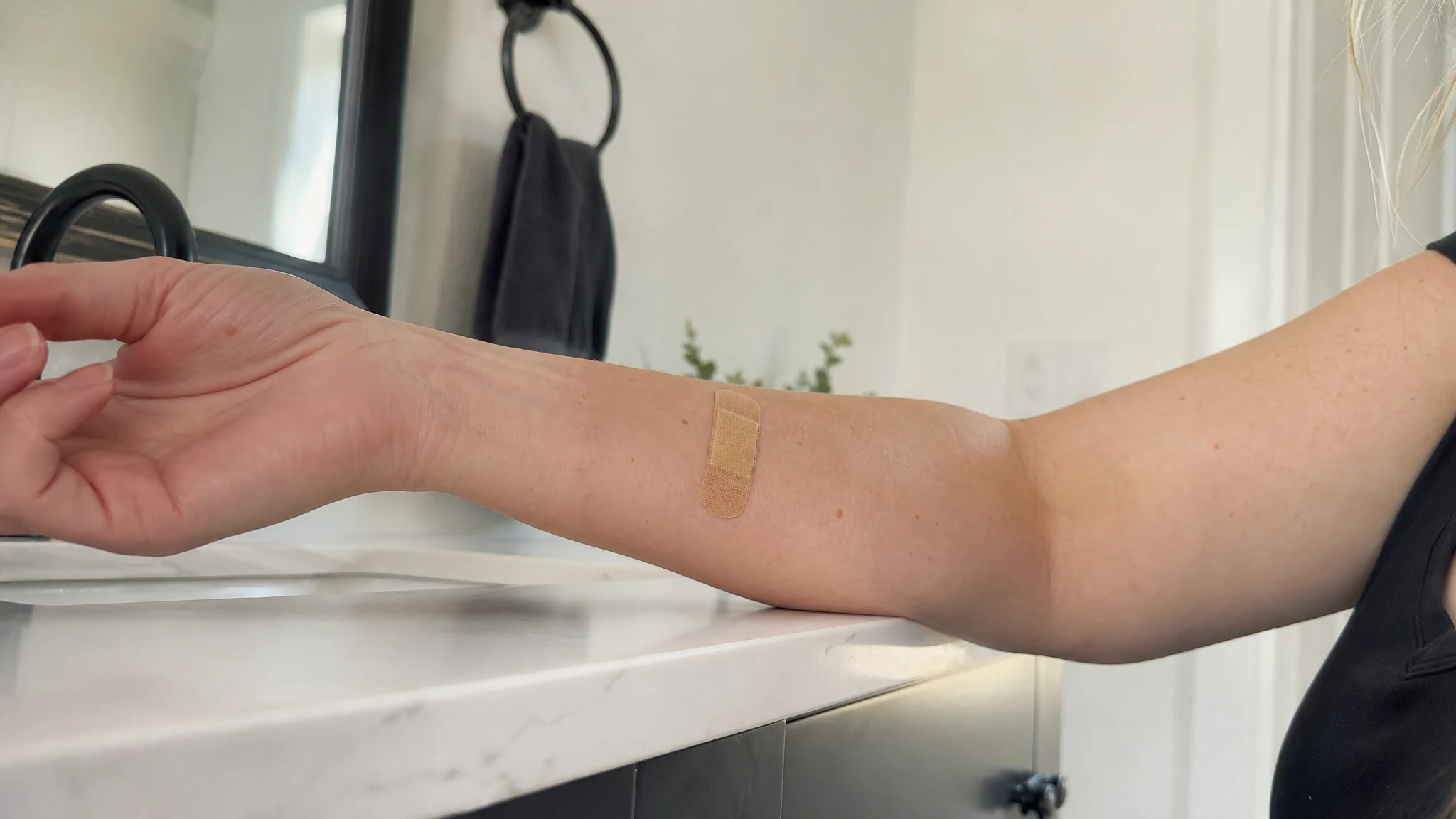
- Use a coin-sized patch of inner forearm and leave it unwashed for 48 hours if you can.
- Check at 48 hours, and again at day 4 to 7.
- If you notice itching, redness, blisters or dry, cracked skin, wash the area and stop. Poison Control advises stopping immediately if a rash or other skin reaction occurs, and not re-testing to be sure (Essential oils: Poisonous when misused).
- If it passes, introduce it on the intended area gradually and keep watching.
Small habits that make the test easier
Choose a spot you will not rub, scratch or wash, and avoid doing the test in the middle of a heavy workout week, when sweat and friction can muddy what you see. Set a phone reminder for each check so you do not forget the second one. Take a quick photo in the same light each time, because redness is easier to judge against yesterday's picture than against memory. Write the blend, the percentage and the date on a sticky note so you know exactly what went on your arm.
Test the whole routine, not just the oil
A new bottle of palmarosa is rarely the only new thing in a week. If you also switch carrier oils, try a different cream or start a new soap, a reaction could come from any of them. We suggest changing one thing at a time and testing each new thing on its own. Think of it as a short wait now that saves a long guessing game later.
When to ask someone
The NHS describes contact dermatitis as skin that becomes itchy, blistered, dry and cracked, usually within a few hours or days of exposure, and suggests seeing a GP for persistent, recurrent or severe symptoms (Contact dermatitis, NHS). The AAD notes that more than 15,000 substances can cause an allergic skin reaction, so a dermatologist or allergist is the person who can say whether geraniol or something else is the cause. Any allergic reaction with difficulty breathing is an emergency.
For related reading, see eczema and sensitive skin and our skin routine post. Palmarosa is a fragrance material to be diluted, patch tested and kept away from the eyes, and a patient routine is the best way to enjoy it.
Palmarosa Essential Oil
Palmarosa Essential Oil from our own shop, in sizes from 0.5 oz to bulk.
From $10.99
Shop Now →Sources & Further Reading
- IFRA. Annex on contributions from other sources to the IFRA Standards, 51st Amendment. ifra-51st-amendment-annex.xlsx
- IFRA. IFRA Standard: Geraniol (Amendment 51), 2023. IFRA_STD_037.pdf
- Hagvall L et al., 2007. Fragrance compound geraniol forms contact allergens on air exposure. Identification and quantification of oxidation products and effect on skin sensitization. Chem Res Toxicol 20(5):807-814. PubMed, PMID 17428070
- Sukakul T, Bruze M, Svedman C, 2024. Fragrance Contact Allergy - A Review Focusing on Patch Testing. Acta Derm Venereol 104. Europe PMC, PMC11334351
- AGES (Austria). New fragrance regulation in cosmetics. ages.at
- FDA. Fragrances in Cosmetics. fda.gov
- American Academy of Dermatology. Patch testing can find what's causing your rash. aad.org
- Poison Control. Essential oils: Poisonous when misused. poison.org
- NHS. Contact dermatitis. nhs.uk