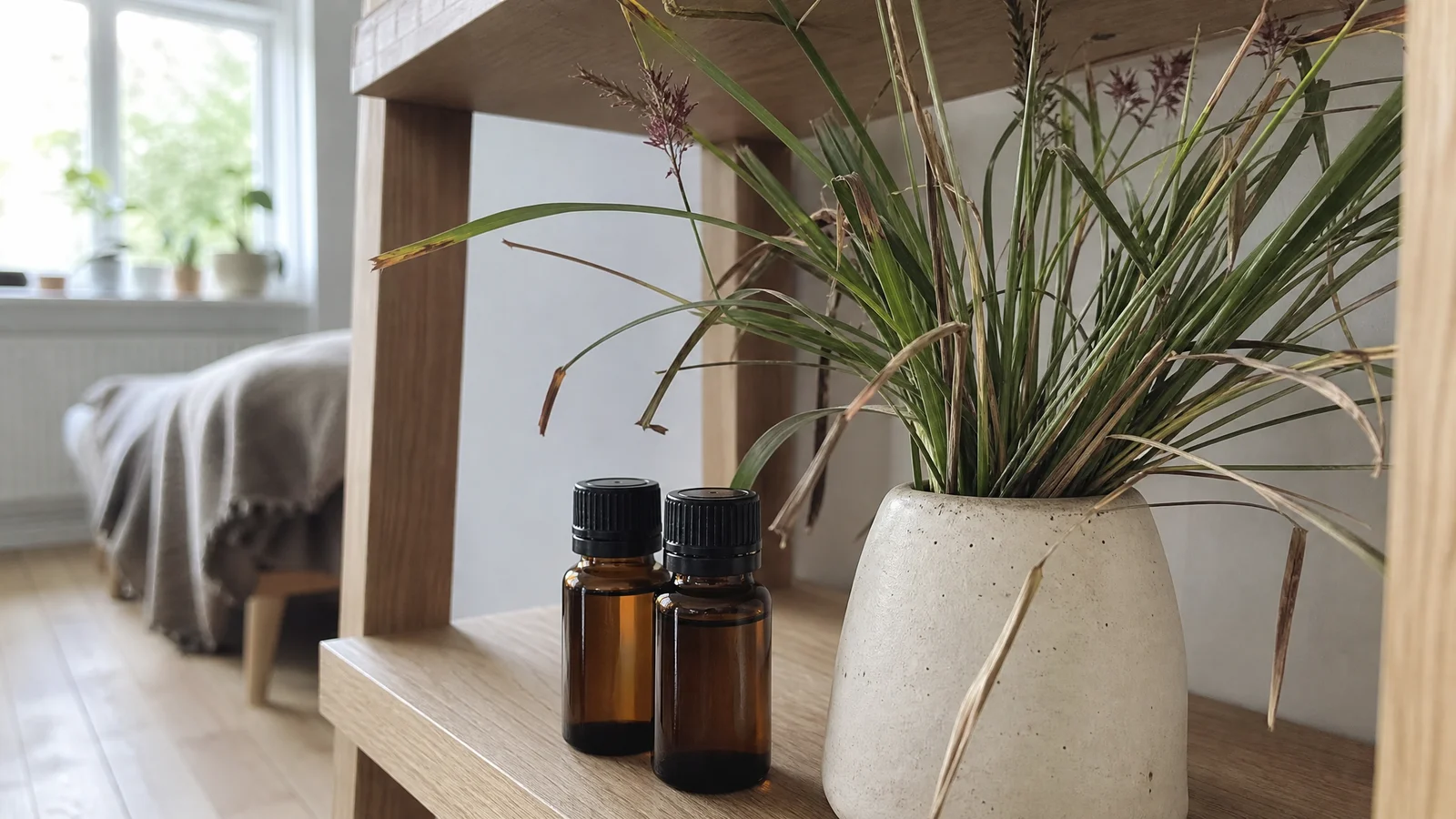
How to Store Palmarosa Oil So It Stays Fresh
The oil in an open bottle of palmarosa slowly meets the air, and that is the one thing worth understanding about keeping it. Palmarosa is mostly geraniol, and geraniol reacts with oxygen. Your goal is not to stop that, which nobody can, but to slow it and to know what job an older bottle is still good for.
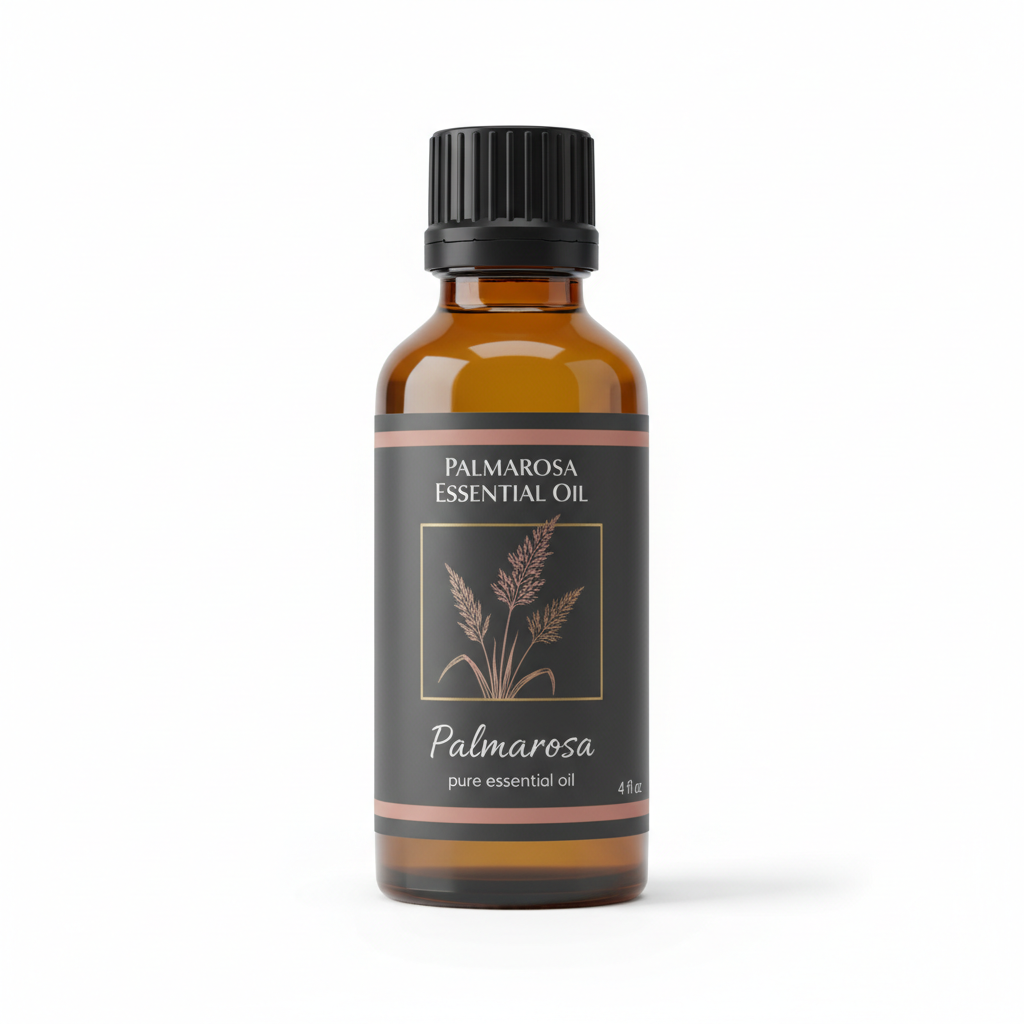
Palmarosa Essential Oil
Our own Palmarosa Essential Oil, in sizes from 0.5 oz to bulk.
From $10.99
Shop Now →Learn what fresh smells like
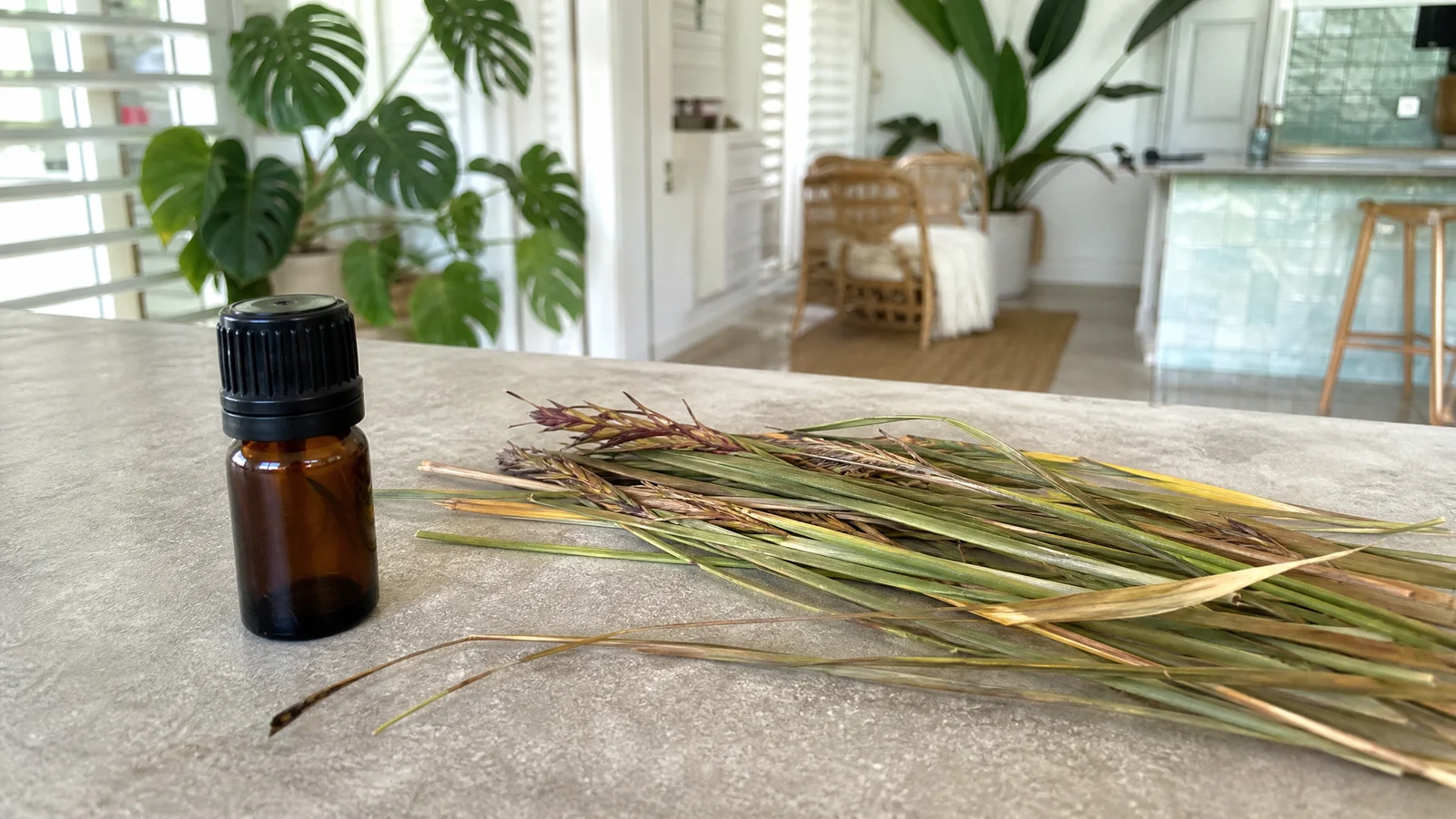
When a new bottle arrives, open it once and take a proper sniff. Fresh palmarosa is sweet and rosy, gently green, with a soft lemony hint, and it is a light yellow liquid that pours almost like water. Fix that picture in your mind, because it is your baseline. Later, when you open an older bottle, you have something real to compare it with.
What happens when geraniol meets air
IFRA lists a typical 82.4% geraniol for palmarosa oil (Annex on contributions from other sources to the IFRA Standards). A Swedish research group studied what air does to geraniol at room temperature. They found it oxidizes by two routes, producing mainly hydrogen peroxide and the aldehydes geranial and neral, plus a little hydroperoxide. In a mouse skin test, the air-exposed samples were moderate sensitizers, noticeably different from fresh geraniol (Hagvall et al., Fragrance compound geraniol forms contact allergens on air exposure).
That was a test of the pure compound, not of a bottle of palmarosa, and it did not measure how many months it takes. We apply it to the oil by reasoning, which seems fair for an oil that is mostly geraniol. In practice it means the question to ask of a bottle is how long it has had air in it, more than how old it is.
What we can tell you about our bottles
Our guidance is that palmarosa typically keeps for 2 to 3 years when it is tightly capped, out of direct light and away from heat. Treat that as an upper bound for a well-kept bottle, not a promise. For larger quantities we suggest storing the oil sealed, cool and away from direct light, and decanting working amounts into smaller airtight bottles. The Certificate of Analysis we publish is for one batch and carries a best-by date of 02/29/2028 alongside density, refractive index and optical rotation. If you plan to make products for sale, ask us in writing through the contact page for the data you need on your lot.
Habits that earn their keep
- Cap it right away. Oxygen is what geraniol reacts with, so every minute open counts.
- Decant a working bottle. A nearly full bottle has little air above the oil, while a nearly empty large one has a lot. Pour what you will use over a few weeks into a small bottle and keep the rest sealed. This is our reasoning, and it matches the decanting advice above.
- Keep it cool and dim. A cupboard beats a sunny windowsill or a shelf above the stove.
- Write the opening date on the label. Time since first opening is the one variable you can actually track.
- Keep it away from flames and little hands. The Tisserand Institute advises keeping essential oils where young children cannot reach them, and away from naked flames (Tisserand Institute, How to Use Essential Oils Safely).
We have left out fridge tricks and vitamin E additions, because nothing we read tests either for palmarosa. If you do chill a bottle, let it come back to room temperature before opening so moisture does not condense inside.
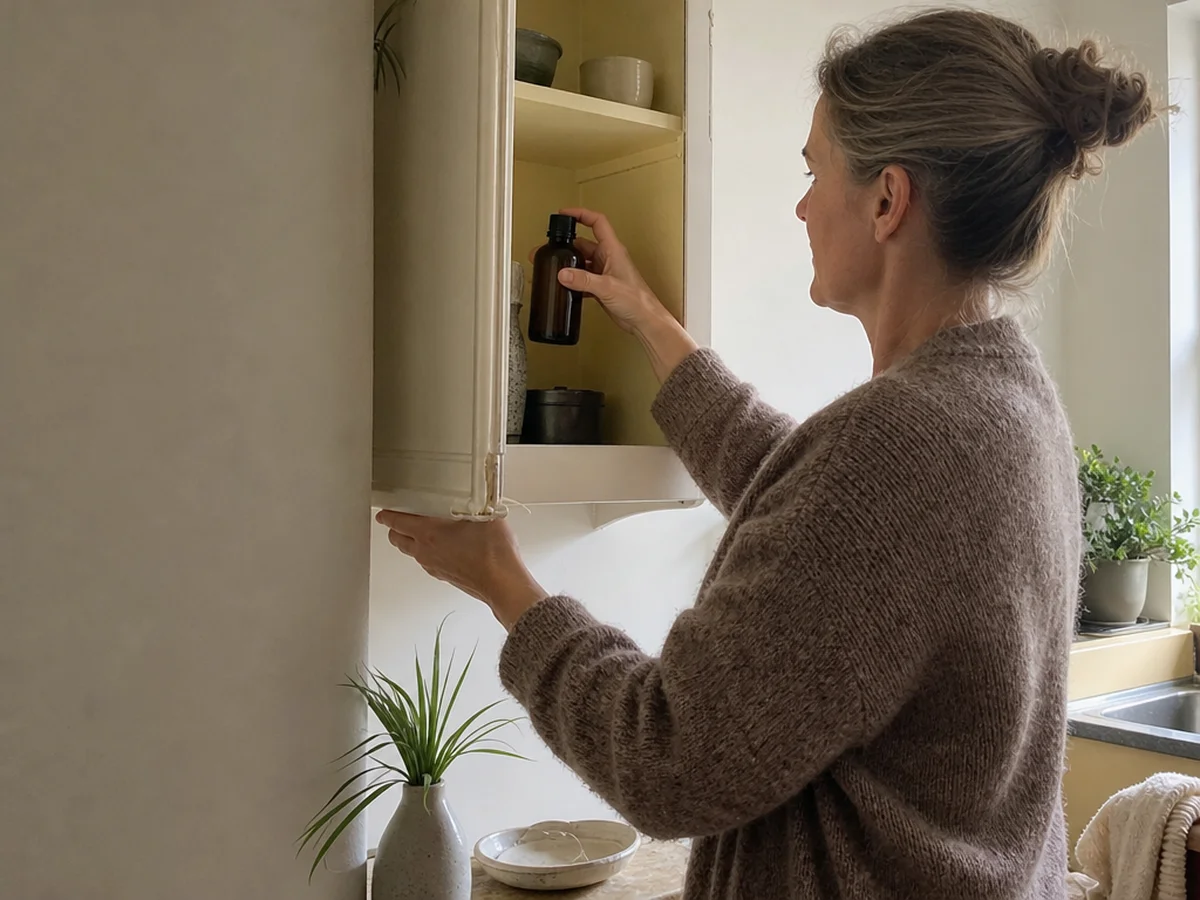
A tidy storage corner
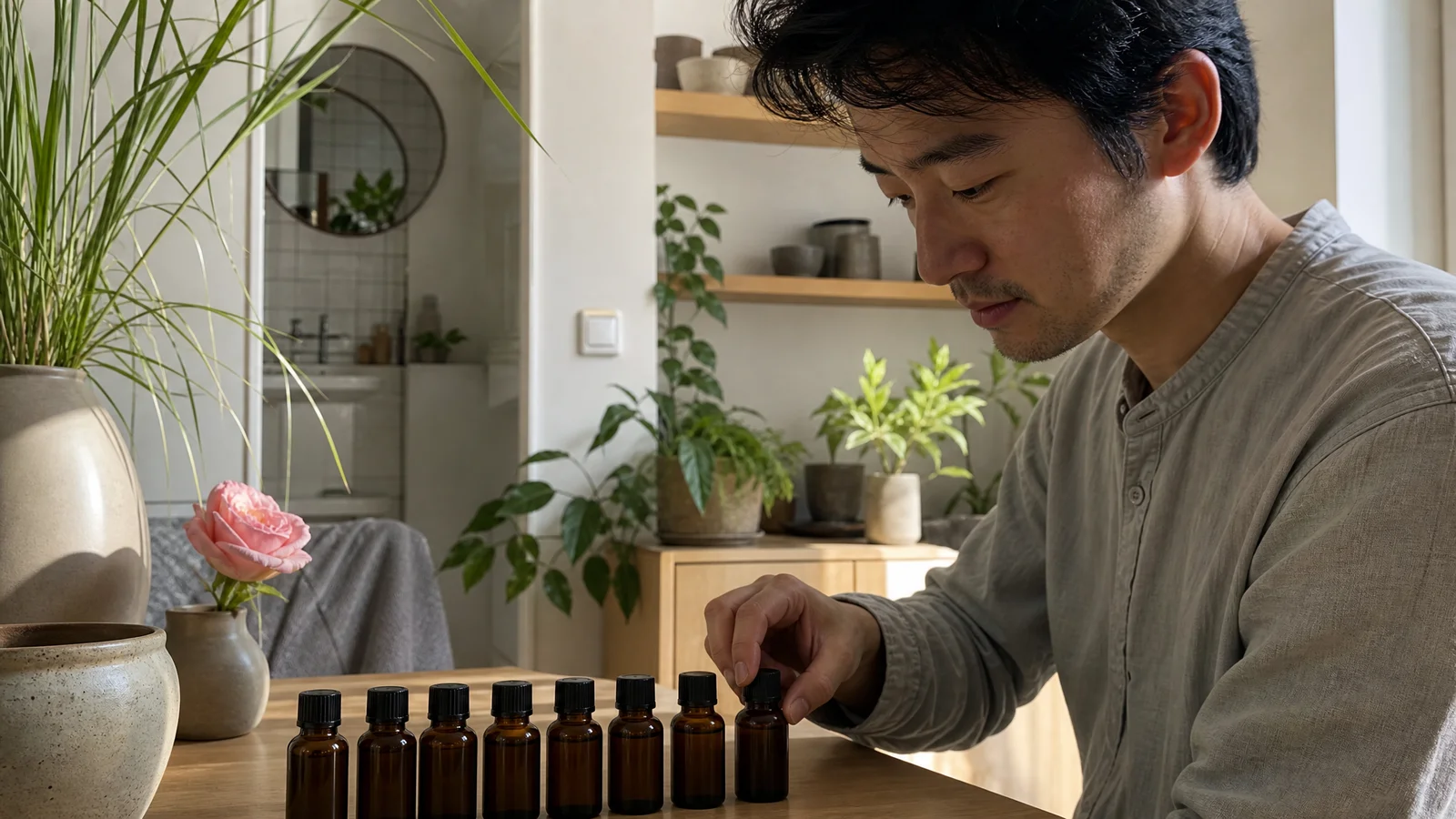
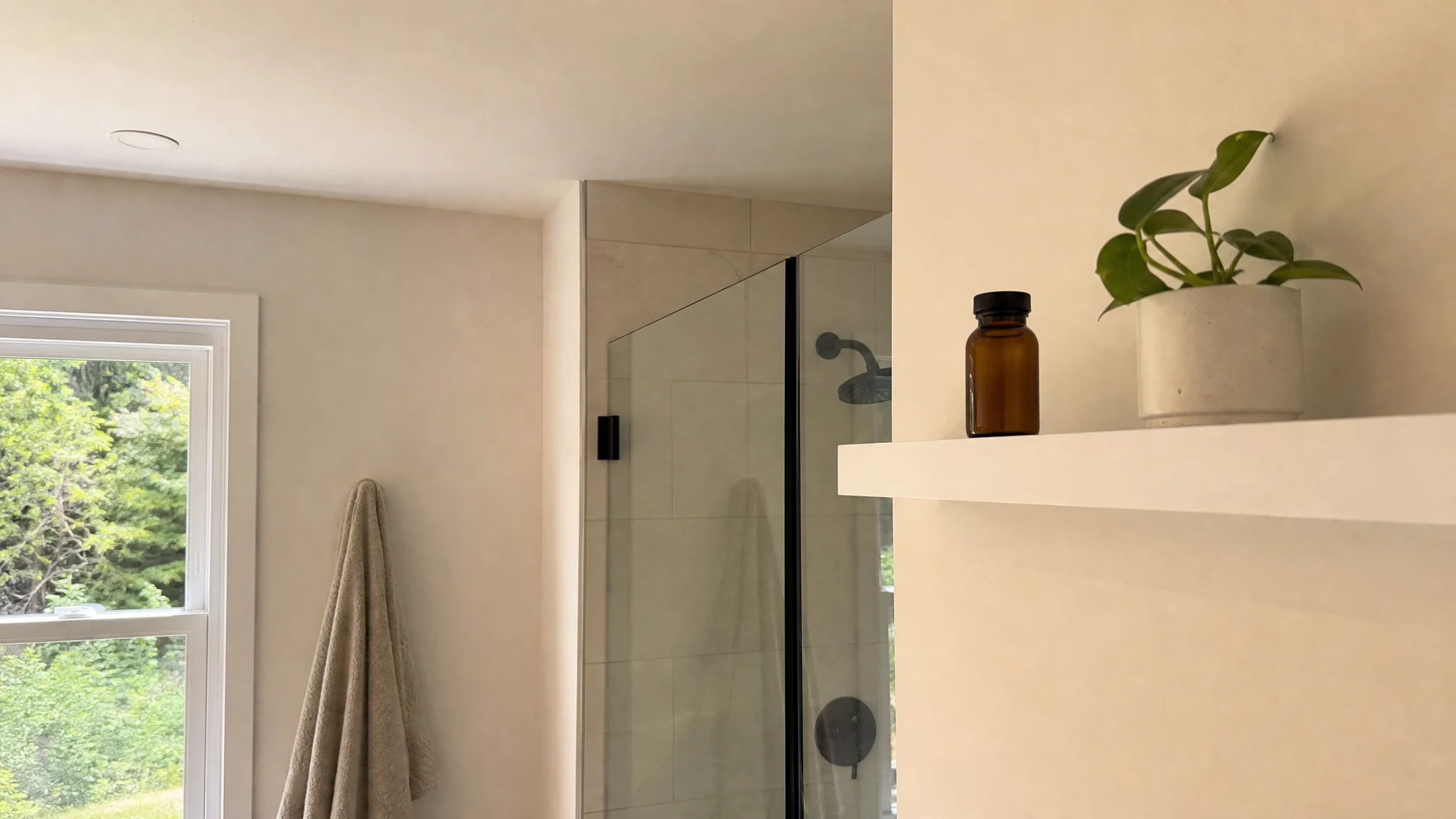
The best spot is the dullest one: a lidded box in a cupboard, away from the stove and the sunny windowsill. Stand the bottle upright and wipe the neck before you cap it, so the cap seals cleanly and nothing sticky builds up. Keep the box where you will see it, so the bottle does not drift onto a counter by the end of the week.
Travel and gifts
If you carry a small bottle or send one to a friend, treat the trip like storage: tightly capped, wrapped in something soft, and never left in a parked car or a sunny bag. A warm glove compartment is about the worst place a bottle could spend an afternoon.
Diluted blends run on two clocks
Once palmarosa is mixed into a carrier, the blend runs on two clocks: the geraniol one above and the carrier's own. We do not sell carrier oils, and your choice changes how long a blend lasts, as our carrier oil comparison explains. Our suggestion is to make small, dated batches rather than one large one you finish over a year. The dilution chart helps with the arithmetic for small amounts.
Retiring a bottle from skin duty
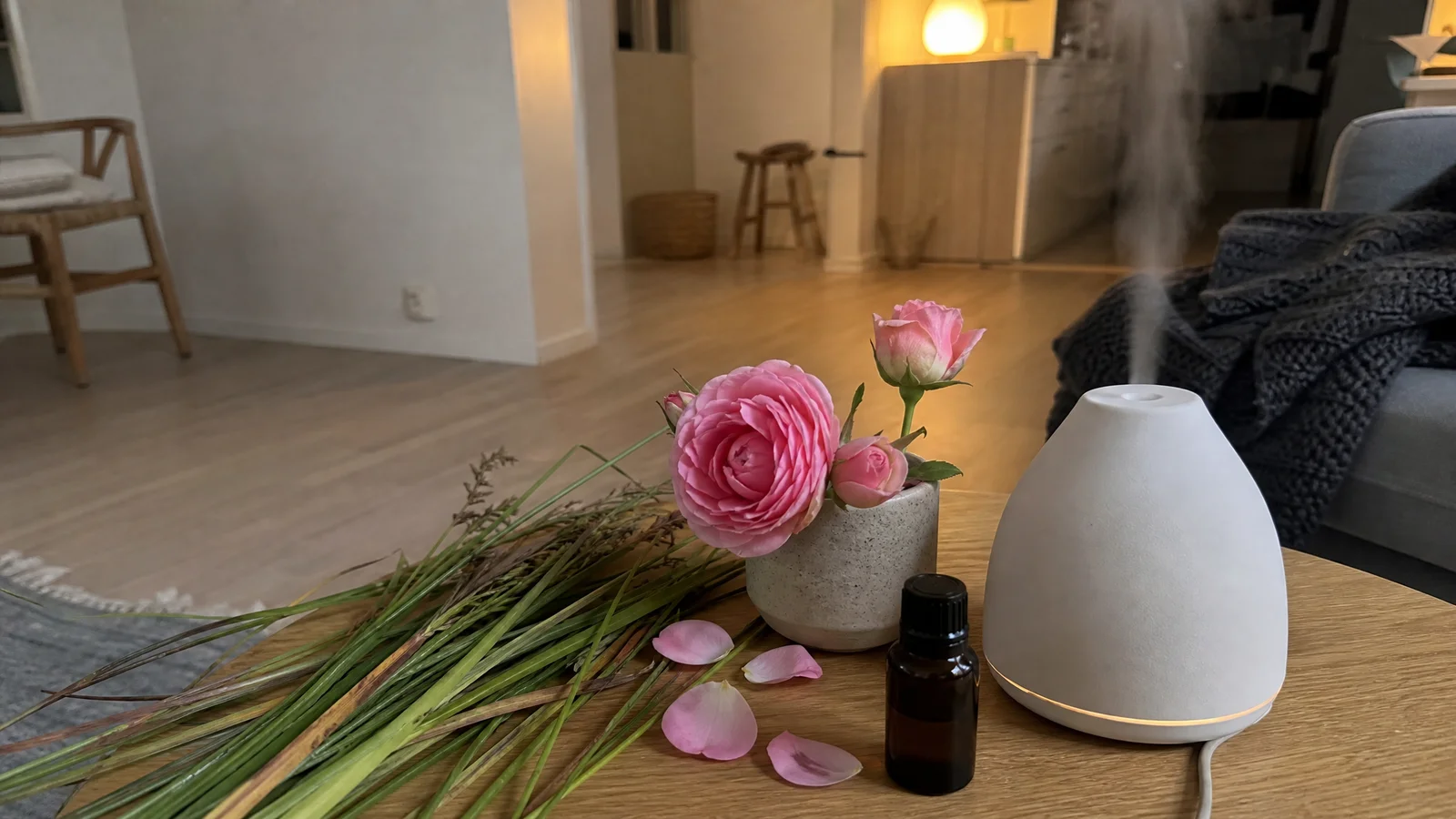
Here is our position, reasoned from the oxidation research: a bottle that has been open a long time, opened often or stored warm should stop going into leave-on products for your face. It still has plenty of life as a room scent, where skin exposure is minimal. IFRA's guidance places candles in category 12 because it expects negligible skin contact (Guidance for the Use of IFRA Standards), and the same logic points an older bottle toward the diffuser or a simmer pot. A bottle that still smells lovely is not proof it is gentle on skin, because we found no source linking scent to oxidation level.
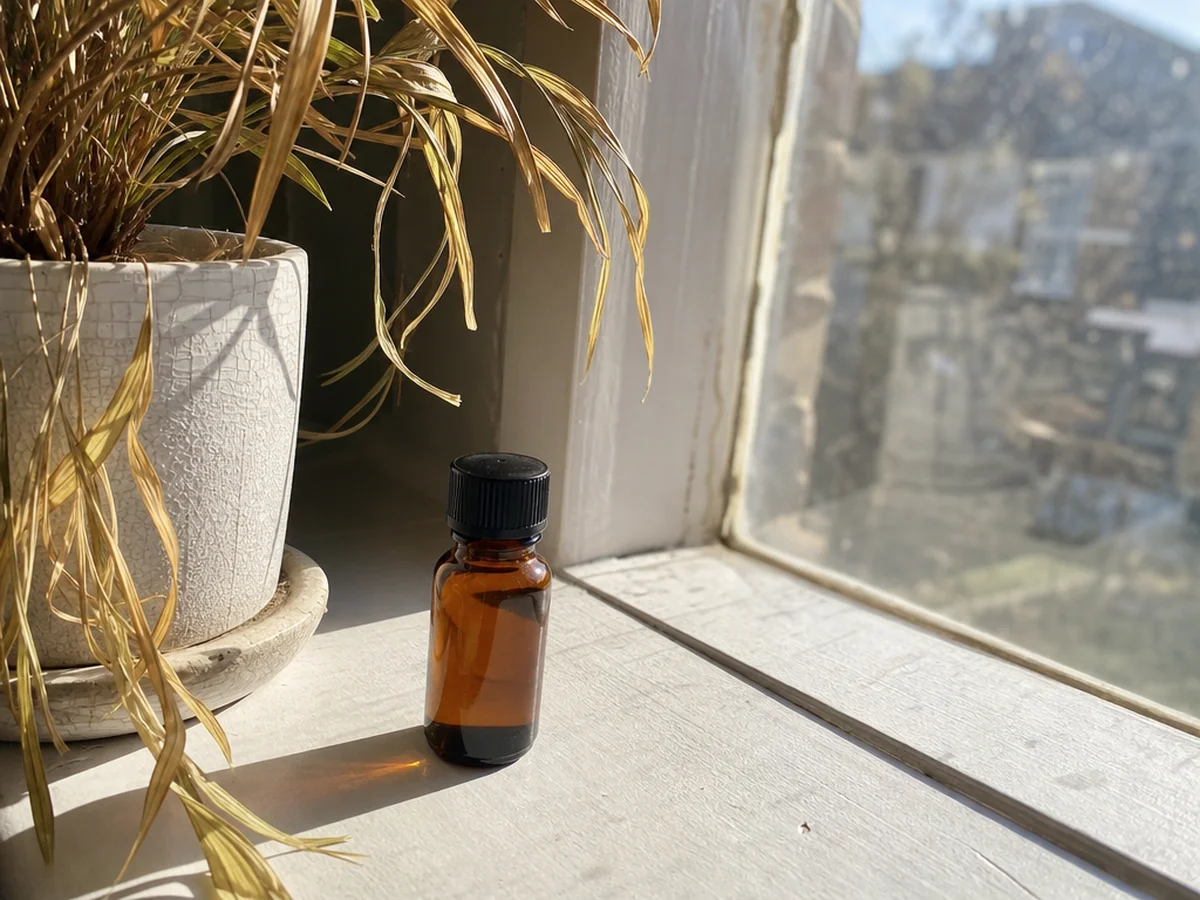
Whatever its age, a new bottle deserves a fresh patch test before you rely on it; our patch testing article walks through how. Less air, less heat, less light and a date on the label: that is the whole routine.
Palmarosa Essential Oil
Palmarosa Essential Oil from our own shop, in sizes from 0.5 oz to bulk.
From $10.99
Shop Now →Sources & Further Reading
- IFRA. Annex on contributions from other sources to the IFRA Standards, 51st Amendment. ifra-51st-amendment-annex.xlsx
- IFRA. Guidance for the Use of IFRA Standards, 51st Amendment, 2023. ifra-51st-amendment-guidance.pdf
- Hagvall L et al., 2007. Fragrance compound geraniol forms contact allergens on air exposure. Identification and quantification of oxidation products and effect on skin sensitization. Chem Res Toxicol 20(5):807-814. Europe PMC, PMID 17428070
- Tisserand Institute. How to Use Essential Oils Safely. tisserandinstitute.org