What Blends With Palmarosa Oil? Six Partners to Try
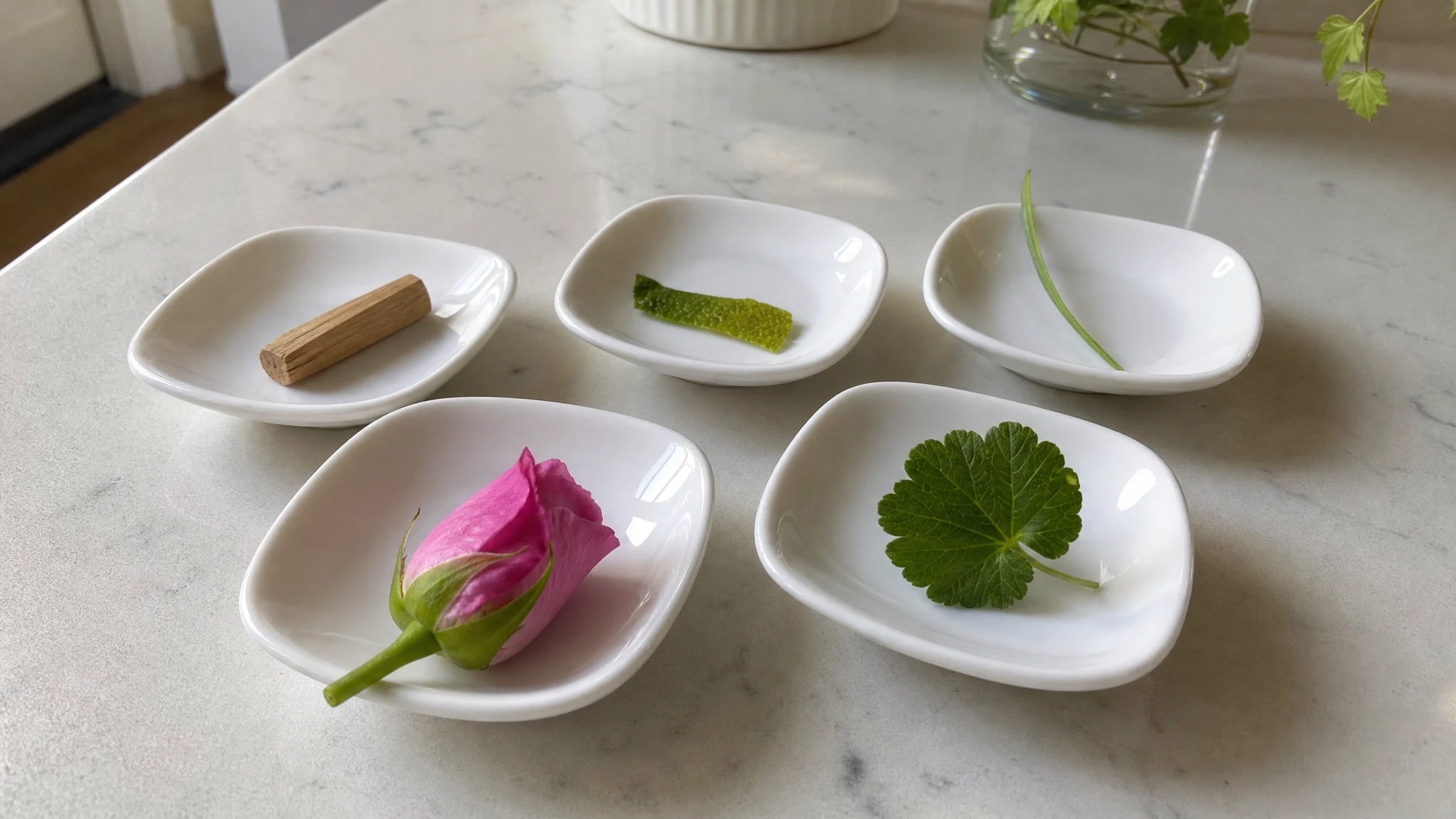
Palmarosa has a gift for making other oils smell more like roses, and a habit of taking over the blend if you let it. Most pairing lists skip that second part. Here is how we think about building around it, starting with the six partners we suggest: geranium, bergamot, ylang ylang, sandalwood, lavender and patchouli.
Palmarosa Essential Oil
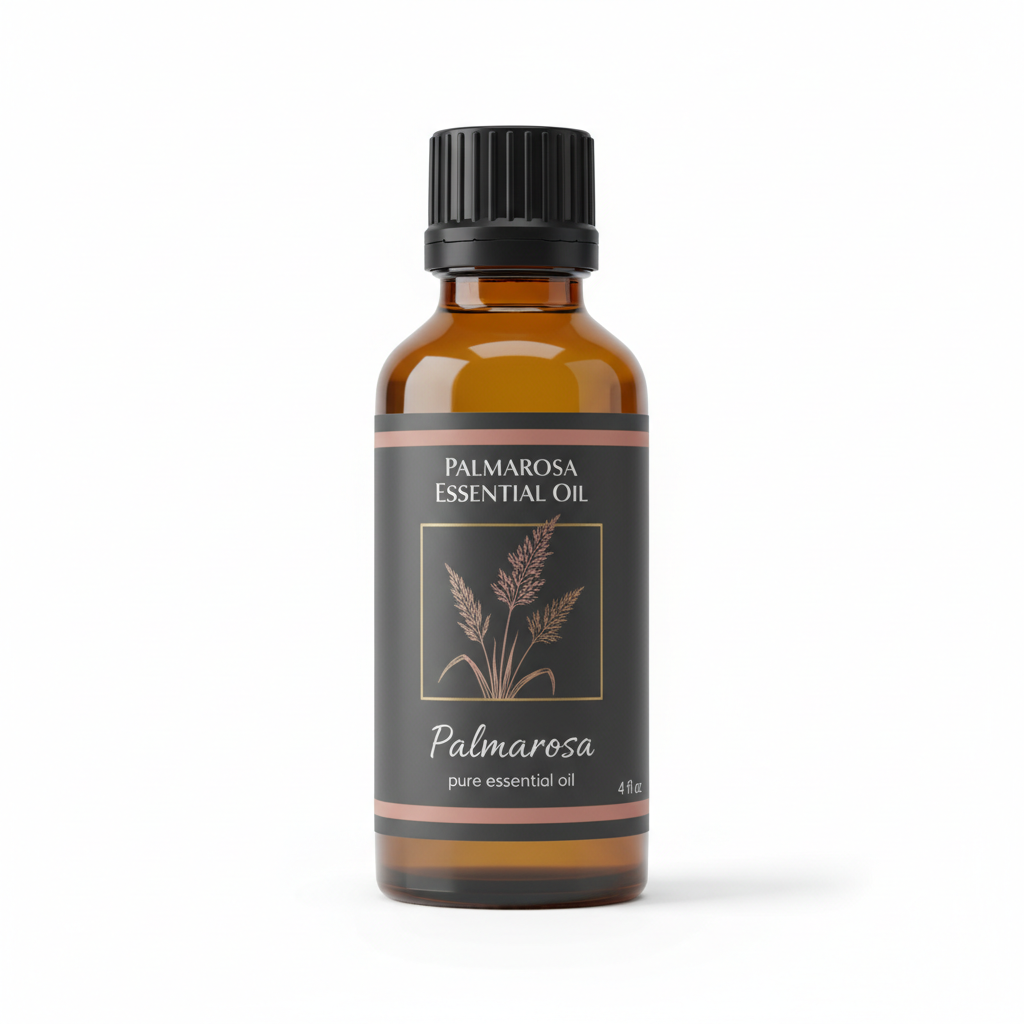
Our own Palmarosa Essential Oil, in sizes from 0.5 oz to bulk.
From $10.99
Shop Now →Start with the rose, then decide how much you want
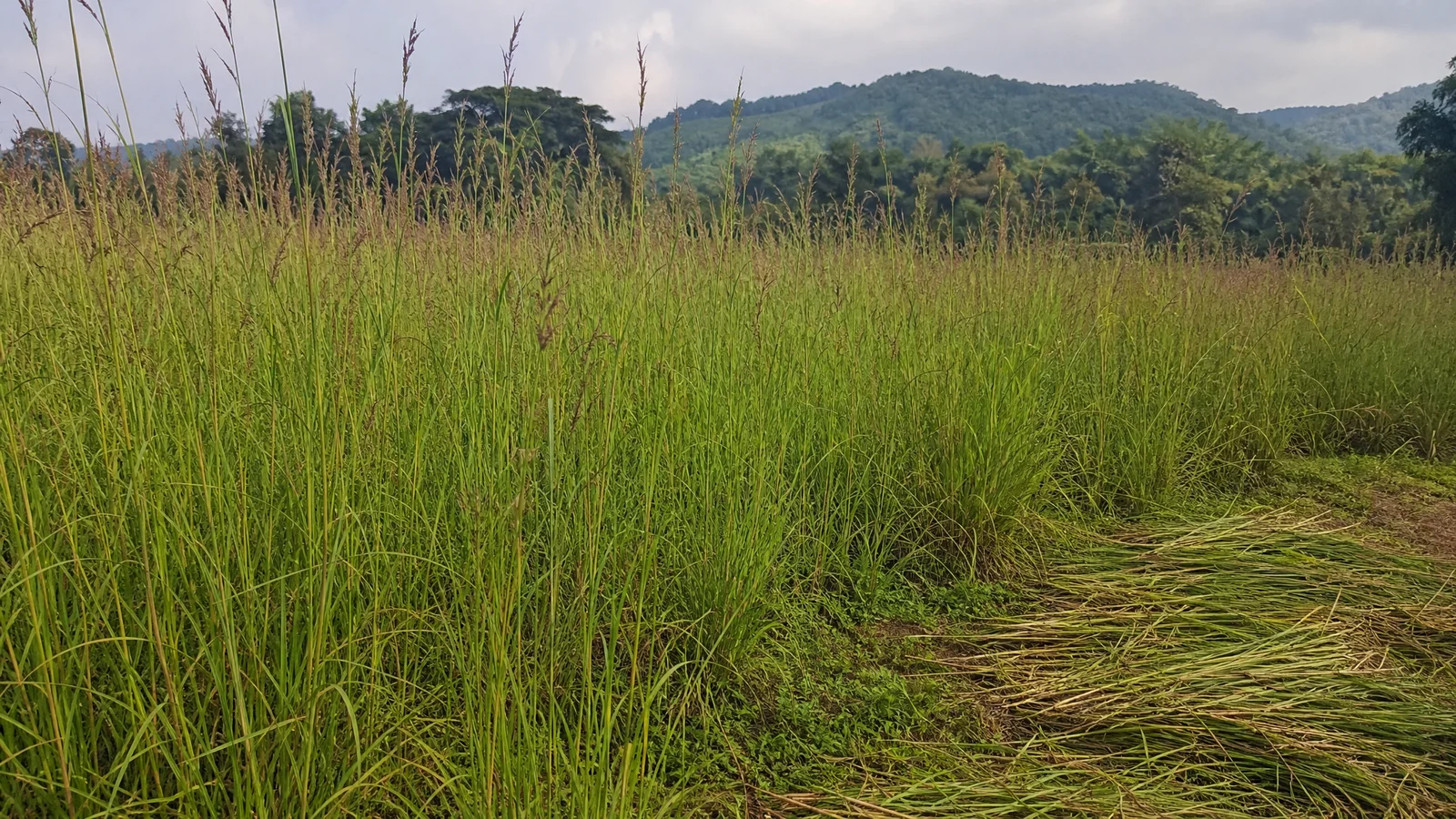
Palmarosa is sweet, rosy and gently green, a middle note with a soft lemony hint. That clear personality is what makes it useful, and it is also why a heavy hand dominates a blend. Think of it as the lead voice that does best with a small supporting cast. A few drops will carry a surprising distance in a mix.
The plant reference PROSEA notes that palmarosa oil blends well with most soap perfume compounds and makes an excellent base with geranium oil and oakmoss absolute (PROSEA, Cymbopogon martini). So geranium is the classic partner, and it is first on our list for a reason. The two share a rosy character, so geranium reinforces palmarosa instead of contrasting with it. If you want the rose to read louder and rounder, that is your pair. Our palmarosa and geranium comparison shows how the two differ.
Pick a role for each partner
A useful way to choose is to ask what you want each oil to do in the mix.
- To deepen the rose: geranium, and ylang ylang if you like a heavier floral.
- To lift it: bergamot, which brings a bright citrus edge next to palmarosa's soft lemony note.
- To ground it: sandalwood and patchouli, the woody and earthy end of our list.
- To soften it: lavender, which sits comfortably beside the green side of palmarosa.
Those roles are a starting frame for your nose, not a promise about how any particular bottle will smell. The simplest way to find your balance is to put a drop of each candidate on its own blotter, then a drop of a two-oil mix, and compare after a few minutes. Begin with more of the partner than you expect to need, since palmarosa is easy to add and hard to take out.
Test on a blotter first
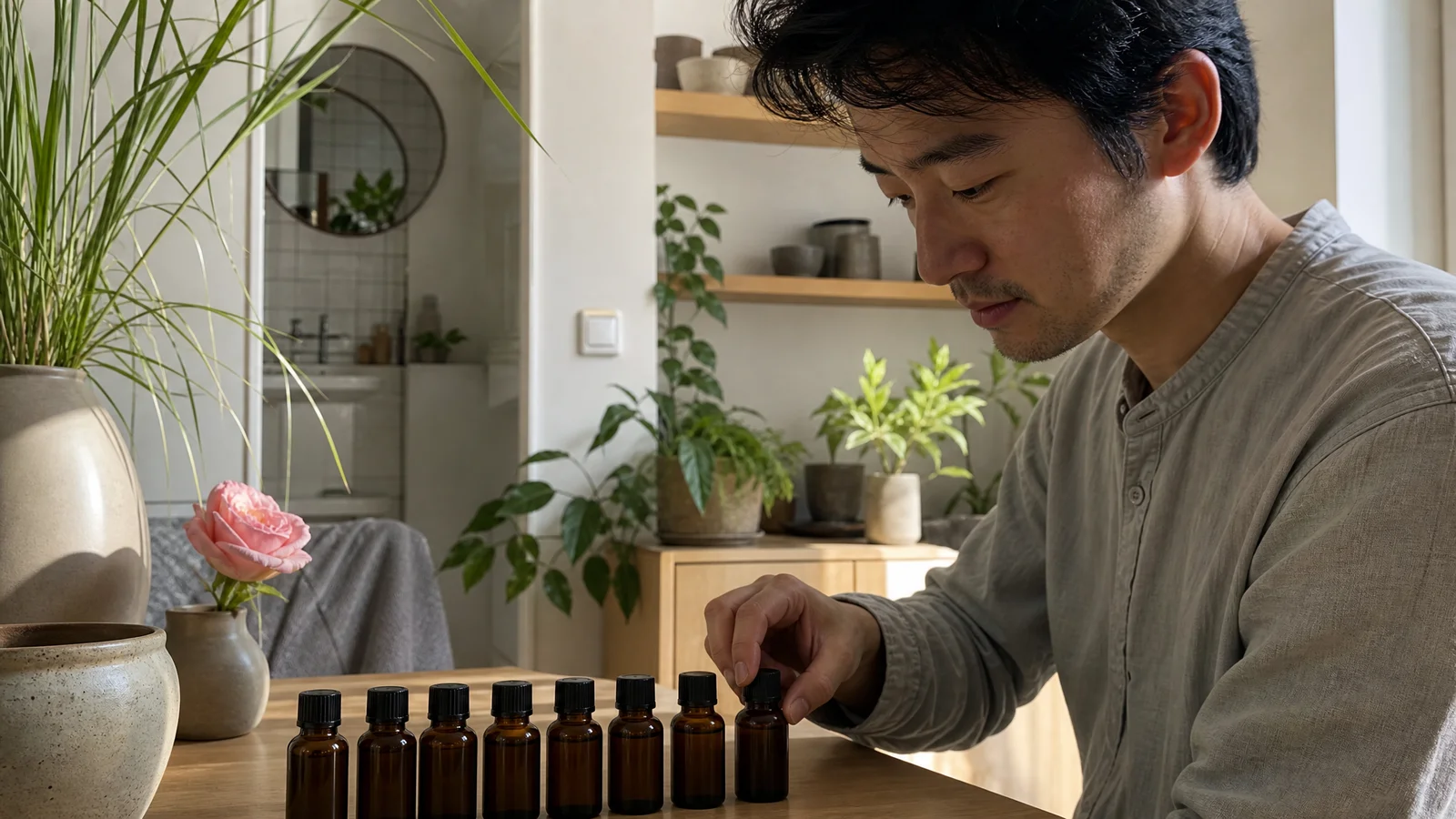
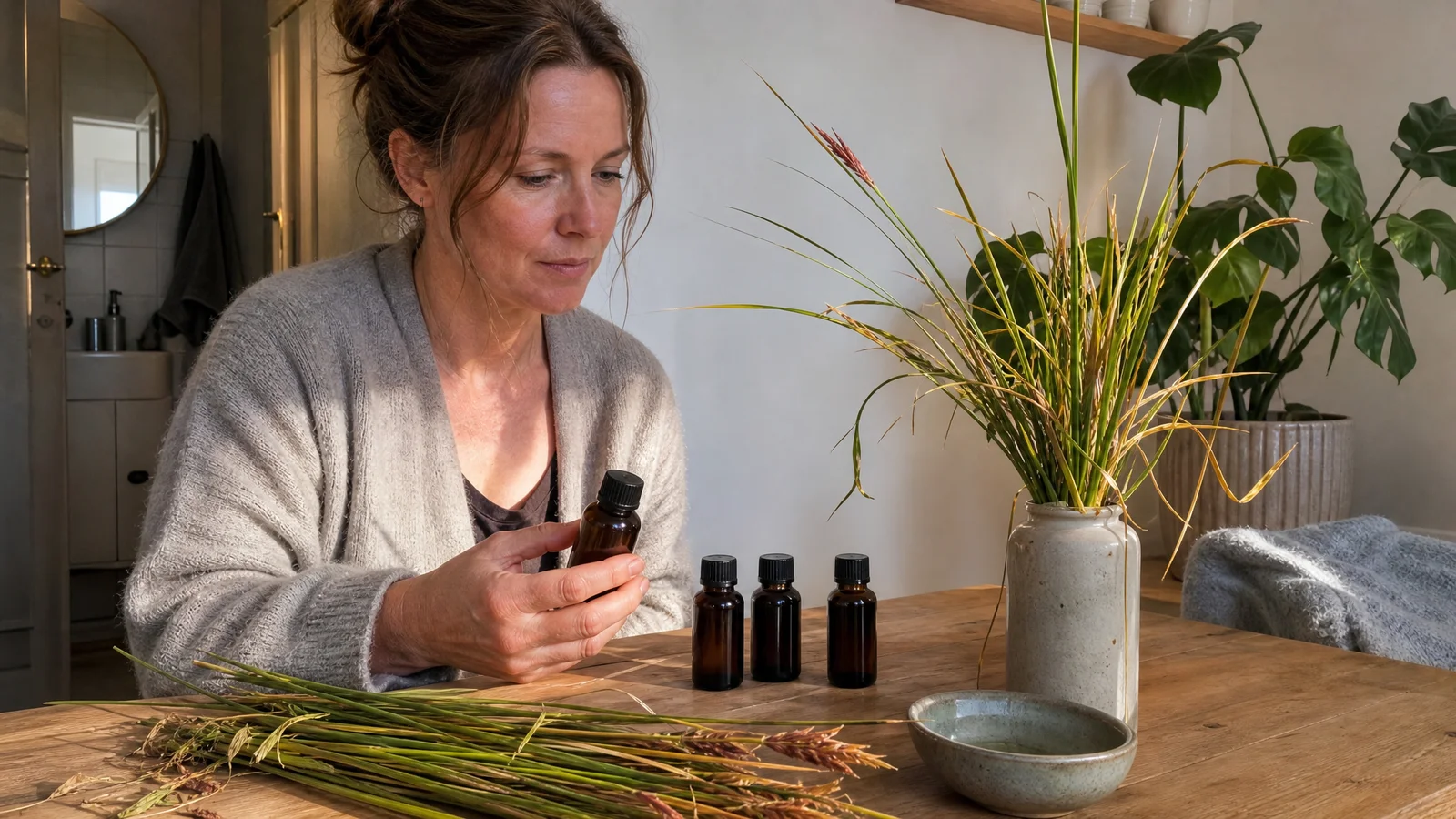
The nicest part of blending is the sniff test. Cut a few strips of paper, label each in pencil, and try one partner at a time with palmarosa. Wave the strip and come back to it after a few minutes and again after an hour. You'll notice how a blend changes: the bright top fades, the rosy heart comes forward, and the base oils tuck in underneath.
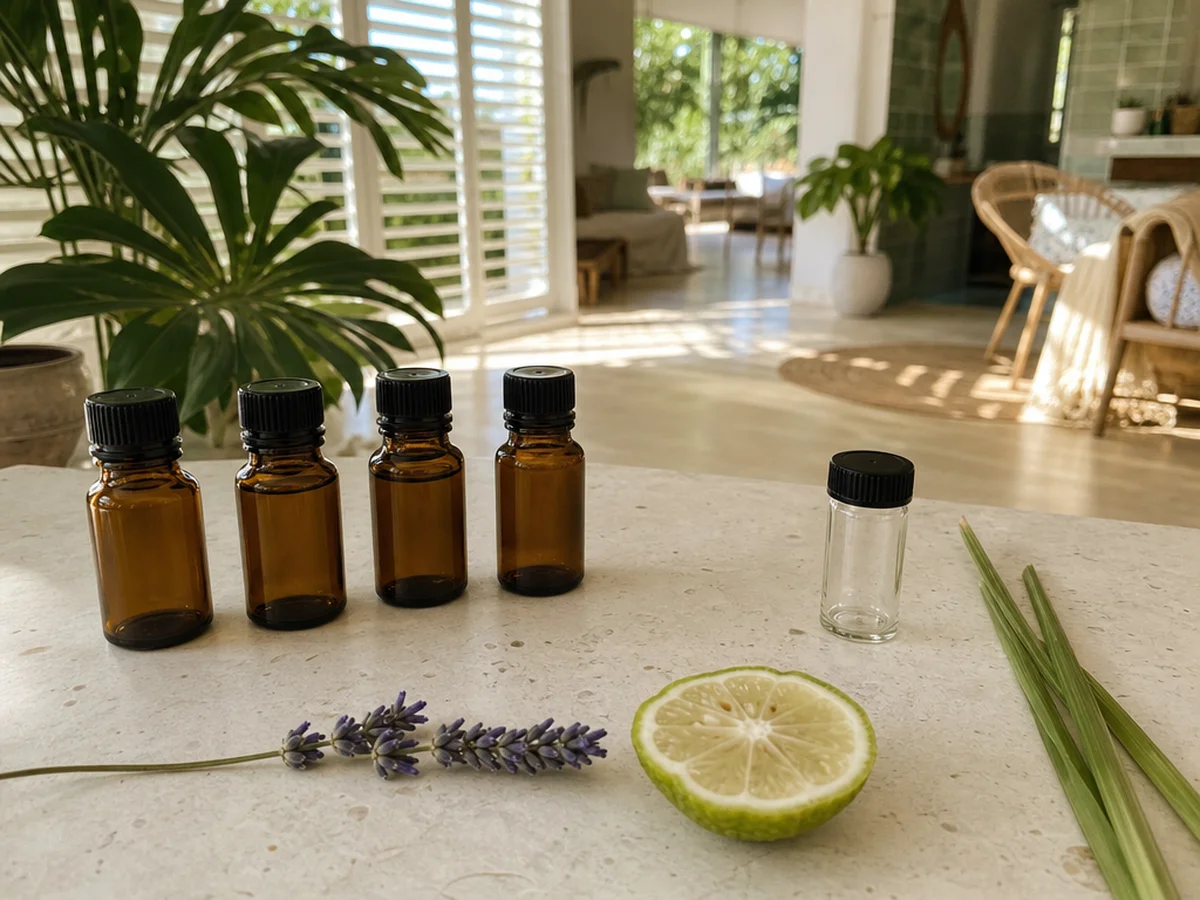
Write down what you like. A notebook of simple ratios, such as two parts palmarosa to one part geranium, is one of the most useful things a home blender can keep.
The geraniol sum
If you are blending for skin, there is one piece of arithmetic worth doing, and it is easier than it sounds. Palmarosa is made mostly of geraniol, a fragrance ingredient with its own industry limit. IFRA's annex lists typical geraniol at 82.4% for palmarosa oil, 17.7% for geranium, 0.48% for lavender and 0.04% for expressed bergamot (IFRA, Annex on contributions from other sources to the IFRA Standards). IFRA's geraniol standard caps the finished product at 0.78% for facial moisturisers and creams, and 1.2% for body creams, oils and lotions (IFRA, Geraniol standard, 51st Amendment).
The sum is each oil's percentage in the finished product times its geraniol share, added together. Here it is for three facial oil blends, as arithmetic using those typical figures (we place a facial oil in the 0.78% category by inference):
| Blend (percent of finished oil) | Geraniol total | Against 0.78% |
|---|---|---|
| Palmarosa 0.4, geranium 0.3, lavender 0.3 | about 0.38% | Half the cap |
| Palmarosa 0.6, geranium 0.4 | about 0.57% | Under |
| Palmarosa 0.9, geranium 0.5 | about 0.83% | Over |
The same total amount of essential oil can sit well under the cap or over it, depending on which oils make it up. Swapping some palmarosa for lavender, as in the first row, buys a lot of room. Our own recommendation for skin is to dilute between 0.5% and 2% in a carrier and patch test first, and we suggest starting at the lower end, especially for a blend with geranium in it, because typical figures are only typical. Our dilution chart turns percentages into weights, and a small scale is better than counting drops.
A few pairings to try
- Palmarosa and geranium: a deeper, rounder rose, the classic pairing.
- Palmarosa and bergamot: rosy with a bright, sparkling top.
- Palmarosa and sandalwood: a soft, creamy-woody base under the rose.
- Palmarosa and lavender: a gentle, green-floral mix.
Treat these as places to start, not rules. Your nose is the judge, and the best blend is the one you want to smell again.
Blending away from skin
A room is a different job. IFRA treats candles and automated air fresheners as a category with no geraniol restriction, because skin contact is negligible, so the arithmetic above matters far less for them. The questions there are about burn temperature and ventilation, which our candle article and diffuser article cover. For ready-made formats, see our roll-on blends.
We sell palmarosa only, so the partner oils, the carrier and the scale come from an aromatherapy or soap-making supplier. Pick one partner, keep the palmarosa modest, and let your nose decide the rest. If you blend regularly, larger sizes are listed on our bulk page.
Palmarosa Essential Oil
Palmarosa Essential Oil from our own shop, in sizes from 0.5 oz to bulk.
From $10.99
Shop Now →Sources & Further Reading
- PROSEA. Cymbopogon martini (Roxb.) J.F. Watson
- IFRA. The Annex on contributions from other sources to the IFRA Standards, 51st Amendment
- IFRA. Geraniol standard, 51st Amendment