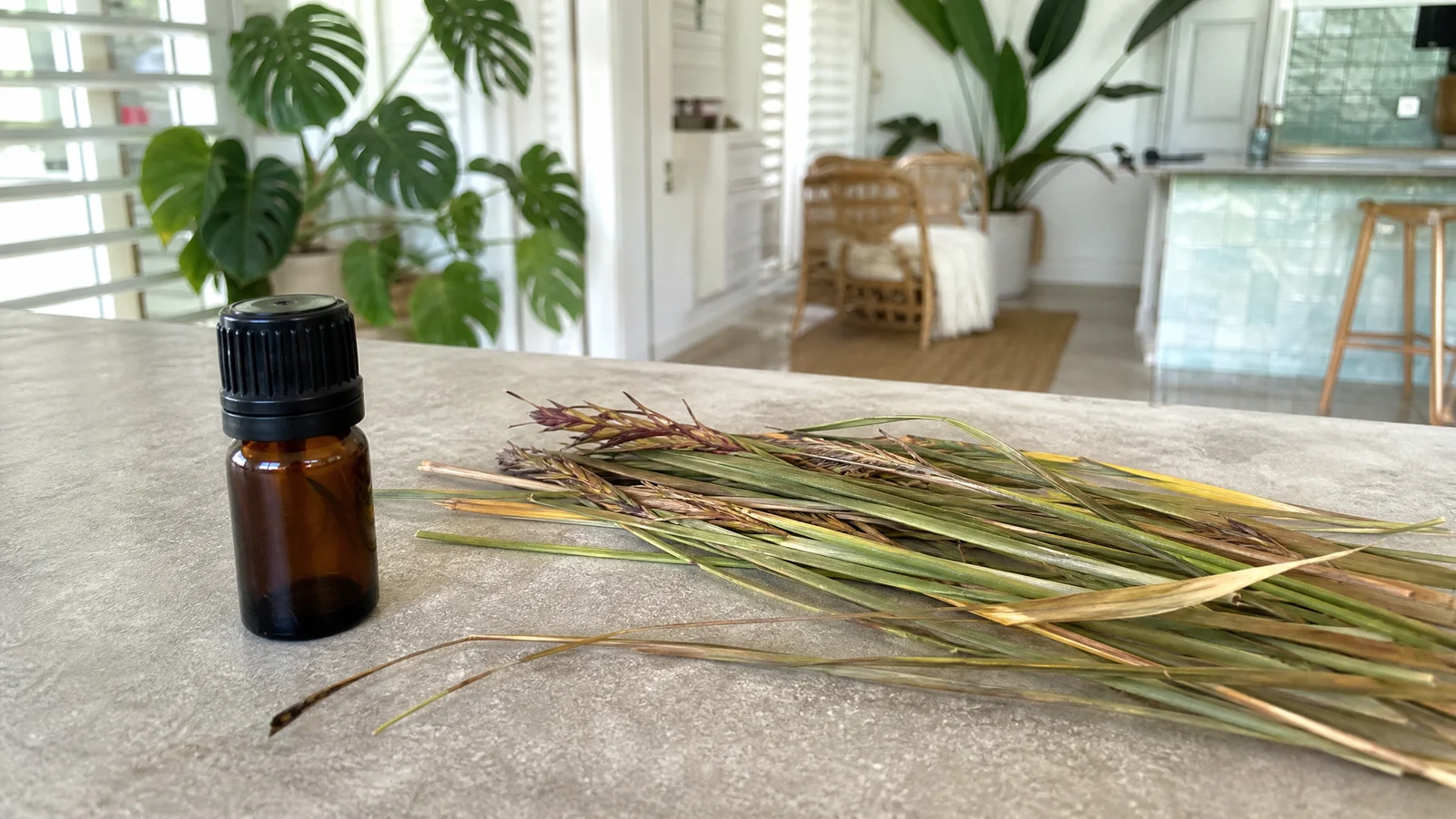
Checking Palmarosa Oil Quality: What to Ask For
You have probably seen the home tests: a drop on paper to see if it leaves a ring, a sniff to judge whether it is "real". They are fun, and they cannot tell you what is in a bottle of palmarosa. Smell, colour and spread can all be matched by a cheaper oil or a blend. What does work is asking for the right documents, knowing what they should show, and reading them alongside the published composition data.
Palmarosa Essential Oil
Our own Palmarosa Essential Oil, in sizes from 0.5 oz to bulk.
From $10.99
Shop Now →Why the nose is only a starting point
Palmarosa smells of rose, and rose is expensive. A 2023 study on rose oil authenticity reports that making 1 kg of rose oil takes 3.5 to 4 tons of flowers, and lists mixing rose with cheaper oils such as palmarosa among the known adulteration routes. Those papers concern rose, not adulterated palmarosa. The takeaway for a palmarosa buyer is narrower: a rosy, geraniol-rich scent is a thing people try to imitate, so a pleasant smell is weak evidence by itself.
That said, a good sniff is still worth doing. We describe our oil as sweet, rosy and gently green with a soft lemony hint, and the Certificate of Analysis we publish records the smell as complying with a "Floral, Grassy, Sweet" requirement for that batch. Think of the nose as the first screen and the paperwork as the second.
Palmarosa is a range, not a number
If you request a gas chromatography report (GC or GC-MS), you need something to compare it against, and the published figures vary. IFRA's table of typical compositions gives palmarosa oil geraniol at 82.4%, farnesol 1% and citral 0.6%. A 2023 Nepalese study of cultivated leaves found geraniol at 76.6%, geranyl acetate at 15.2% and linalool at 2.0%, while root oil from the same plants was 87.9% geraniol and 4.4% geranyl acetate. Which part of the plant went into the still clearly matters.
Then there is a result that looks like another oil entirely. A 2025 paper on wild-growing Cymbopogon martinii in Rajasthan identified 59 compounds, with carveol, mentha-dienols, piperitol and limonene leading and no geraniol among them. The authors say it resembles var. sofia, in contrast to geraniol-dominant var. motia, and IFRA lists sofia separately as gingergrass oil with 0.04% geraniol. The practical point: the Latin name alone does not tell you the oil is geraniol-rich. Our label-reading guide goes through the vocabulary.
What a useful report contains
- The laboratory's name, and its accreditation if that matters to you. A chart with no lab behind it is only a drawing.
- The lot number and test date, matching the lot you will receive.
- Named compounds with percentages, at least geraniol, geranyl acetate and linalool, so you can set them against the ranges above.
- The method, so a second laboratory could repeat it.
Even a good report has limits. The rose-oil authors say the current ISO norms for genuine rose oil can easily be evaded because they test only major components, and they argue for chiral analysis of minor ones. Reasoning from that, an oil boosted with added geraniol could pass a major-component check. That is an inference from a rose study, not a finding about palmarosa, but it is why we suggest asking who ran the test as well as what it says. A 2021 study that bought 31 neroli, mandarin and bergamot oils online found that more than 45% failed an ISO comparison, and its authors note that simply buying the most expensive oil does not solve it.
What our own certificate shows
The Certificate of Analysis we publish is for one batch. It names the product, the botanical name Cymbopogon martinii, CAS 8014-19-5, leaves as the part used and steam distillation as the method. It reports relative density 0.888 (printed standard 0.880 to 0.894), refractive index 1.473 (1.471 to 1.478) and optical rotation +0.12 degrees (-1.4 to +3), all inside their ranges. The CAS number matches IFRA's palmarosa entry rather than its gingergrass entry, though a printed number is a statement and not an analysis.
Those three constants are good at catching gross errors and less able to prove identity on their own. So if you need a geraniol figure or GC-MS report, ask us in writing through the contact page before you order, and rely on the document you receive for your lot. The same standard is fair to apply to any seller.
When the bottle arrives
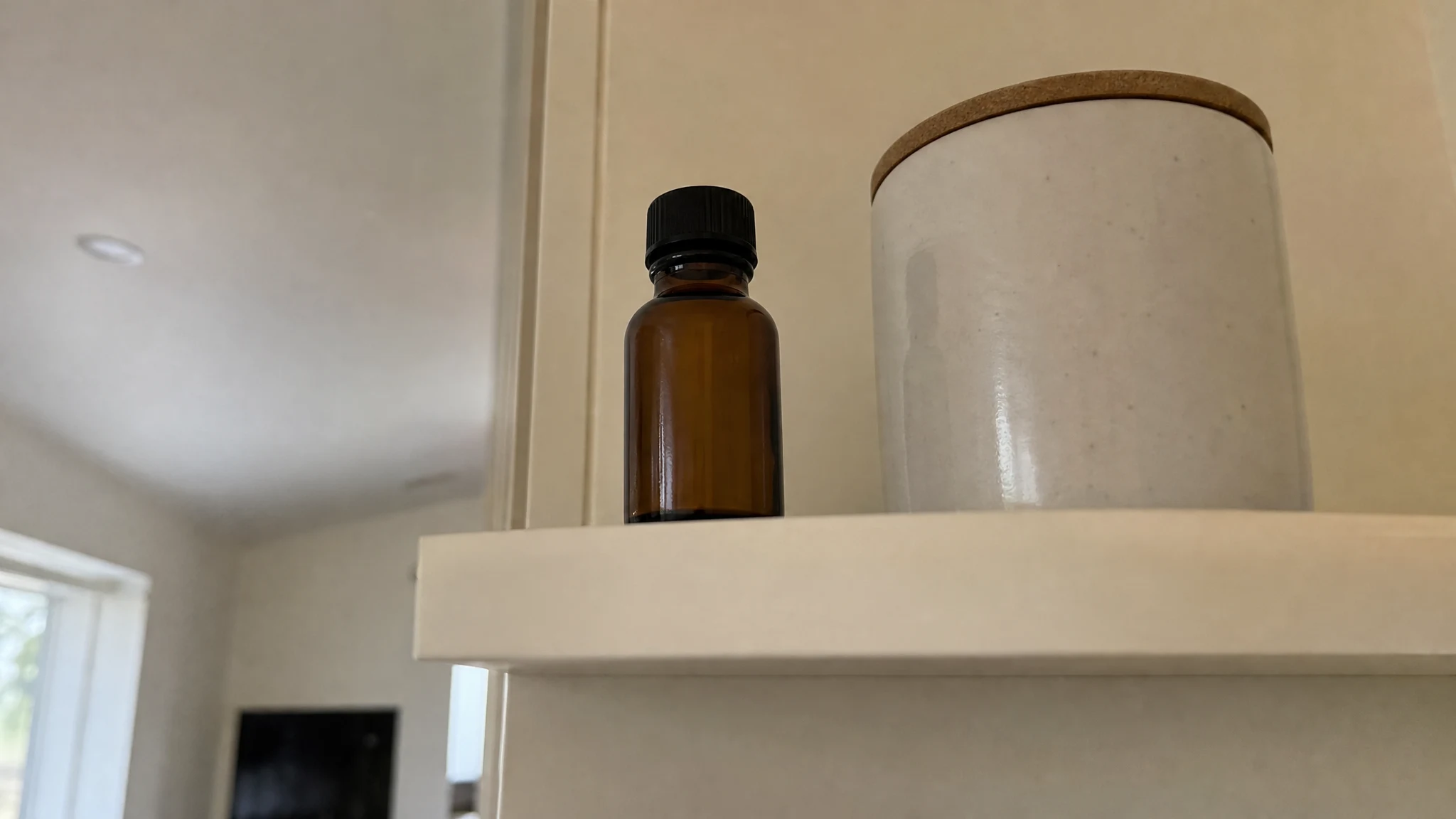
Before you put it away, give the bottle a minute of attention. Check that the label matches the listing and the paperwork, that the cap closes snugly, and that the oil looks like a light yellow liquid that moves almost like water. Then open it, hold it a little way from your nose, and take one slow breath. You are looking for a sweet, rosy, gently green scent with a lemony hint, with nothing sharp or chemical sitting on top. Write the date and the lot on a note and keep it with your documents, because a record made on day one is far more useful than a memory months later.
Free checks worth making
- The label should say Cymbopogon martinii, the part used and palmarosa oil, with no trailing "fragrance" or "blend".
- "Organic" should come with a certifier and a number you can look up; our organic label guide explains why.
- Listings that promise sleep or mood effects are describing a drug under the FDA's intended-use test, which is worth a question to the seller.
- Patch test a diluted drop before wider use, and read our patch testing guide, because geraniol is a recognised fragrance allergen whatever the grade of the oil.
A word like "premium" is not a number, but a lab name, a lot and a composition are. Ask for those three and you will learn more than any drop of oil on paper can tell you.
Palmarosa Essential Oil
Palmarosa Essential Oil from our own shop, in sizes from 0.5 oz to bulk.
From $10.99
Shop Now →Sources & Further Reading
- Raeber J, Favrod S, Steuer C, 2023. Determination of Major, Minor and Chiral Components as Quality and Authenticity Markers of Rosa damascena Oil by GC-FID. Plants
- IFRA, 2023. Annex on contributions from other sources to the IFRA Standards (51st Amendment)
- Dangol S et al., 2023. Essential Oil Composition Analysis of Cymbopogon Species from Eastern Nepal by GC-MS and Chiral GC-MS, and Antimicrobial Activity of Some Major Compounds. Molecules
- Sonigra P, Meena M, 2025. Influence of growth stage on the chemical composition, antimicrobial, and antioxidant potential of Cymbopogon martinii (Roxb.) Wats. essential oil. Frontiers in Plant Science
- Pierson M, Fernandez X, Antoniotti S, 2021. Type and magnitude of non-compliance and adulteration in neroli, mandarin and bergamot essential oils purchased on-line: potential consumer vulnerability. Scientific Reports
- US FDA, Is It a Cosmetic, a Drug, or Both? (Or Is It Soap?)