Palmarosa Aroma: A Rosy, Grassy Scent Explained
Open a bottle of palmarosa and the first thing you notice is a green, rosy sweetness with a faint lemony edge, a bit like a rose garden after the grass has been cut. Most people have an opinion about it within a second, and that speed is the interesting part. Smell reaches us before we have had time to think.
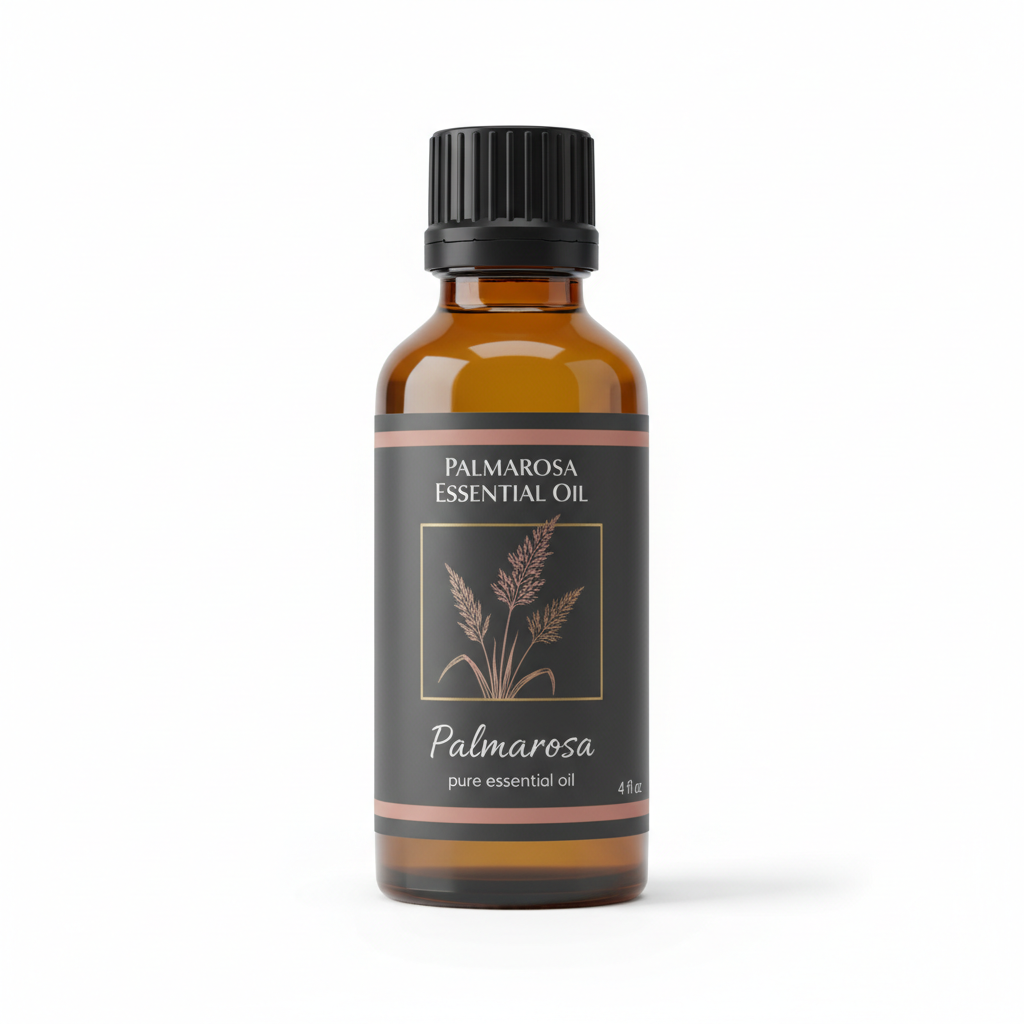
Palmarosa Essential Oil
Our own Palmarosa Essential Oil, in sizes from 0.5 oz to bulk.
From $10.99
Shop Now →Why a scent changes how a room feels
Scent is tied up with memory and association in a way that sight and sound are not. A whiff of something can bring back a kitchen, a garden or a holiday before you can say why. Rachel Herz reviewed the scientific literature on this, analysed 18 studies that met strict criteria, and found credible evidence that odors can affect mood, physiology and behavior. She also concluded that a psychological explanation, built on association, expectation and memory, fits the data better than a pharmacological one (Herz, 2009).
That is a refreshing way to think about palmarosa. We do not need to credit the oil with any special power over the body. A scent you love, tied to a moment you enjoy, can make that moment feel different. The US National Center for Complementary and Integrative Health describes a study in which lemon scent lifted mood while measured stress indicators stayed the same (NCCIH, Aromatherapy). The feeling was real to the people who had it, and it is the feeling that a pleasant scent is good at.
What palmarosa brings to the room
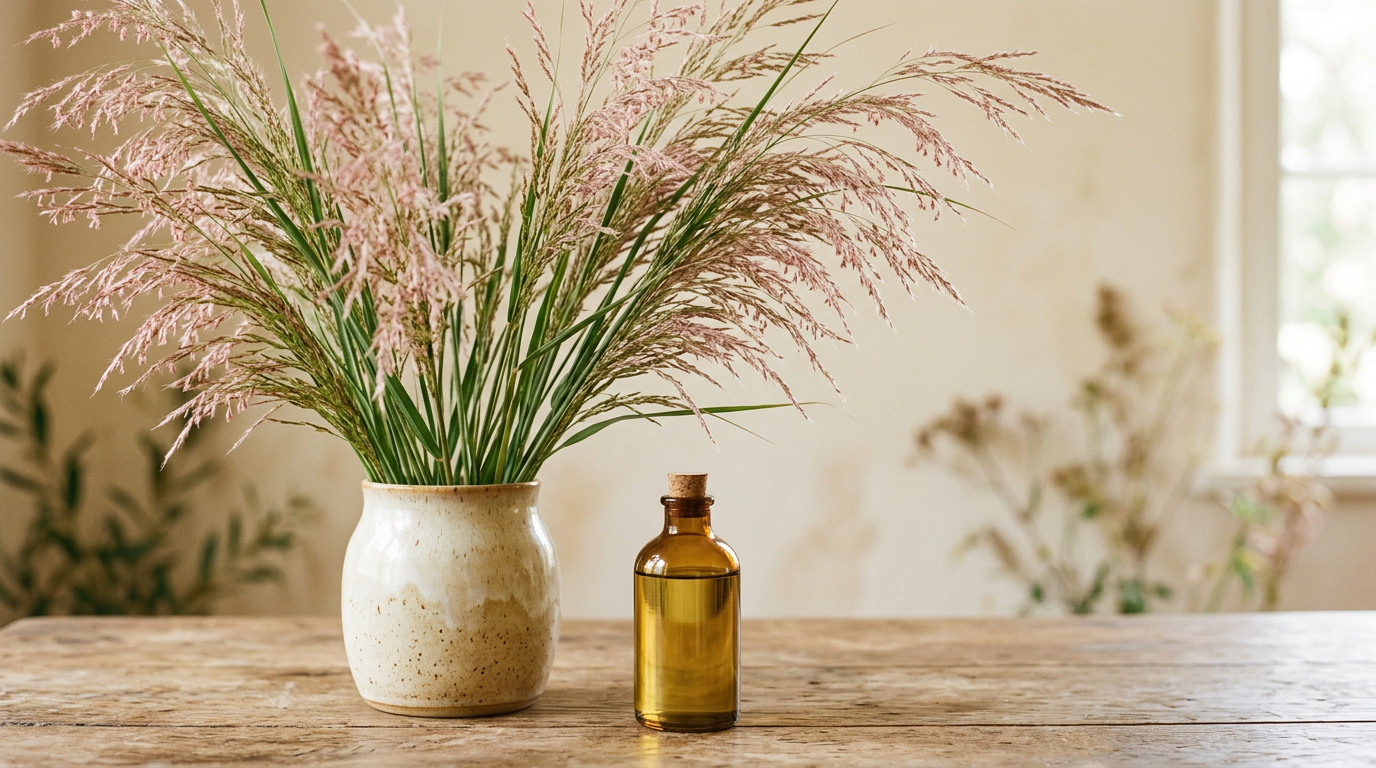
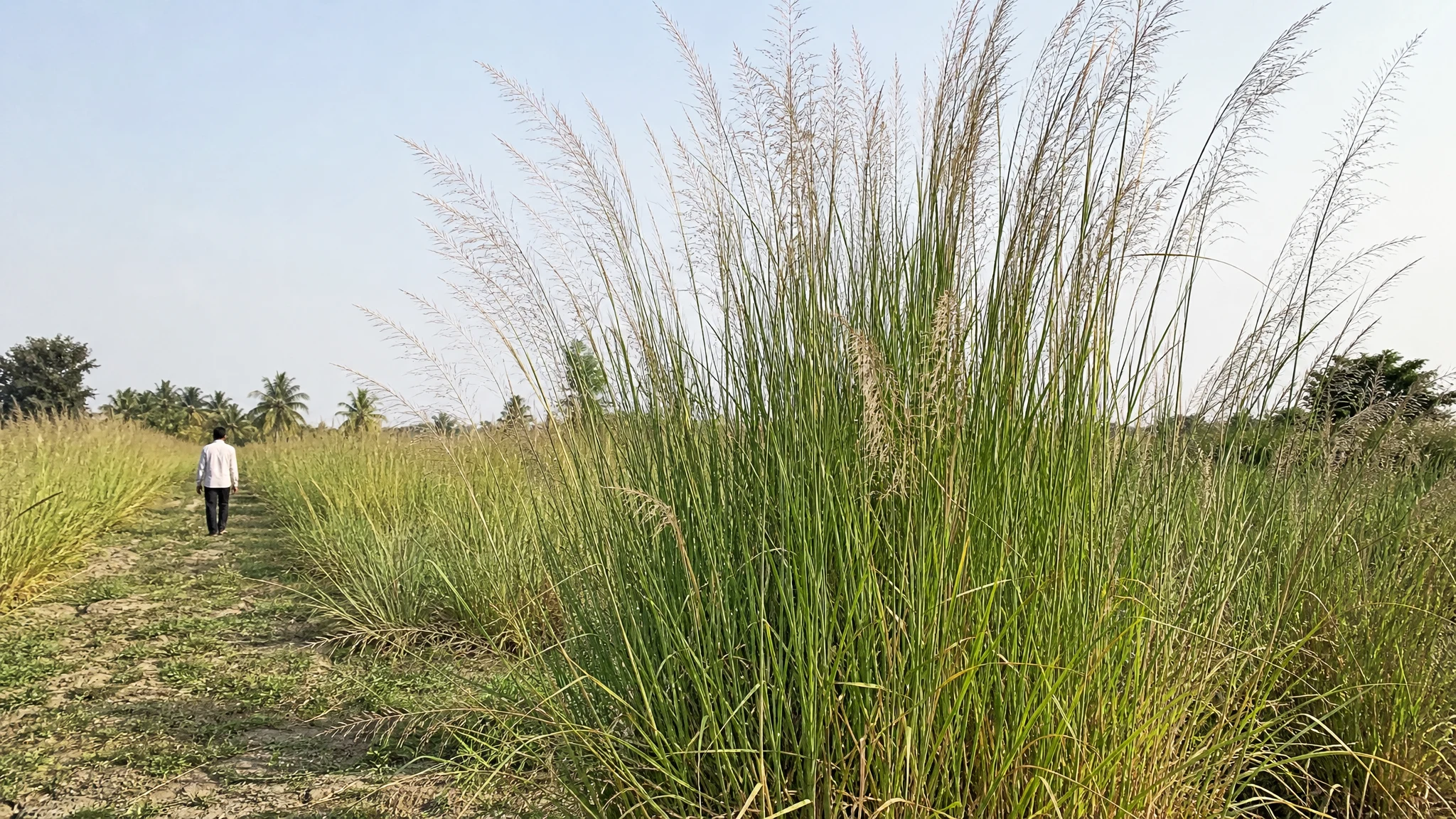
We sell one palmarosa oil, steam-distilled Cymbopogon martinii, and we describe its aroma as sweet, rosy and gently green with a soft lemony hint. It is a middle note, which means it sits in the heart of a blend rather than flashing past at the start or lingering at the end. It is lighter and airier than true rose otto, which is part of its charm: it gives the impression of roses without the heaviness.
That lightness makes it a good partner. We suggest geranium, bergamot, ylang ylang, sandalwood, lavender and patchouli as companions, and our pairing guide goes through what each one adds. If you want to know exactly how it compares with other rosy and grassy oils, our scent description is a good place to start.
Meeting the scent for the first time
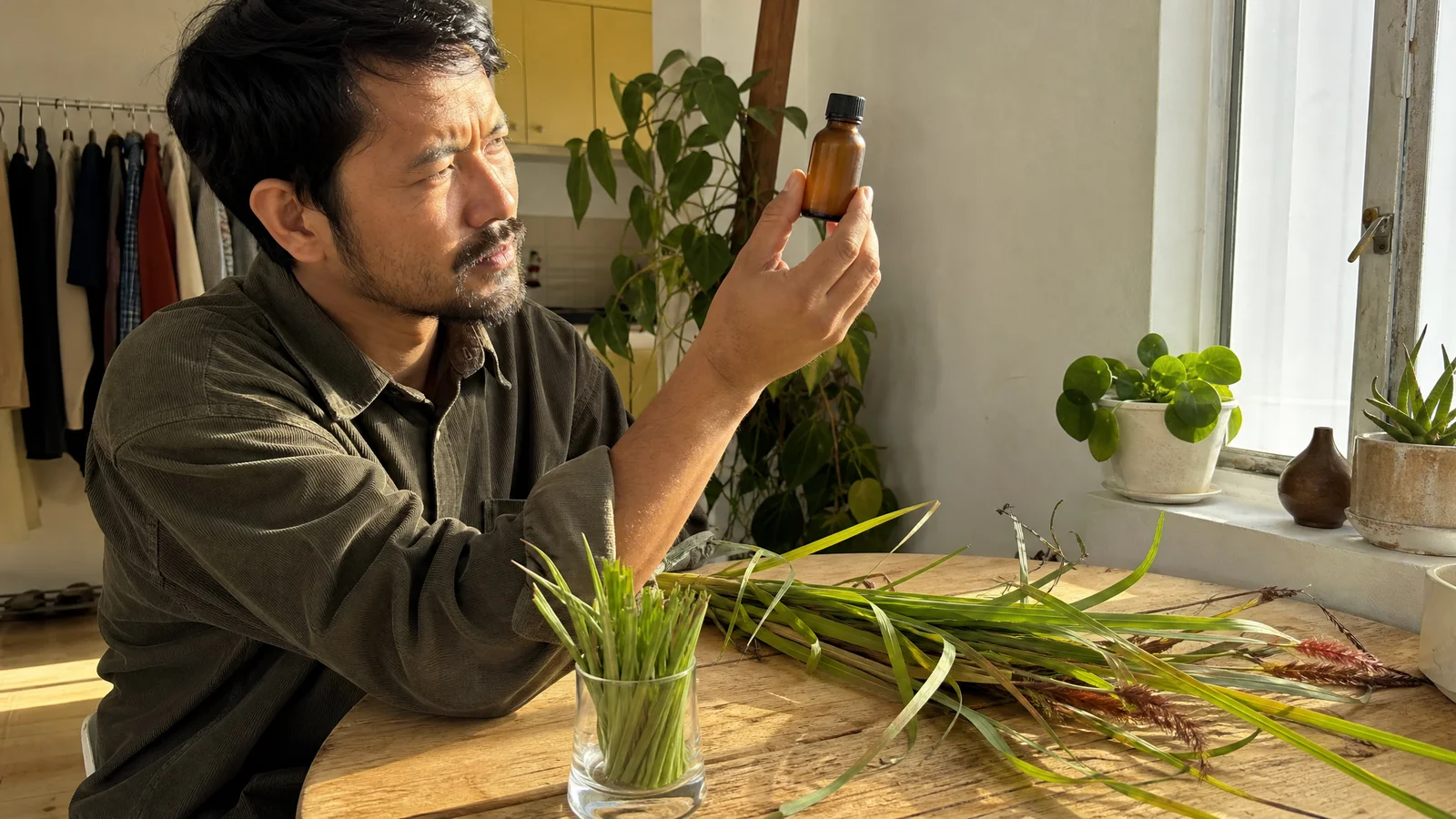
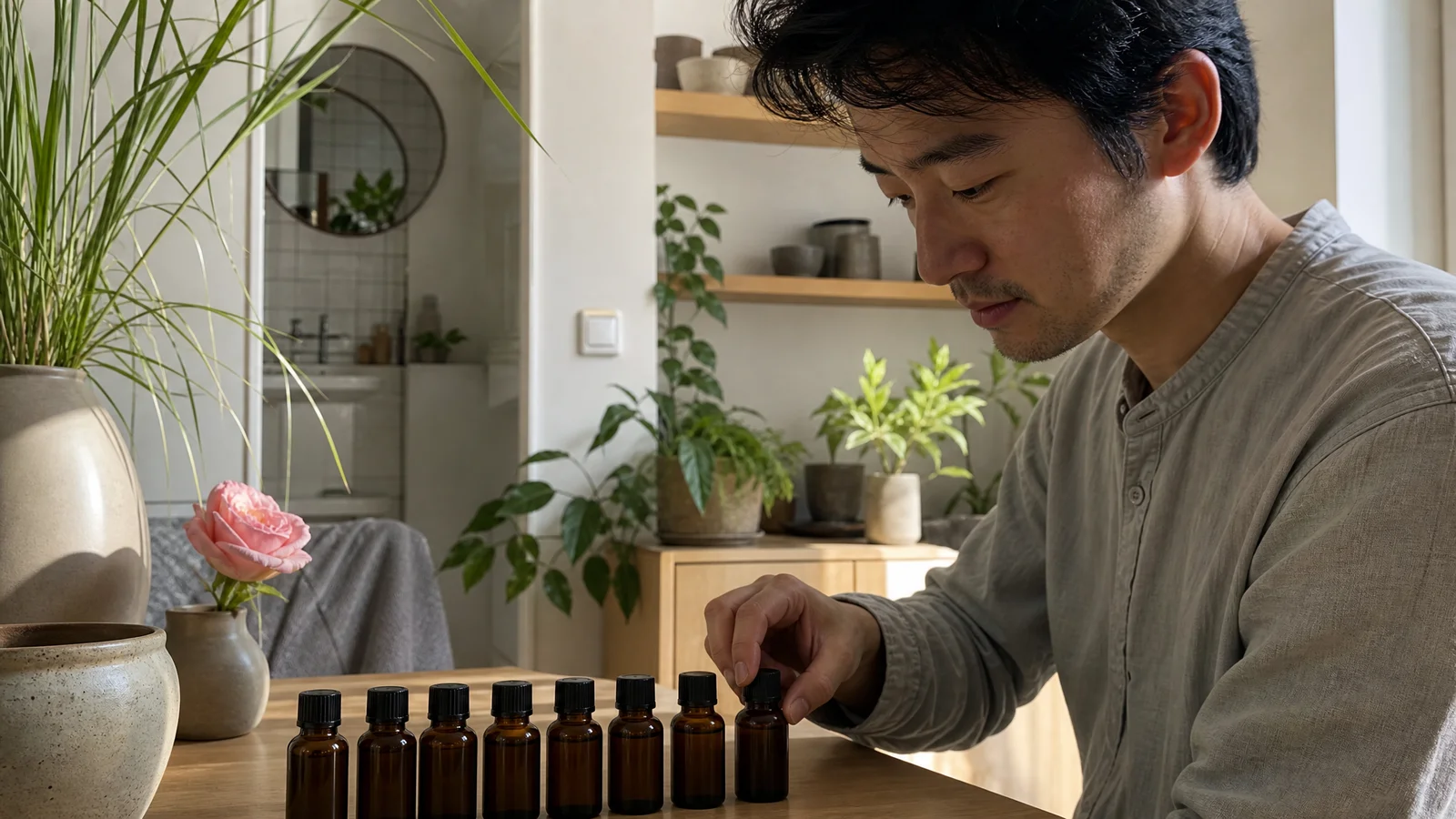
If palmarosa is new to you, give it a proper introduction. Put one drop on a strip of plain paper or a clean cotton pad, wave it gently a hand's width from your nose and breathe in once, not deeply. You will probably catch the green, grassy lift first. Wait a minute and smell again, and the sweeter, rosy part tends to come forward, with that faint lemony edge underneath. Come back after an hour and you will probably find a soft, rounded sweetness that has lost most of its sparkle.
That unfolding is why it is called a middle note, and it is worth noticing before you decide how much to use. People place the same oil differently: one person may hear rose, another a freshly mown lawn, and both are right.
Rooms where it sits well
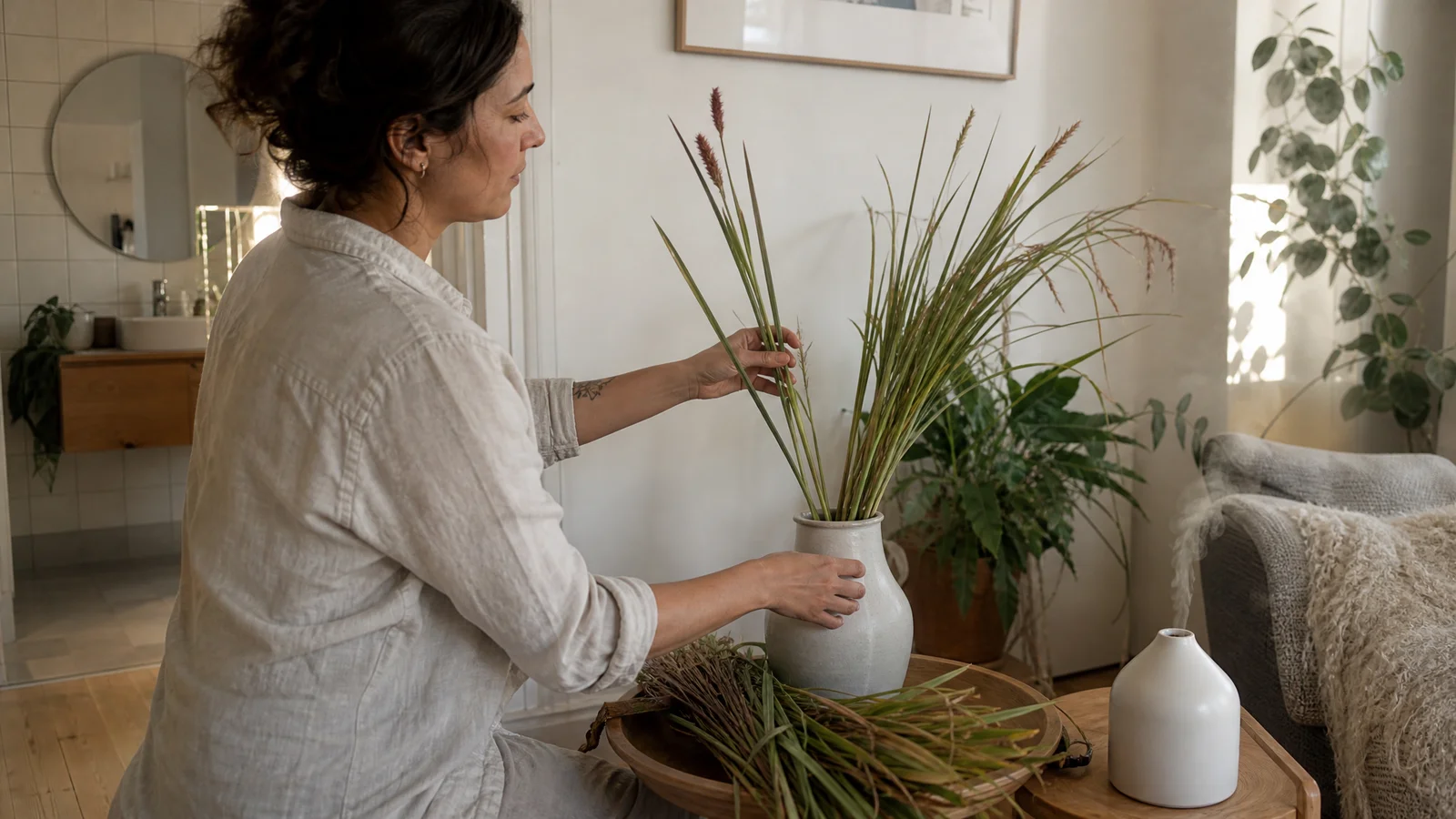
A light, airy rose suits spaces where you do not want something heavy. Think of a hallway that needs a welcoming note, a reading corner, a kitchen after the dishes are done or a desk by a window. Spaces with strong smells of their own, such as a room full of cooking or a freshly painted wall, are harder going, so give the room some fresh air first and let the palmarosa be the last thing you add rather than the first.
Making a scent into a ritual
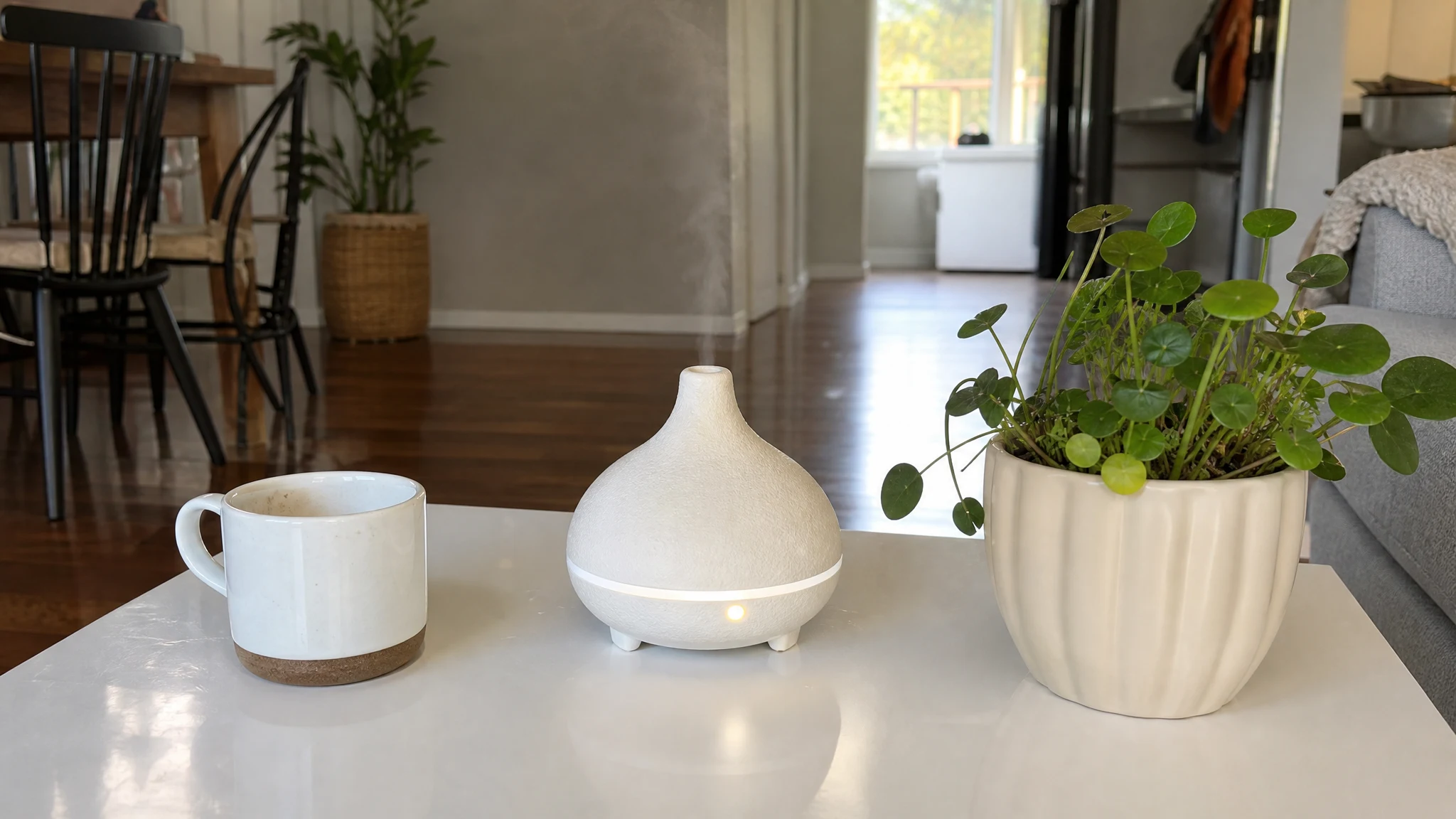
The research above suggests where the real power lies: in the pairing. If you diffuse palmarosa while you read, cook, tidy up or wind down for the evening, the scent becomes part of that moment, and over time the moment carries the scent and the scent carries the moment. A light hand suits a green, airy oil like this one. Our diffuser ideas put that into practice.
A few simple habits keep it pleasant. Ventilate the room, keep the oil and the diffuser out of the reach of children, and keep animals in mind, since they can be more sensitive to scents than we are, and our pets article goes through what to consider. Our oil is for external, fragrance use only and is never to be swallowed.
Where we draw the line
We are a fragrance and skincare-ingredient business. We sell an external cosmetic oil, and we make no claim that it treats or relieves anything. The FDA looks at a product's intended use, including its label and advertising, to decide whether it is a cosmetic or a drug, and gives the example that a fragrance marketed to make you more attractive is a cosmetic while the same fragrance marketed to help you sleep is a drug (FDA). We would rather describe palmarosa honestly, by how it smells and what it does for a room.
If you are looking for help with sleep, worry or low mood, a physician or licensed therapist is the right person to talk to, and a scent can sit alongside that support as one small, pleasant part of your day.
Palmarosa earns its place on the shelf for the simplest reason of all: it smells lovely, and a lovely smell is its own reward.
Palmarosa Essential Oil
Palmarosa Essential Oil from our own shop, in sizes from 0.5 oz to bulk.
From $10.99
Shop Now →