Palmarosa Certificate of Analysis: How to Read One
A certificate of analysis looks like proof, and it is, but only of the things it actually measured. Reading one well is a small skill that pays off every time you buy an essential oil. We will use the certificate we publish as the worked example, since it is the one we know best.
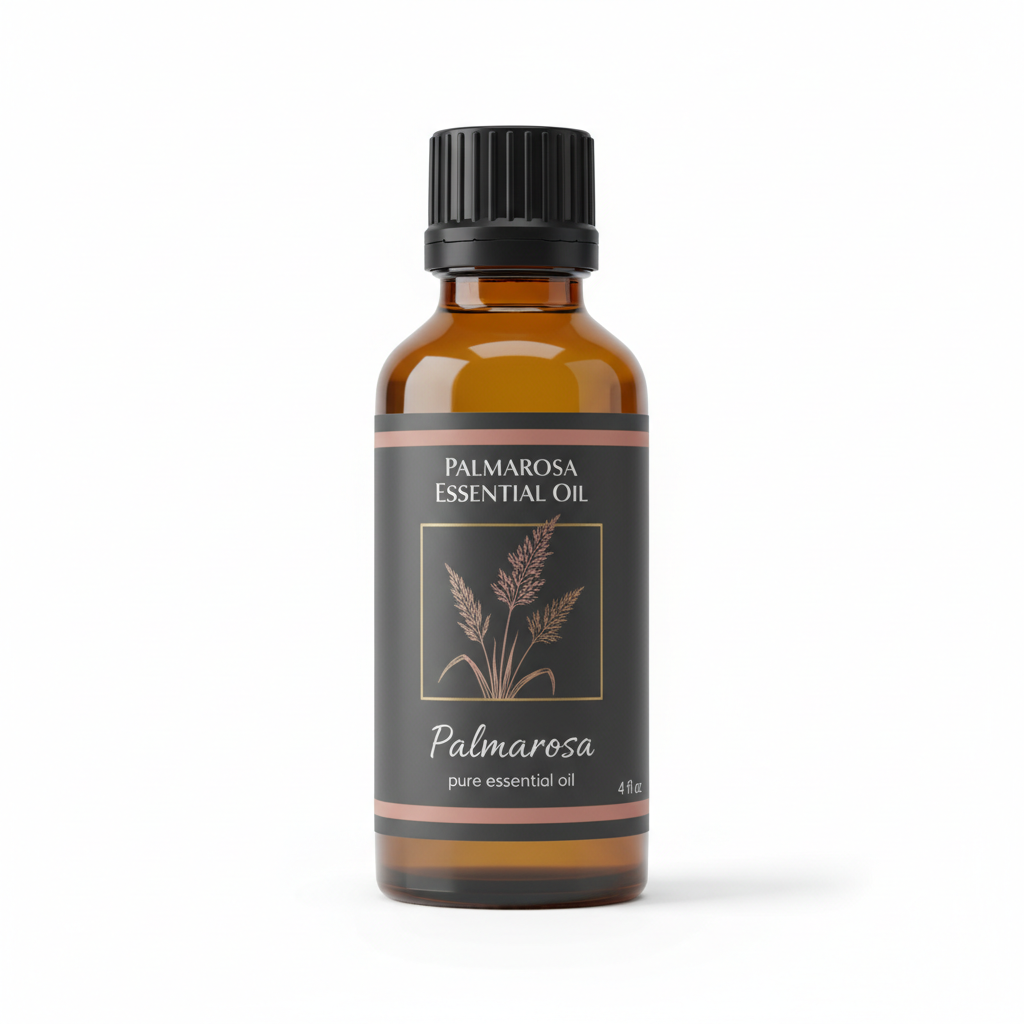
Palmarosa Essential Oil
Our own Palmarosa Essential Oil, in sizes from 0.5 oz to bulk.
From $10.99
Shop Now →What the three numbers mean
Our certificate is for one batch of palmarosa, and it reports three physical measurements.
- Relative density: 0.888. This compares the oil's weight with water's, and the certificate prints an expected range of 0.880 to 0.894. It also lets you convert volume to weight for that batch, so 1 ml is about 0.888 g, which is handy for formulating by weight.
- Refractive index: 1.473. This describes how much light bends as it passes through the oil, against a printed range of 1.471 to 1.478.
- Optical rotation: +0.12 degrees. This is how far the oil twists polarized light, against a printed range of -1.4 to +3 degrees.
All three sit inside the ranges beside them. The certificate also records the botanical name, Cymbopogon martinii, the CAS number 8014-19-5, leaves as the part used, steam distillation, the batch number and a best-by date of 02/29/2028, with "Complies" for appearance and smell.
What physical constants are good for
These checks are a sensible first filter. An oil that sits well outside the expected range for density or refractive index is worth a second look. They are also quick and inexpensive, which is why they appear on so many certificates.
It is just as helpful to know what they cannot settle. Authors who study rose oil note that the ISO norm for it specifies appearance, color, odor, density, refraction and optical rotation, that its chromatographic profile leaves out some minor quality markers, and that mixing in cheaper oils or single compounds is a known practice (Raeber, Favrod and Steuer, 2023). That is about rose, so applying it to palmarosa is an inference. The inference is modest: three constants inside a range are consistent with the right oil, but they cannot show what the oil is made of. The question of composition belongs to a different report.
What a gas chromatography report adds
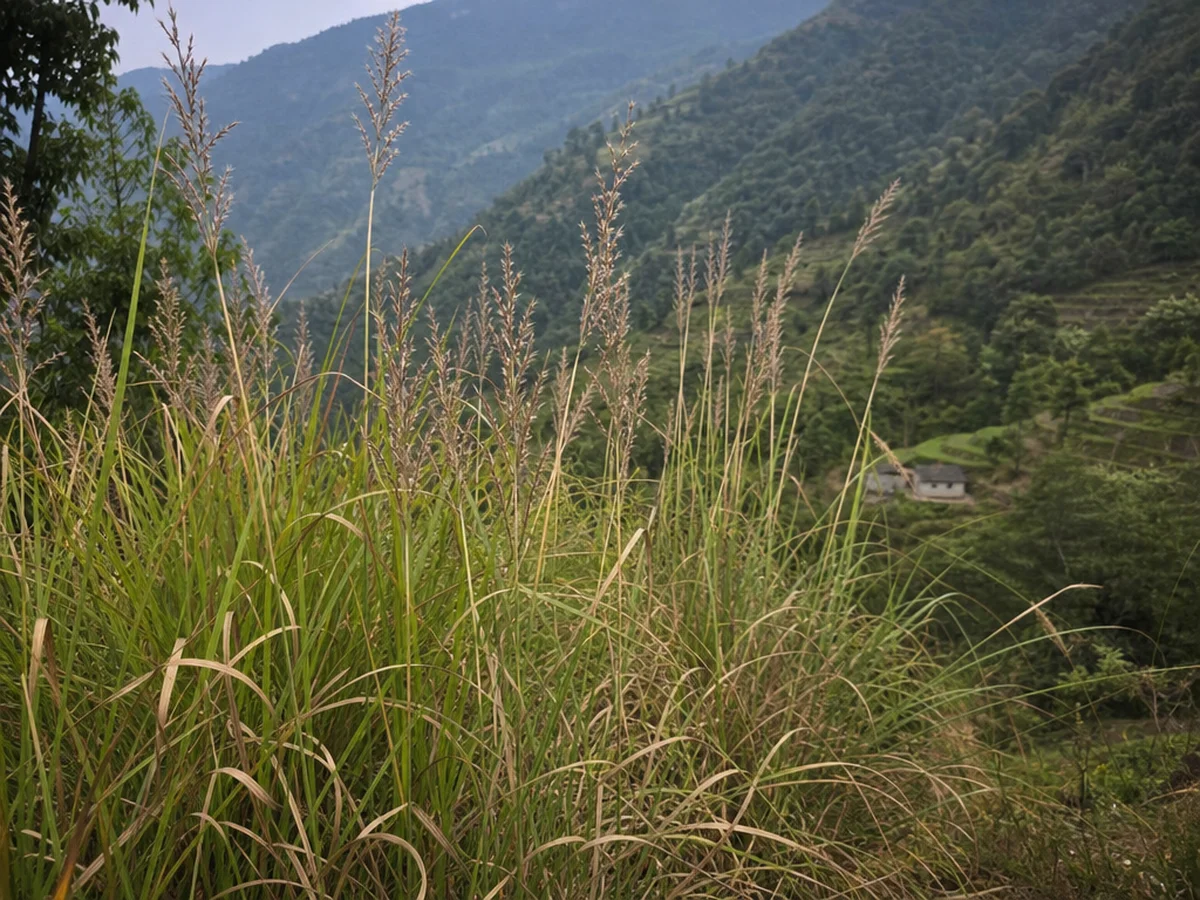
A GC-MS report lists the constituents and their percentages. For palmarosa the headline numbers are geraniol and geranyl acetate, and the same species name can cover very different profiles. A study of cultivated palmarosa leaf oil from Nepal found 76.6% geraniol and 15.2% geranyl acetate (Dangol et al., 2023). A study of wild plants near Udaipur, India, reported a carveol-rich profile with geraniol absent from its constituent table, which the authors say resembles the gingergrass variety and not the geraniol-dominant palmarosa (Sonigra and Meena, 2025). Same species, quite different oils, which is exactly what a constituent report exists to sort out.
Our published certificate does not include one. If constituent data matter for your formula or your label, ask us in writing through our contact page before you order, and rely only on a report you have received for your lot. The same advice holds for any seller: ask for the paperwork on the exact lot you will receive, and read what it measured.
How to read one in five minutes
You do not need a chemistry background to get value from a certificate. Start at the top and check that the product name and botanical name match what you ordered. Look for a batch number, then for a date, then for the measured results beside the ranges that go with them. Anything that sits inside its printed range is doing what it should; anything outside, or anything that is simply missing, is a question for the seller. Finish by asking whether the document is about your bottle or about a general specification.
File it where you can find it
Save the certificate with the order confirmation, and write the batch number on the bottle or in your notebook. If you later make something to sell, a dated record of what you used is a favour to your future self. It takes a minute, and it turns a loose PDF into a proper paper trail. Put the seller's name and the date you asked your questions on the same page, so the whole conversation lives in one place.
Using a report to plan your formula
A geraniol figure is also the starting point for skin safety arithmetic. IFRA caps geraniol by product category, for example 0.78% in a facial moisturizer and 1.2% in body creams, oils and lotions (IFRA Standard, Geraniol, Amendment 51). Dividing a cap by the geraniol share of your oil tells you the most oil the product can hold. Using IFRA's typical 82.4%, that comes to about 0.95% oil for the face. It is our arithmetic and not a figure for our batch, but it shows why a number from a report is worth having. Our shop guidance is 0.5% to 2% in a carrier with a patch test first, and we start at the low end.
Our dilution chart converts percentages into drops, and our bottle-size article helps you choose a size. If you want to see how a certificate fits into a wider checklist, our quality-checks article is the next stop.
A certificate is a conversation starter. The best ones leave you knowing exactly which questions to ask next.
Palmarosa Essential Oil
Palmarosa Essential Oil from our own shop, in sizes from 0.5 oz to bulk.
From $10.99
Shop Now →Sources & Further Reading
- Determination of Major, Minor and Chiral Components as Quality and Authenticity Markers of Rosa damascena Oil by GC-FID (Raeber, Favrod and Steuer, Plants, 2023)
- Essential Oil Composition Analysis of Cymbopogon Species from Eastern Nepal by GC-MS and Chiral GC-MS, and Antimicrobial Activity of Some Major Compounds (Dangol et al., Molecules, 2023)
- Influence of growth stage on the chemical composition, antimicrobial, and antioxidant potential of Cymbopogon martinii (Roxb.) Wats. essential oil (Sonigra and Meena, Frontiers in Plant Science, 2025)
- IFRA Standard: Geraniol (IFRA, 2023, Amendment 51)