Can You Ingest Palmarosa Oil? Why We Say No
Search for palmarosa and you will eventually meet the phrase "food grade," and then wonder whether a drop in your tea is a good idea. It is not. We sell palmarosa oil as a fragrance and skincare ingredient, sold neat, and our guidance is never to take it internally. The reason the question comes up is interesting, though, so it is worth unpicking.
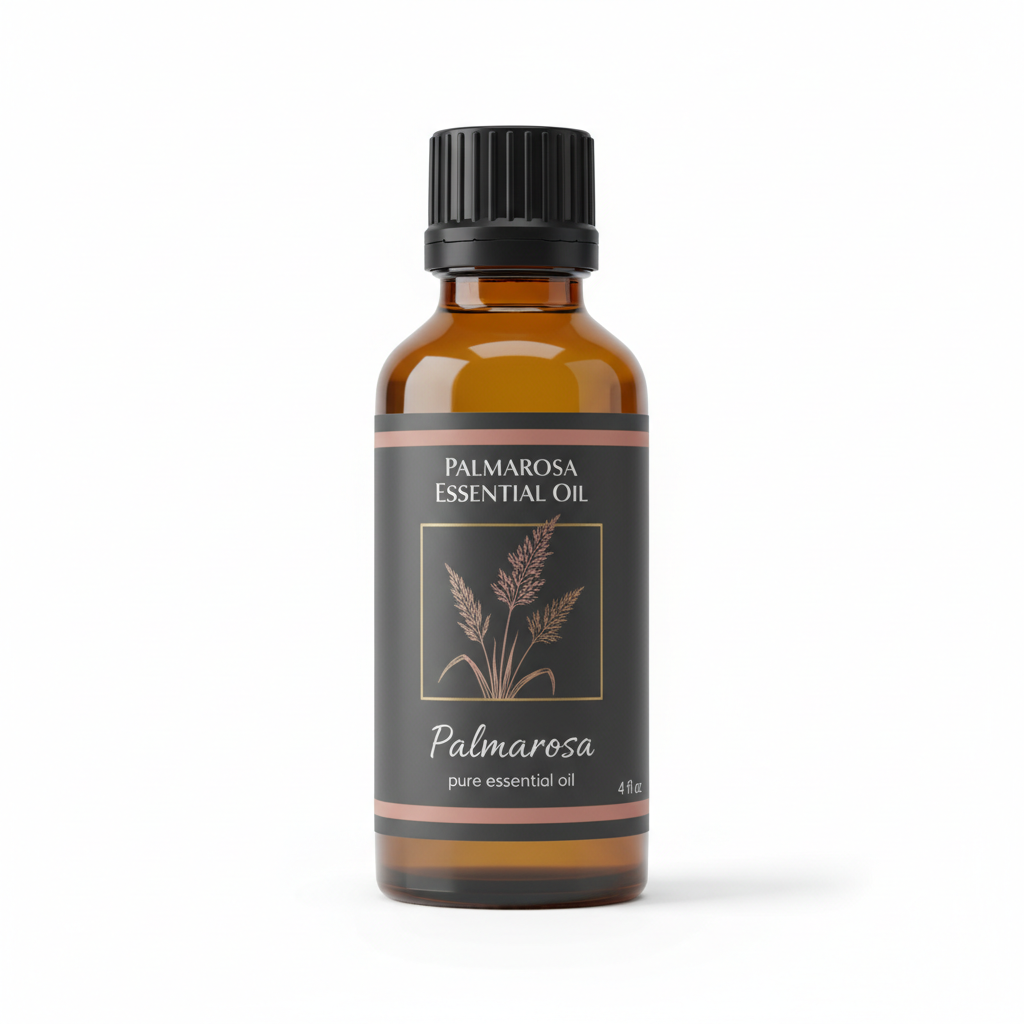
Palmarosa Essential Oil
Our own Palmarosa Essential Oil, in sizes from 0.5 oz to bulk.
From $10.99
Shop Now →Where the confusion comes from
In the US federal regulations, section 182.20 of Title 21 lists essential oils, oleoresins and natural extractives that are generally recognized as safe for their intended use. Palmarosa (Cymbopogon martini) is on that list, alongside many familiar herbs and spices (21 CFR § 182.20 - Essential oils, oleoresins (solvent-free), and natural extractives (including distillates)). International flavour experts have looked at geraniol as well. A joint FAO/WHO committee reviewed a group of flavouring agents including geraniol in 2004 and found no concern at the intake levels estimated for flavour use (ALIPHATIC BRANCHED-CHAIN SATURATED AND UNSATURATED ALCOHOLS, ALDEHYDES, ACIDS, AND RELATED ESTERS (JECFA 52, 2004)).
That is the whole origin of "palmarosa is edible." Read closely, though, these listings are about tiny amounts of a flavouring dispersed through a food, made and handled as a food ingredient. They say nothing about a neat drop or a spoonful from a bottle sold for scent. A regulatory entry for a substance doesn't vouch for the particular bottle in your hand either.
A sense of scale
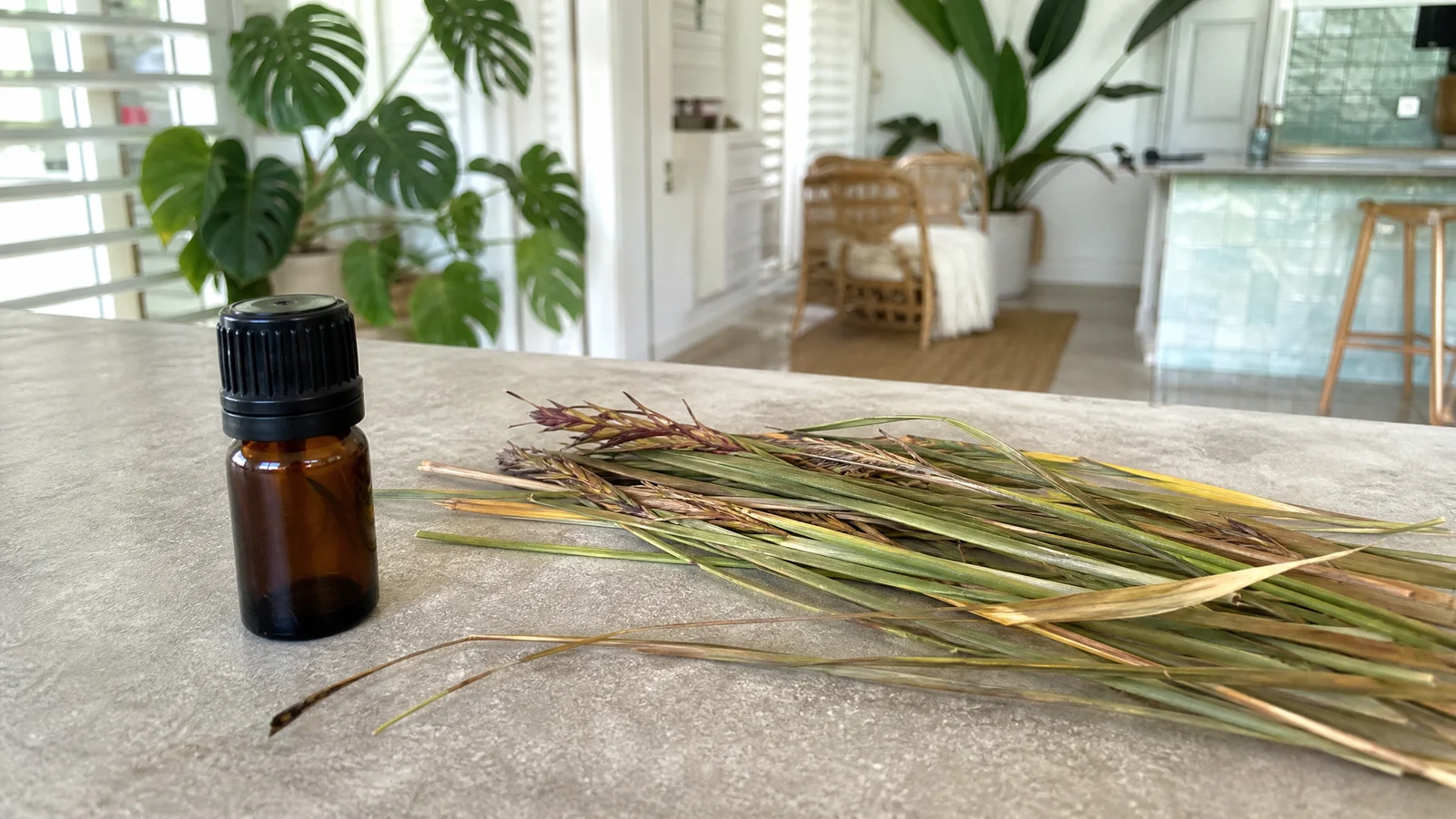
A single drop of our oil is about 0.05 ml, which is roughly 44 mg using the density of 0.888 on the Certificate of Analysis we publish for one batch. That is arithmetic, not a dose. The point is only that a drop of neat oil is a very concentrated thing compared with a flavouring spread through a recipe. The certificate itself covers appearance, smell, density, refractive index and optical rotation for that batch; it doesn't describe a food use, and we don't offer one.
What poison centres say
Poison Control in the United States says essential oils can cause serious poisoning when misused, that swallowing them can be dangerous, and that oil breathed into the lungs during choking or vomiting can cause pneumonia. It also notes that children have thin skin and immature livers, which might make them more susceptible to toxic effects than adults (Essential oils: Poisonous when misused | Poison Control). Its advice for homes with young children is to lock bottles away, out of sight and reach of children and pets.
A look at Australian poison centre calls shows the same pattern. Most essential oil exposures there involved young children and were accidental, and the oils most often reported were common household ones such as eucalyptus and tea tree (Essential oil poisoning calls on the rise, children most affected - The University of Sydney). Palmarosa isn't among them, which reflects what people own rather than how risky each oil is, drop for drop.
What about grass teas?
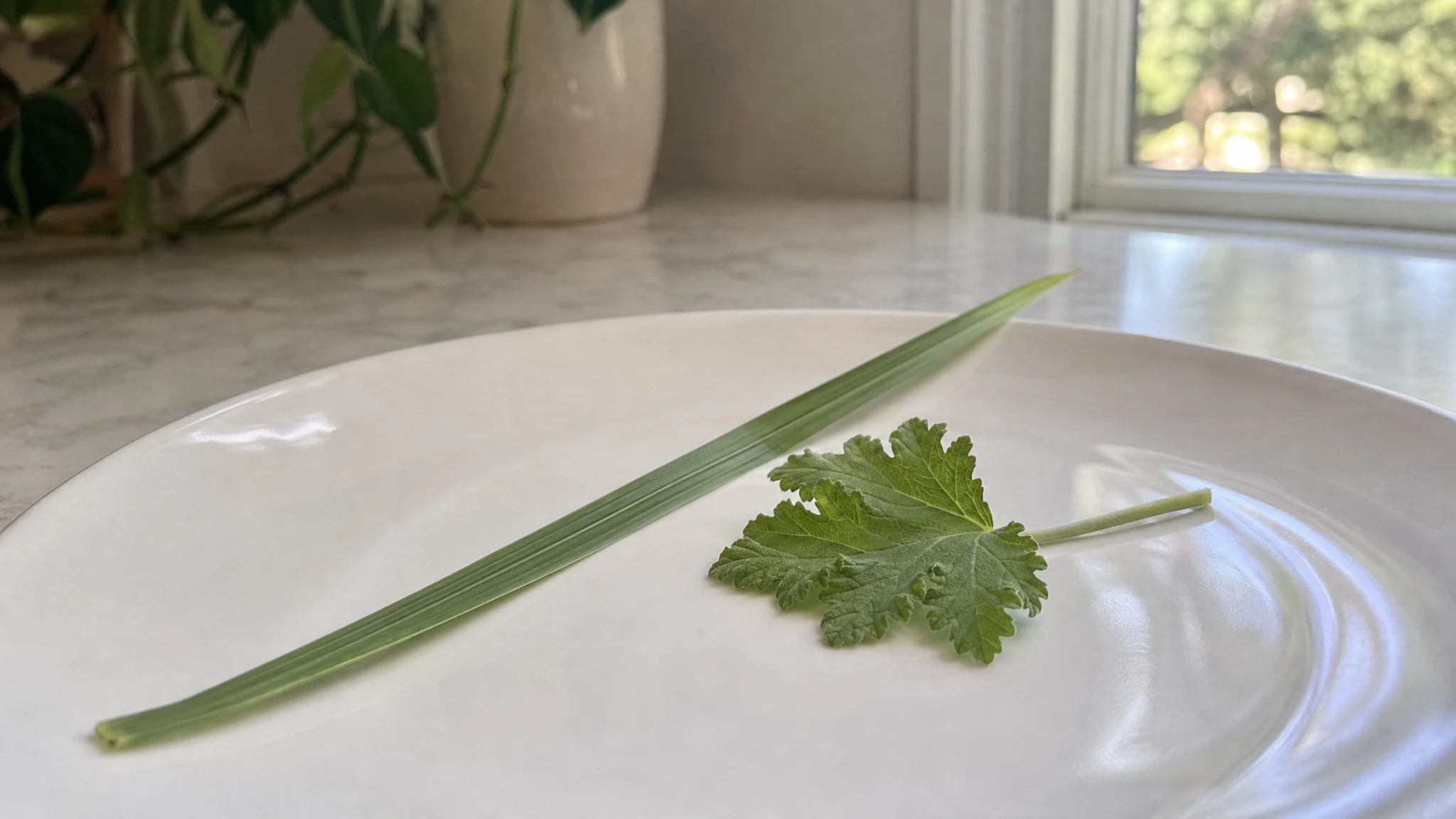
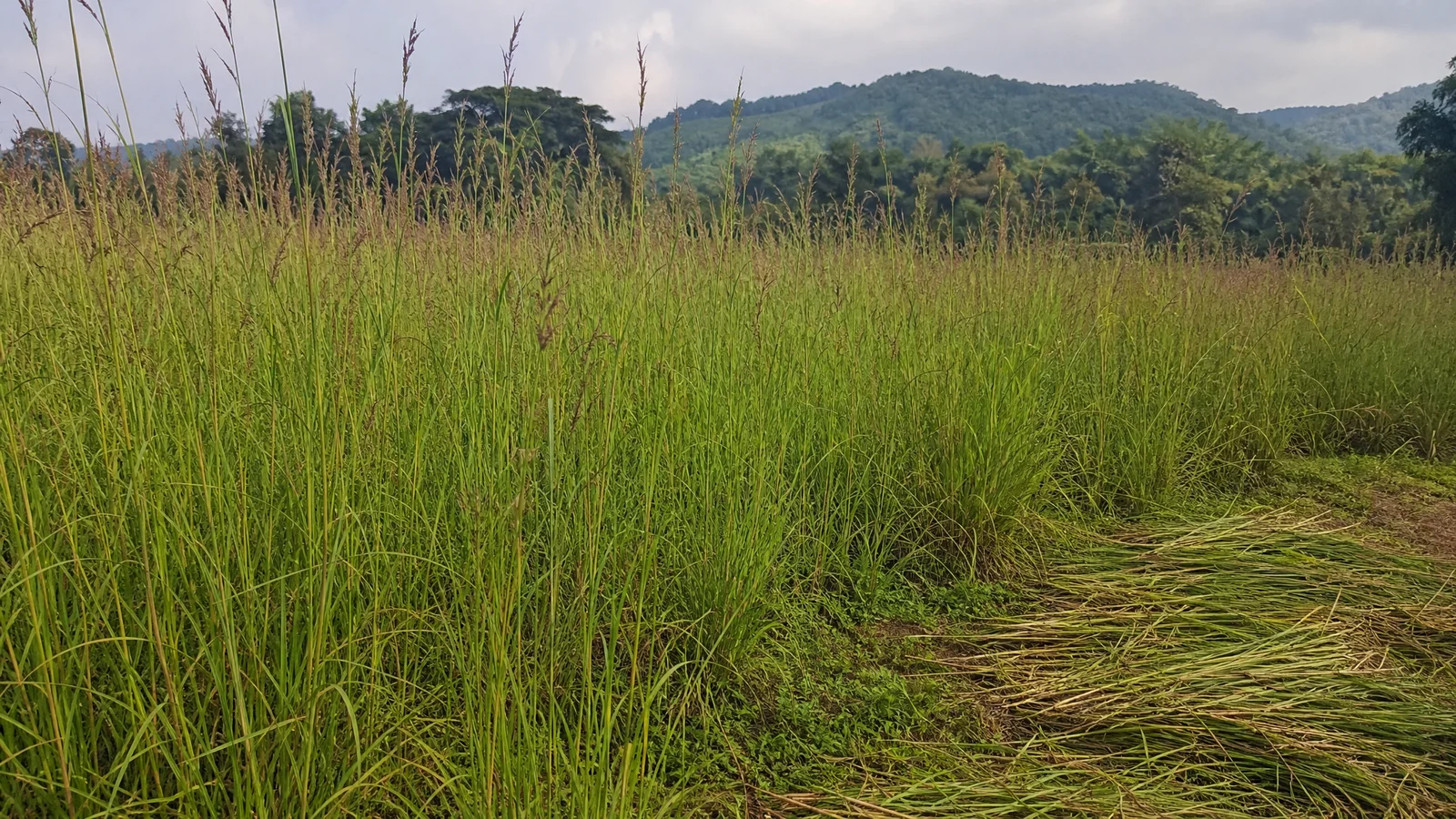
Palmarosa, lemongrass and citronella are all Cymbopogon grasses, and some of the family turn up in herbal teas. A tea made by steeping leaves is a different material from a steam-distilled oil, which is the concentrated aromatic fraction. We offer no guidance on teas. If you are curious about one, particularly if you are pregnant, nursing, on medication or choosing for a child, a pharmacist or physician is the right person to ask.
If someone swallows some
- Call Poison Help on 1-800-222-1222 in the United States, or use the online tool at poison.org. The service is free, confidential and open 24 hours a day. Keep the bottle with you.
- If there is trouble breathing, collapse or a severe allergic reaction, call emergency services.
- For a pet, call a veterinarian or pet poison line; our pets post has numbers and background.
Outside the US, use your national poison information service.
Habits that keep the bottle where it belongs
- Put the cap back on straight away, every time, and give it a little twist to be sure it has seated.
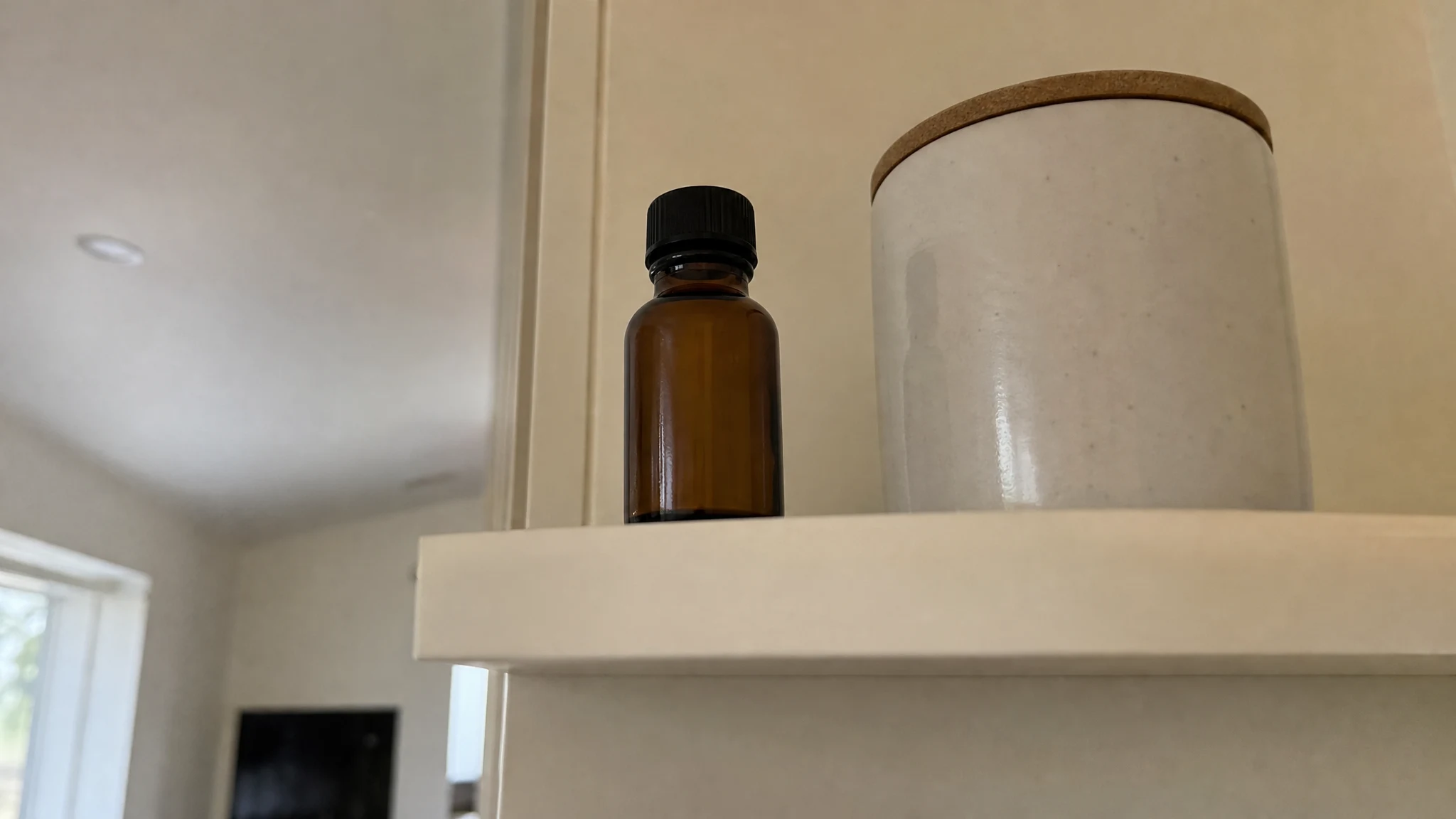
- Keep the bottle on a high shelf or in a closed cupboard, rather than on a bathroom counter or kitchen worktop where it looks like any other small bottle.
- Label anything you make with it, including roll-ons, sprays and jars of salts, so nobody mistakes a scented product for something else.
- Do not decant it into a drinks bottle, a spice jar or anything that once held food.
- Wipe drips from the outside of the bottle so small hands and paws do not pick up oil.
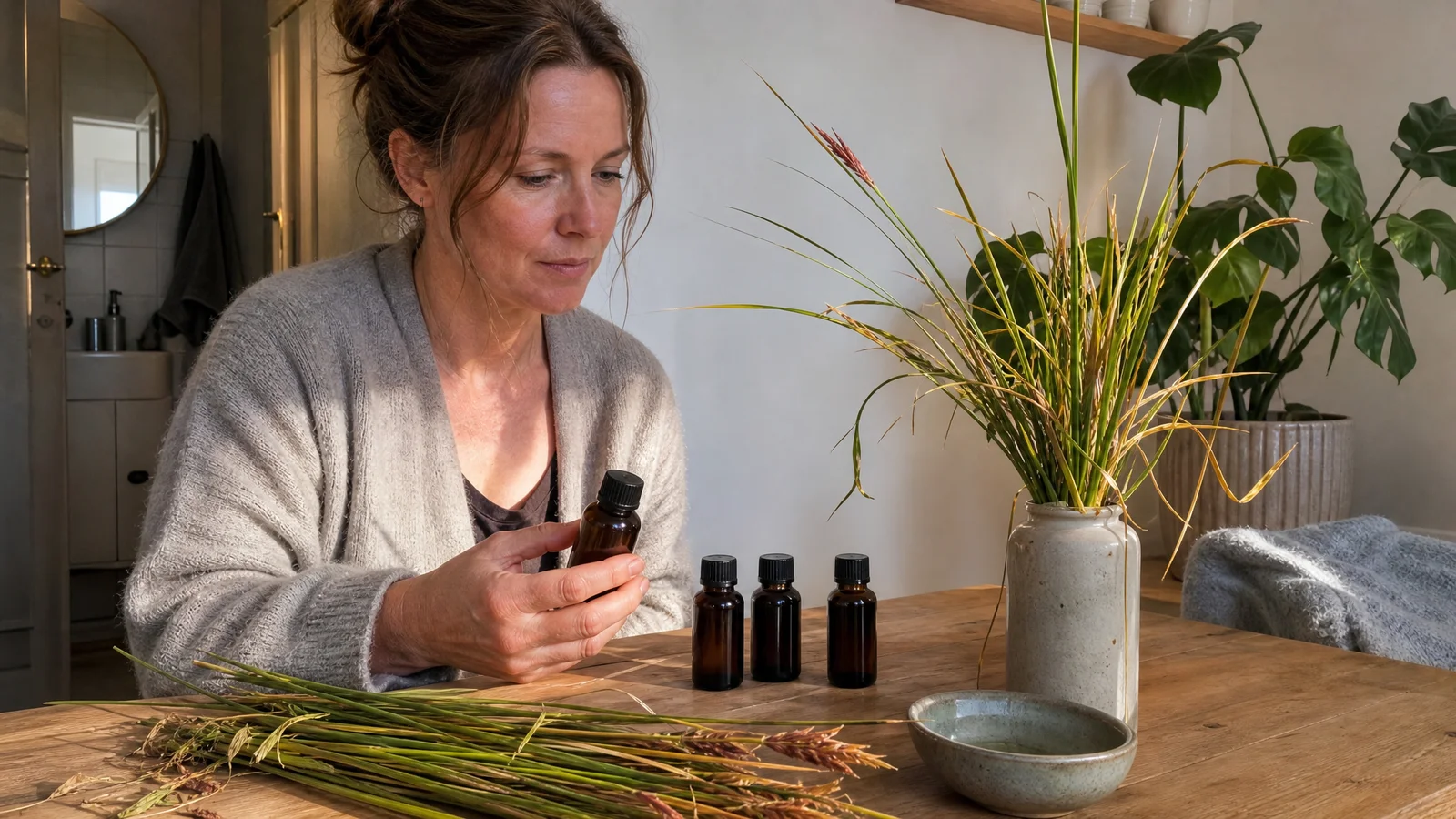
None of this is complicated, and it becomes automatic quickly. It also helps to tell everyone in the household, including visitors and older children, that the bottle is for scent and for the outside of the skin only. A short, friendly rule said out loud once works better than hoping everyone will guess.
Where palmarosa shines instead
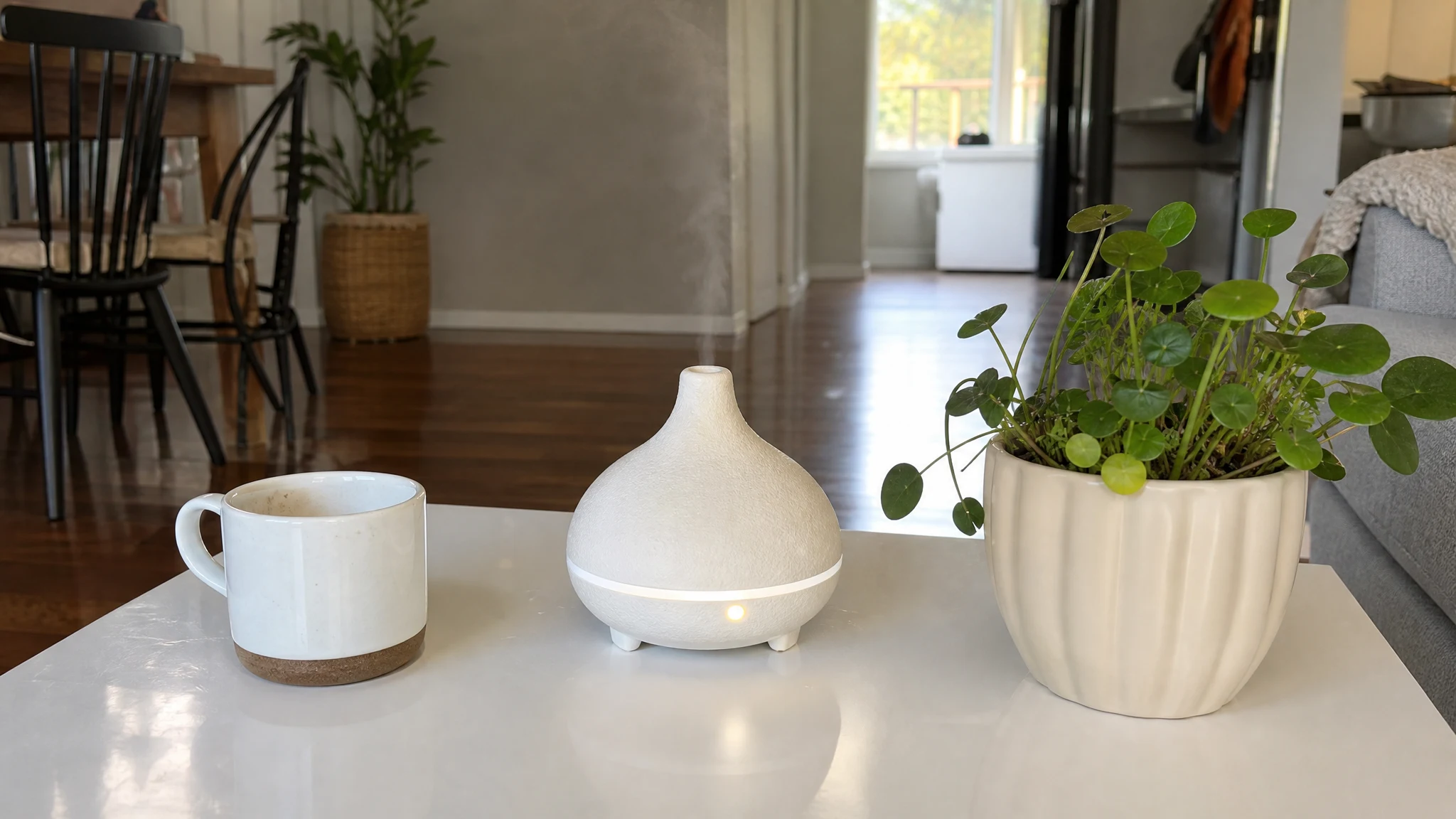
Its sweet, rosy, gently green aroma belongs in a diffuser, in soap or candles, in natural perfumery, or diluted in a carrier oil for skin, where our guidance is 0.5% to 2% with a patch test first. The dilution chart has the maths, and our posts on pregnancy and children cover storage in more detail. For a broader overview, see the question and answer page.
Keep the bottle capped, high up and out of reach, and enjoy the scent the way it was meant to be enjoyed, through the air and on the outside of the skin.
Palmarosa Essential Oil
Palmarosa Essential Oil from our own shop, in sizes from 0.5 oz to bulk.
From $10.99
Shop Now →Sources & Further Reading
- 21 CFR § 182.20 - Essential oils, oleoresins (solvent-free), and natural extractives (including distillates). law.cornell.edu
- JECFA 52, 2004. ALIPHATIC BRANCHED-CHAIN SATURATED AND UNSATURATED ALCOHOLS, ALDEHYDES, ACIDS, AND RELATED ESTERS. inchem.org
- Poison Control. Essential oils: Poisonous when misused. poison.org/articles/essential-oils
- The University of Sydney. Essential oil poisoning calls on the rise, children most affected. sydney.edu.au