Palmarosa Oil Around Pets: What to Know First
If you share your home with a cat, a dog or a bird, the nicest thing about a diffuser, the scent of rose and cut grass, is also the thing to think about first. Animals smell and process the world differently from us. Palmarosa is not named on the poison line pages we checked, but that is not the same as a clean bill of health, so here is how we would think it through.
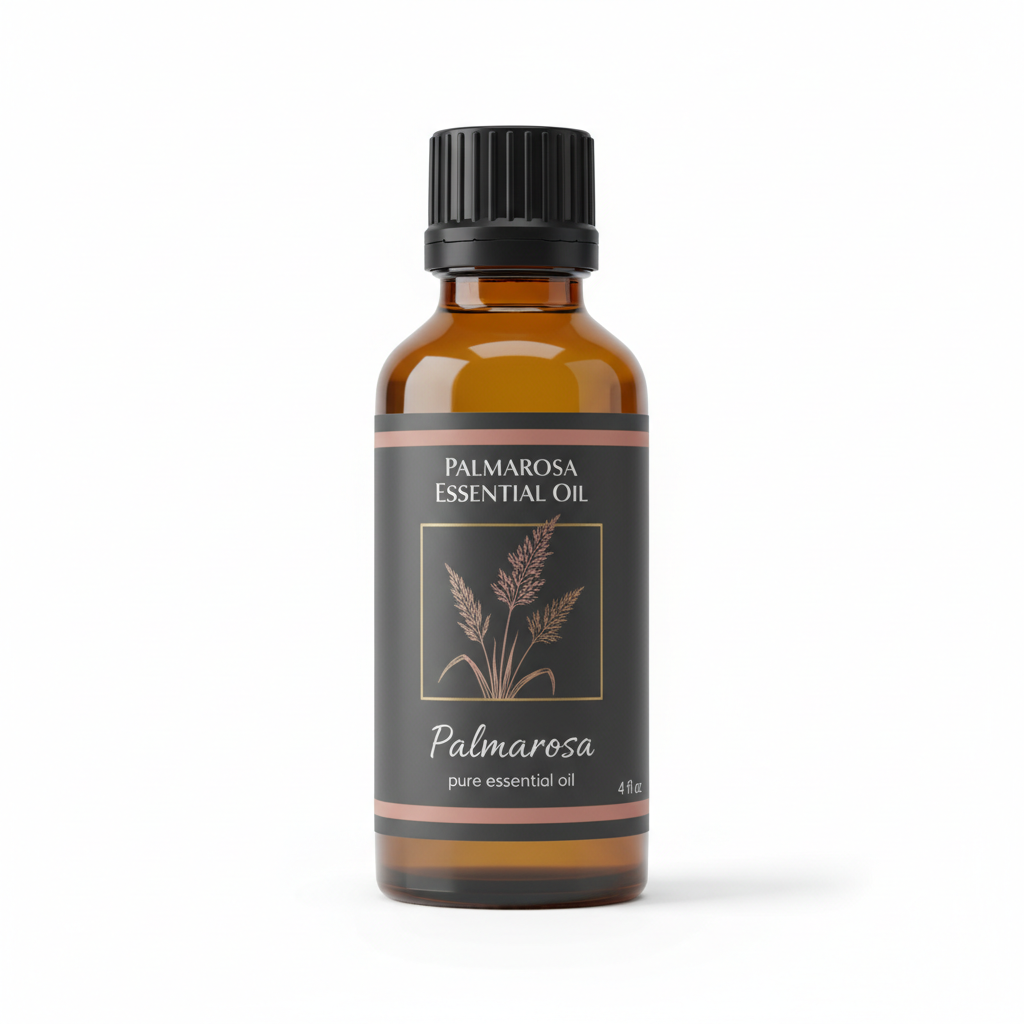
Palmarosa Essential Oil
Our own Palmarosa Essential Oil, in sizes from 0.5 oz to bulk.
From $10.99
Shop Now →What the poison lines say
The ASPCA's Animal Poison Control Center notes that cats are especially sensitive to essential oils. If ingested in significant quantities or concentrations, effects such as stomach upset, central nervous system depression and even liver damage could occur, and inhaling the oils could lead to aspiration pneumonia. Its advice is not to use essential oils in areas where pets have access unless they are supervised or your veterinarian approves (Pet Poisons: Be Mindful of these Household Products and Cleaning Agents | ASPCA). Its hotline is (888) 426-4435.
The Pet Poison Helpline says essential oil toxicosis can affect all species, but cats and birds are at the greatest risk, with drooling, vomiting, lethargy and a loss of appetite among the common signs (Essential Oils | Pet Poison Helpline®). Neither page lists palmarosa by name. Those lists tend to name the oils that generate the most calls, so absence from them tells you little in either direction.
Why cats are a special case
The European Food Safety Authority's feed panel gives a clear example in its opinion on lemongrass oil, a relative of palmarosa in the same plant genus. For most animals it asked for a safety margin of 100, but for cats it asked for 500, because cats have an unusually low capacity for glucuronidation, one of the body's ways of clearing compounds out (Safety and efficacy of a feed additive consisting of an essential oil derived from the aerial parts of Cymbopogon flexuosus (Nees ex Steud.) Will. Watson (lemongrass oil) for use in all animal species (FEFANA asbl)). That is a different oil taken in feed, not a limit for ours, but it shows why regulators treat cats with extra care.
Thinking like your pet
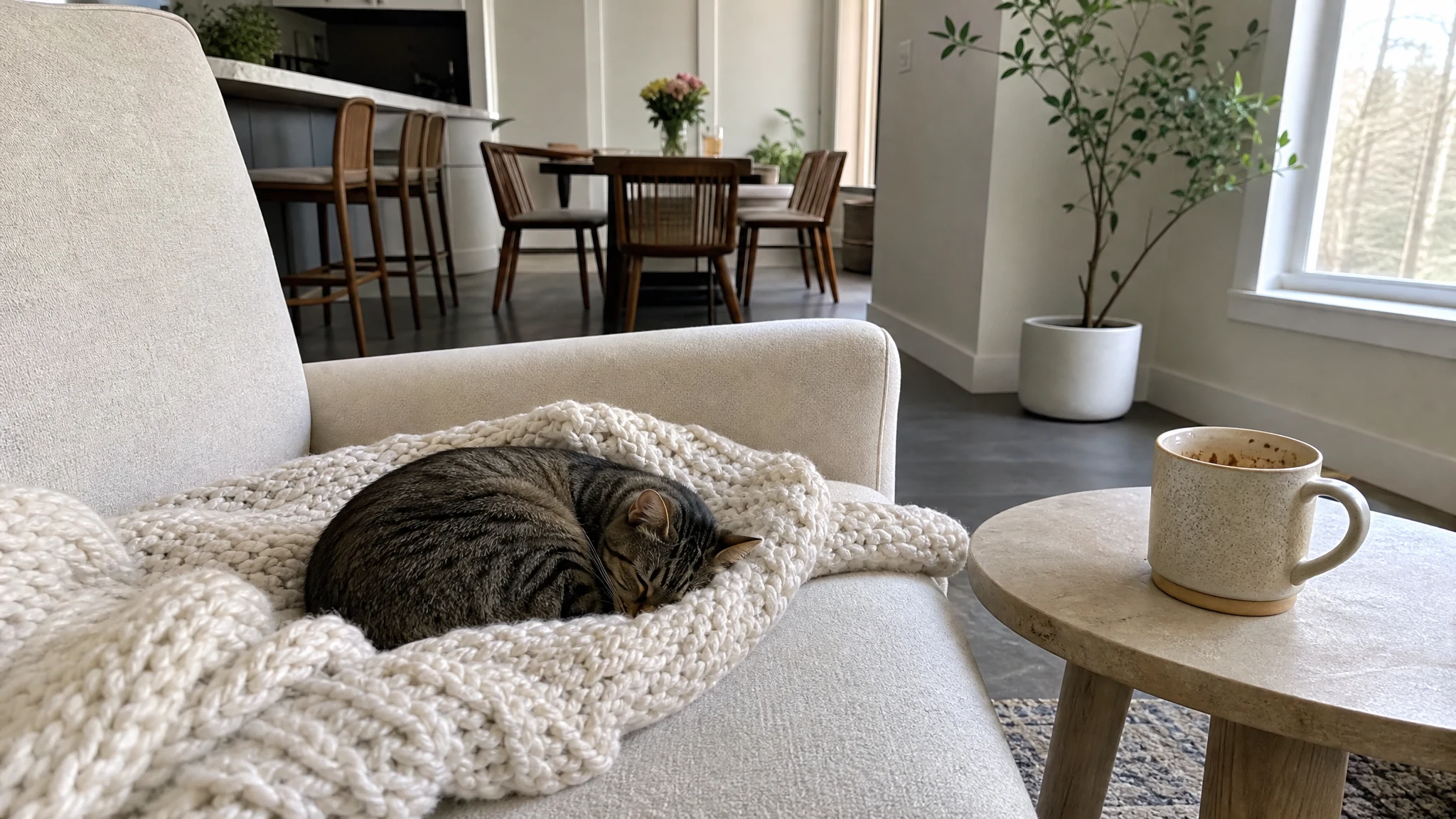
It helps to picture your home from a pet's point of view. A cat curls up on a warm shelf, a dog follows your nose-level trail, a bird sits in a cage in the middle of the living room, and none of them can choose to leave a scented room if the door is closed. Their world is built around smell, so a scent that seems gentle to you may be a lot to them.
Scale matters
A drop of our oil is about 0.05 ml, or roughly 44 mg using the density of 0.888 on the Certificate of Analysis we publish for one batch. Spread over a 70 kg adult that is under 1 mg per kilogram. Over a 4 kg cat it is about 11 mg per kilogram, and over a 30 g bird, well over a gram per kilogram. We have no toxic dose to compare these with, so they are not a verdict, only arithmetic showing that small bodies get far larger doses from the same spill.
Our own approach at home
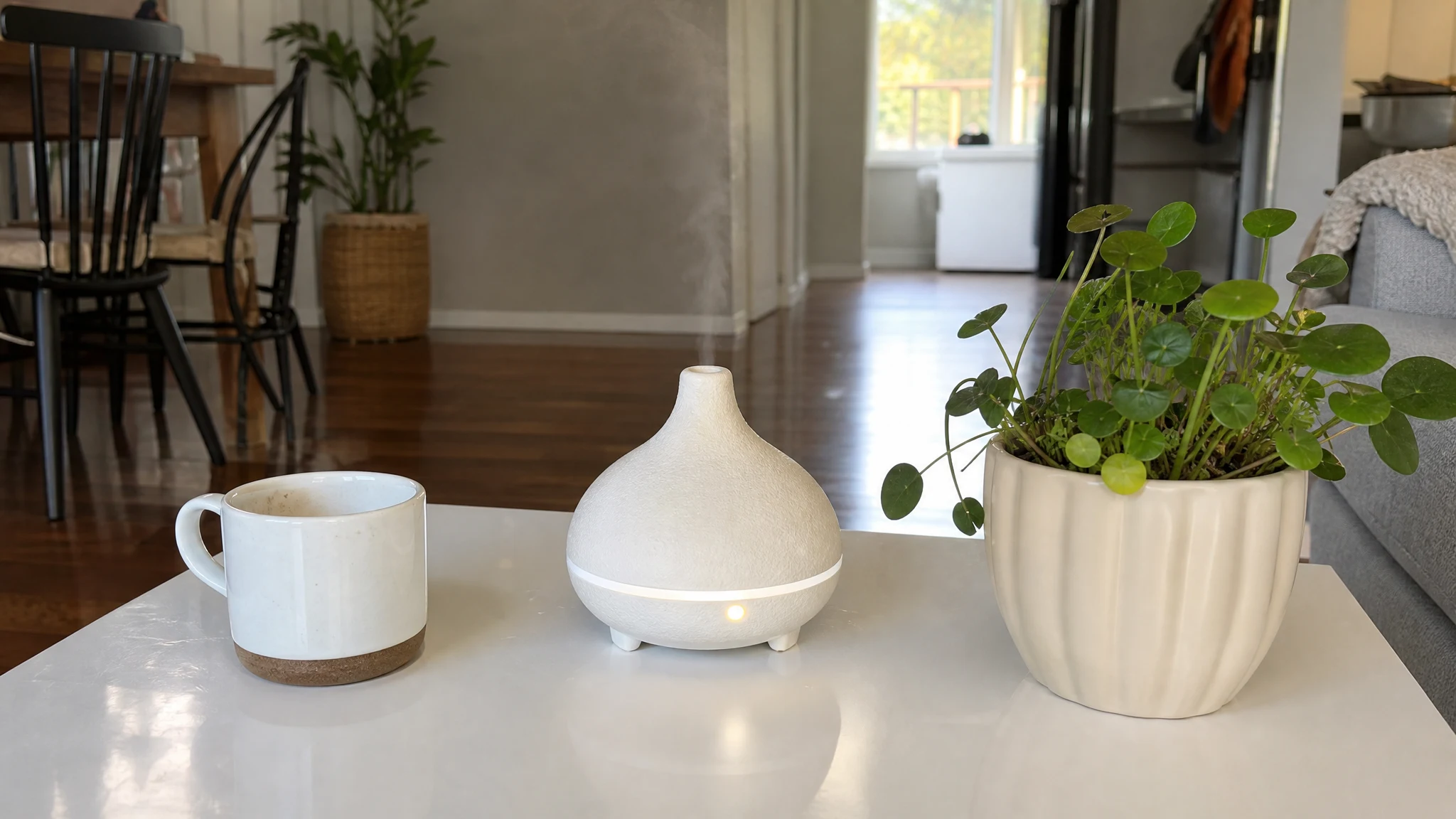
Our guidance is simple: keep the oil away from pets, as well as children, and don't take it internally. In practice that means a closed cupboard for the bottle, no neat oil on or near an animal, and no diffusing in a room where a cat or bird lives. With a dog, give it the freedom to leave the room, and ask your veterinarian before you begin. If you are scenting a space for yourself, a closed door and a short session beats an all day cloud.
| Situation | What we would do |
|---|---|
| Diffuser, dog in the house | Short sessions, door open so the dog can leave, ask your veterinarian |
| Diffuser, cat or bird in the house | Skip it |
| Bottle storage | Closed cupboard, cap tight |
| Spills on a floor or counter | Wipe up promptly with soap and water, keep animals away |
Small habits that help
Wipe up spills right away, keep the cap tight, and wash your hands before you stroke an animal after handling the oil. Store the bottle where a curious paw or a swishing tail can't knock it over. These are simple habits, and they cost nothing.
If your pet has been exposed
- Move the animal into fresh air and keep it from licking or grooming more oil off its coat. Keep the bottle.
- Call your veterinarian or a pet poison line right away: the ASPCA on (888) 426-4435 or the Pet Poison Helpline on 855-764-7661. Ask whether a consultation fee applies.
- Don't induce vomiting unless a professional tells you to, because of the risk of aspiration.
- Go in person if the animal is drooling, vomiting, lethargic, off its food or struggling to breathe.
Our children post applies the same storage logic to little hands, and our diffuser post is worth rereading with this one in mind. For general percentages in skin products for people, the dilution chart is the place to look, but it is not an animal chart.
A veterinarian is the right person for any question about a particular animal. Until then, a bottle in a cupboard and a closed door are the simplest way to keep everyone in the house comfortable.
Palmarosa Essential Oil
Palmarosa Essential Oil from our own shop, in sizes from 0.5 oz to bulk.
From $10.99
Shop Now →Sources & Further Reading
- ASPCA. Pet Poisons: Be Mindful of these Household Products and Cleaning Agents | ASPCA. aspca.org
- Pet Poison Helpline. Essential Oils | Pet Poison Helpline®. petpoisonhelpline.com
- EFSA FEEDAP Panel, 2023. Safety and efficacy of a feed additive consisting of an essential oil derived from the aerial parts of Cymbopogon flexuosus (Nees ex Steud.) Will. Watson (lemongrass oil) for use in all animal species (FEFANA asbl). PMC10369294