Palmarosa Oil During Pregnancy: What to Ask Your Midwife
If you are pregnant or nursing and curious about palmarosa oil, the most useful thing we can offer is a name: your midwife or obstetric clinician. That is not a brush-off. For this oil, a person who knows your pregnancy can answer what no paper currently does, and a little preparation makes that conversation quick.
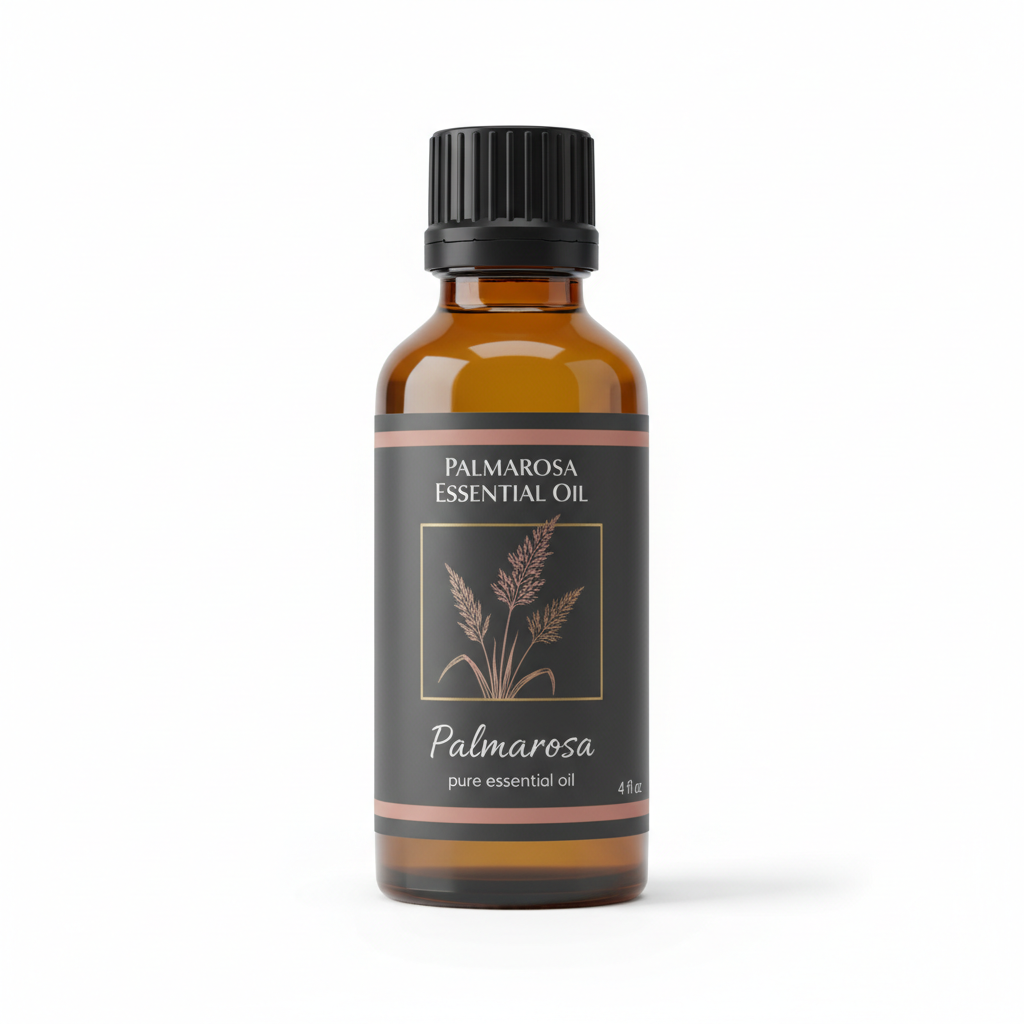
Palmarosa Essential Oil
Our own Palmarosa Essential Oil, in sizes from 0.5 oz to bulk.
From $10.99
Shop Now →What the authorities say
MotherToBaby, a teratogen information service, makes a plain point in its post on essential oils: for many products, "there is no information at all." The same post adds that products used on the skin usually do not lead to large absorption, and that anyone with questions should speak with a healthcare provider (MotherToBaby, A Slippery Topic). It is a short blog post about essential oils in general, not a review of palmarosa, but it captures the situation well.
The NHS Borders midwifery guideline is more specific, and it is written for midwives trained in aromatherapy rather than for home use. It advises avoiding essential oils in the first trimester because some are emmenagogic, meaning they can bring on menstruation, and it says essential oils should not go onto the skin undiluted, with three named exceptions that do not include palmarosa (NHS Borders, Aromatherapy Guideline for Midwifery Practice). Its list of oils with specific cautions does not mention palmarosa or geraniol, so there is no palmarosa rule to quote either way.
We also looked for studies of palmarosa oil in pregnant or breastfeeding people and found none. We would rather say that plainly than borrow a result from a rat study or a single isolated compound, which could not tell you what a few drops in a room or in a body oil mean for you.
What to bring to the conversation
A clinician can work with specifics, so it helps to arrive with them.
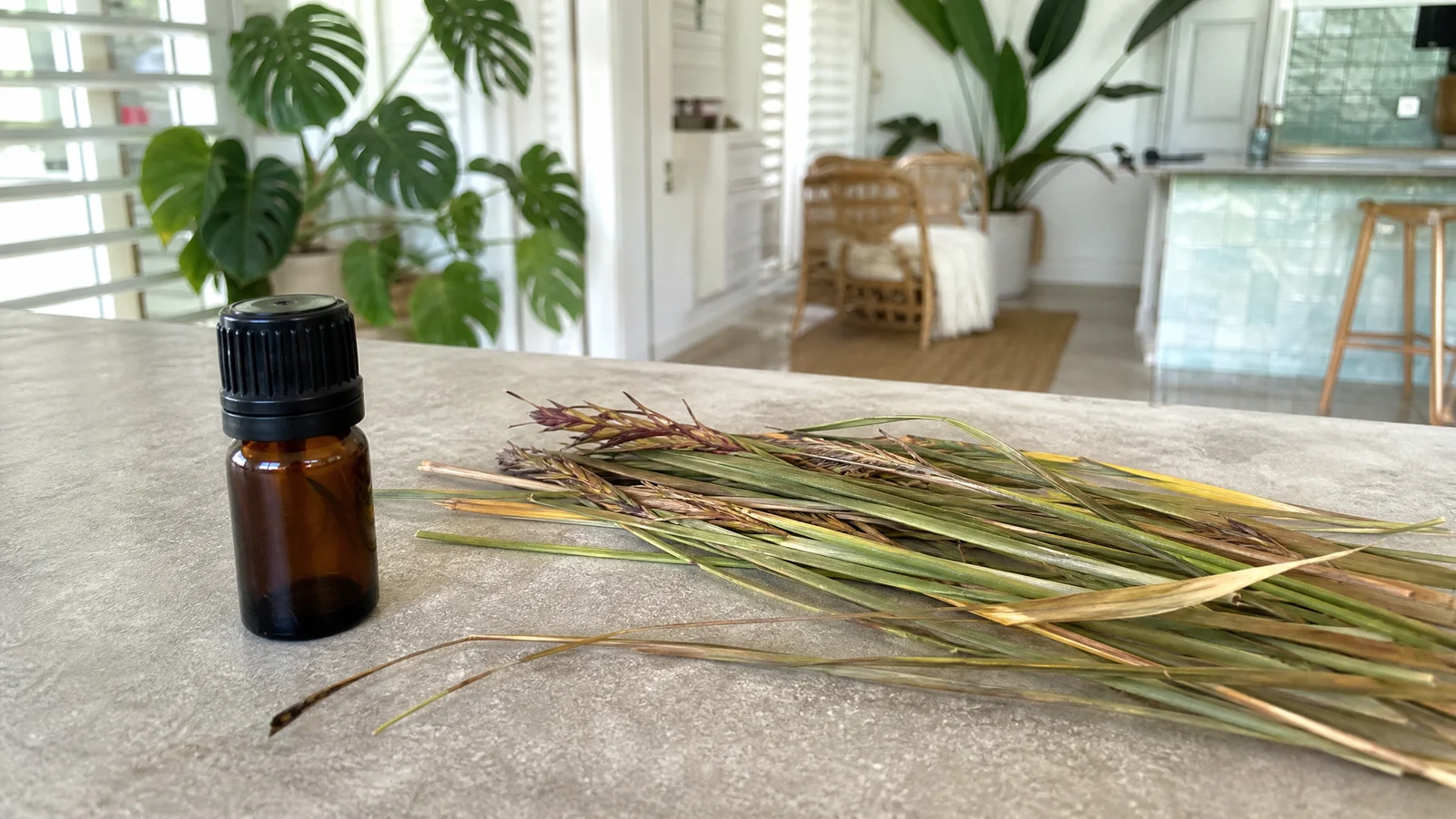
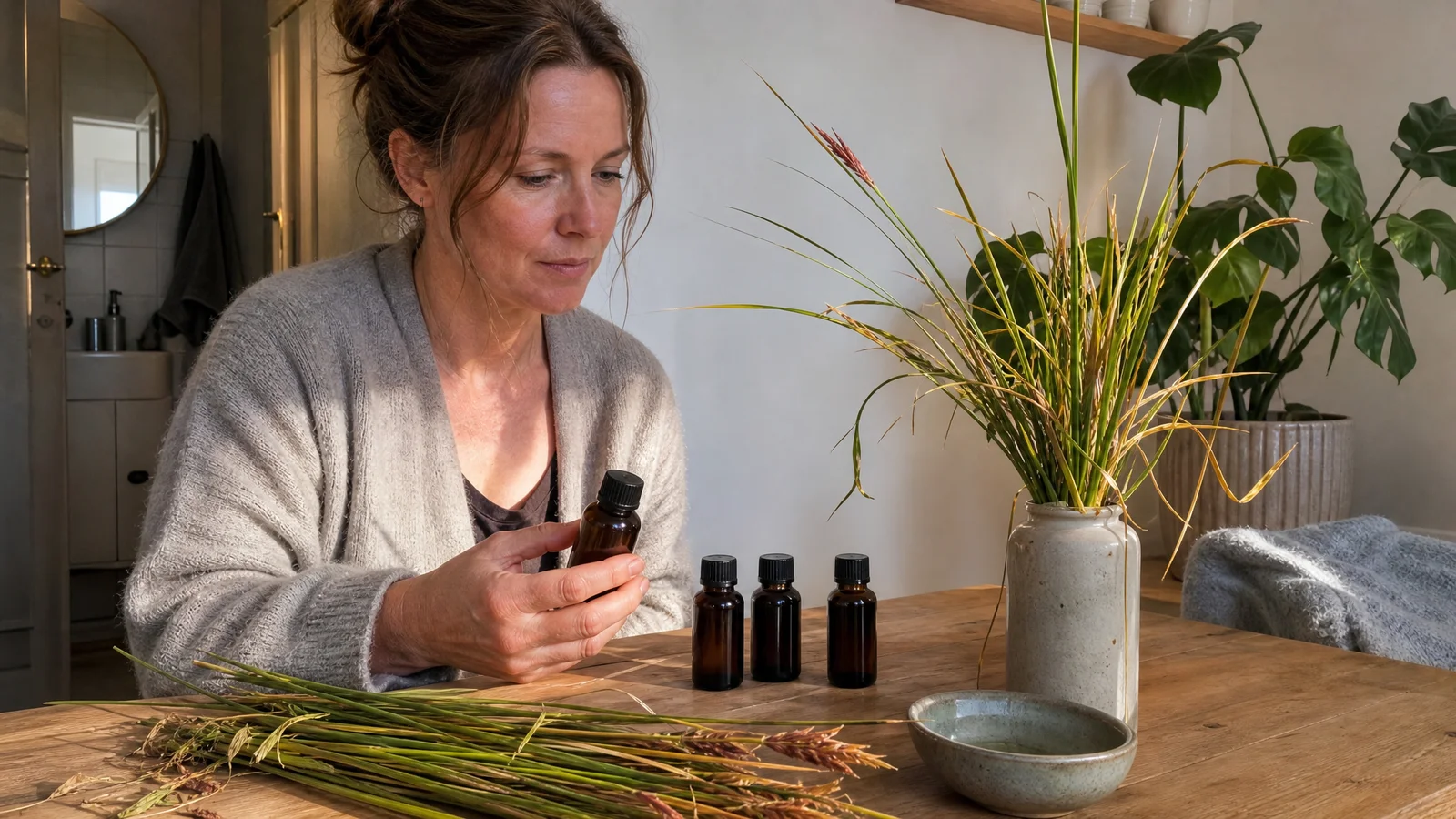
- The bottle. Palmarosa oil is Cymbopogon martinii, and its main component is geraniol. IFRA lists a typical 82.4% geraniol for palmarosa oil (Annex on contributions from other sources to the IFRA Standards), and geraniol is a recognised fragrance allergen.
- How you would use it. A few minutes of a diffuser in a ventilated room is a different question from a daily body oil. Say which one you mean.
- The percentage. We sell the oil neat, so the dilution is yours. Our guidance is 0.5% to 2% in a carrier oil, and we start at the low end. IFRA's geraniol standard sets 0.78% geraniol as the ceiling for a face moisturizer and 1.2% for body lotion (IFRA Standard: Geraniol, Amendment 51). Dividing by the typical 0.824 geraniol share gives roughly 0.95% oil for the face and 1.46% for the body, which is our arithmetic and not a pregnancy figure. The dilution chart turns those percentages into millilitres and grams.
IFRA's limits are an industry code written for the general consumer, and we found no pregnancy-specific adjustment in them. Treat them as a ceiling that applies to everyone and let your clinician say whether you should sit well below it, or skip the oil for now.
A written note helps more than you would think. Before the appointment, jot down the bottle name, the botanical name, how you would use it and how often, and take a photo of the label. Appointments are short, and a clear note lets the conversation spend its time on the answer. If you have more than one scented product at home, list those too, so the clinician sees the whole picture.
Skin, air and swallowing
These are three separate questions, and it helps to keep them apart. On skin, a diluted blend and a patch test come first; our patch testing article explains how a spot test works and what it cannot promise. In the air, we found no authority that sets a limit for diffused palmarosa for pregnant readers, and the midwifery guideline above is a clinical document that does not translate to a home diffuser.
Swallowing is the simple one. Our oil is for external, cosmetic and fragrance use and is not to be taken internally at any stage of life. If an essential oil is swallowed, Poison Control says to use its online tool or call a poison center at 1-800-222-1222, where help is free, confidential and available around the clock (Essential oils: Poisonous when misused).
If smells are harder to handle than usual, trust your nose. A scent you enjoyed last month can be unwelcome now, and there is no point forcing it. Palmarosa will keep, tightly capped and out of the light, until it is welcome again.
If your skin objects
Poison Control advises stopping a product immediately if a rash or other skin reaction occurs and gently washing it off. The NHS suggests seeing a GP for contact dermatitis symptoms that are persistent, recurrent or severe (Contact dermatitis, NHS). Difficulty breathing alongside a reaction is an emergency.
We sell palmarosa as a cosmetic fragrance oil and make no claims about pregnancy, nursing or any symptom. If you would like it for scent, we are glad to have you, and the green light belongs to the person who is caring for you and your baby. For other household questions, our posts on children and common questions are a good next stop.
Whatever you decide, keep the bottle capped and up high, away from small hands and curious pets, and take your time. There is no hurry to open it.
Palmarosa Essential Oil
Palmarosa Essential Oil from our own shop, in sizes from 0.5 oz to bulk.
From $10.99
Shop Now →Sources & Further Reading
- MotherToBaby. A Slippery Topic: The Use of Essential Oils during Pregnancy. mothertobaby.org
- NHS Borders. Aromatherapy Guideline for Midwifery Practice. Right Decisions
- IFRA. IFRA Standard: Geraniol (Amendment 51), 2023. IFRA_STD_037.pdf
- IFRA. Annex on contributions from other sources to the IFRA Standards, 51st Amendment. ifra-51st-amendment-annex.xlsx
- Poison Control. Essential oils: Poisonous when misused. poison.org
- NHS. Contact dermatitis. nhs.uk