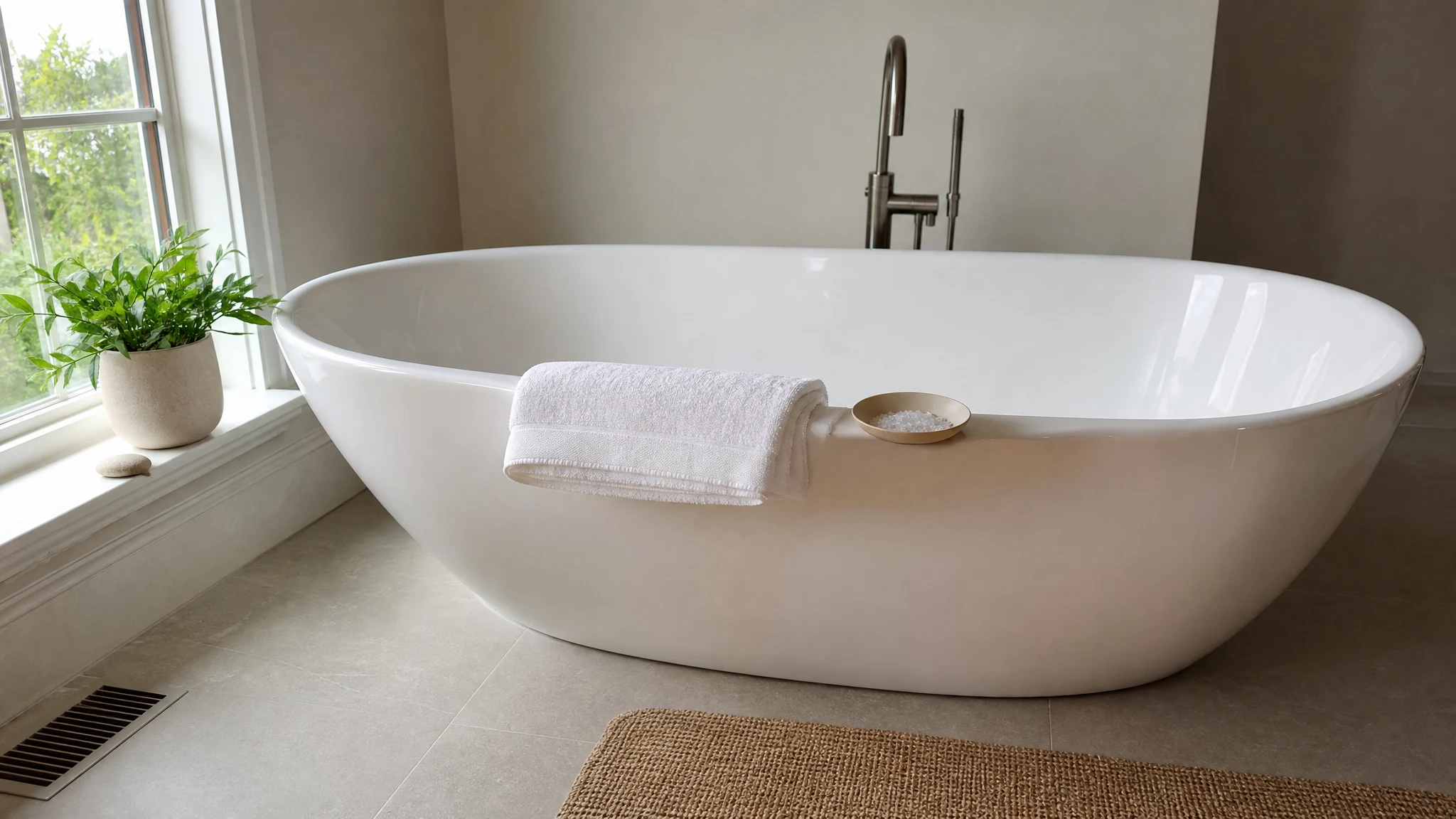
Palmarosa Bath Salts: Mixing Oil and Water Properly
Stir palmarosa into bath salts and it will smell lovely in the jar, then behave oddly in the tub. Salt doesn't dissolve oil, so the oil rides in on the crystals and floats on the surface. The fix is a small, inexpensive ingredient called a dispersant, and once you have it, a rose-green bath is easy to make.
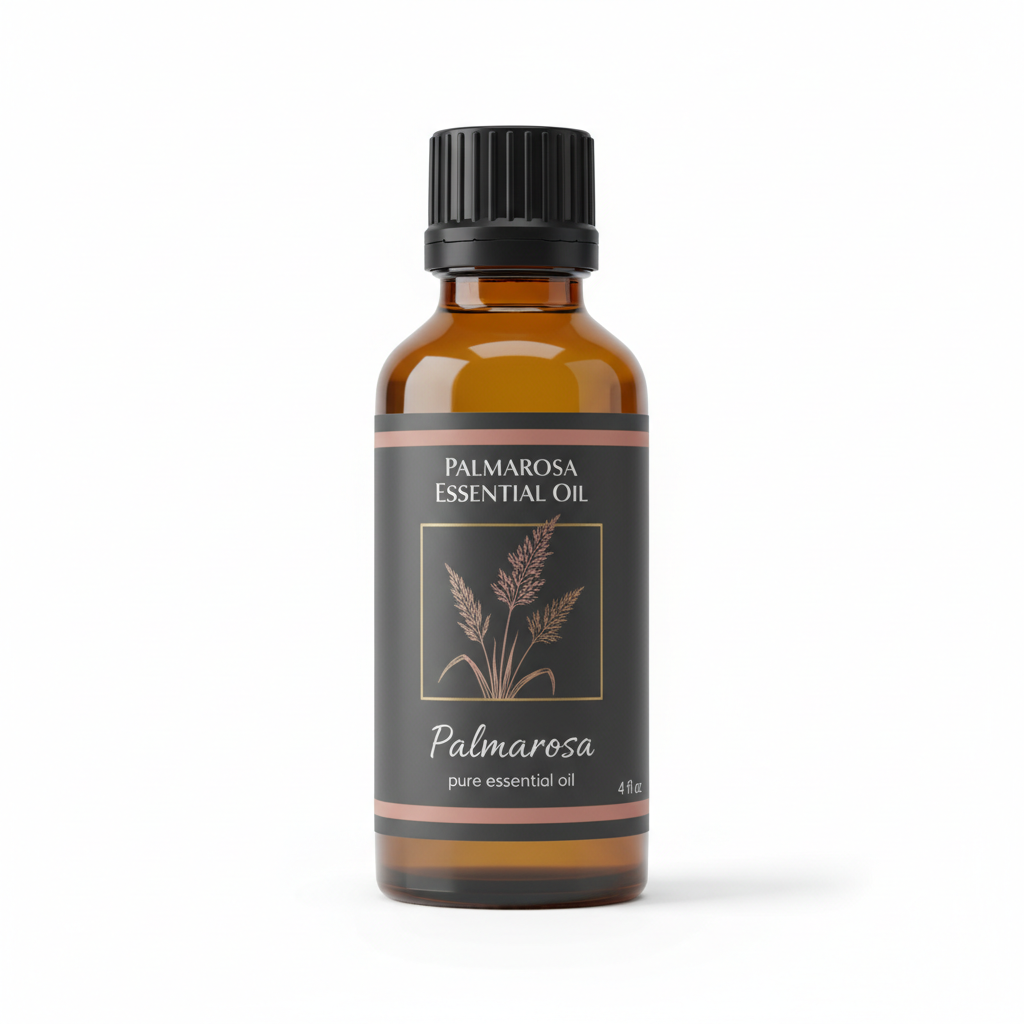
Palmarosa Essential Oil
Our own Palmarosa Essential Oil, in sizes from 0.5 oz to bulk.
From $10.99
Shop Now →What oil does in bathwater
The Tisserand Institute, a respected essential oil safety educator, makes dispersing the golden rule of bathing with oils. Pour oil straight into the water and you get "a film of undiluted essential oils sitting on top" that clings to you as you climb in. Its recommended fix is a dispersant: Solubol, polysorbate 20 or 80, or Natrasorb Bath, a modified tapioca starch (Bath Safety: how to use essential oils safely in the bath). Milk, salt and baking soda are not on that list, however often recipes suggest them.
The same Institute puts bath products at 2% to 4% in its dilution ranges, with a catch worth knowing. That figure assumes the oil is evenly dispersed and so diluted further in the water (Dilution for essential oils - Tisserand Institute). Dispersal is what makes a bath a gentle way to enjoy a scent.
Keeping the amount small
Palmarosa is rich in geraniol, a fragrance allergen, and our own guidance for skin is 0.5% to 2% in a carrier with a patch test first. Bathwater is a lot of dilution, but skin stays in it for a while, so we like to begin small. Our suggestion is 4 drops of palmarosa for one bath. By arithmetic, using the density of 0.888 on the Certificate of Analysis we publish for one batch and the rough convention of 20 drops to the millilitre, that is about 0.18 g of oil. Spread through a 150 litre tub it is a tiny fraction of a percent. Tubs and droppers vary, so treat the numbers as a guide.
If the rose note feels quiet, the better move is a second bath on another day rather than more drops in the first. A softer scent is part of the charm of this oil.
Set things up before the water runs
Bath salts are easiest when everything is within reach before you start. Have a dry bowl, a small cup, a spoon and a scale on the counter, and measure the oil and dispersant carefully rather than by eye. Use a spoon you do not mind keeping for craft work, since oily spoons are awkward to wash in with the dinner things. A glass or metal bowl is easier to clean than a porous one, and a jar with a good seal keeps leftover salts tidy. Wipe the counter afterwards, since salt and oil together can leave a sticky patch that is easy to miss.
A bath for one
- Weigh about 200 g of plain bath salts into a dry bowl. Any salts from a grocery, pharmacy or craft shop will do; they are bulk and a carrier for the scent.
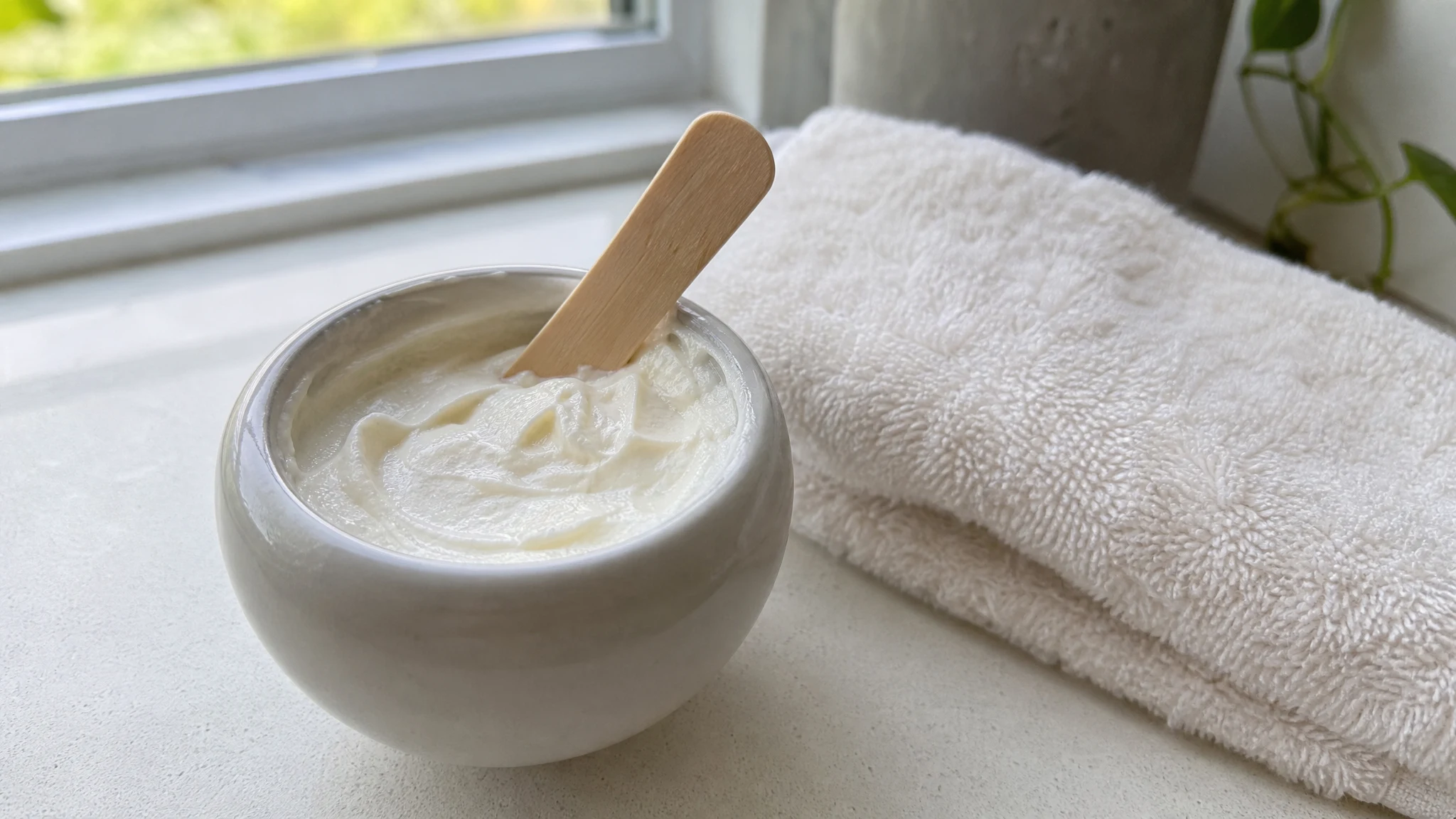
- In a small cup, mix 4 drops of palmarosa with the dispersant, in the amount its maker specifies. We don't sell dispersants, and published guidance varies by product, so follow the label on the one you buy. Stir until it looks uniform.
- Fold the cup into the salts a little at a time. Use the mixture the same day, since the aroma is brightest when fresh.
- Add the salts to running water and swirl the bath by hand before you step in.
Rinse afterwards if your skin feels itchy or tight. A tub that has held oils and dispersants can be slippery, so take your time getting out.
What you will notice
The aroma is gentle once it is dispersed: a hint of rose and fresh-cut grass that rises with the steam, then settles into the room. It tends to be strongest when the salts first meet running water, so it is worth lingering by the tap for a moment. If the scent seems faint, resist topping up. A lighter hand is part of what makes this oil easy to live with, and a bath that smells quietly of roses is more pleasant than one that fills the whole house.
This is a scent ritual, nothing more
We sell palmarosa for its aroma and make no claim that a bath with it relaxes you, helps you sleep or does anything for the body. The pleasure is in the fragrance. If you have eczema or broken skin, have reacted to fragrance before, are pregnant, or the bath is for a child, skip it and ask a dermatologist, midwife or paediatrician; our posts on sensitive skin, pregnancy and children summarise what authorities publish. Fragrance can also bother some people with asthma when inhaled (Allergens in Cosmetics), so step out if you notice itching, stinging or wheezing. Keep the oil and the mixed salts out of reach of children and pets.
If a bath isn't the right setting, a gentle diffuser blend gives you the same rose-green note, and the dilution chart is useful for any other format you try.
Think of the dispersant as the quiet hero of the recipe. With it, a few drops go a long way, and the jar of salts becomes a small, fragrant treat for the end of the day.
Palmarosa Essential Oil
Palmarosa Essential Oil from our own shop, in sizes from 0.5 oz to bulk.
From $10.99
Shop Now →Sources & Further Reading
- Tisserand Institute. Bath Safety: how to use essential oils safely in the bath. tisserandinstitute.org/safety/bath-safety
- Tisserand Institute. Dilution for essential oils - Tisserand Institute. tisserandinstitute.org/dilution-essential-oils
- FDA. Allergens in Cosmetics. fda.gov