Palmarosa Body Butter: A Simple Water-Free Recipe
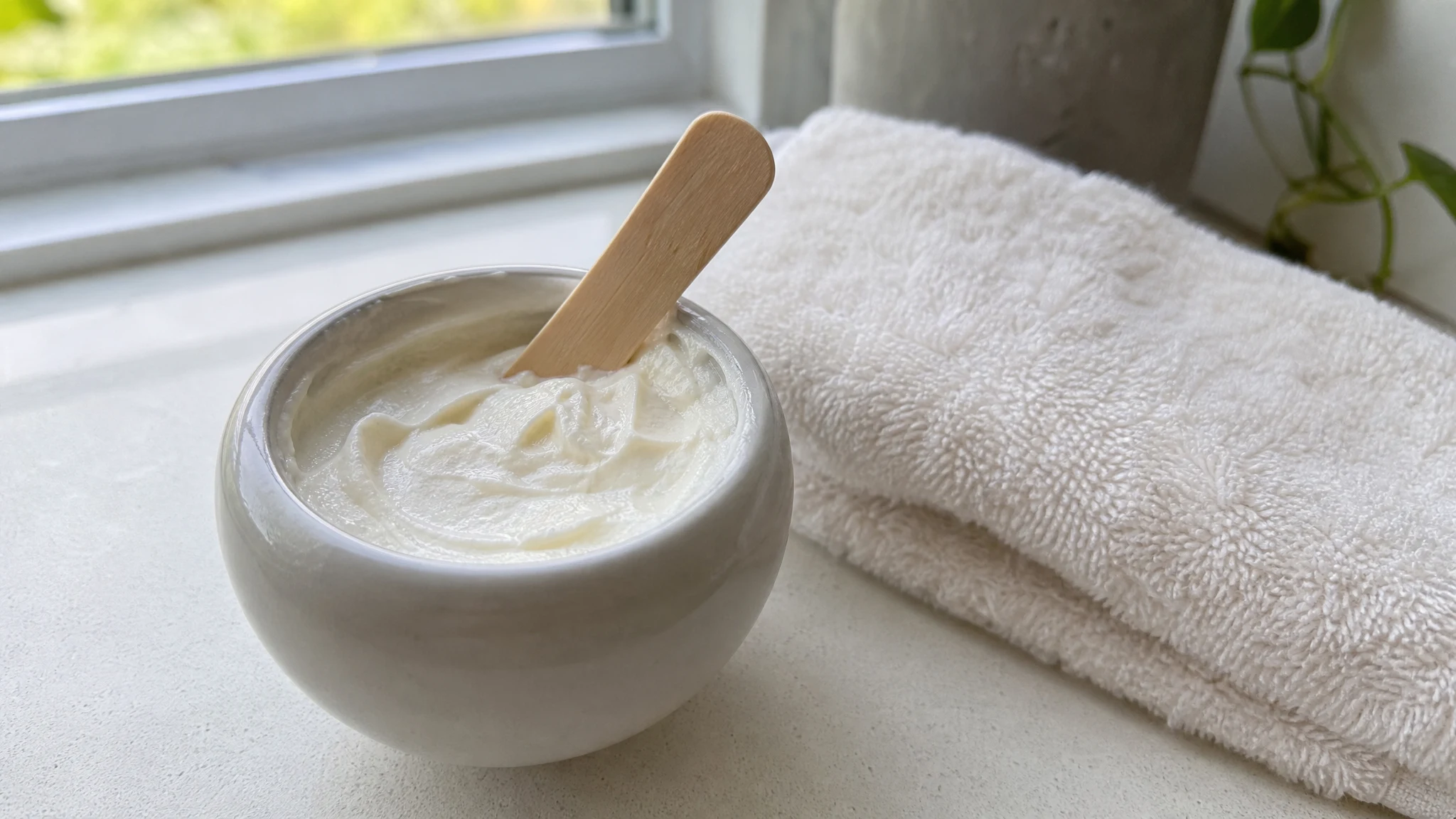
Some body butters are all about the scoop, thick, spoonable and a little bit luxurious. This one is built that way: shea butter, a soft liquid oil, and just enough palmarosa to leave a gentle rose-and-grass scent on the skin. There is no water in it, which keeps the whole thing simple. The formulation below is worked out from published guidance and arithmetic.
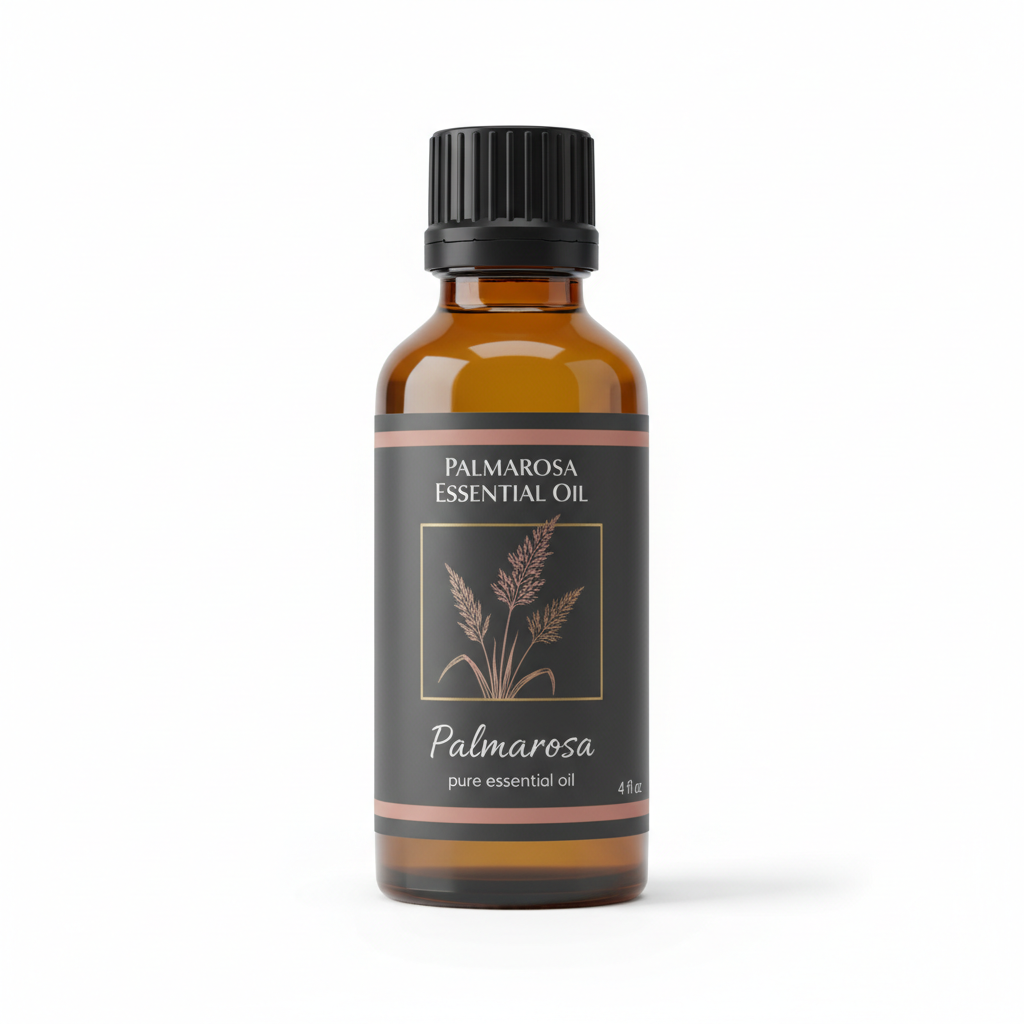
Palmarosa Essential Oil
Our own Palmarosa Essential Oil, in sizes from 0.5 oz to bulk.
From $10.99
Shop Now →Why we leave the water out
Water is where home skincare gets complicated. The FDA lists the usual routes to a contaminated cosmetic: contaminated water or raw materials, weak preservation, packaging that does not protect the product, and fingers dipped into the jar. It adds that water dilutes preservatives and that warm, damp storage can break them down (FDA). A butter with no water phase sidesteps several of those at once. That is our reasoning from the FDA's list, not an FDA statement that water-free products need no care, so a clean jar, a clean spoon and sensible storage still matter.
The trade is feel. A butter made of fat is richer and a little more noticeable on the skin than a lotion. For a body product at the end of the day, many people consider that a feature.
How much palmarosa belongs in it
We recommend diluting our palmarosa to between 0.5% and 2% in a carrier and patch testing first. For a leave-on body butter we sit at the lower end. IFRA's geraniol standard gives about 1.46% oil as a rough ceiling for body creams and lotions and about 1.14% for hand cream, using the annex's typical 82.4% geraniol (our arithmetic, not a figure for any particular bottle). At 2%, the oil would bring about 1.65% geraniol, above both (IFRA, 2023). The Tisserand Institute's general range for body oils and lotions is 1% to 3%, and 0.2% to 1% for sensitive skin (Tisserand Institute).
So here is our suggestion: start at 0.5% for a first jar, treat 1% as the most you would use on the body, and keep it off the face. Geraniol is one of the fragrance allergens the EU requires to be declared on labels, and a patch-testing review describes it as both a prehapten and a prohapten, meaning it can become a stronger allergen after oxidation (Sukakul, Bruze and Svedman, 2024). If you have eczema, broken skin or a history of reacting to fragrance, a dermatologist or allergist should be your first call.
The formula, by weight
This makes 100 g. It uses the density on the certificate we publish for one batch (0.888, so 1 ml weighs about 0.888 g) and the rough convention of 20 drops per ml. Droppers vary, so weigh the oil if your scale reads to 0.01 g.
| Ingredient | Amount |
|---|---|
| Unscented shea butter | 60 g |
| Liquid carrier oil of your choice | about 39 g |
| Palmarosa oil at 0.5% | 0.5 g (about 0.56 ml, about 11 drops) |
| Palmarosa oil at 1%, the most we would use | 1.0 g (about 1.13 ml, about 22 drops), with the carrier reduced by the same weight |
The butter-to-oil ratio is a suggestion for a soft, spoonable texture. More liquid oil gives a softer butter, so adjust in small steps. Shea butter, the carrier and a clean jar are easy to find at a craft shop, pharmacy or grocery, and our carrier guide helps with the choice.
Making it
- Wash and thoroughly dry the bowl, whisk and jar. Stray water is the one thing this recipe does not want.
- Melt the butter and carrier together gently until clear, then chill until the edges just begin to set.
- Stir in the palmarosa once the mixture has cooled, since a hot batch is no place for a fragrant, volatile oil.
- Whip until fluffy, spoon into the jar and close it.
- Use a clean spoon each time rather than fingers.
Shea butter can turn grainy if it cools slowly. A quick chill in a cold water bath before whipping is a sensible precaution, and it is our suggestion based on how fats crystallise, not a tested instruction.
What it feels like to use
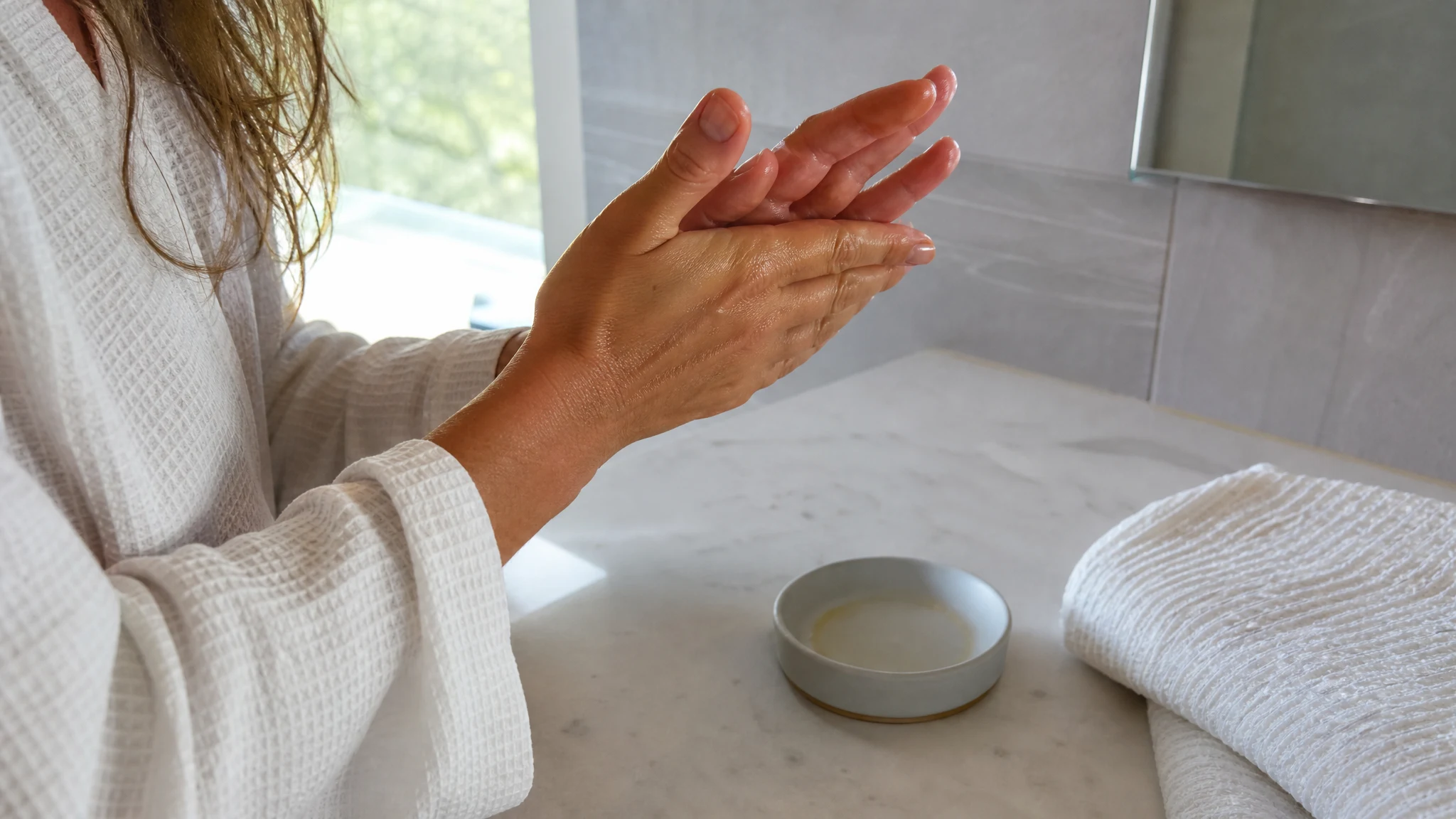
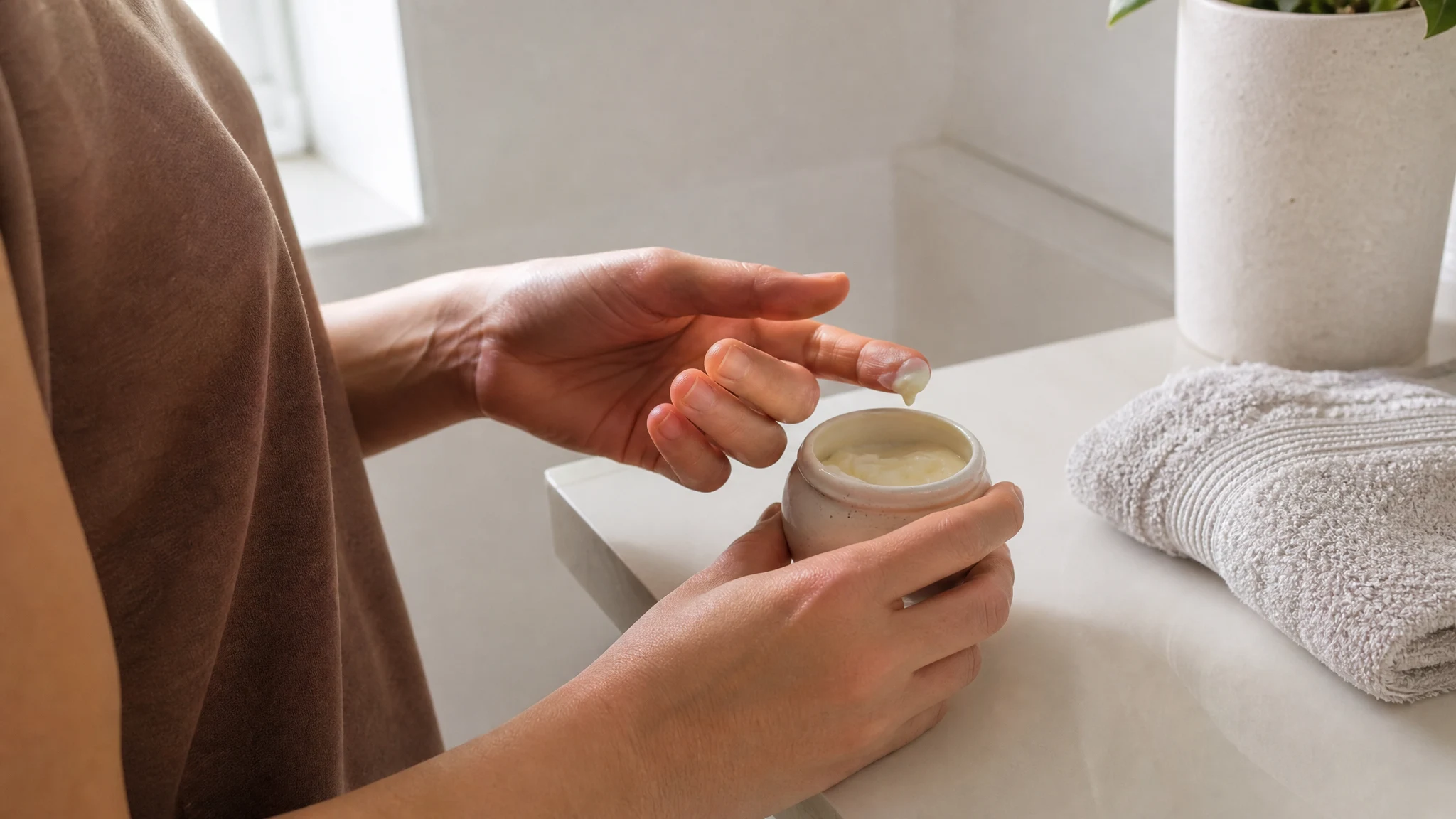
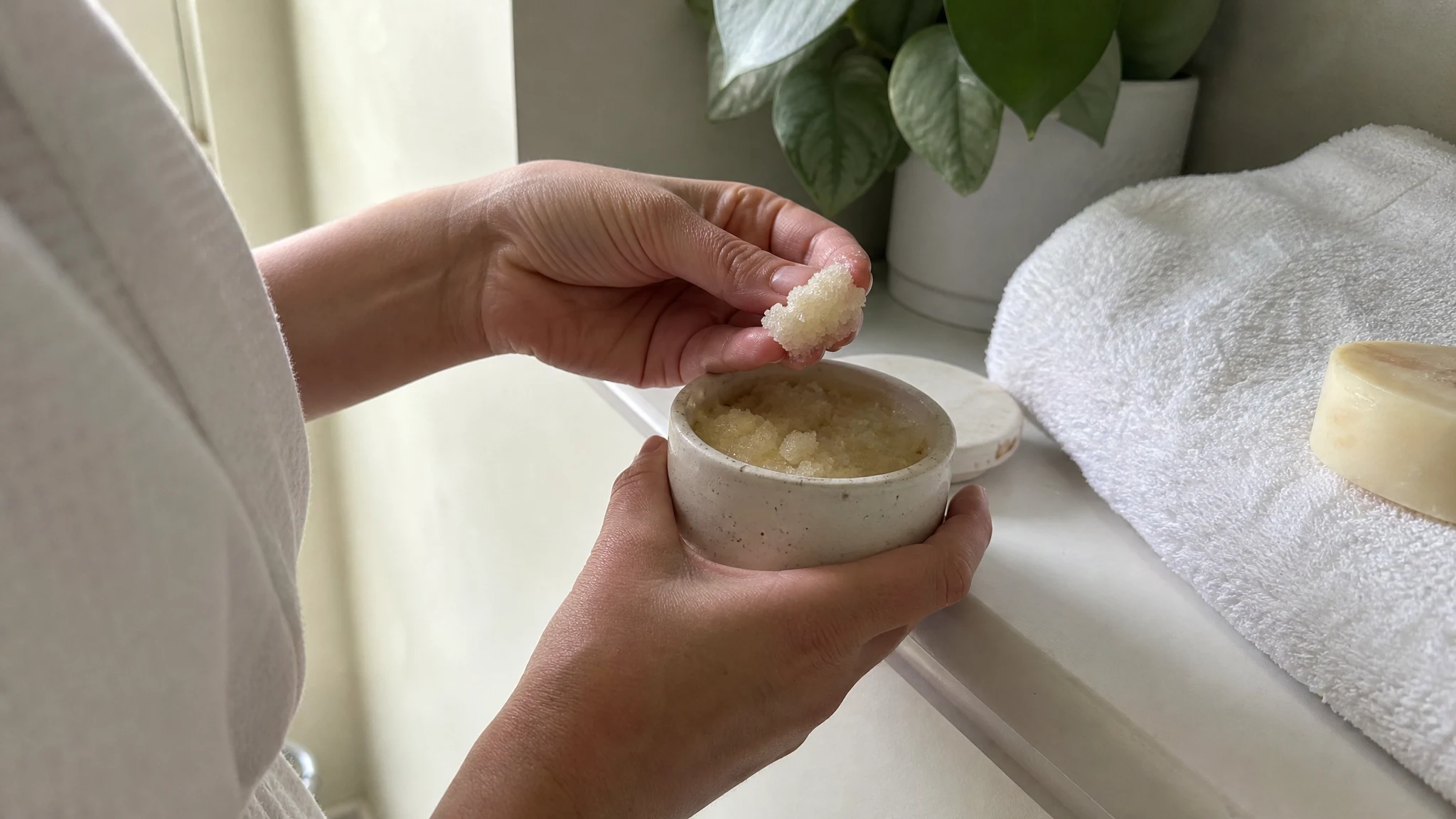
A water-free butter is thick in the jar and softens as soon as it meets the warmth of your hands, so take a pea-sized amount, rub it between your palms and press it on rather than dragging it. Expect it to feel richer than a lotion and to sit on the skin for a few minutes before it settles in. The scent is soft, with the rosy note up front and a faint green edge, and it fades gently through the day rather than announcing itself.
Patch test and keeping it fresh
Dab a little on the inner forearm and wait a day before using it more widely. A home check is gentler than a clinic one, in which the FDA describes the allergen sitting on the skin for two days across two to three visits (FDA), so treat it as a first step and stop at any redness or itching. Make a jar you will finish in a reasonable time, because fats eventually go rancid and geraniol that has been exposed to air forms stronger sensitizers than fresh geraniol did in mouse tests (Hagvall et al., 2007). Keep the oil bottle tightly closed.
It is not for babies or young children, and our oil is for external use only. For the wider arithmetic, take a look at the dilution chart, and for a face version see the facial oil. If you are unsure how your skin will respond, side effects and patch testing explains what to look for.
A jar of this on the nightstand is a small, scented pleasure, and it is made from three ingredients you can pronounce.
Palmarosa Essential Oil
Palmarosa Essential Oil from our own shop, in sizes from 0.5 oz to bulk.
From $10.99
Shop Now →Sources & Further Reading
- IFRA Standard: Geraniol, 2023 (Amendment 51)
- Annex on contributions from other sources to the IFRA Standards, 51st Amendment
- Tisserand Institute, Dilution for essential oils
- FDA, Microbiological Safety and Cosmetics
- FDA, Allergens in Cosmetics
- Sukakul T, Bruze M, Svedman C, 2024. Fragrance Contact Allergy - A Review Focusing on Patch Testing. Acta Derm Venereol
- Hagvall L et al., 2007. Fragrance compound geraniol forms contact allergens on air exposure. Identification and quantification of oxidation products and effect on skin sensitization. Chem Res Toxicol