Palmarosa Soap and Sugar Scrub: Easy Rinse-Off Recipes
Soap is where palmarosa gets room to stretch its legs. Because a bar is rinsed away within a minute or two, the fragrance industry lets a rinse-off product carry roughly three times as much geraniol as a body oil. That is good news for anyone who loves the sweet, rosy, gently green scent of this grass and wants it in the shower.
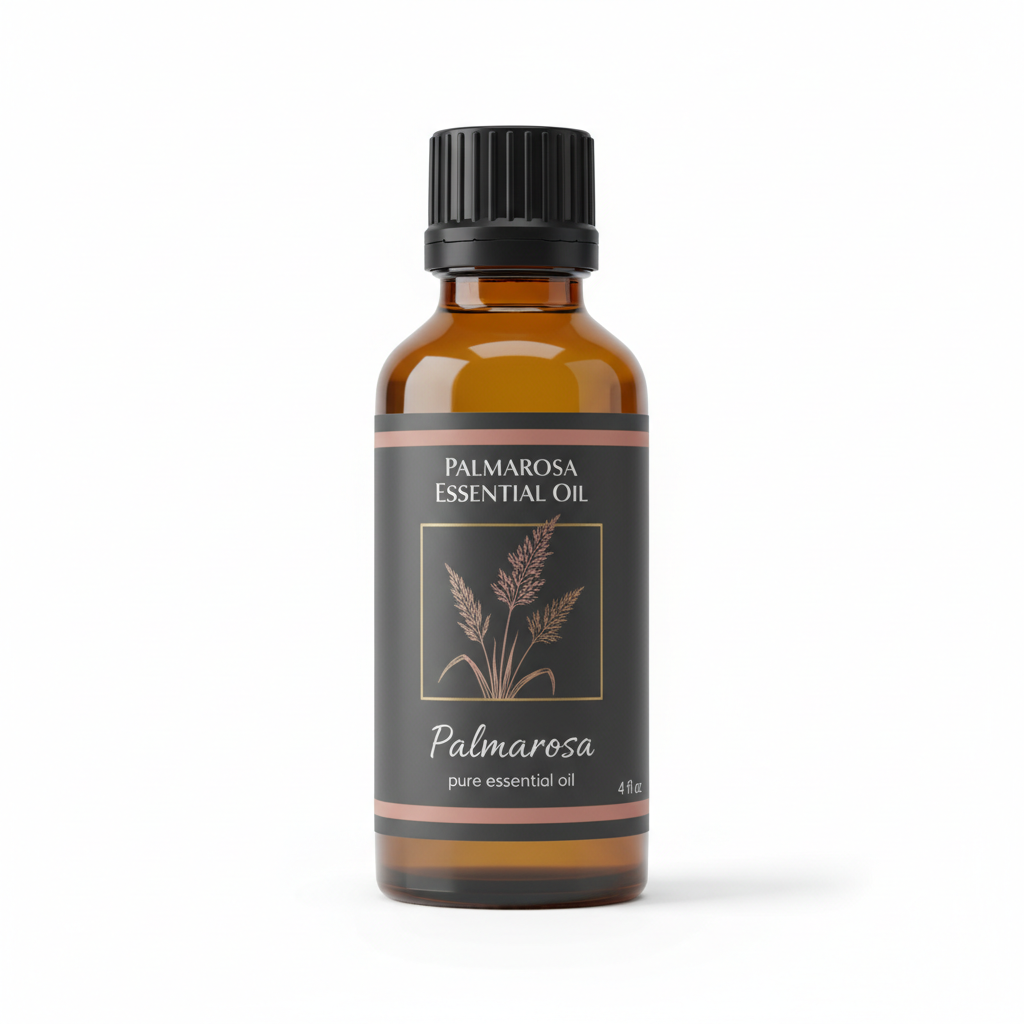
Palmarosa Essential Oil
Our own Palmarosa Essential Oil, in sizes from 0.5 oz to bulk.
From $10.99
Shop Now →Why a bar can take more than a body oil
Palmarosa oil is mostly geraniol, and geraniol is the component the International Fragrance Association (IFRA) limits, product type by product type. Its guidance sorts bar soap, liquid soap, shower gels and rinse-off face cleansers into category 9, with a cap of 2.8% geraniol in the finished product. Body creams, oils and lotions sit in category 5A at 1.2%, and face moisturizers in 5B at 0.78% (IFRA Standard, Geraniol, 2023 (Amendment 51)).
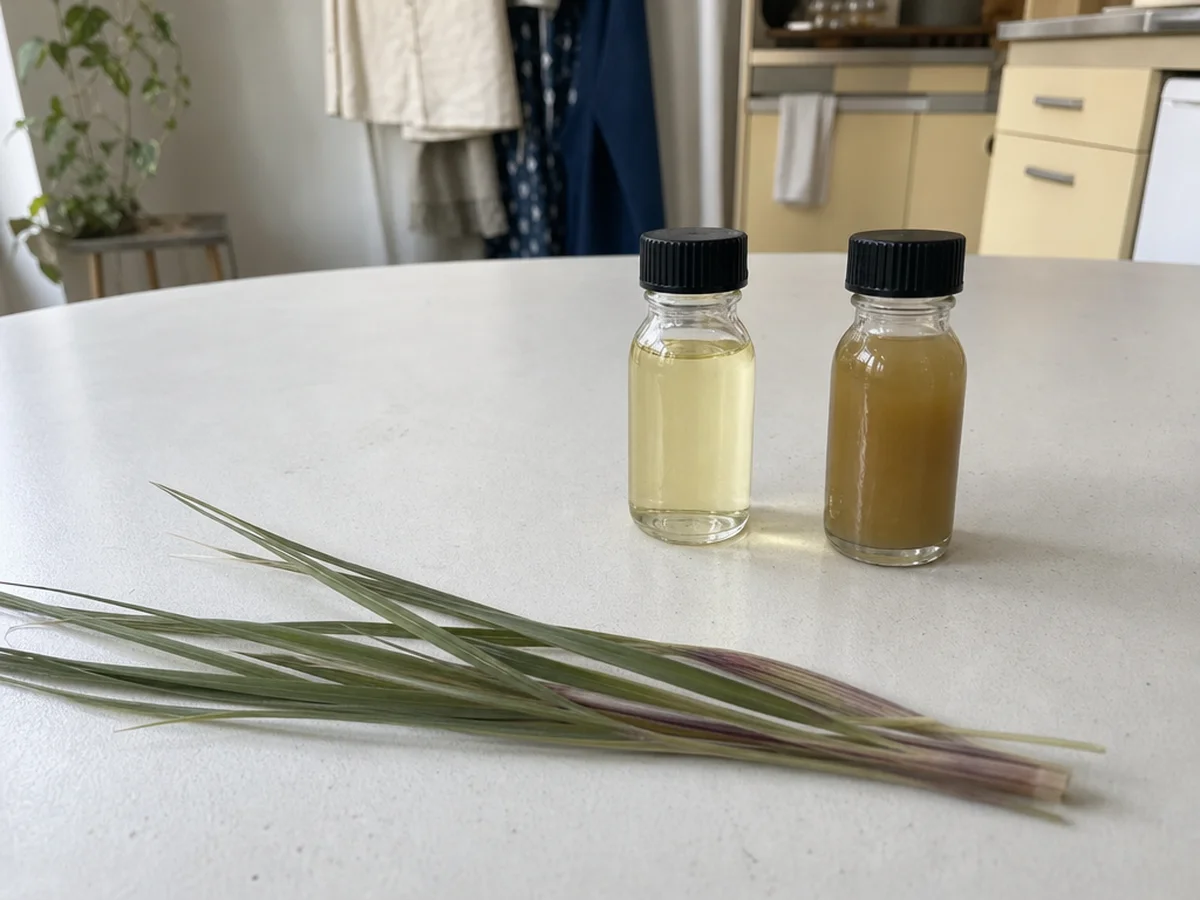
IFRA's reference composition puts geraniol at about 82% of palmarosa oil, so dividing 2.8% by 0.82 gives a ceiling of roughly 3.4% oil in a bar. That is our arithmetic from a typical composition, not a measurement of our oil. Our own dilution guidance for skin is 0.5% to 2% in a carrier oil, and for soap and scrub we suggest 1%. It sits comfortably under the rinse-off ceiling and under the leave-on ones too, which leaves a margin for the way real batches vary.
A melt-and-pour bar
Melt-and-pour is a ready-made soap base you melt, scent and pour into moulds, with no lye to handle. You will find the base at a craft or soap-supply shop; we sell the oil only. Our shop lists soap among the uses for palmarosa, and this is the gentlest way in.
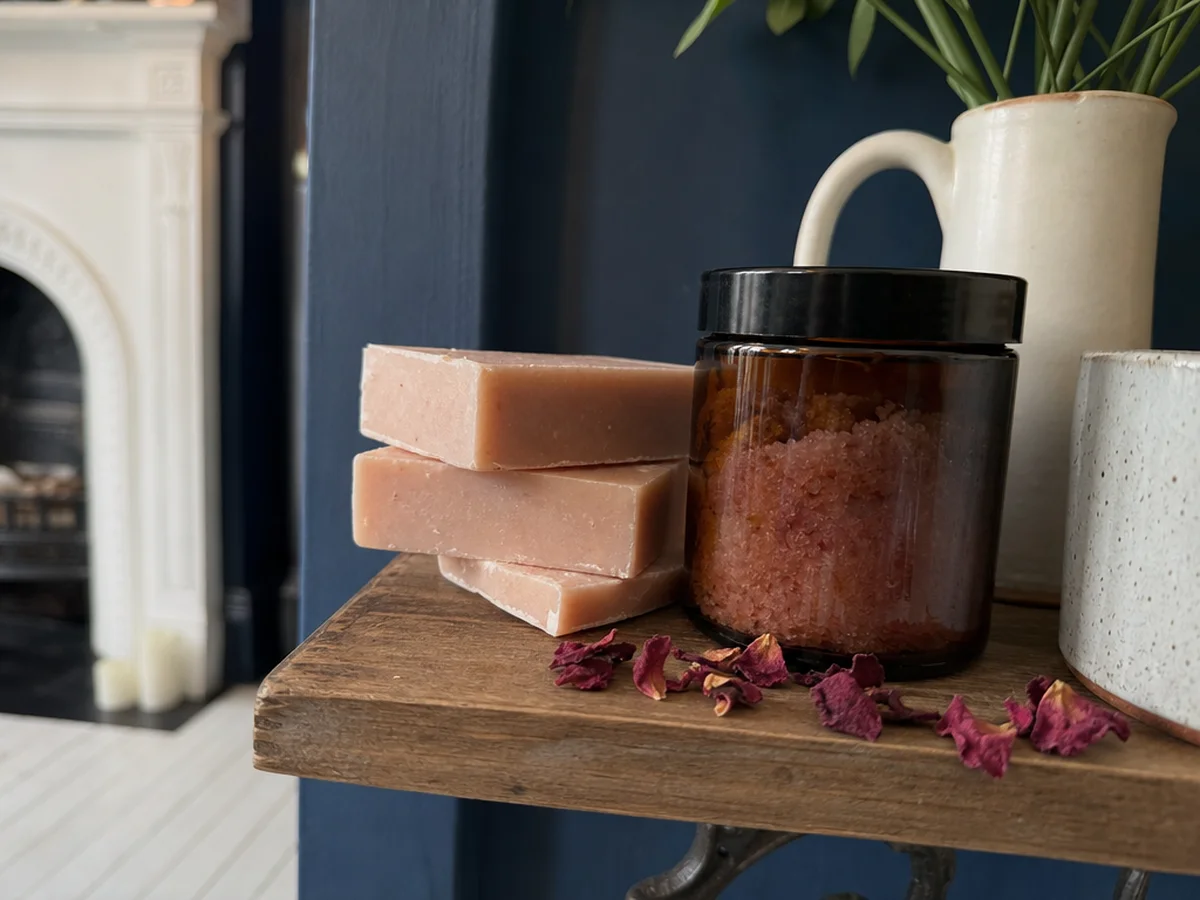
For every 100 g of finished soap, weigh 99 g of base and 1 g of palmarosa oil. For a 500 g batch that is 495 g of base and 5 g of oil. If you only have a dropper, 1 g is about 1.13 ml, or around 23 drops. That uses the density of 0.888 on the Certificate of Analysis we publish for one batch and the rough convention of 20 drops to the millilitre. Droppers differ, so a scale that reads to 0.1 g is the better tool.
- Melt the base following the maker's directions.
- Let it cool a little before the oil goes in, since heat chases off the lightest aromatic molecules. That is a practical habit, and the base's own instructions come first.
- Stir in the weighed oil, pour, and leave the bars to set.
- Wrap them once firm.
Making it pretty
Silicone moulds from a craft shop release bars easily, and a simple shape looks best because the scent is the star. Leave the bars to harden fully before you pop them out, and give the surface a quick wipe if it is cloudy. For a gift, wrap each bar in paper and add a tag with the scent and the date. You can write "sweet, rosy, gently green" on it and be telling the truth.
A note if you plan to sell bars: the US Food and Drug Administration treats a product as soap only when most of it is an alkali salt of fatty acids and it is sold solely as soap. A cleanser also marketed for fragrance or moisturizing is a cosmetic and is labelled as one (Is It a Cosmetic, a Drug, or Both? (Or Is It Soap?)). For gifts and home use the question never comes up.
A dry sugar scrub
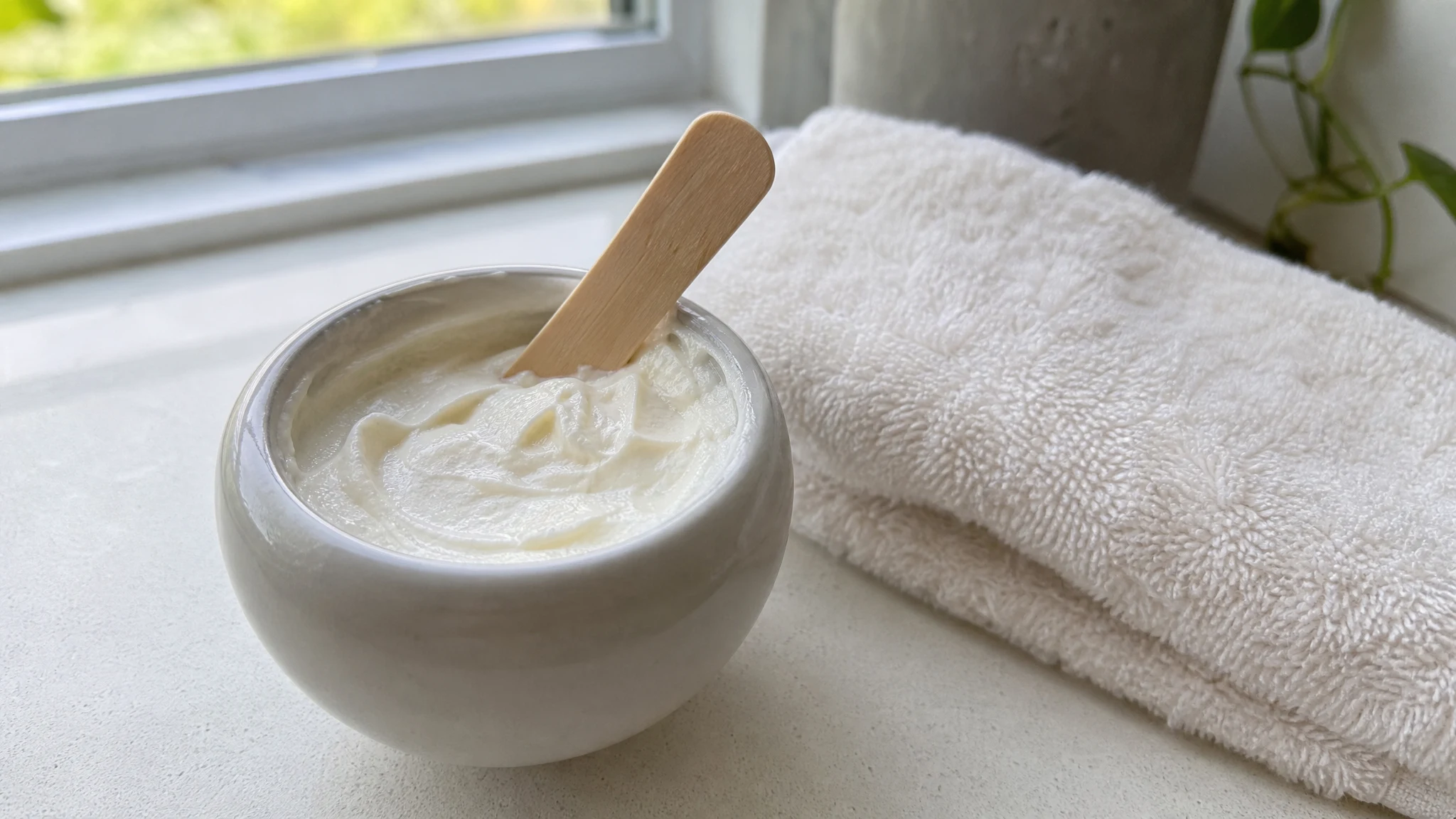
A scrub is simply sugar bound with oil. The ratio below, about two parts sugar to one part carrier oil, is a texture preference, so adjust it by feel and keep palmarosa at 1% of the total weight.
- 66 g dry granulated sugar
- 33 g carrier oil, such as jojoba or sweet almond (from a grocery, pharmacy or craft shop)
- 1 g palmarosa oil, about 23 drops
Stir the palmarosa into the carrier first, then fold in the sugar, so the scent spreads evenly and doesn't gather in pockets. Our guide to carrier oils for palmarosa helps you pick the base.
Notice that there is no water in the jar. Water is a common route for microbes to get into cosmetics, along with fingers dipped into a jar and warm, damp storage (Microbiological Safety and Cosmetics). A jar kept by the shower is exactly that setting, so we would keep the lid on, scoop with a dry spoon, make small batches and bin any jar that gets wet. Use it on the body, rinse it off well, and skip freshly shaved or broken skin. That last caution is common sense rather than a sourced rule. We would also keep scrubs off the face, since the face has the lowest cap of the lot.
Using the scrub
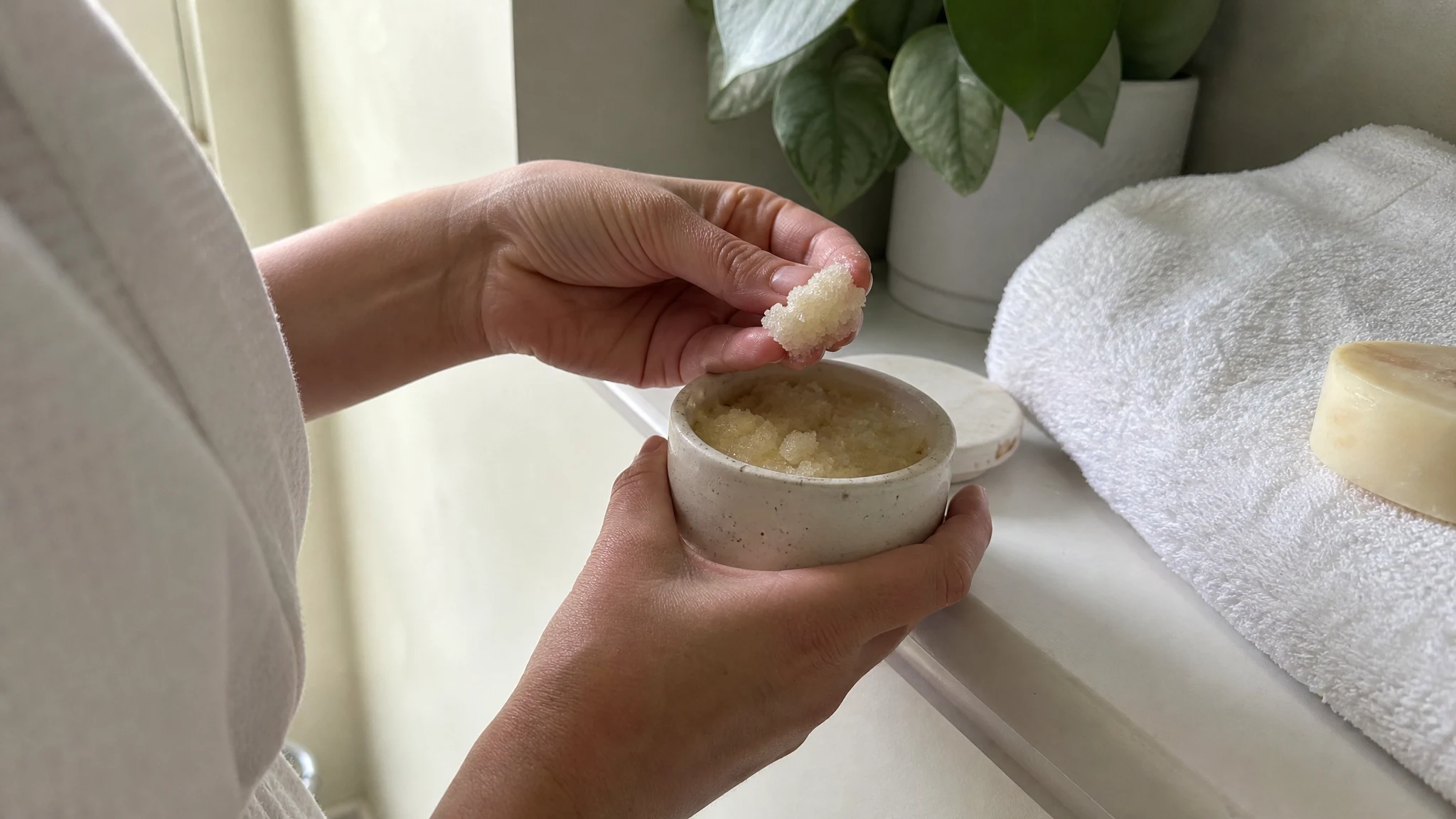
Scoop a small spoonful into your palm and work it in gentle circles over wet arms or legs, then rinse well. As the warm water hits it, you'll notice the sweet rosy note lift out of the jar. Keep the lid closed between uses, and set the jar somewhere the shower spray cannot reach. A bar likewise lasts longer on a draining dish than in a puddle.
A word on scented soap and sensitive skin
Geraniol is one of the fragrance allergens that EU rules require to be named on a label. Dermatologists describe it as both a prehapten and a prohapten, which means it can turn into an allergen either through air oxidation or inside the skin (Fragrance Contact Allergy - A Review Focusing on Patch Testing). A bar is a daily, repeated exposure, so patch test first, and if you have eczema or a known fragrance allergy, check with a dermatologist before making scented soap. Our patch testing guide walks through the test. Keep the neat oil away from children and pets, and if you enjoy a soak as well as a wash, see how we handle bath salts.
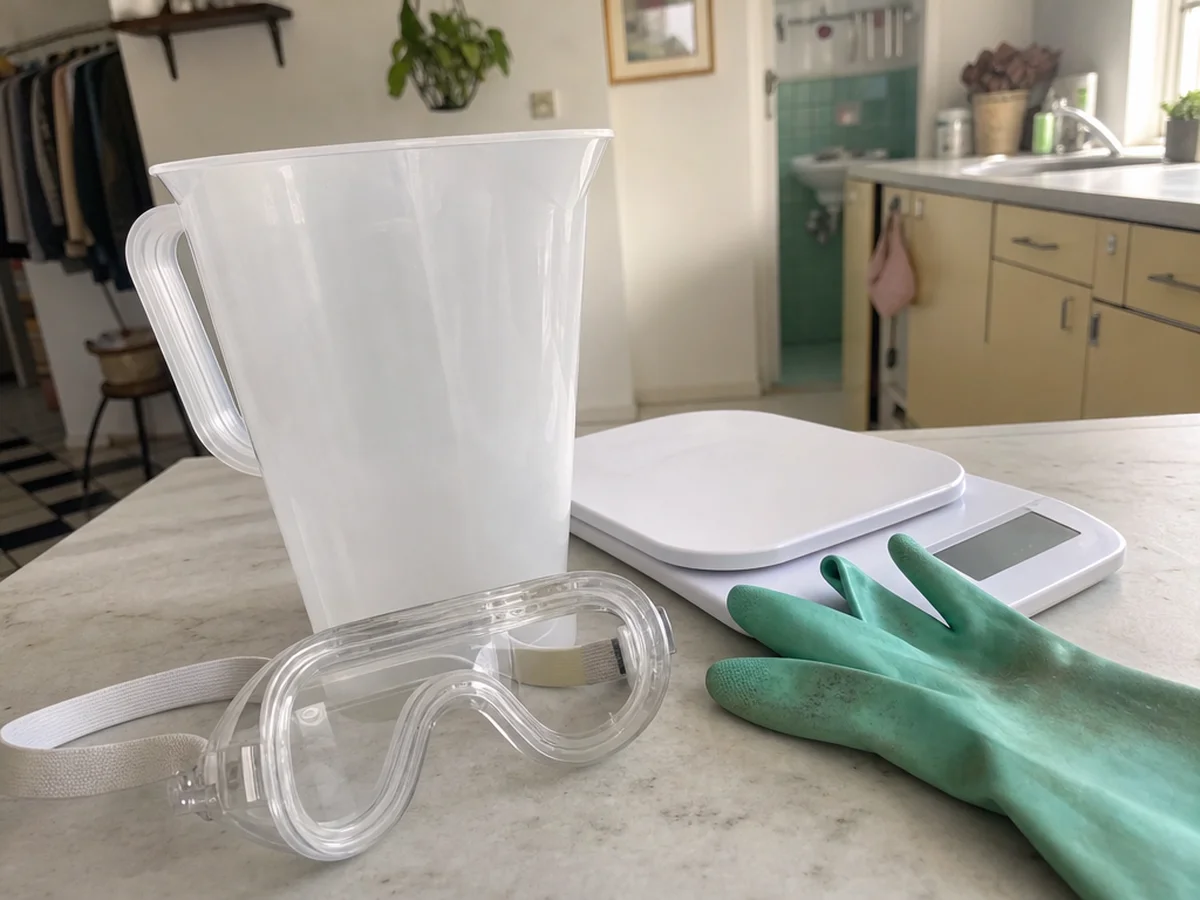
One percent, weighed rather than guessed, is a good place to begin. A bar scented that way carries the sweet, rosy note without shouting, and you can nudge the amount up or down on the next batch.
Palmarosa Essential Oil
Palmarosa Essential Oil from our own shop, in sizes from 0.5 oz to bulk.
From $10.99
Shop Now →Sources & Further Reading
- IFRA Standard, Geraniol, 2023 (Amendment 51). IFRA_STD_037.pdf
- FDA. Is It a Cosmetic, a Drug, or Both? (Or Is It Soap?) fda.gov
- FDA. Microbiological Safety and Cosmetics. fda.gov
- Sukakul T, Bruze M, Svedman C. Fragrance Contact Allergy - A Review Focusing on Patch Testing. Acta Derm Venereol 2024. PMC11334351