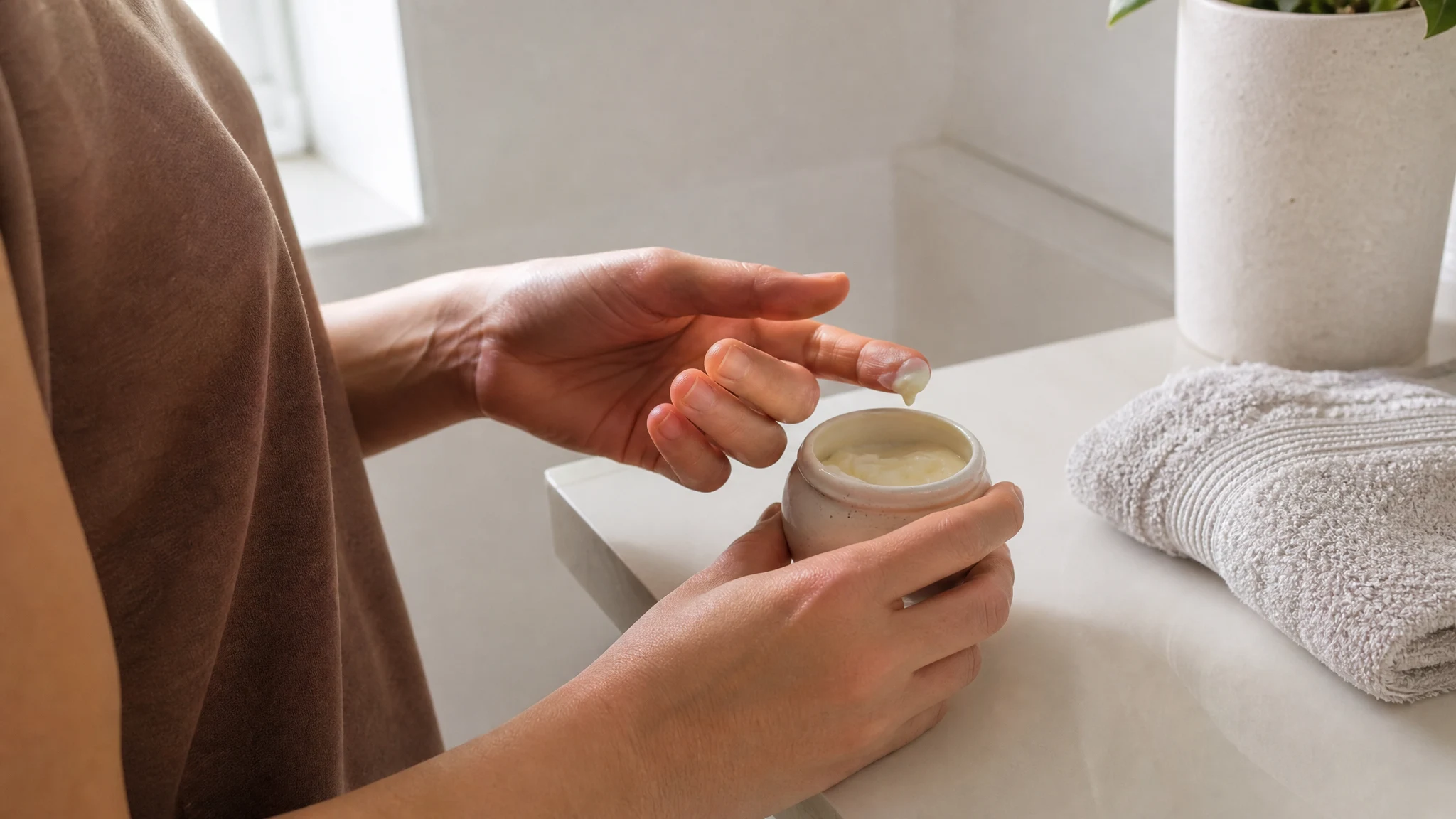
Palmarosa in Deodorant: How Little Is Enough?
If you have ever wondered whether a few drops of palmarosa could turn an ordinary deodorant into something that smells faintly of roses, the short answer is yes, a very few. The underarm is one of the places where fragrance limits are tightest, so a whisper is exactly the right amount. Here is the number and how to use it.
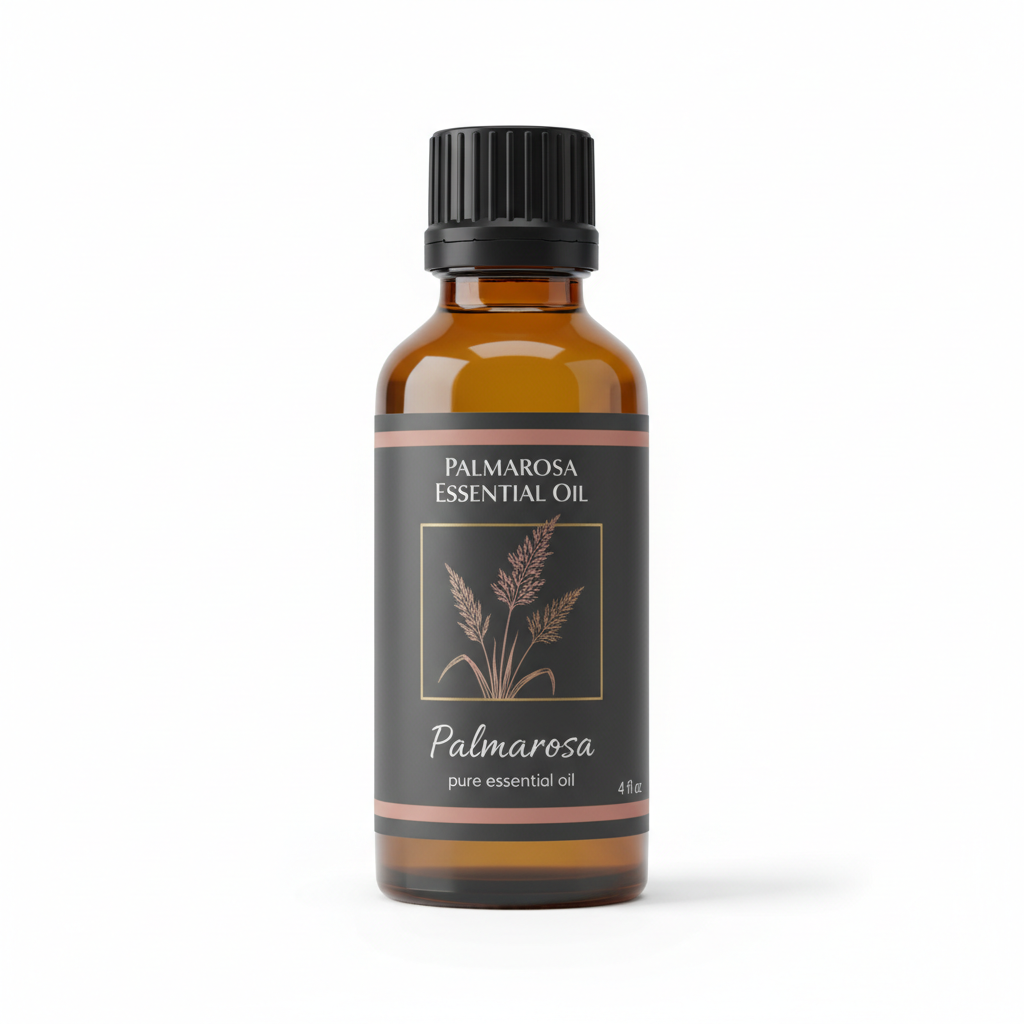
Palmarosa Essential Oil
Our own Palmarosa Essential Oil, in sizes from 0.5 oz to bulk.
From $10.99
Shop Now →What we are making, and what we are not
A scented deodorant is a cosmetic, and the FDA draws the line by intended use: a product meant to cleanse or beautify is a cosmetic, while one meant to affect the body's structure or function is a drug, and a deodorant that is also an antiperspirant counts as both (FDA). We sell an external fragrance oil and make no claim about sweat or odor. What palmarosa adds is scent, and a very pleasant one.
The NHS puts the practical side well: for body odour, its self-care advice is to wash the underarms with soap at least twice a day and dry them thoroughly, change and wash clothes regularly and choose natural fabrics, and it says a pharmacist can suggest stronger antiperspirants (NHS, Body odour). Fragrance is the finishing touch on a routine like that.
The underarm ceiling
We recommend diluting our palmarosa to between 0.5% and 2% in a carrier for general skin use. The underarm has a lower figure of its own. In IFRA's geraniol standard, category 2 (the underarm category) allows 0.25% geraniol in the finished product (IFRA, 2023). With the typical 82.4% geraniol that IFRA lists for palmarosa oil (IFRA annex), the ceiling for the oil works out to about 0.30%. That is our arithmetic, not a measurement of any bottle. It is also below the low end of our general range, so for an underarm product we go lower, and the Tisserand Institute's general range of 0.5% to 1.2% for facial products and deodorants (Tisserand Institute) is not the number to follow here.
The underarm is also where fragrance allergy tends to show itself. A review of antiperspirant and deodorant allergy found fragrance in 90% of the 107 products it checked and noted that axillary dermatitis is over-represented in people with a known fragrance allergy (Zirwas and Moennich, 2008). That is a good reason to keep the scent light and to think twice if you have reacted to scented products before.
Two drops in 50 g
With the density on the certificate we publish for one batch (0.888) and the rough convention of 20 drops per ml, a drop weighs about 0.044 g. That makes the maths easy:
| Drops in 50 g of base | Share of the product | Against the 0.30% ceiling |
|---|---|---|
| 2 | about 0.18% | comfortably under |
| 3 | about 0.27% | just under |
| 4 | about 0.36% | over |
Our suggestion is 2 drops. Because droppers vary, a larger drop could push 3 drops past the ceiling, and 2 leaves a margin. If you own a scale that reads to 0.01 g, weigh about 0.09 g instead.
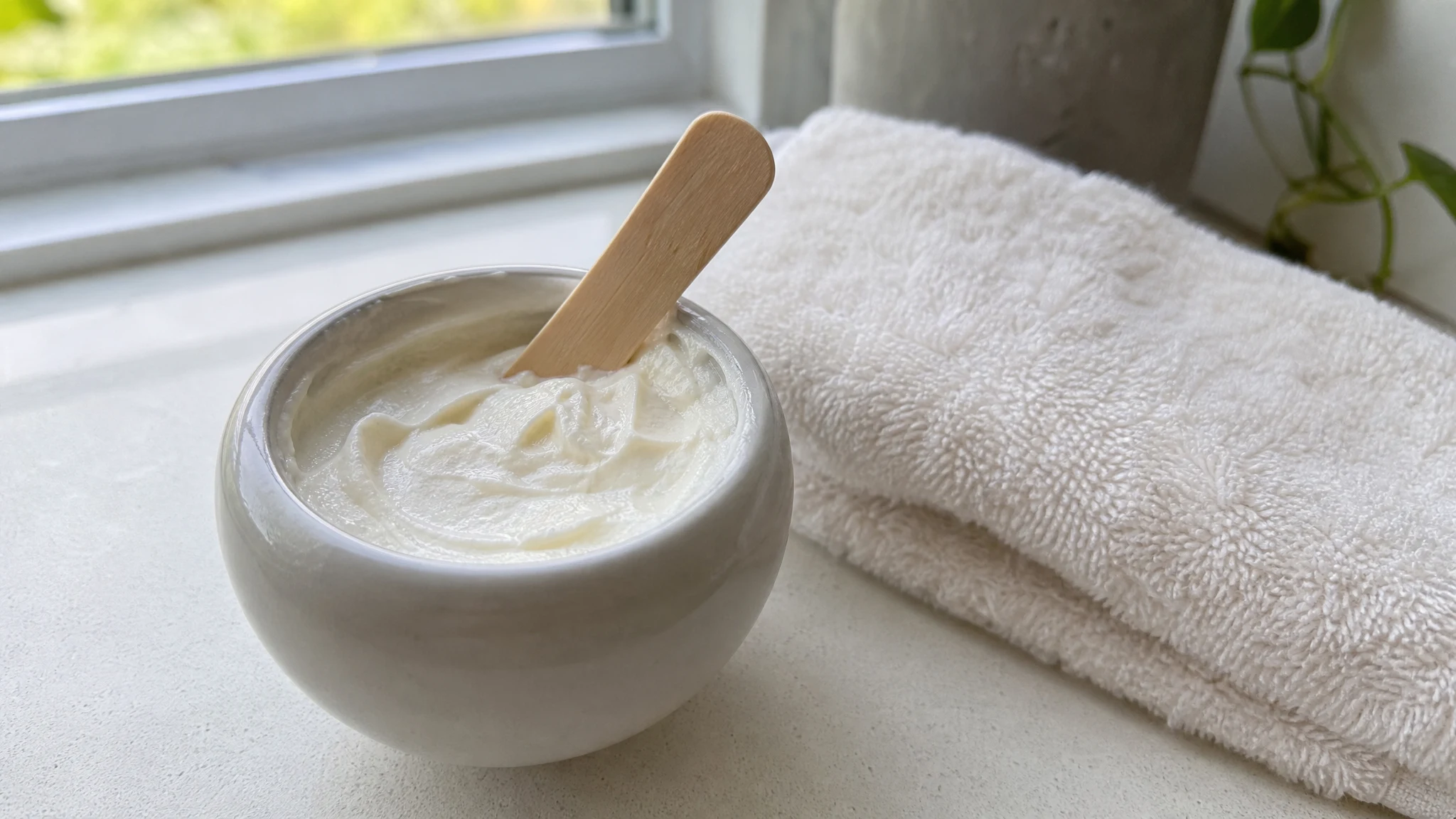
For the base, use an unscented deodorant cream or stick from a pharmacy or grocery. Check the label first for "fragrance", "parfum" or any essential oil already in the product: if one is there, its geraniol adds to ours and palmarosa is best left out. Soften a cream gently in a clean dish, stir in the drops and pack it back into a clean container. A hard stick is better left alone, as melting it for two drops is not worth the trouble.
Keep the batch small and the label clear
Scenting a deodorant is a two-minute job, which makes it easy to get carried away, so keep the batch small. Write the date on the container and, if you share a bathroom, name it clearly so nobody else is surprised by the fragrance. If the base you chose is already scented, leave the palmarosa out and enjoy what is in the tub. A bottle of palmarosa lasts a very long time at two drops a batch.
What you will notice
At this level the rose is a rumour rather than a statement. You may catch a soft, sweet, slightly green note when you open the container and almost nothing on the skin afterwards. That is the right result. If you want more presence, enjoy the oil somewhere it can be stronger, such as a diffuser, and keep the underarm scent faint.
Patch test, and who should ask first
Try a little of the finished product on your inner forearm and wait a day. A clinic patch test is a longer affair, with the allergen on the skin for two days over two to three visits (FDA, Allergens in Cosmetics), so a home check is only a first step. Use it on unbroken skin, not right after shaving or waxing, and stop at the first itch, redness or sting. Anyone with known fragrance allergy or eczema should ask a dermatologist before using a scented product, and a rash that lingers deserves a professional look. Keep the oil away from eyes, children and pets, and never swallow it.
Our dilution chart covers the wider arithmetic, side effects and patch testing explains reactions, and the body mist and linen spray post uses the same ceiling for a spray.
A deodorant scented this lightly is the quietest kind of luxury: you barely notice it, until you catch a faint hint of roses when you lift your arm.
Palmarosa Essential Oil
Palmarosa Essential Oil from our own shop, in sizes from 0.5 oz to bulk.
From $10.99
Shop Now →Sources & Further Reading
- FDA, Is It a Cosmetic, a Drug, or Both? (Or Is It Soap?)
- NHS, Body odour
- IFRA Standard: Geraniol, 2023 (Amendment 51)
- Annex on contributions from other sources to the IFRA Standards, 51st Amendment
- Tisserand Institute, Dilution for essential oils
- Zirwas MJ, Moennich J, 2008. Antiperspirant and deodorant allergy: diagnosis and management. J Clin Aesthet Dermatol
- FDA, Allergens in Cosmetics