Palmarosa Linen Spray and Body Mist Recipes
A palmarosa body mist and a palmarosa linen spray look like the same project in two bottles, and they are not. The fragrance industry's geraniol limit for a body mist is more than four times lower than for a fabric spray, so the two want different strengths. Here are both, worked out from published limits and simple arithmetic.
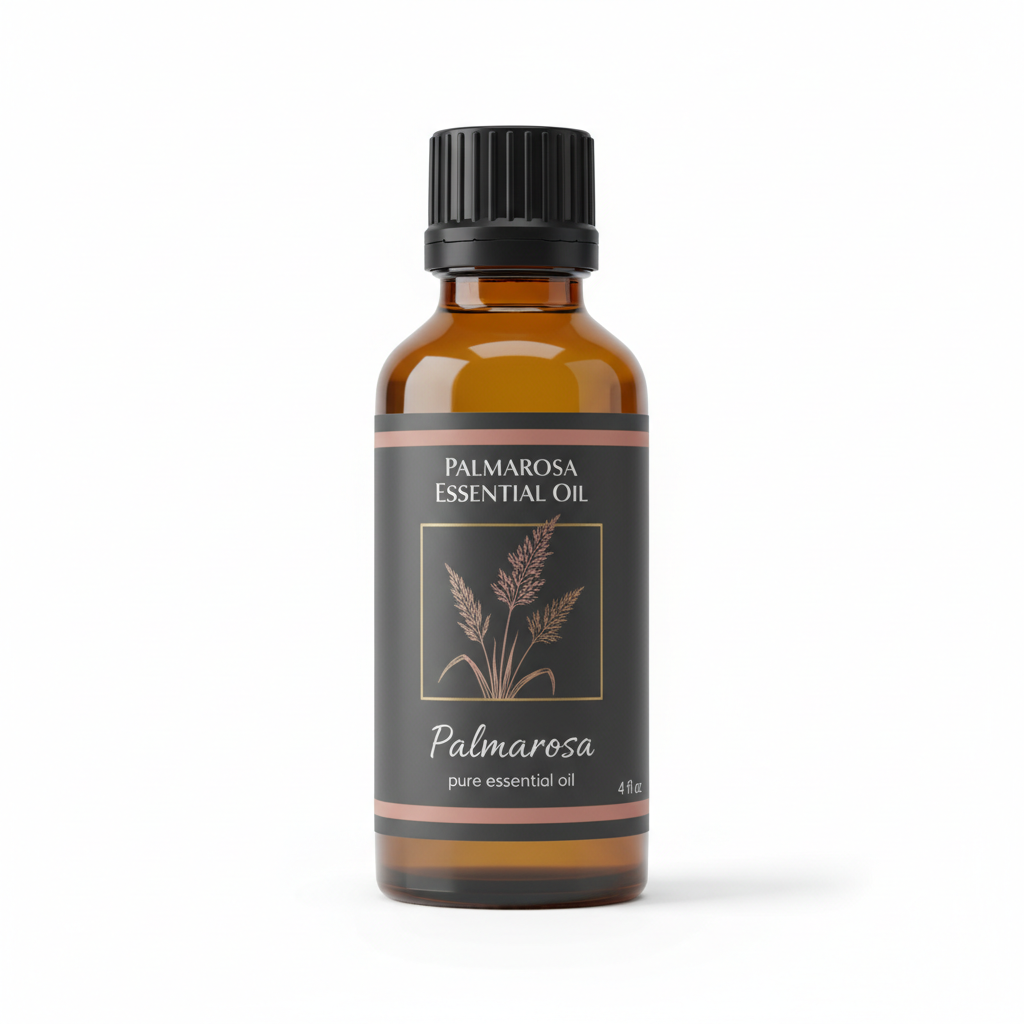
Palmarosa Essential Oil
Our own Palmarosa Essential Oil, in sizes from 0.5 oz to bulk.
From $10.99
Shop Now →One bottle, three ceilings
IFRA's guidance places body sprays and mists in category 2, the underarm category, because use often spreads beyond the body. A mist clearly labelled not for the underarms can be considered under category 4, though the guidance asks for a case-by-case decision. Fabric sprays sit in 10A. Pillow spray sits in category 11, on the assumption that a face may rest on the pillow before it dries (IFRA guidance, 51st Amendment). Each category has a geraniol limit in the geraniol standard (IFRA, 2023), and palmarosa's typical geraniol content of 82.4% (IFRA annex) turns that into a ceiling for the oil.
| Product | IFRA category | Rough ceiling for the oil |
|---|---|---|
| Body mist | 2 | about 0.30% |
| Pillow spray | 11 | about 0.32% |
| Linen or fabric spray | 10A | about 1.33% |
These come from our arithmetic on typical values, so treat them as ceilings and not targets. Our dilution guidance of 0.5% to 2% in a carrier oil is written for skin products blended in oil, and both ends of it sit above the body mist ceiling. A spray is a different product, so we work from the table instead.
Here is what we would do. Make the body mist and the pillow spray at 0.30% or less, since you cannot control exactly where a spray lands. Make the linen spray at 1%, which suits sheets, curtains and throws. At 0.30% the scent is a soft veil. If you want more presence, make a linen spray and enjoy it from across the room.
Choosing where to spray
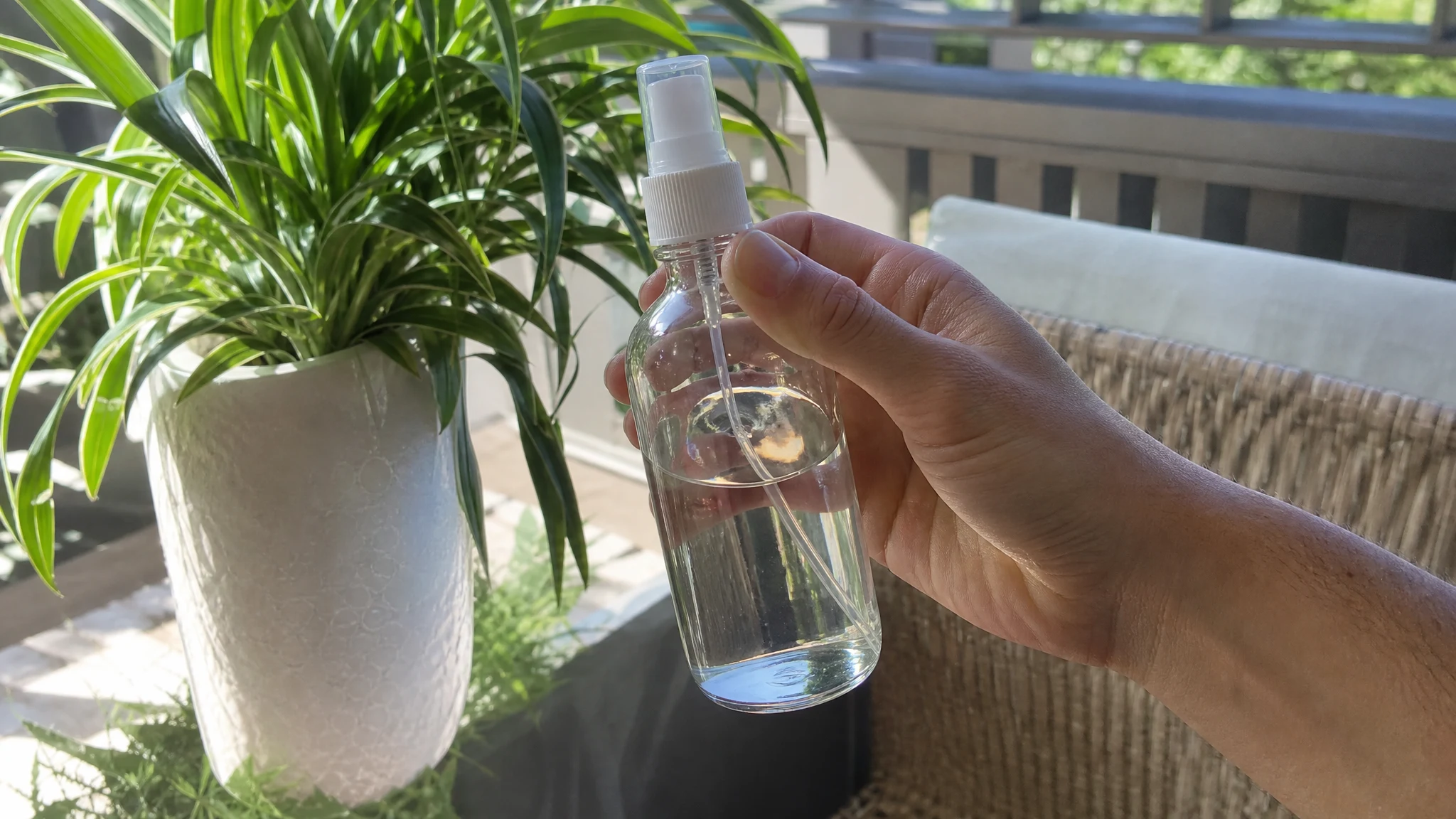
Where the spray goes matters as much as the recipe. A linen spray is lovely on the bed sheets, on a towel stack, or on curtains in a bedroom, where a soft rosy freshness hangs about. Hold the bottle a little distance away and use a light misting, not a soaking, so the fabric dries quickly and the scent stays subtle.
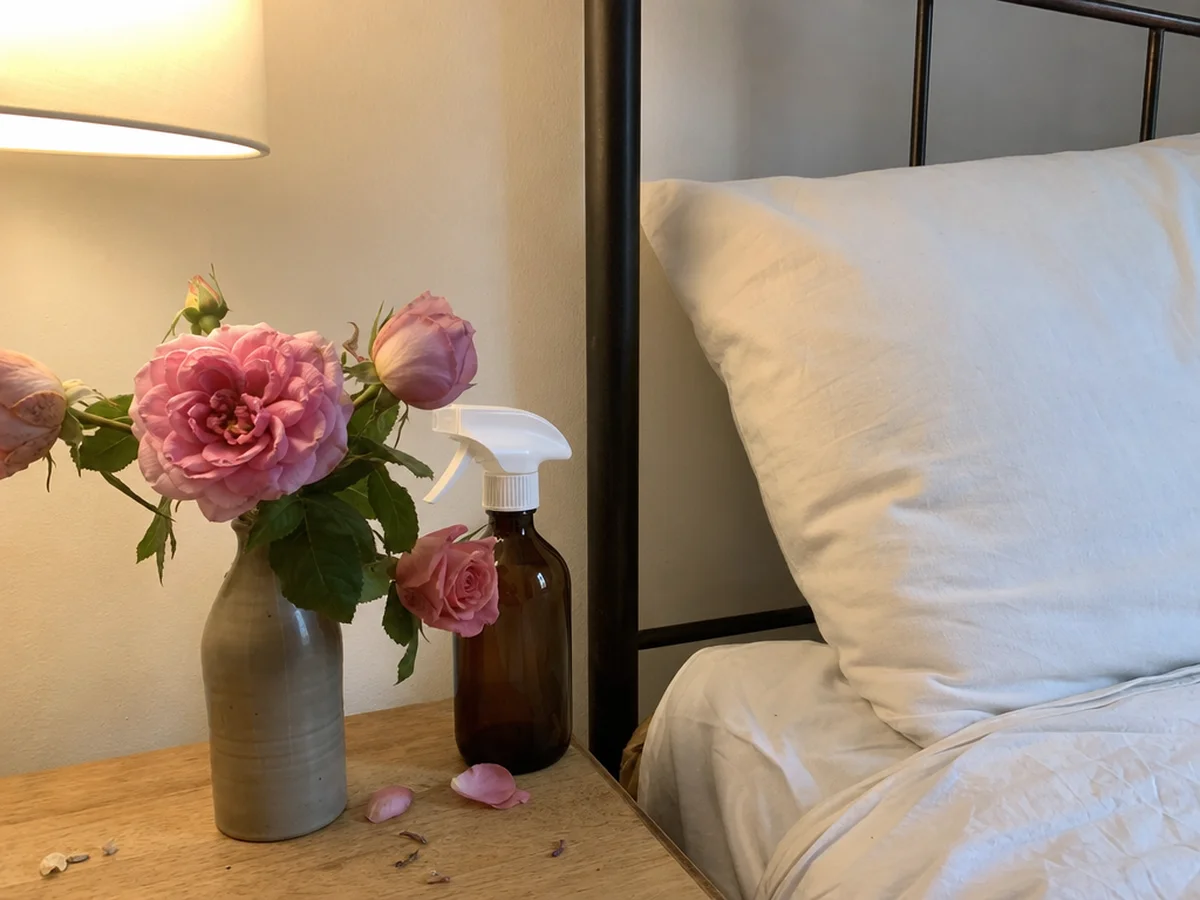
You'll notice the scent is strongest just after spraying and then fades to something quieter. That is normal and rather nice, because it means the room does not get overloaded.
Why we use alcohol instead of water
Most online recipes mix the oil into water with a solubilizer, which is a bigger project than it looks. Oil and water do not mix: geraniol dissolves in water only to about 100 mg per litre, while it is soluble in ethanol and in most fixed oils (PubChem, geraniol, solubility section). Water also brings the preservation question the FDA raises: contaminated water and weak preservation top its list of causes of contaminated cosmetics (FDA). Geraniol dissolves in ethanol, so a spray of just oil and ethanol skips both problems.
The formulas, for 100 g
These use the density on the certificate we publish for one batch (0.888, so 1 ml weighs about 0.888 g) and about 20 drops per ml. The Tisserand Institute notes that drop conversions "are always approximate", so use grams if you can (Tisserand Institute).
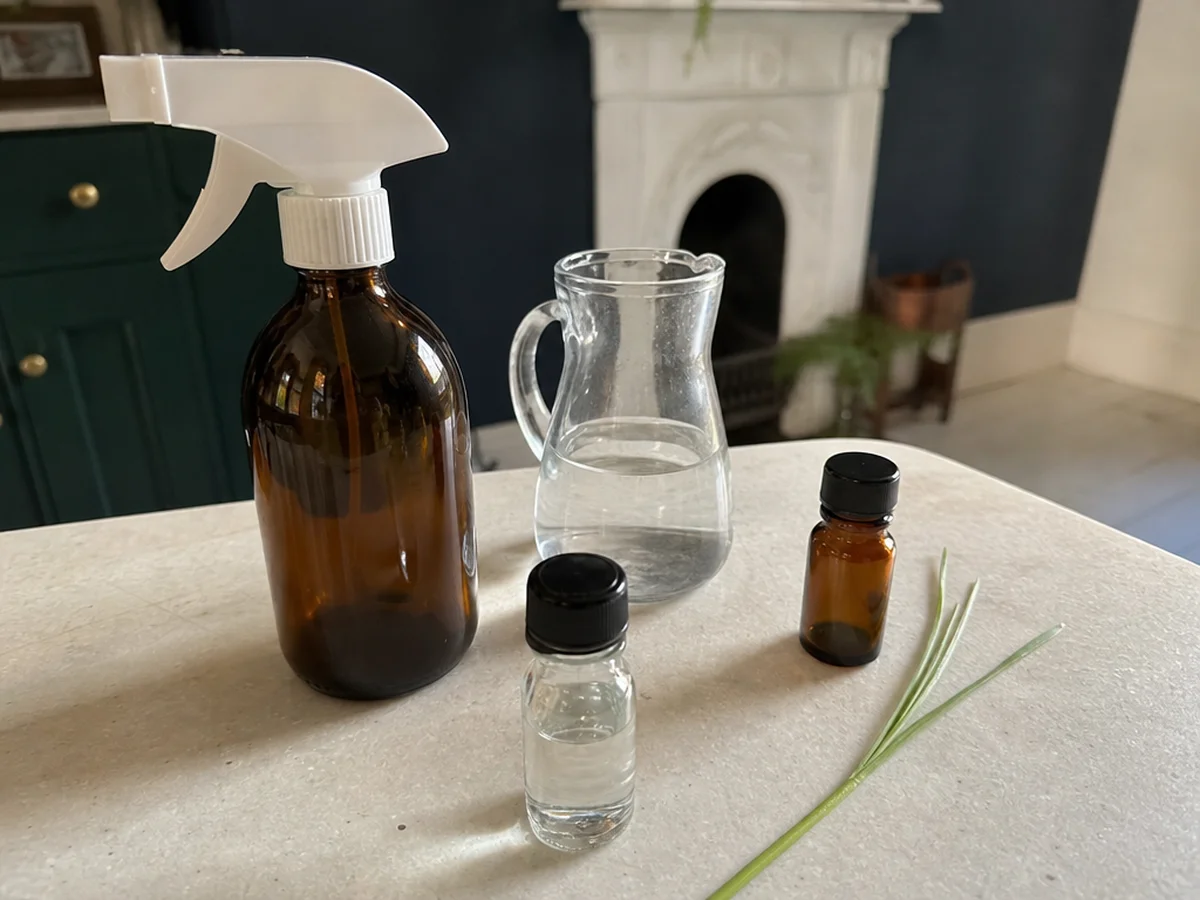
| Ingredient | Body mist or pillow spray | Linen spray |
|---|---|---|
| Palmarosa oil | 0.30 g (about 7 drops) | 1.00 g (about 23 drops) |
| Ethanol, unscented perfumery or cosmetic grade | 99.70 g | 99.00 g |
| Fine-mist spray bottle, clean and dry | to fill | to fill |
- Weigh the empty bottle and zero the scale.
- Weigh in the palmarosa oil, then add the ethanol up to the target weight.
- Cap and shake until clear. Label it with the contents, the percentage and the date.
- Test a hidden patch of fabric first, since an oil can mark some fabrics and alcohol can lift some dyes.
Ethanol is available from a pharmacy or a perfumery or soap supplier, and bottles from a packaging supplier. We do not sell either. Alcohol is flammable, so keep sprays away from candles, stoves and anything with a flame while you work and while it dries.
Bottles and labels
A fine-mist bottle gives a gentler spray than a cheap trigger sprayer, and a clear label stops anyone mistaking a body mist for a linen spray. Write the contents and the date on each one, and keep them in a cupboard away from sun and heat.
Who should sit this one out
If you have eczema, broken skin or a history of reacting to fragranced products, skip the body mist and ask a dermatologist or allergist about it. Geraniol is one of the fragrance allergens the EU requires to be declared, and a patch-testing review describes it as both a prehapten and a prohapten (Sukakul, Bruze and Svedman, 2024). Keep the bottle away from children and pets, and do not spray near an animal's bedding or in a nursery. These are scent sprays, and we do not offer them as cleaners or repellents; our cleaning spray post has more on that.
If you are after a leave-on skin product with a higher ceiling, our body butter is the better format, and the deodorant article deals with the underarm case at the same 0.30% ceiling. The dilution chart has the wider conversions.
Done at the right strengths, the two sprays are a small pleasure: a quiet veil on the skin, and a fresh, green-rosy breath through the laundry.
Palmarosa Essential Oil
Palmarosa Essential Oil from our own shop, in sizes from 0.5 oz to bulk.
From $10.99
Shop Now →Sources & Further Reading
- IFRA Standard: Geraniol, 2023 (Amendment 51)
- Annex on contributions from other sources to the IFRA Standards, 51st Amendment
- Guidance for the Use of IFRA Standards, 51st Amendment (June 30, 2023)
- PubChem, Geraniol (CID 637566), solubility section
- FDA, Microbiological Safety and Cosmetics
- Tisserand Institute, Dilution for essential oils
- Sukakul T, Bruze M, Svedman C, 2024. Fragrance Contact Allergy - A Review Focusing on Patch Testing. Acta Derm Venereol