Adding Palmarosa to Face Oil and Body Cream
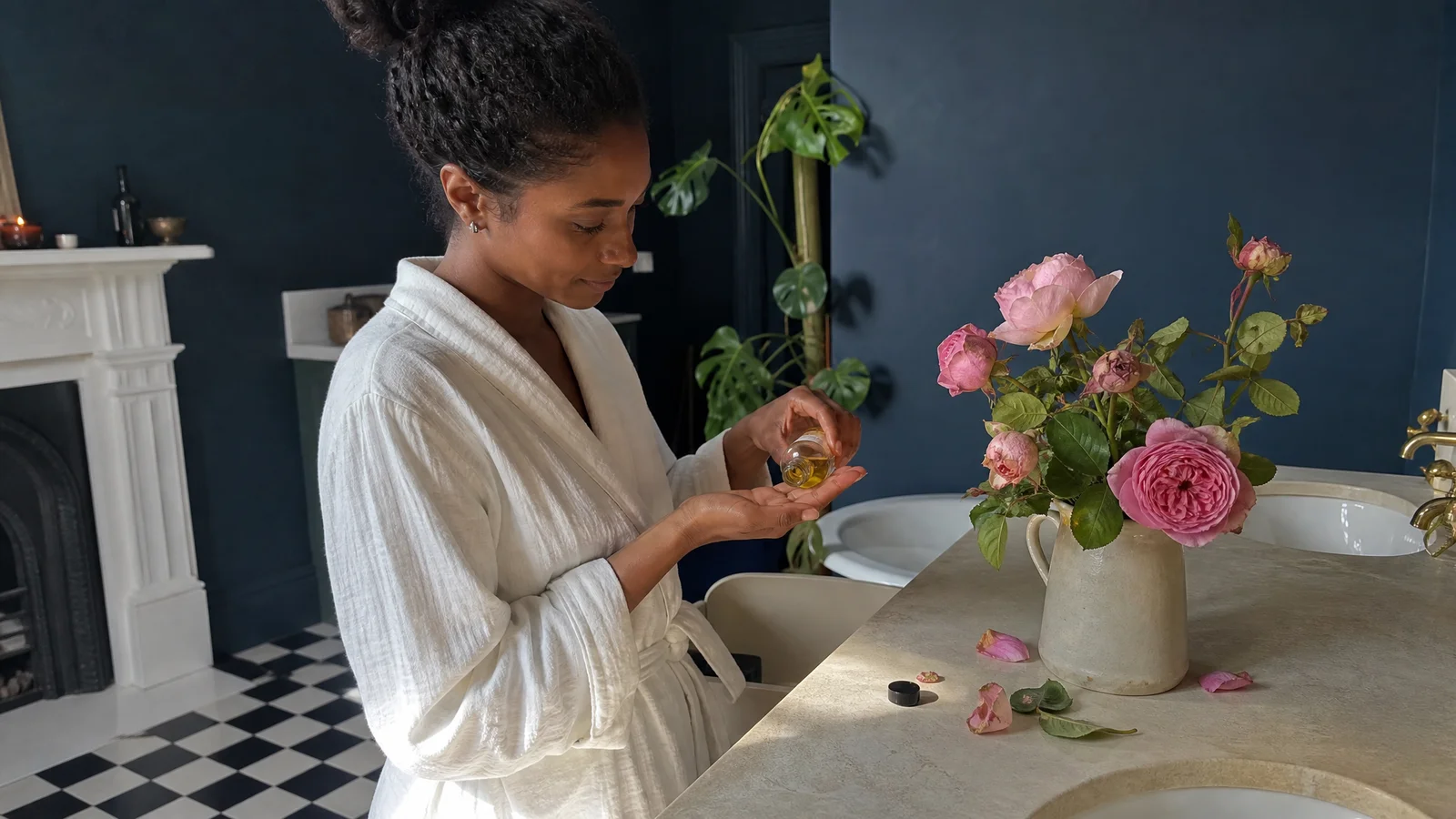
A little palmarosa can make a face oil or body cream smell like a rose garden after rain, and that is reason enough to want it in your routine. The part worth planning is the amount, because the molecule that gives palmarosa its rosy character also sets how much a leave-on product can comfortably carry.
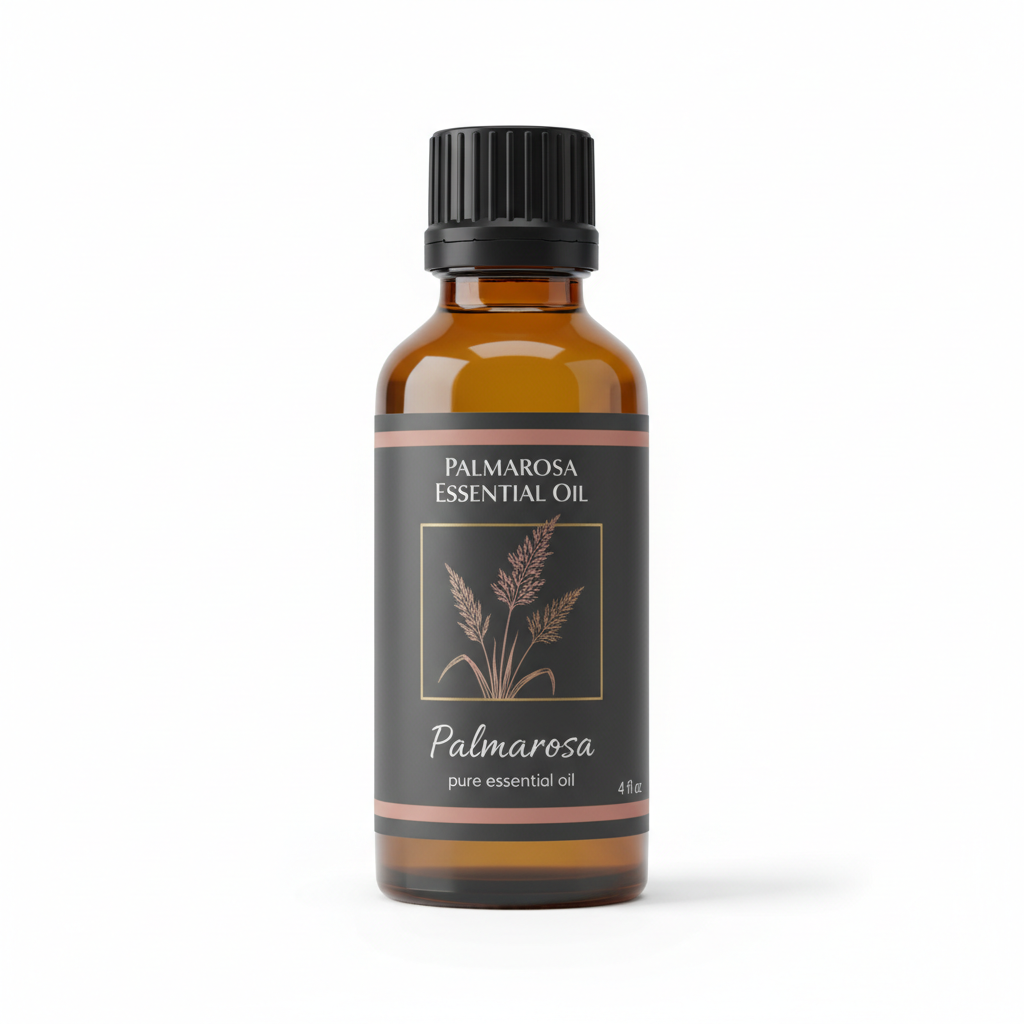
Palmarosa Essential Oil
Our own Palmarosa Essential Oil, in sizes from 0.5 oz to bulk.
From $10.99
Shop Now →What palmarosa brings
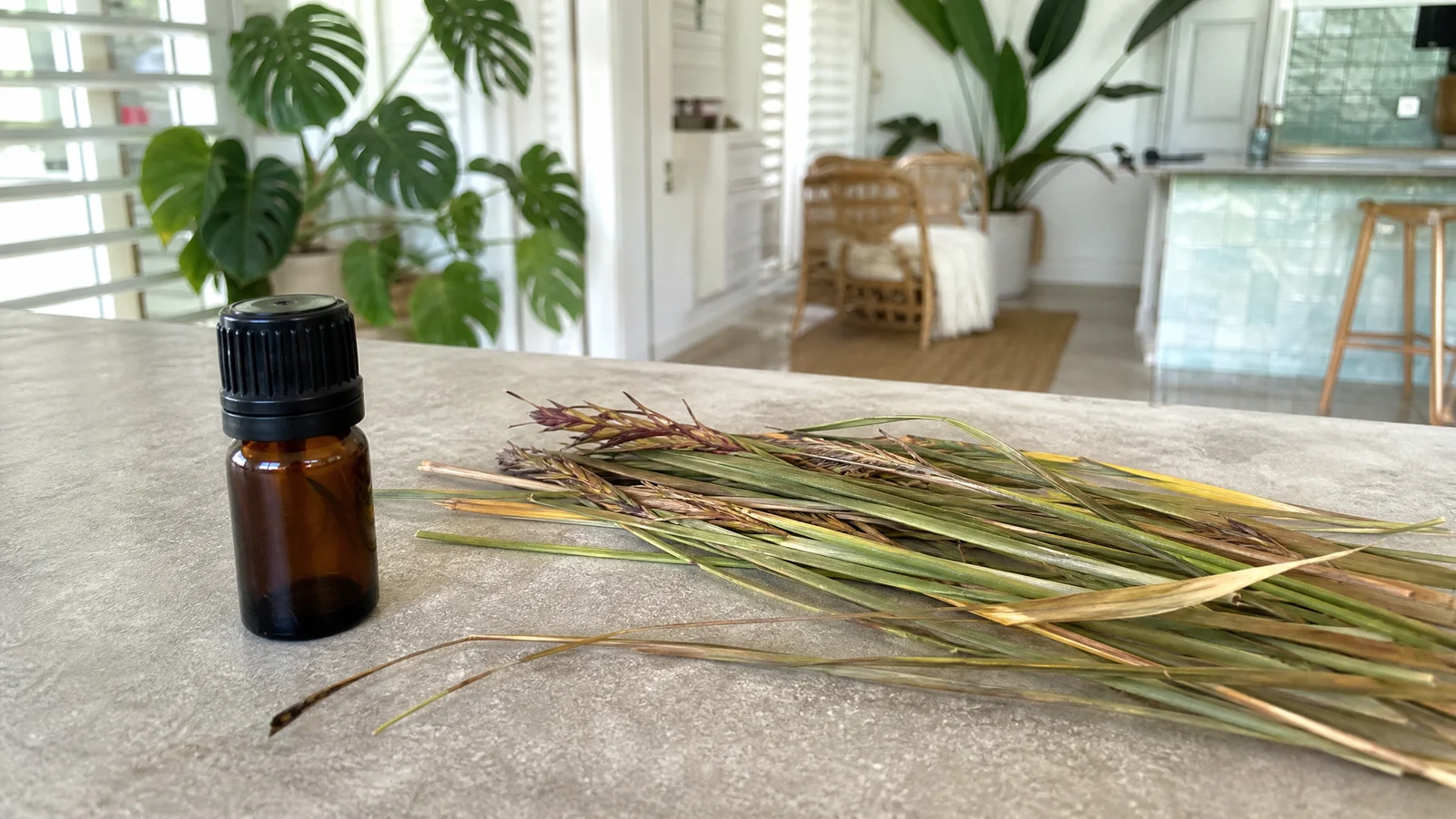
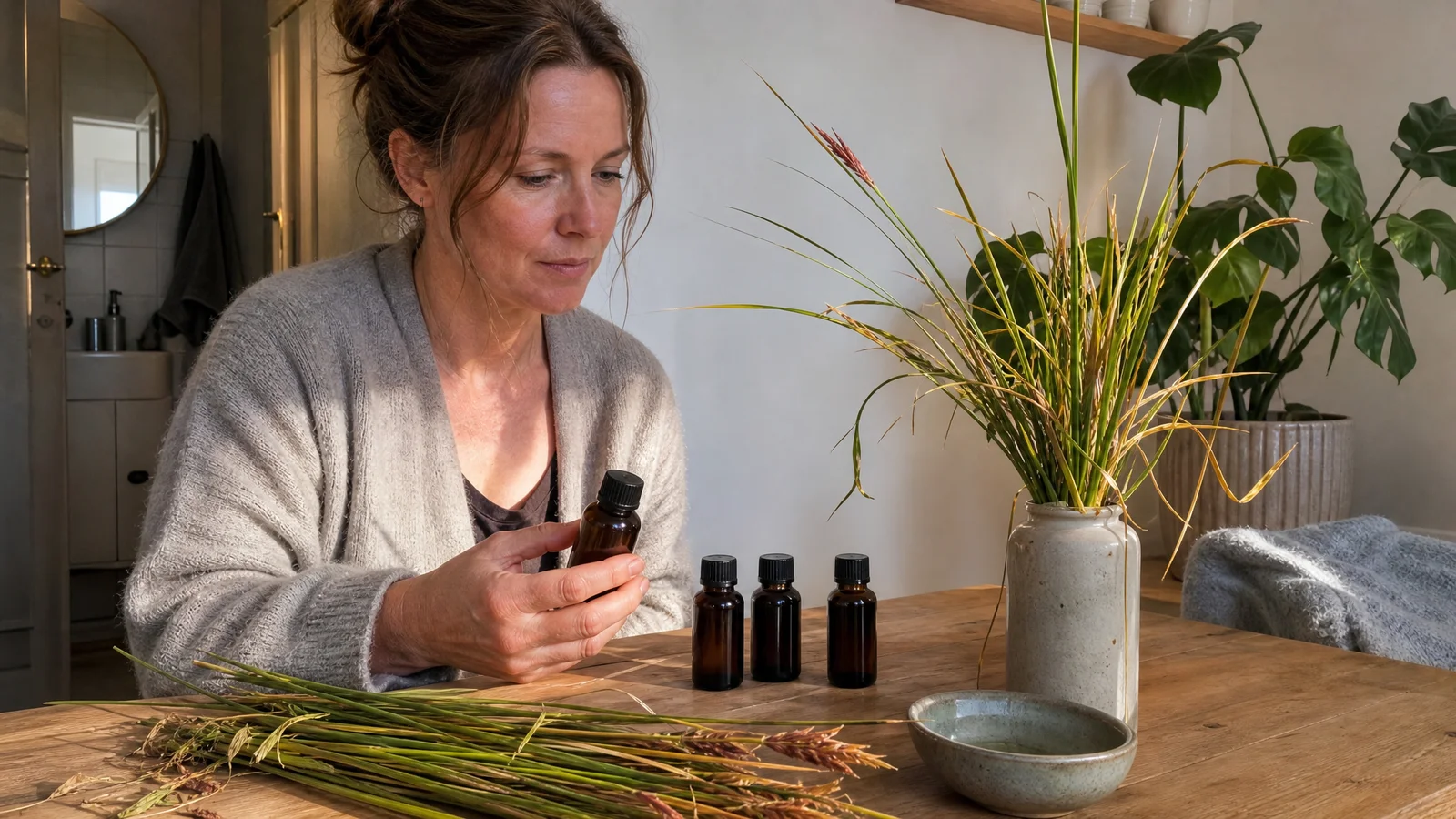
Think of it as the finishing touch in a routine, never the main event. Open the bottle and you'll notice a sweet, rosy scent with a gentle green note and a soft lemony hint. It is a middle note, lighter and airier than true rose, which means it sits at the heart of a product's fragrance instead of announcing itself. That airiness is why a very small amount is enough, and why a heavy hand is the quickest way to spoil it.
Start with the scent, and the base
We sell one product, steam-distilled Cymbopogon martinii, neat, and no cleanser, serum or moisturiser, so the base is yours to choose at a pharmacy or supply shop. The oil is a fragrance in that base, and the base does the heavy lifting; we make no therapeutic claim for it. If you have eczema, broken skin or a history of reacting to fragranced products, the careful path is to ask a dermatologist before adding any fragrance, and our eczema and sensitive skin article explains why.
Know your ceiling before picking a recipe
IFRA lists palmarosa oil at a typical 82.4% geraniol (Annex on contributions from other sources to the IFRA Standards), and its geraniol standard caps geraniol in each product category, naming dermal sensitization and systemic toxicity as the reasons (IFRA Standard: Geraniol, Amendment 51). IFRA's guidance puts body creams, oils and lotions in category 5A and facial moisturizers in 5B (Guidance for the Use of IFRA Standards). Dividing each cap by 0.824 gives the most palmarosa a product can hold on geraniol alone. That is our arithmetic from a typical value; the Certificate of Analysis we publish for one batch has no geraniol figure.
| Product | IFRA category | Most palmarosa oil | In 1 oz of carrier |
|---|---|---|---|
| Facial moisturizer | 5B | about 0.95% | about 5 to 6 drops |
| Hand cream | 5C | about 1.14% | about 7 drops |
| Body cream, oil or lotion | 5A | about 1.46% | about 9 drops |
| Body mist or underarm | 2 | about 0.30% | under 2 drops |
Drops assume 20 per millilitre, a rough convention. The Tisserand Institute reminds us that drop conversions are always approximate, and its general essential oil ranges are 0.2% to 1% for sensitive or impaired skin, 0.5% to 1.2% for facial cosmetics and 1% to 3% for body oils and lotions (Tisserand Institute, Dilution for essential oils). Those are general figures, not palmarosa ones. IFRA's guidance does not name a pure facial oil, so placing one in 5B is our inference. Our dilution chart converts percentages to grams if you would rather weigh.
Where our 0.5% to 2% line sits
Our dilution guidance is 0.5% to 2% in a carrier oil, with a patch test first and the low end for the face. At 0.5% palmarosa brings about 0.41% geraniol, at 1% about 0.82%, and at 2% about 1.65%, so the top of our range lies above the 5B, 5C and 5A caps in the table. Because of that, we start at the bottom: around 0.5% for the face, and no more than about 1% for the body. A body oil on a patch of arm makes a gentler first trial than the face, since the face has the tighter cap.
A tidy first week
Here is how we would pace it, as a recommendation and not a rule. Make a very small batch. Spend the first days on the patch test and nothing else, and plan for it to take most of a week before the blend meets your face. If all is well, try it on a body area first and keep everything else in your routine the same. Only after a few comfortable days would we move on to anything else, and the face comes last.
Testing, then adding it in
A home dab is a screen rather than a clinical test. The FDA describes patch testing as a clinical procedure that can take two to three office visits (Allergens in Cosmetics, FDA), and a 2024 review notes that essential oils may add 1% to 2% to the contact allergy rate found with standard fragrance mixes (Sukakul et al., Fragrance Contact Allergy - A Review Focusing on Patch Testing). The practical reading is to test the diluted blend, not the neat oil, on a small patch of inner forearm, and to stop at any itching, redness, burning or swelling. Our patch testing article gives the full routine.
- Change one thing at a time. If a new serum, cleanser and palmarosa all arrive in one week, you cannot tell which one a reaction came from.
- Make the smallest batch you can. Weighing beats counting drops. At the density of 0.888 on our certificate, 1 ml of that batch weighs about 0.888 g.
- Choose a carrier you already tolerate. Our carrier oil comparison covers shelf life and allergens.
- Keep the oil away from eyes and out of reach of children and pets.
- Date the bottle. An old, much-opened bottle suits a room scent better than a face product; see how to keep palmarosa fresh.
Notice the scent, not just the numbers
The numbers keep you safe, but the scent is why you are here. After the first couple of uses, ask yourself whether you can still smell the palmarosa or whether it has become background. If it fades quickly for you, that is a normal thing for a nose to do, and it is not a signal to add more. A scent you can only just catch is often the nicest version.
For a worked face-oil formula built on these limits, read the DIY facial oil article, or the body butter formula for a water-free body product. A good palmarosa routine is simple: a base you like, a percentage under the ceiling for the product, a careful test, and the patience to add one thing at a time.
Palmarosa Essential Oil
Palmarosa Essential Oil from our own shop, in sizes from 0.5 oz to bulk.
From $10.99
Shop Now →Sources & Further Reading
- IFRA. IFRA Standard: Geraniol (Amendment 51), 2023. IFRA_STD_037.pdf
- IFRA. Annex on contributions from other sources to the IFRA Standards, 51st Amendment. ifra-51st-amendment-annex.xlsx
- IFRA. Guidance for the Use of IFRA Standards, 51st Amendment, 2023. ifra-51st-amendment-guidance.pdf
- Tisserand Institute. Dilution for essential oils. tisserandinstitute.org
- FDA. Allergens in Cosmetics. fda.gov
- Sukakul T, Bruze M, Svedman C, 2024. Fragrance Contact Allergy - A Review Focusing on Patch Testing. Acta Derm Venereol 104. Europe PMC, PMC11334351