Palmarosa Oil and Sensitive Skin: Why Geraniol Matters
Palmarosa smells like a quiet rose garden, and it is easy to assume something that soft must be mild. Scent and skin tolerance are two different questions, though, and for anyone with eczema or reactive skin it pays to treat them separately. Our honest position: we sell palmarosa as a fragrance material, we make no claim that it helps any skin condition, and if you have eczema we would leave it out of what you put on your skin.
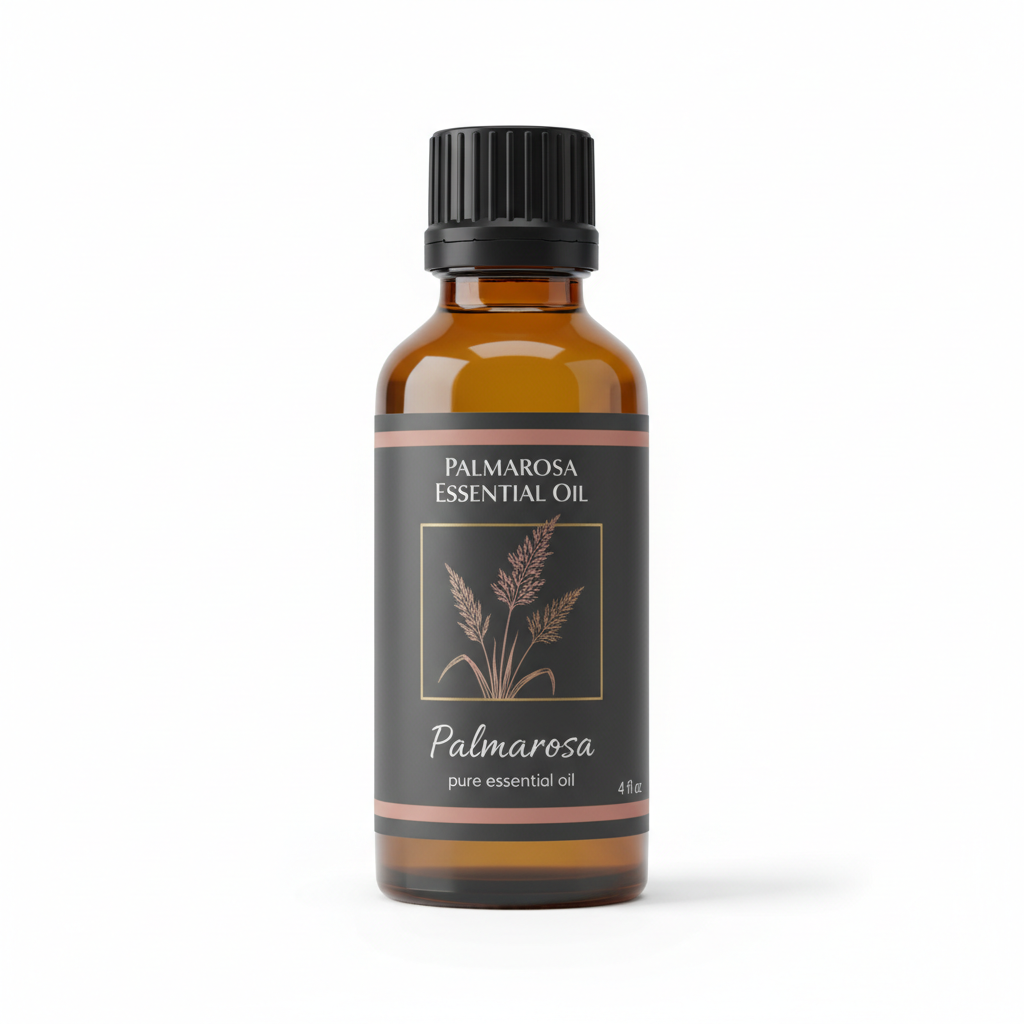
Palmarosa Essential Oil
Our own Palmarosa Essential Oil, in sizes from 0.5 oz to bulk.
From $10.99
Shop Now →Why eczema advice says fragrance-free
The National Eczema Association lists fragrance, meaning perfumes and other scented products, among common things that can set off flares. Dermatologists at the American Academy of Dermatology, writing about dry and sensitive skin, recommend products labelled fragrance-free. An essential oil sold for its aroma is a fragrance ingredient, so that advice covers it. None of those pages names palmarosa; that is our reading of what they say. The NHS adds the practical frame: if you have atopic eczema and your treatments are not helping, a GP is the right next step, and a GP or dermatologist can arrange patch testing if you suspect a product.
Some people with sensitive skin tolerate scented products and some do not, and nothing about how a bottle smells can tell you which group you are in. We would rather say that plainly than let a pretty scent do the persuading. The only reliable answer is a slow, small, patient trial, which is what the steps below are for.
What is special about geraniol
Palmarosa oil is high in geraniol. IFRA lists a typical 82.4% for the oil, with a little farnesol and citral alongside. Geraniol is among the fragrance ingredients that European rules require brands to name on a label, and the fragrance industry sets its own limits for it by product type: 0.78% of a finished face moisturiser, 1.2% of a body lotion. Working from those figures, we reach practical ceilings of around 0.95% palmarosa oil for a face product and 1.46% for a body product. That is arithmetic from a typical composition, and it is why we describe 2% as the top of a range and begin at 0.5%.
Here is a detail that surprises people. Geraniol changes when it meets air. In a 2007 laboratory study, researchers found that geraniol oxidises at room temperature, forming hydrogen peroxide and the aldehydes geranial and neral. In mice, the air-exposed material was a moderate skin sensitiser, while the freshly purified compound was only weak. That is a study of the isolated compound, not of palmarosa oil, so we draw a modest lesson from it: freshness and good storage are part of looking after any geraniol-rich oil. Keep the bottle tightly closed, away from light and heat, which is also how we suggest storing ours, and consider decanting a working amount from larger sizes. Our storage guide goes into the details.
If you are not eczema-prone but have sensitive skin
Many people simply find some scented products uncomfortable. If that is you and you want to try palmarosa, the sensible sequence is small:
- Begin with the lowest strength we suggest, 0.5% in a carrier, which is about 3 drops in an ounce (rough arithmetic at about 20 drops per ml).
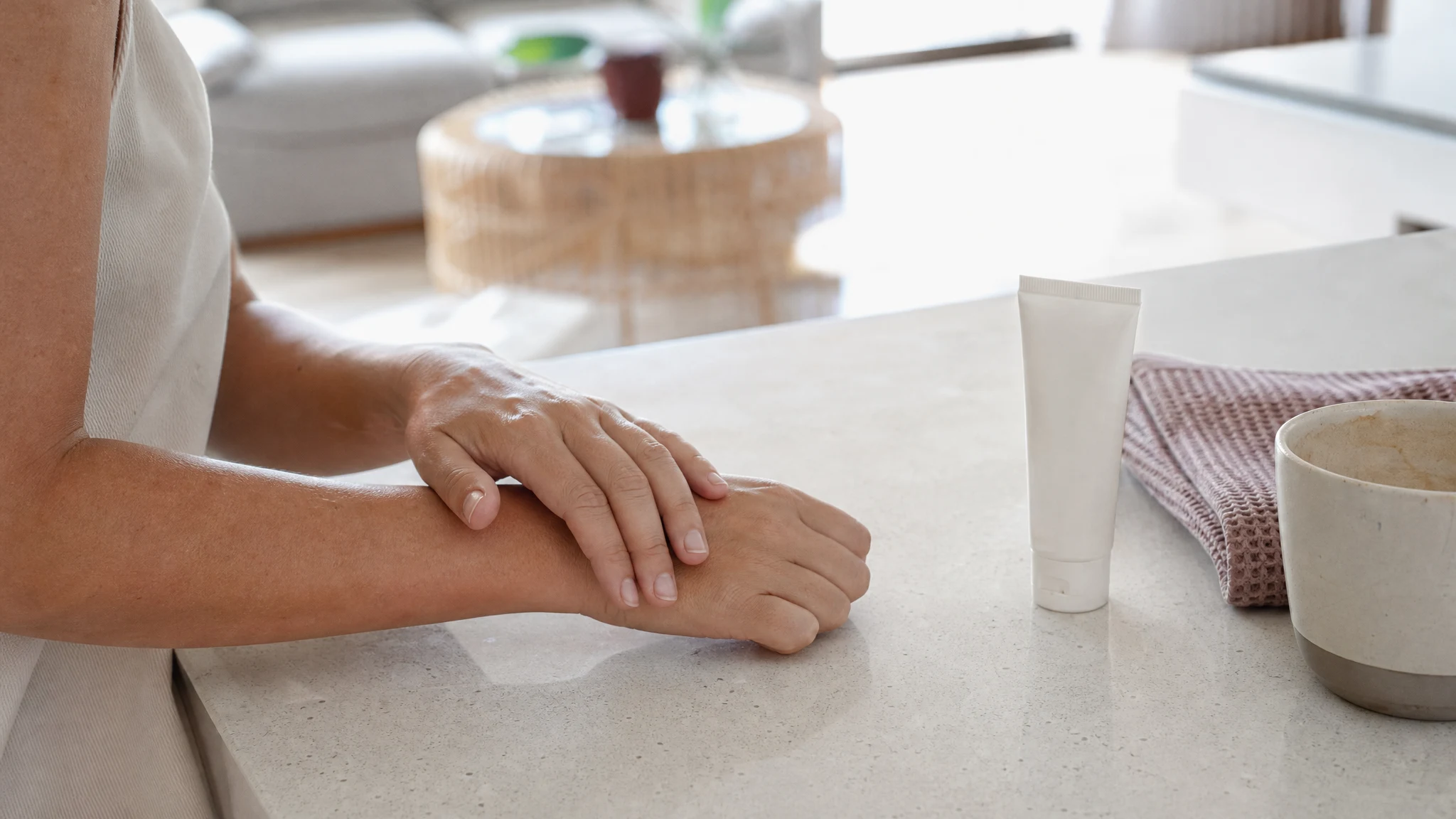
- Patch test on the inner forearm first, as our guidance says, and wait before using it anywhere else. The FDA describes patch testing for cosmetic allergens as covering the skin for 48 hours and reading the result at 72 to 96 hours, so patience is part of the test.
- Use one new scented thing at a time, so that if skin reacts you know the cause.
- Stop if skin itches, burns or reddens, and speak to a pharmacist, GP or dermatologist.
A simple note on your phone is enough: the date, the percentage, the carrier and where you tried it. If skin does react, that note is what a pharmacist or dermatologist will ask for first, and it saves you guessing from memory.
The Tisserand Institute lists 0.2% to 1% as a general range for sensitive or impaired skin. That is a broad range, not a palmarosa-specific one, and it points the same way as our advice: go low.
A home for the scent that is not your skin
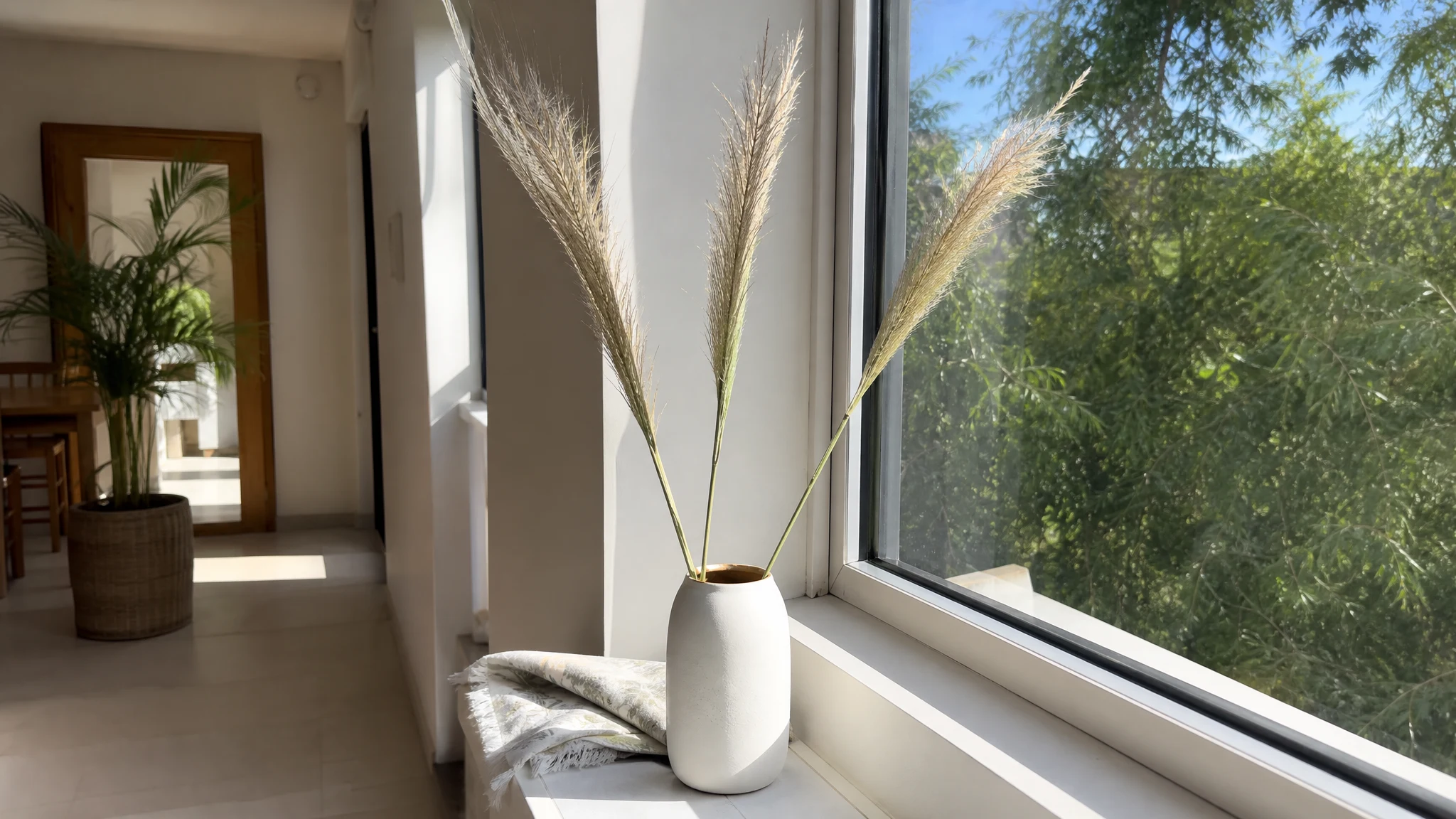
If you love the smell and your skin does not, the oil can still be part of your home: a few drops in a diffuser used in a ventilated room, or in a candle if you make them. Our dilution chart and our guide to using palmarosa on skin cover the details for people whose skin welcomes it. Keep the oil away from eyes, children and pets, and never take it internally.
If you diffuse, start with fewer drops than you think you need and sit in the room for a few minutes before you decide. A scent that is delightful at arm's length can feel overwhelming up close. Open a window, let it come and go, and switch the diffuser off the moment it stops being a pleasure.
Plenty of lovely things are best enjoyed at arm's length, and a rose-scented room is one of them.
If your skin says no, that is useful information, not a failure. The oil will keep, tightly capped and out of the light, for the room, the candle or the diffuser.
Palmarosa Essential Oil
Palmarosa Essential Oil from our own shop, in sizes from 0.5 oz to bulk.
From $10.99
Shop Now →Sources & Further Reading
- Eczema (contact dermatitis): Symptoms, causes, types & treatment | National Eczema Association
- Dermatologists' top tips for relieving dry skin
- Atopic eczema - NHS
- Fragrance compound geraniol forms contact allergens on air exposure. Identification and quantification of oxidation products and effect on skin sensitization.
- Allergens in Cosmetics | FDA
- IFRA Standard: Geraniol (CAS-No. 106-24-1), 51st Amendment
- IFRA 51st Amendment, Annex on contributions from other sources
- Dilution for essential oils - Tisserand Institute