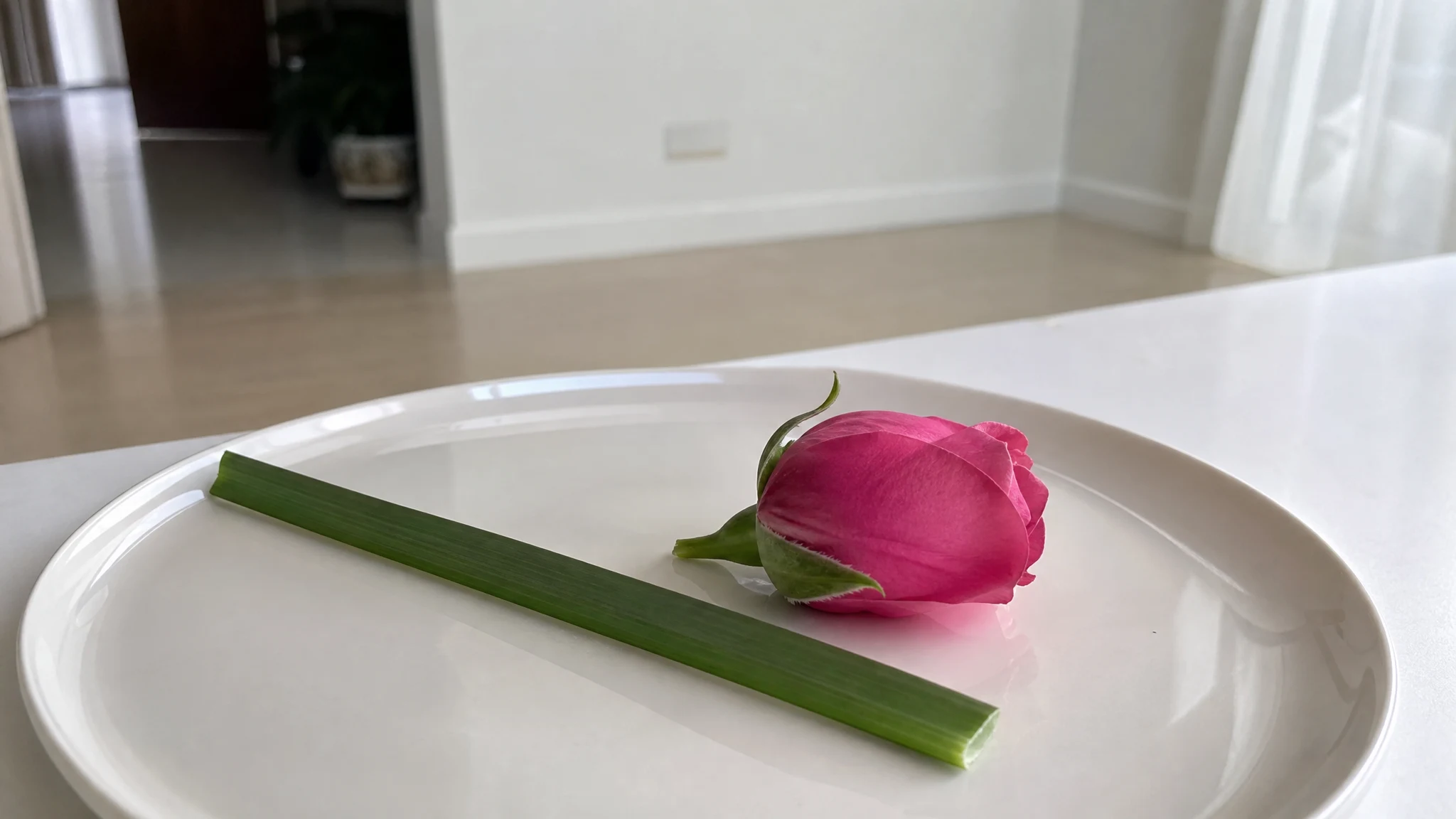
Why Palmarosa Smells Like Rose: Meet Geraniol
A grass that smells like a rose sounds like a trick, and the trick has a name: geraniol. Palmarosa oil is one of the few essential oils that is mostly a single molecule, and it happens to be one of the molecules that makes roses smell the way they do. Understanding that one compound explains why palmarosa is so rosy, why its quality varies from batch to batch, and why we pay attention to how much of it goes into a leave-on blend.
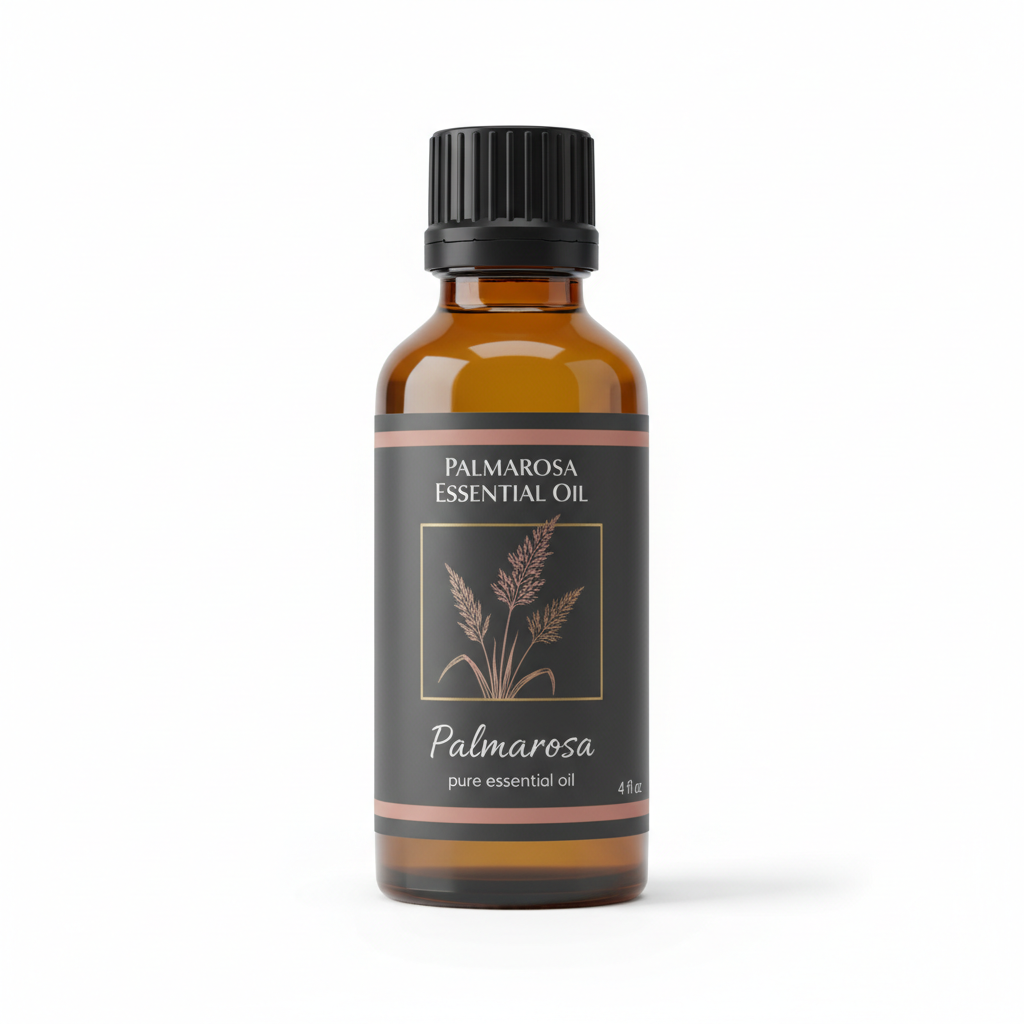
Palmarosa Essential Oil
Our own Palmarosa Essential Oil, in sizes from 0.5 oz to bulk.
From $10.99
Shop Now →One molecule doing most of the work
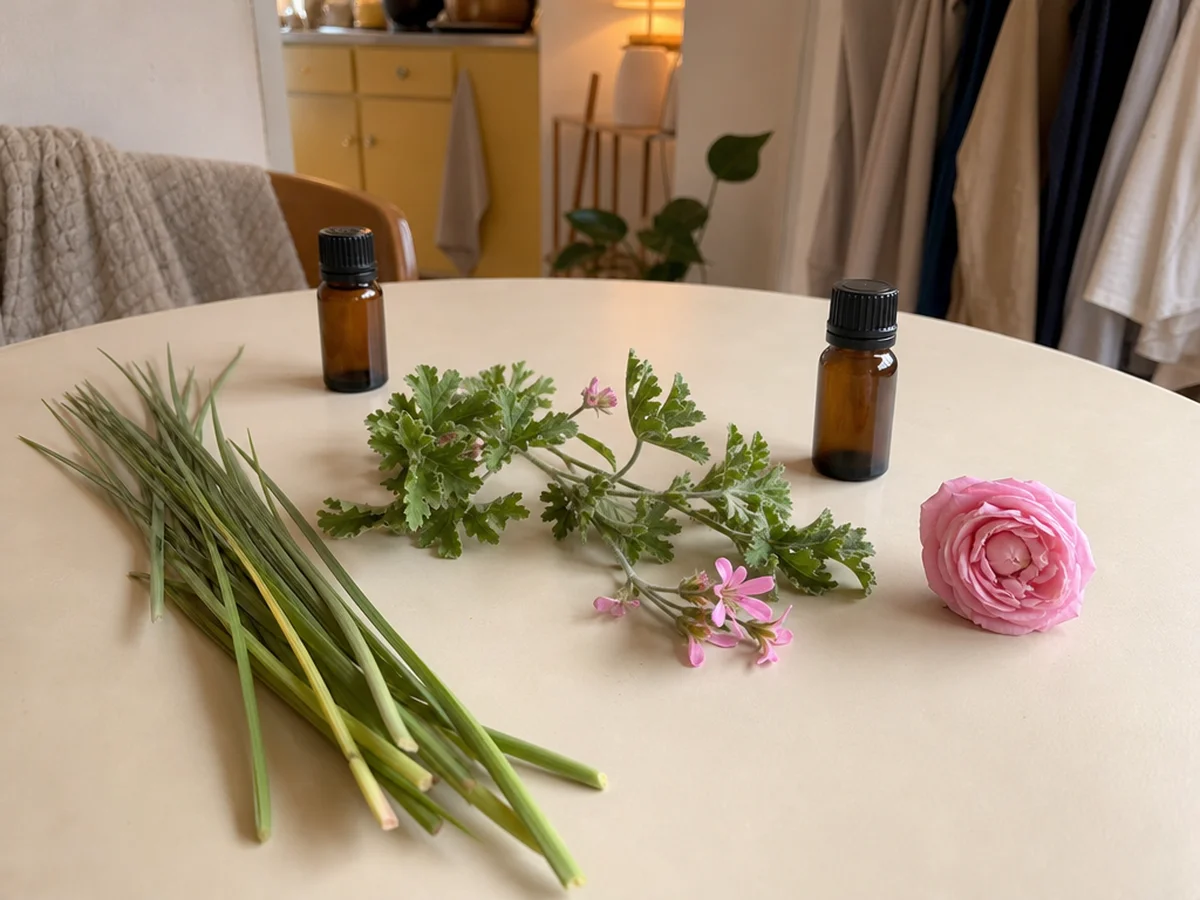
Geraniol is a simple, open-chain alcohol, and perfumers prize it: PROSEA calls palmarosa oil an excellent extender in floral, rose-like perfume compounds and describes its odour as sweet, floral and rosy. In the oil, geraniol travels with geranyl acetate, a related ester, and a little linalool, and the three make up most of it. Geraniol turns up in real rose oil and in geranium oil too, at about 17.7% in each on IFRA's reference list, which is why palmarosa slips so easily into rose and geranium blends.
The IFRA annex lists a typical composition for palmarosa oil of 82.4% geraniol, with 1% farnesol and 0.6% citral (IFRA, The Annex on contributions from other sources to the IFRA Standards). It is a handy benchmark, though it is a typical figure for a class of oils rather than a promise about any one bottle.
Smelling the difference yourself
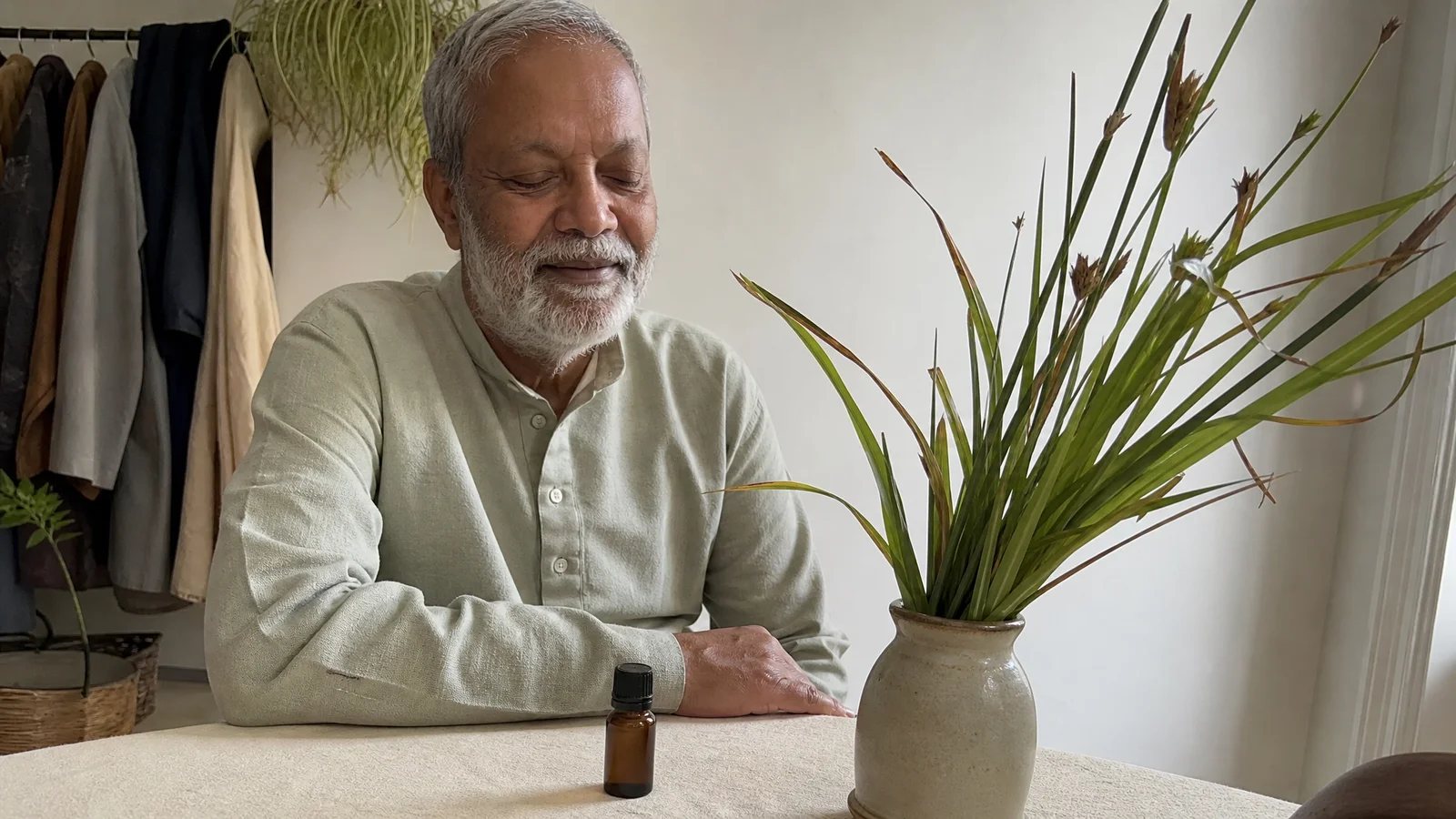
You don't need a laboratory to appreciate the point. Put a drop of palmarosa on a paper blotter, wave it gently, and come back to it every few minutes. You'll notice the first impression is sweet and rosy with a green, grassy edge, and that the rose lingers after the greenness has faded. That slow shift from top to heart is a big part of why we love it as a middle note.
Why no two analyses agree
Look at published analyses of Cymbopogon martinii and the geraniol figure moves around. Researchers in eastern Nepal hydrodistilled cultivated leaf and found about 77% geraniol with 15% geranyl acetate (Dangol et al., Essential Oil Composition Analysis of Cymbopogon Species from Eastern Nepal by GC-MS and Chiral GC-MS, and Antimicrobial Activity of Some Major Compounds). A Colombian team steam-distilling palmarosa grown in Santander reported geraniol in the mid-80s percent, with a yield of about 0.41% (Romero et al., Enhanced Two-Step Extraction from Biomass of Two Cymbopogon Species Cultivated in Santander, Colombia).
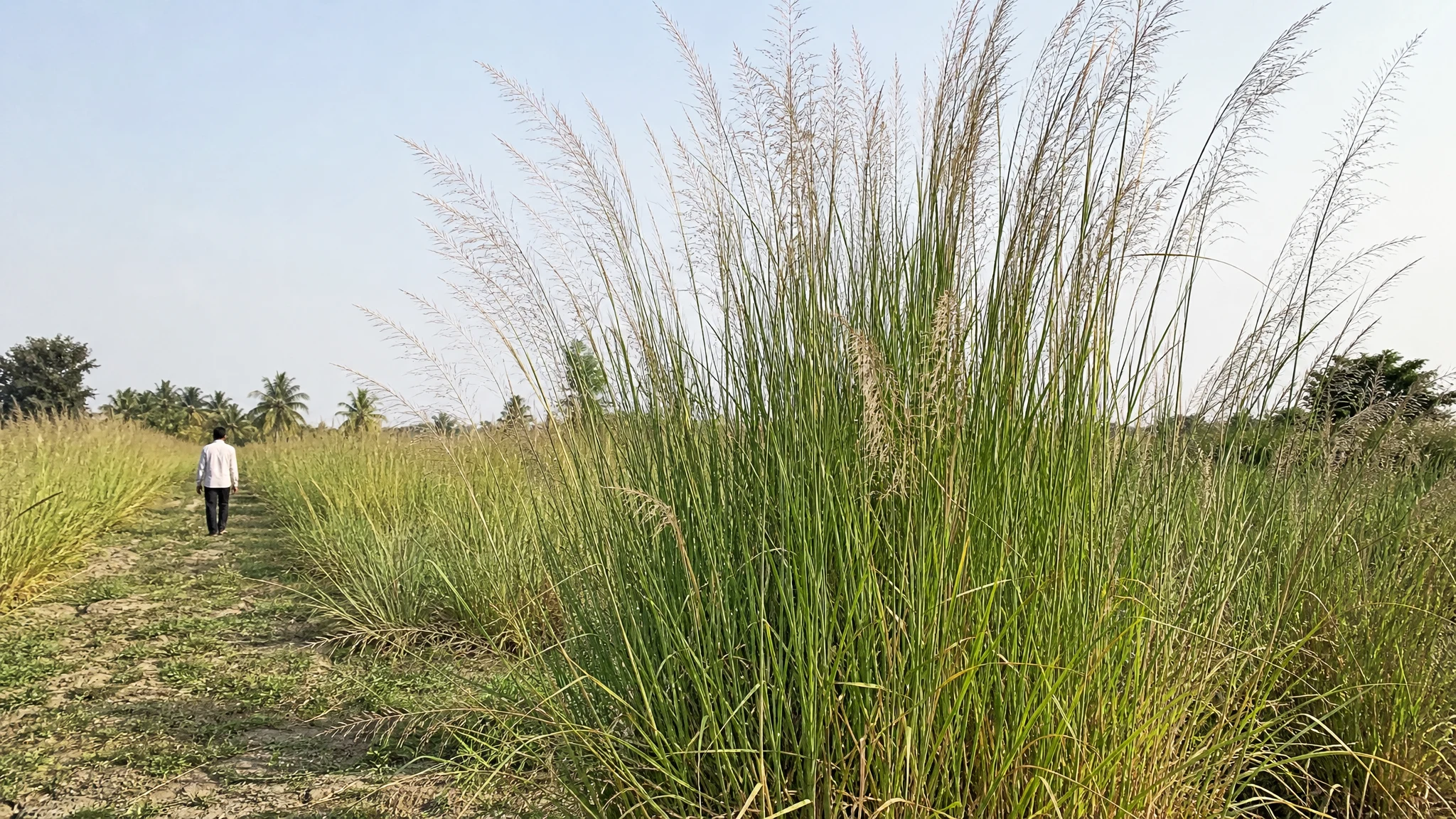
Several things push those numbers around. PROSEA explains that harvests in the rainy season give more oil but less geraniol, while dry-season harvests give less oil with more geraniol, and that geraniol runs up to 95% in the true palmarosa variety. That is why harvest timing matters, and our How It's Made page describes cutting the grass once the seed heads colour for the same reason (PROSEA, Cymbopogon martini).
The look-alike grass
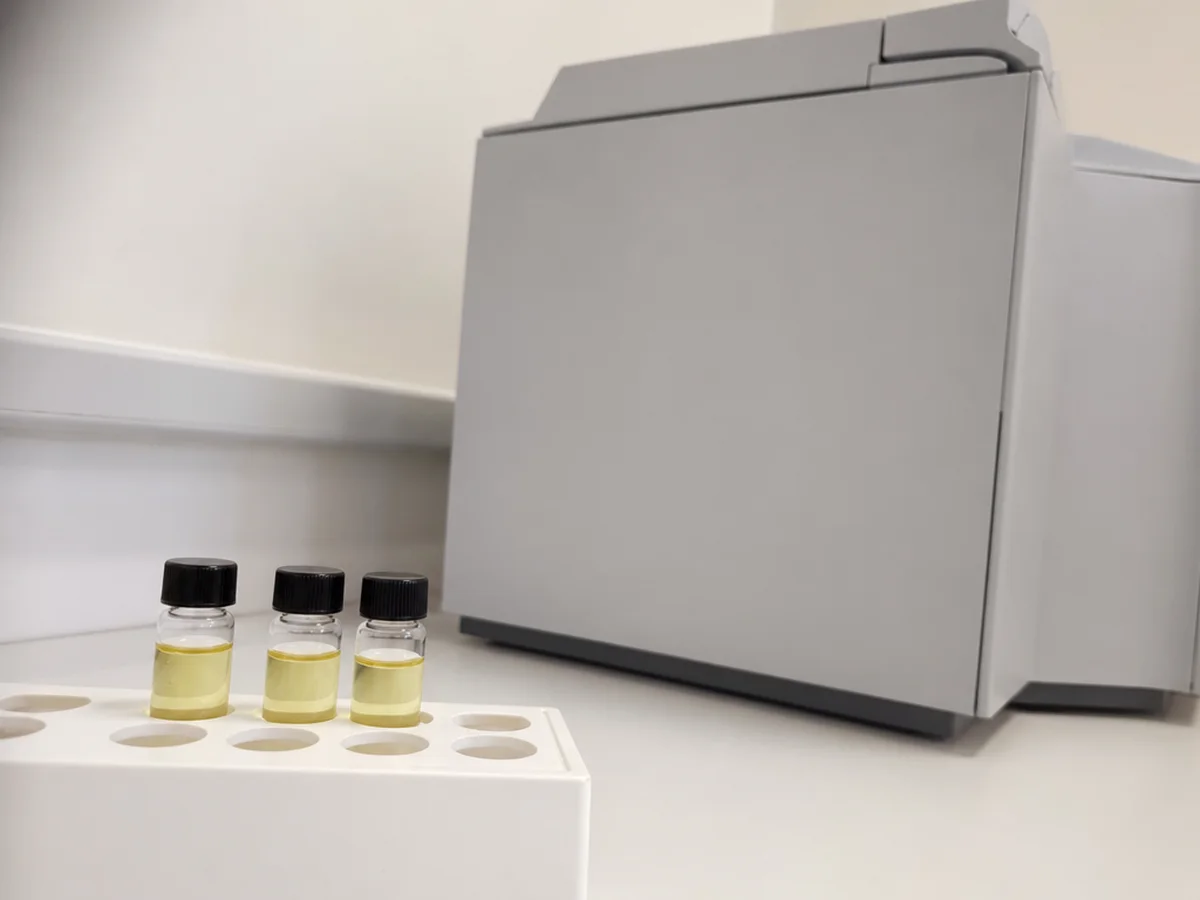
There is a twist. The same species name also covers a second variety, gingergrass (var. sofia), whose oil smells turpentine-like and tops out at about 65% geraniol according to PROSEA. A 2025 study of wild C. martinii from Udaipur, Rajasthan, found 59 compounds across three growth stages, with geraniol not among the main ones, and the authors said the profile resembled var. sofia (Sonigra and Meena, Influence of growth stage on the chemical composition, antimicrobial, and antioxidant potential of Cymbopogon martinii (Roxb.) Wats. essential oil). So the Latin name alone does not tell you which smell you will get. A gas chromatography report does. If that matters for what you are making, ask us in writing through the contact page before ordering, and get any report for your lot in writing.
The Certificate of Analysis we publish is for one batch. It lists a relative density of 0.888, a refractive index of 1.473 and an optical rotation of +0.12 degrees, each inside its printed range, and does not report constituents.
One practical thought from people who love this oil: a strong, simple scent like this rewards a light hand. Because so much of the oil is one big, clear note, a single drop is easy to over-do in a blend, and the quiet blends are the ones people come back to. Start small, smell, and add only if you miss it.
What a lot of geraniol means in practice
Geraniol is among the 26 fragrance allergens regulated in the EU, and a 2024 review of fragrance patch testing describes it as both a prehapten and a prohapten, meaning air or skin enzymes can turn it into something more reactive (Sukakul, Bruze and Svedman, Fragrance Contact Allergy - A Review Focusing on Patch Testing). That is a good reason to treat the oil as the concentrated ingredient it is, to keep the cap on tight and to store it away from light and heat.
IFRA's geraniol standard sets maximums for the finished product, 0.78% for facial moisturisers and 1.2% for body creams, oils and lotions among them. Dividing by the typical 82.4% gives about 0.95% and 1.46% as palmarosa oil in those products, by our arithmetic. Our dilution guidance is 0.5% to 2% in a carrier, and because the top of that range lands above those figures, we start at the lower end for anything left on the skin and patch test first. Our dilution chart and patch-testing guide carry on from here.
Understood this way, geraniol is the reason palmarosa is lovely, and the reason a light touch suits it best.
Palmarosa Essential Oil
Palmarosa Essential Oil from our own shop, in sizes from 0.5 oz to bulk.
From $10.99
Shop Now →Sources & Further Reading
- IFRA. Geraniol standard, 51st Amendment
- IFRA. The Annex on contributions from other sources to the IFRA Standards, 51st Amendment
- Dangol S et al., 2023. Essential Oil Composition Analysis of Cymbopogon Species from Eastern Nepal by GC-MS and Chiral GC-MS, and Antimicrobial Activity of Some Major Compounds. Molecules
- Romero AK et al., 2023. Enhanced Two-Step Extraction from Biomass of Two Cymbopogon Species Cultivated in Santander, Colombia. Molecules
- Sonigra P, Meena M, 2025. Influence of growth stage on the chemical composition, antimicrobial, and antioxidant potential of Cymbopogon martinii (Roxb.) Wats. essential oil. Front Plant Sci
- PROSEA. Cymbopogon martini (Roxb.) J.F. Watson
- Sukakul T, Bruze M, Svedman C, 2024. Fragrance Contact Allergy - A Review Focusing on Patch Testing. Acta Derm Venereol