Why Was Palmarosa Called Turkish Geranium?
For a long stretch of history, palmarosa oil travelled under a false name. Merchants called it Turkish geranium, though it came from a grass, not a geranium, and it was shipped through Arabian ports to Constantinople, where it was put to work alongside the most expensive perfume material in the world. The story of how a field grass became a rose stand-in, and how its chemistry was finally understood, is worth telling.
Palmarosa Essential Oil
Our own Palmarosa Essential Oil, in sizes from 0.5 oz to bulk.
From $10.99
Shop Now →An old grass, a late crop
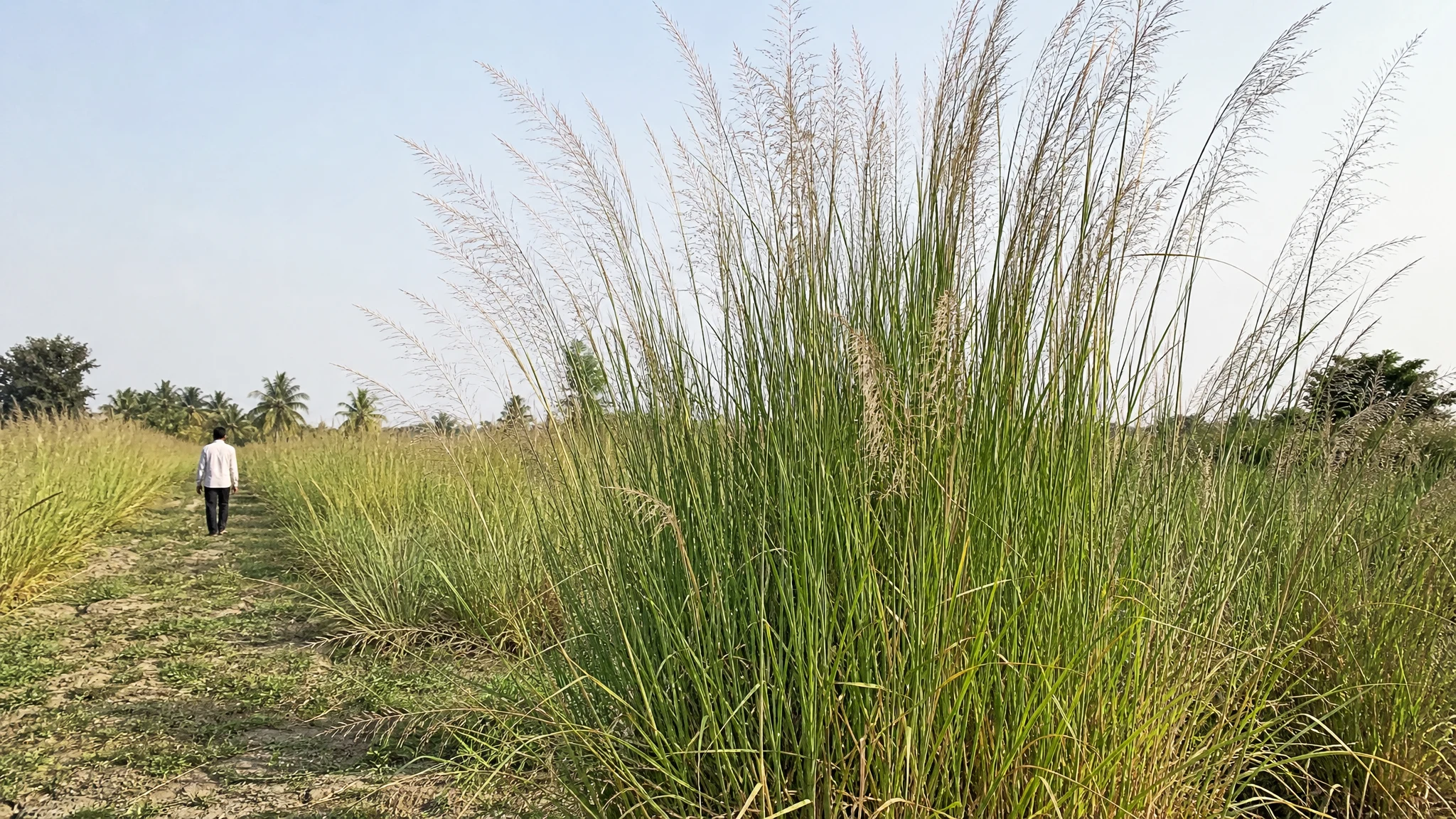
Palmarosa originates in the Indian subcontinent, where wild stands were harvested since antiquity. According to the PROSEA handbook of essential-oil plants, it was only at the start of the twentieth century that the grass was taken into cultivation in India. It reached Java in the 1930s, where it produced good quantities of oil, and today it is also grown in Brazil, Guatemala, Honduras, Madagascar and a few African countries (PROSEA, Cymbopogon martini). So for most of its history, the oil came from grass cut where it grew.
Why a grass was called a geranium
The old reference work The Volatile Oils, by E. Gildemeister, lists palmarosa oil under several names, including rusa oil, Indian grass oil and Indian or Turkish geranium oil. The Turkish label comes from the route: oil went from Bombay to Red Sea ports, across Arabia and on to Constantinople. Gildemeister adds that in Constantinople it was used on a large scale to adulterate rose oil (Gildemeister, 122. Palmarosa Oil). PROSEA records the same habit, noting that the oil was used with Turkish rose attars and that names like "Geranium palmarosa Turkish" were given to the blended product.
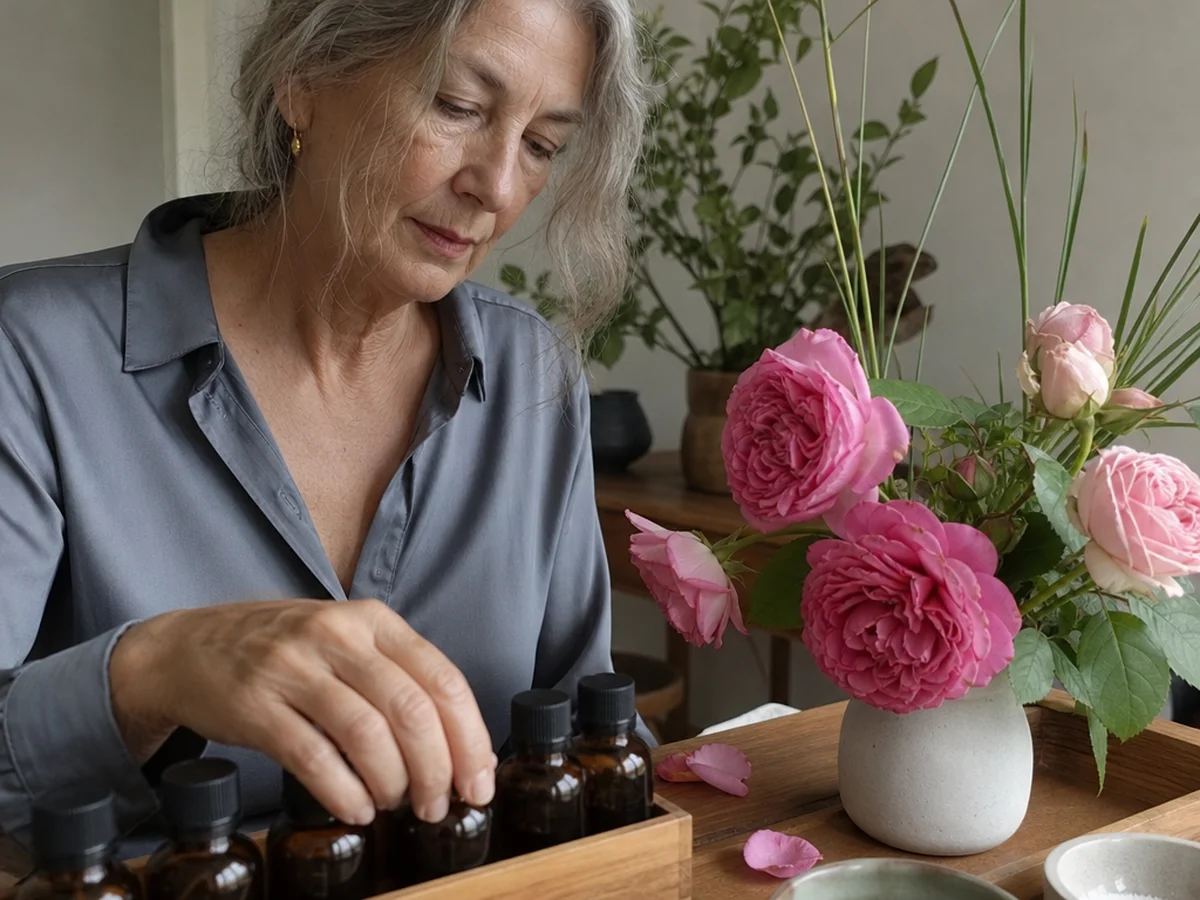
The word geranium was really shorthand for a smell: rosy, sweet and green, like the rose geraniums. It was never botany. It still helps explain why people compare palmarosa with geranium oil today, and our palmarosa and geranium comparison sorts out what each really offers.
Why the story is still fun to tell
We enjoy this history because it is so human. A merchant in a busy port had a barrel of fragrant oil, a customer wanted the scent of roses, and a clever label closed the deal. Names in the perfume trade have always been a mix of geography, marketing and wishful thinking, and palmarosa's old names are a charming example.
It is also why we like to say plainly what our oil is: palmarosa, from a grass, with a rosy, green character of its own. It doesn't need a borrowed name.
The economics of a rose stand-in
Rose oil is scarce for a simple reason. A 2023 paper on rose oil authenticity reports that distilling Rosa damascena gives only about 0.02% oil, so a kilogram takes 3.5 to 4 tons of flowers. The same paper lists the cheaper oils sometimes mixed into rose oil, palmarosa among them (Raeber, Favrod and Steuer, Determination of Major, Minor and Chiral Components as Quality and Authenticity Markers of Rosa damascena Oil by GC-FID).
It is easy to see why palmarosa filled the role. It is mostly geraniol, which is also a large part of what makes rose smell like rose, and PROSEA calls it an excellent extender in floral, rose-like perfume compounds. That is a fair description of what palmarosa still does well. Sold under its own name, it stands on its own merits as a sweet, rosy middle note, and our piece on palmarosa and rose oil goes into how they compare.
The chemists catch up
Understanding the oil took the nineteenth century. Gildemeister's account (122. Palmarosa Oil. Part 3) is a tidy lesson in how hard it was to study a material nobody could name reliably. J. Stenhouse reported an East Indian grass oil in 1844, though his source was probably citronella. H. Gladstone described an Indian geranium oil in the early 1860s, and it is unclear which oil he actually had. The first to work with reliable palmarosa material was O. Jacobsen, who in 1871 identified its main component as an alcohol and named it geraniol. Semmler confirmed its formula in 1890 and recognised it as the first aliphatic terpene alcohol. Gildemeister and Stephan later identified the acids in the oil's esters as acetic and n-caproic acid, and in 1910 Elze reported farnesol.
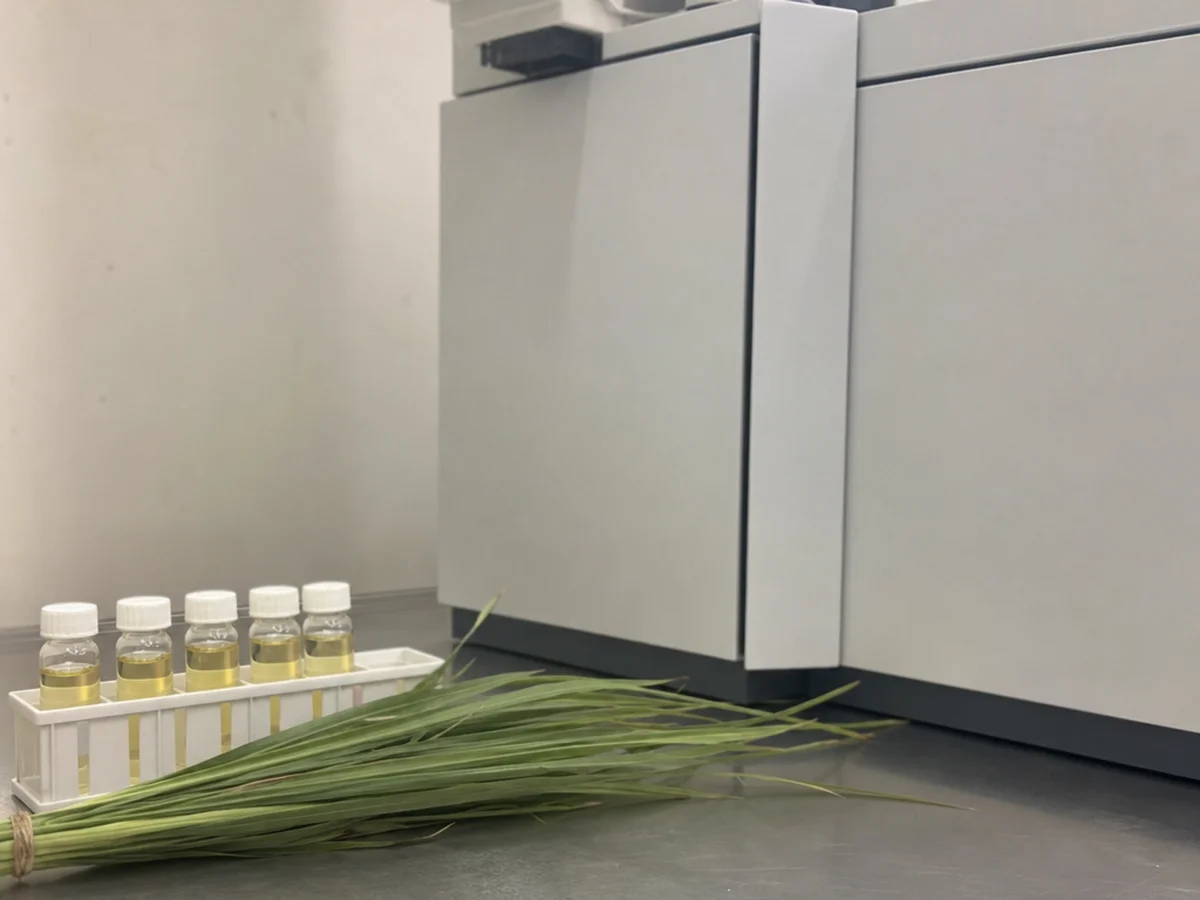
The same text puts geraniol at roughly 75 to 95% of the oil, with esters at about 3 to 13%. Modern analyses fit comfortably inside that range, and farnesol is still on the books today, which our article on the chemistry of palmarosa explores.
Next time you smell a bottle, try picturing the old trade routes. It is a nice way to give a drop of oil some context, and it makes the scent feel like it has somewhere to come from.
Where that leaves the oil now
PROSEA observes that palmarosa oil has gradually lost ground to cheaper synthetic and natural geraniol, yet it adds that the natural oil is still preferred in high quality perfumes, especially in the Middle East. That seems to us the right place for it: a material valued for its whole character, the geraniol together with the sweet, green, slightly lemony edges, instead of as a chemical supplier.
Two varieties exist, palmarosa proper (var. martini) and gingergrass (var. sofia), and they smell quite different. If you ever want to know which you are holding, ask the seller in writing for a gas chromatography report for the lot. Our guide to reading a palmarosa label explains why.
From Bombay ports to modern perfumers' benches, the grass has always been prized for the same thing, a rose-like sweetness that costs a great deal less than the real flower.
Palmarosa Essential Oil
Palmarosa Essential Oil from our own shop, in sizes from 0.5 oz to bulk.
From $10.99
Shop Now →Sources & Further Reading
- de Guzman CC, Reglos RA, 1999. Cymbopogon martini (Roxb.) J.F. Watson. Plant Resources of South-East Asia No 19: Essential-oil plants
- Gildemeister E. The Volatile Oils, Vol. 2. 122. Palmarosa Oil and 122. Palmarosa Oil. Part 3
- Raeber J, Favrod S, Steuer C, 2023. Determination of Major, Minor and Chiral Components as Quality and Authenticity Markers of Rosa damascena Oil by GC-FID. Plants