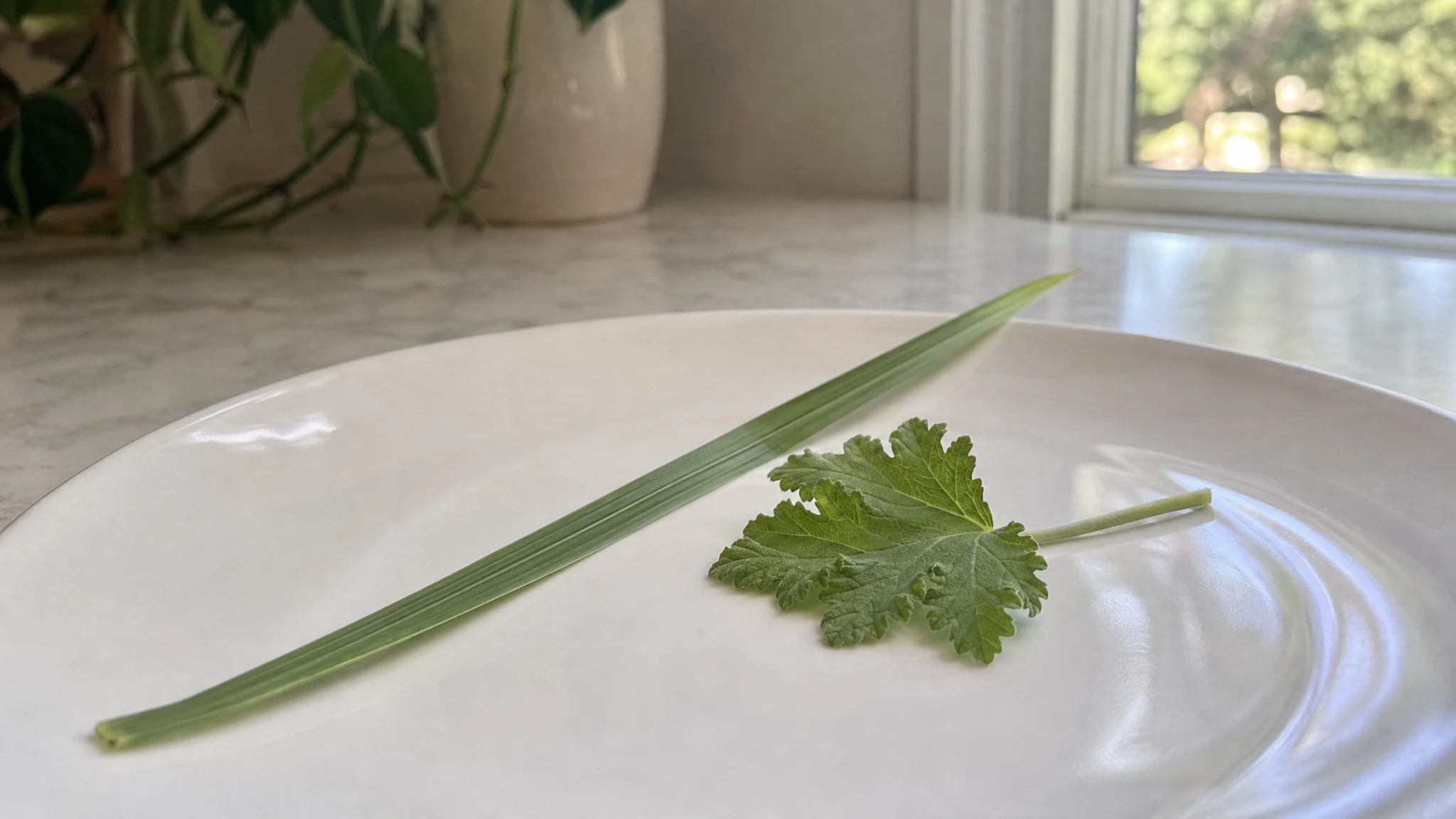
Palmarosa vs Geranium: Which Rosy Oil Should You Pick?
Two bottles, both called rosy, and neither one is rose. Palmarosa and geranium are the two oils people most often hold up next to each other when they want a floral, rose-leaning note without rose's expense. They get there by different routes, and once you know the routes, choosing between them becomes simple.
Palmarosa Essential Oil
Our own Palmarosa Essential Oil, in sizes from 0.5 oz to bulk.
From $10.99
Shop Now →Start with the names
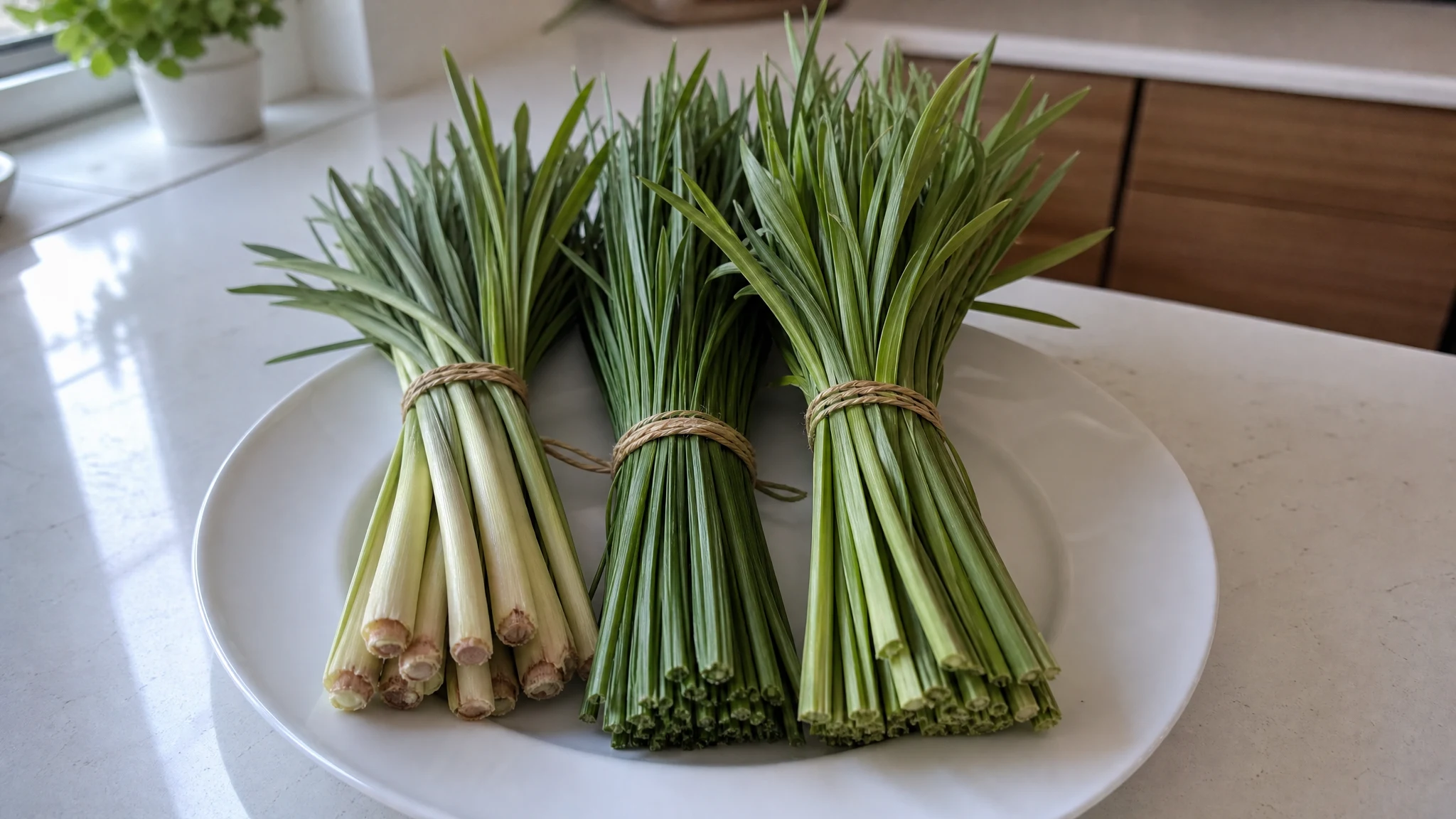
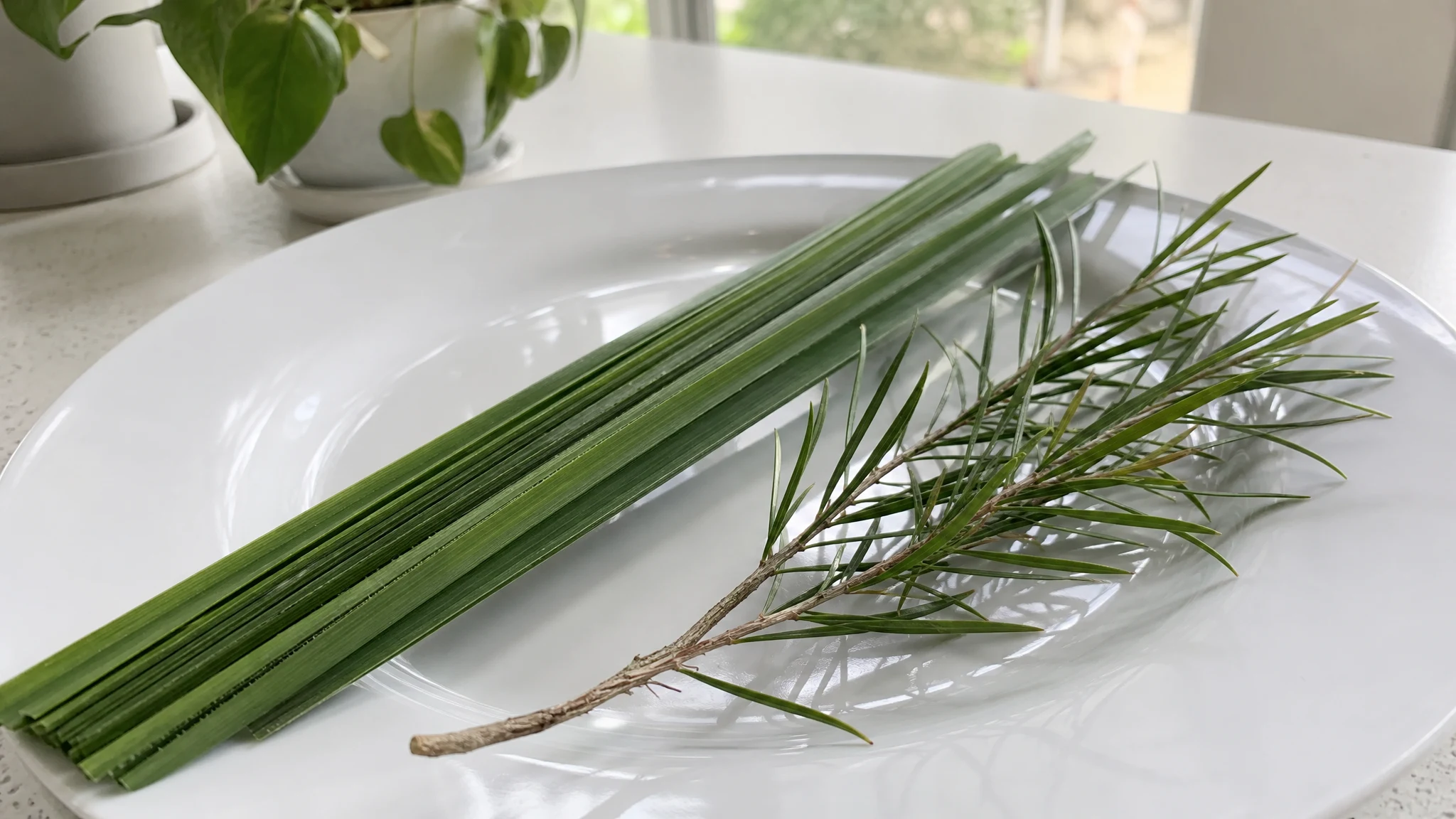
The oil sold as geranium comes from Pelargonium graveolens, a scented-leaf pelargonium, and not from the hardy garden Geranium. IFRA's annex keeps them apart, listing geranium oil (P. graveolens), a separate African geranium (P. odoratissimum) and a zdravetz oil from Geranium macrorrhizum (IFRA annex). Palmarosa is the grass, Cymbopogon martinii, and we sell it as palmarosa, steam-distilled and sold neat. Gingergrass is a different variety of the same species, which is one more reason to check the botanical name on any label.
A quick sniff test
If you ever have both bottles in front of you, smell them side by side. Palmarosa is the sweet, rosy, gently green one, with a soft lemony hint that makes it feel light and open. Geranium tends to come across fuller and more layered, a floral with more going on beneath it. Neither is better. They are simply two different ways of reaching a rose, and it helps to know which one you want before you pick up a bottle.
Two ways to smell rosy
The clearest difference is where the rosiness lives. In IFRA's typical figures, palmarosa is 82.4% geraniol. Geranium carries about 17.7% geraniol and 21.1% citronellol, which means the rose note is shared between two molecules and finished with others. Palmarosa is the single clear voice, and geranium is the small choir.
Geranium also changes with where it grows. A review of geranium oil describes the Reunion type as having citronellol and geraniol in almost a one-to-one ratio, with the Chinese type leaning heavily on citronellol and citronellyl formate and holding little geraniol. Individual samples ranged from 6% geraniol with 37.5% citronellol to 15.33% geraniol with 24.54% citronellol (Narnoliya, Jadaun and Singh, 2019). So a recipe tuned to one origin may not carry over to another.
Palmarosa has its own variation. A study of cultivated palmarosa leaf oil from Nepal reported 76.6% geraniol and 15.2% geranyl acetate (Dangol et al., 2023), while a different study of wild plants near Udaipur found a carveol-rich profile its authors compared to the gingergrass variety (Sonigra and Meena, 2025). Whichever oil you choose, a gas chromatography report for the lot you are buying is the best way to know what you actually have.
Choosing by what the recipe needs
- A clean, sweet, rosy-green middle note. That is palmarosa. Our shop describes ours as sweet, rosy and gently green with a soft lemony hint, and we list geranium among the oils that blend well with it.
- A fuller, many-sided floral. That leans toward geranium, whose citronellol and other components give it a different character. Ask the seller for the origin, since the types differ.
- Both. The two sit together happily, and our pairing guide shows how the geraniol and citronellol shares add up.
Cost often decides the matter, and both oils are sold as economical stand-ins for rose. We do not quote prices here. The shop page always shows our current one, and the fairest comparison is per gram of a documented lot.
Blending the two
If you cannot choose, use both. A simple starting point is two parts palmarosa to one part geranium by drops, which keeps the green rose in front and lets the geranium round it off. Our rose meadow blend adds a touch of bergamot to that idea. The sums in the next section still apply to whatever you mix.
The allergen arithmetic
Geraniol is one of the fragrance allergens that regulators track closely, and IFRA caps it in finished products: 0.78% in a facial moisturizer and 1.2% in body creams and oils (IFRA Standard, Geraniol, Amendment 51). Dividing by each oil's typical geraniol share gives a rough ceiling on geraniol alone: about 0.95% palmarosa for the face, against about 4.4% geranium. That is our arithmetic from typical values and it counts geraniol only, so geranium's own citronellol and other components bring caps we have not listed here.
What it means in practice is that palmarosa rewards a lighter hand. Our shop guidance is to dilute to between 0.5% and 2% in a carrier and patch test first. We start at the low end, and we suggest 0.5% on the face, because 2% oil would carry about 1.65% geraniol on these figures. Our dilution chart turns the percentages into drops, and our rose comparison carries on the story.
If you are picking your first bottle
If you want one rosy oil for a diffuser, a bar of soap and a fabric spray, palmarosa is a tidy place to start. We would say that, of course, because it is the oil we sell, so weigh it as you like. What matters most is knowing what you want the scent to do: a clean, bright rose-green line, or something rounder and more floral. Once you know that, the choice usually makes itself.
Since we sell palmarosa only, you will find geranium at a craft, soap-supply or perfumery-supplies shop. A rosy recipe often benefits from both of them, and from a light touch with each.
Palmarosa Essential Oil
Palmarosa Essential Oil from our own shop, in sizes from 0.5 oz to bulk.
From $10.99
Shop Now →Sources & Further Reading
- Annex on contributions from other sources to the IFRA Standards (IFRA, 51st Amendment, 2023)
- IFRA Standard: Geraniol (IFRA, 2023, Amendment 51)
- The Phytochemical Composition, Biological Effects and Biotechnological Approaches to the Production of High-Value Essential Oil from Geranium (Narnoliya, Jadaun and Singh, Essential Oil Research, 2019)
- Essential Oil Composition Analysis of Cymbopogon Species from Eastern Nepal by GC-MS and Chiral GC-MS, and Antimicrobial Activity of Some Major Compounds (Dangol et al., Molecules, 2023)
- Influence of growth stage on the chemical composition, antimicrobial, and antioxidant potential of Cymbopogon martinii (Roxb.) Wats. essential oil (Sonigra and Meena, Frontiers in Plant Science, 2025)