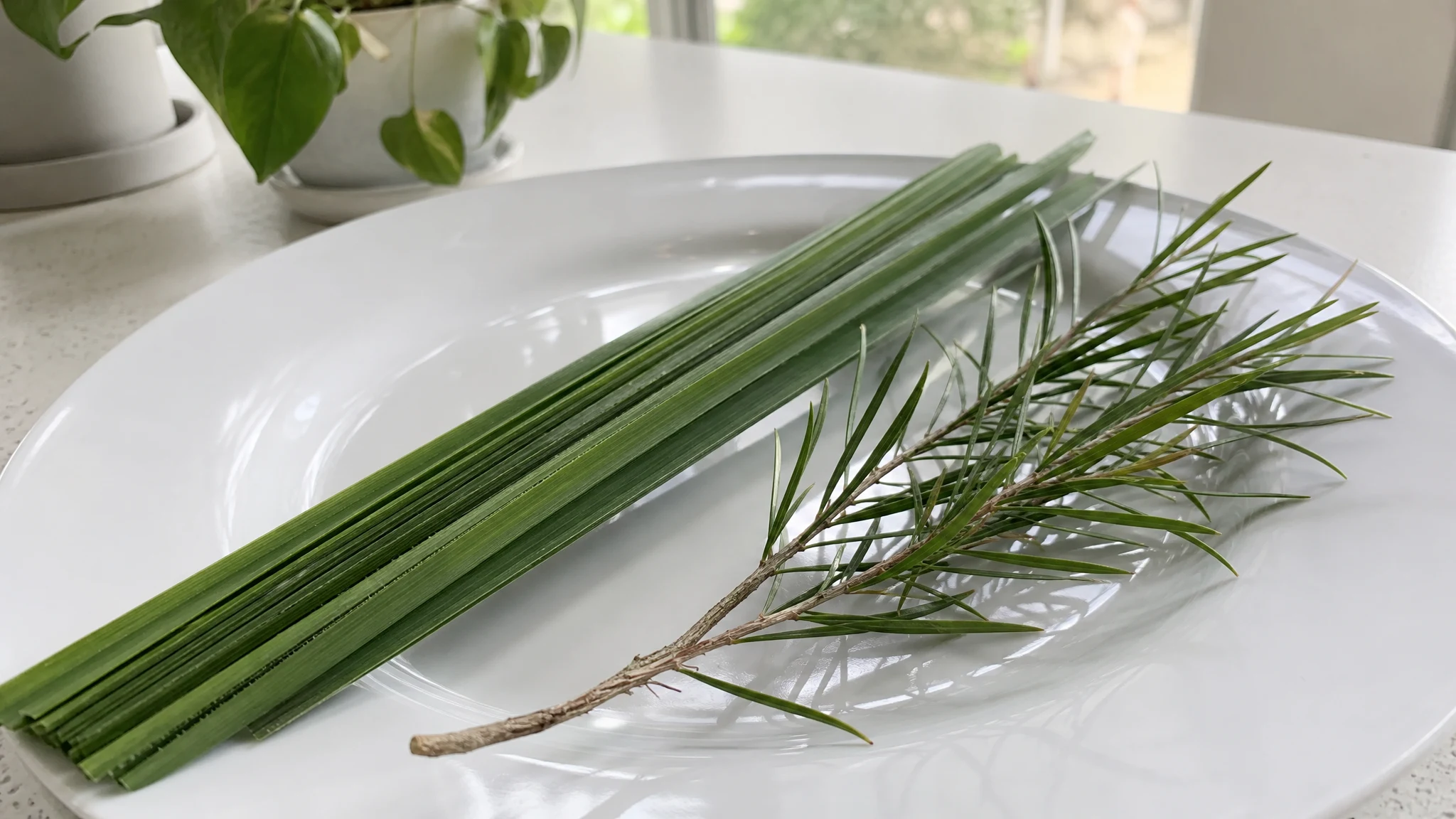
Palmarosa vs Tea Tree Oil: Two Very Different Oils
"Is palmarosa a gentler tea tree?" is a question that makes sense on the surface, since both are popular, both are bottled neat, and both turn up in the same corners of the internet. Look at the two side by side, though, and the more interesting finding is how little they have in common. One is a grass built on a rosy alcohol. The other is a tree oil with an entirely different cast of molecules.
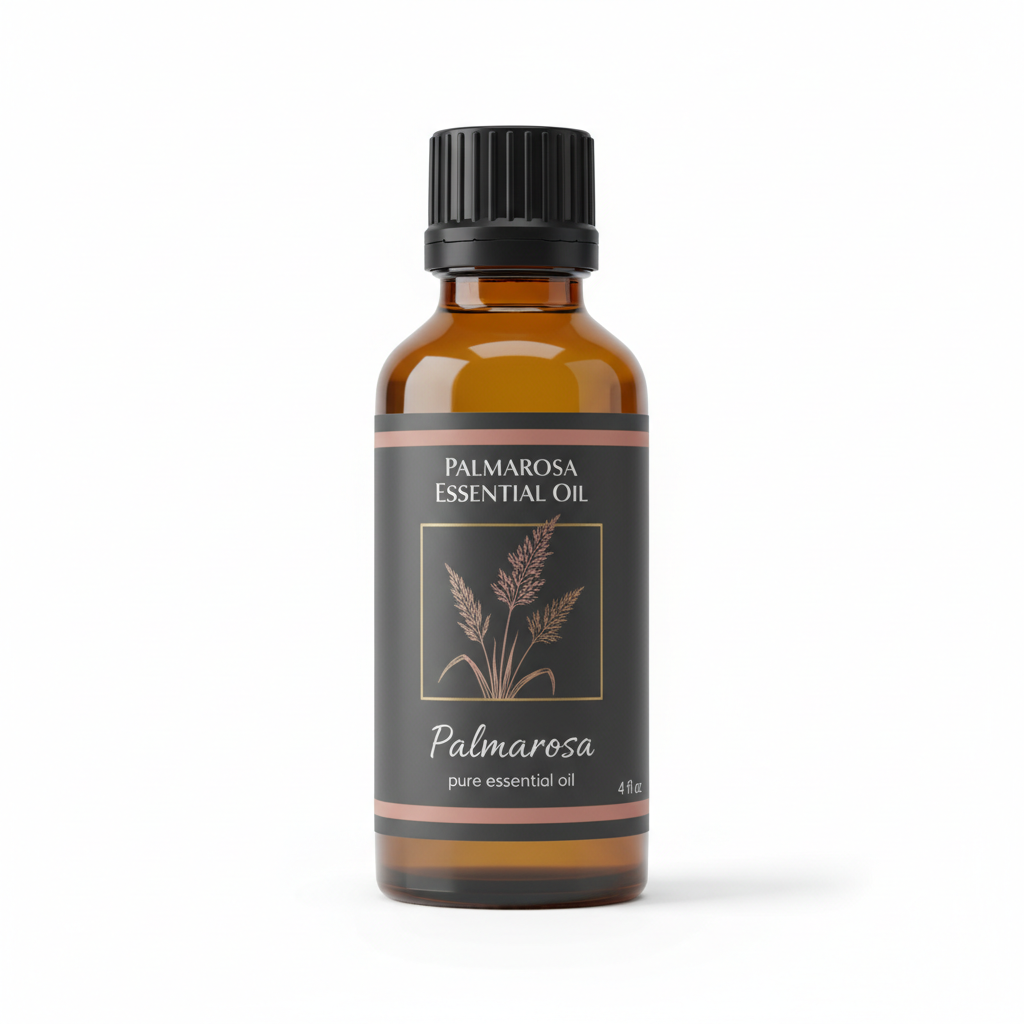
Palmarosa Essential Oil
Our own Palmarosa Essential Oil, in sizes from 0.5 oz to bulk.
From $10.99
Shop Now →Open both bottles
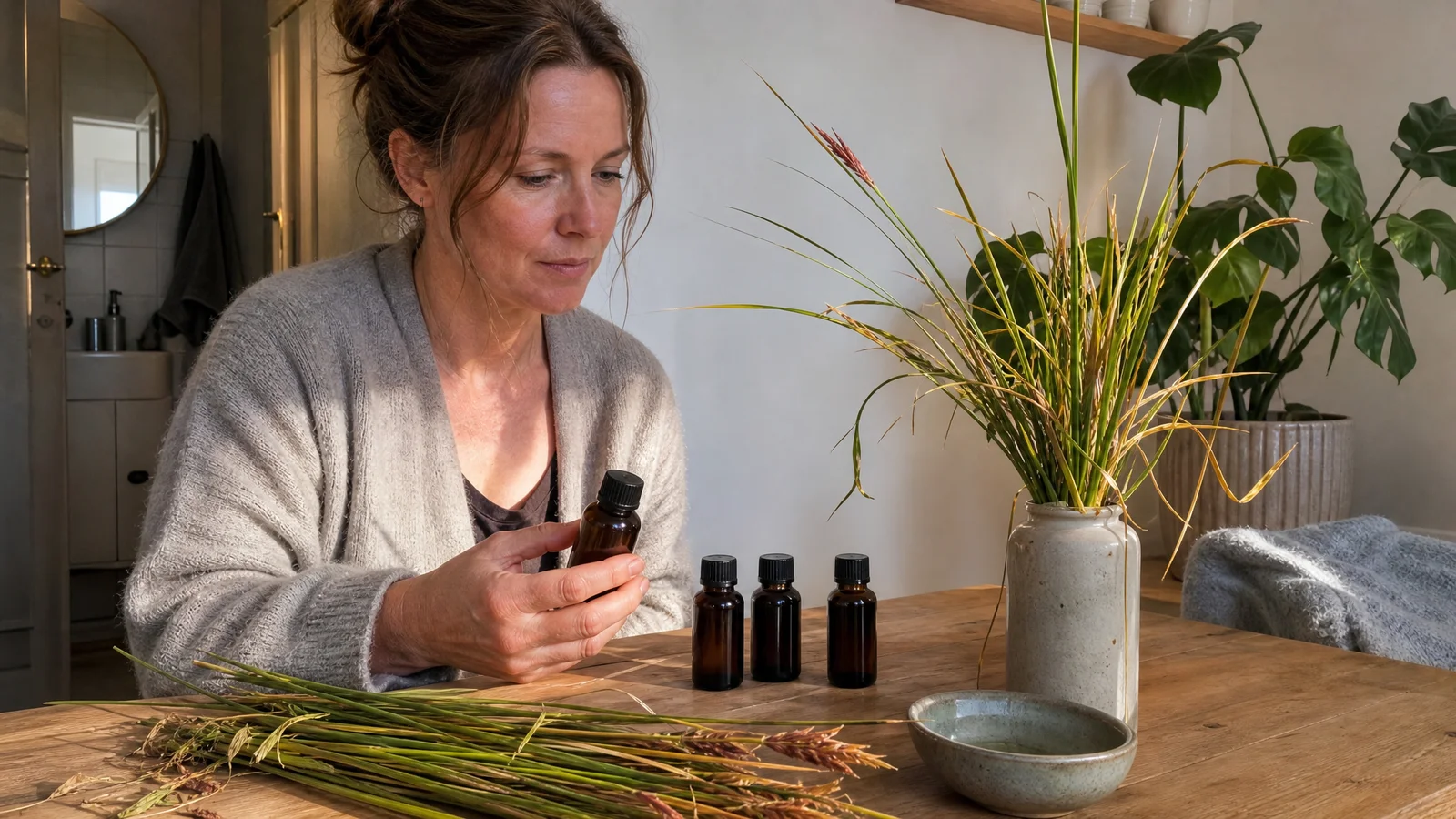
The quickest way to see the difference is to smell them one after the other. Palmarosa is sweet, rosy and gently green, with a soft lemony hint. Tea tree tends to smell sharper and fresher, with an altogether different character. You won't mistake one for the other, and you wouldn't want to. Their aromas pull in opposite directions, so a recipe built around one rarely welcomes the other.
Different plants, different chemistry
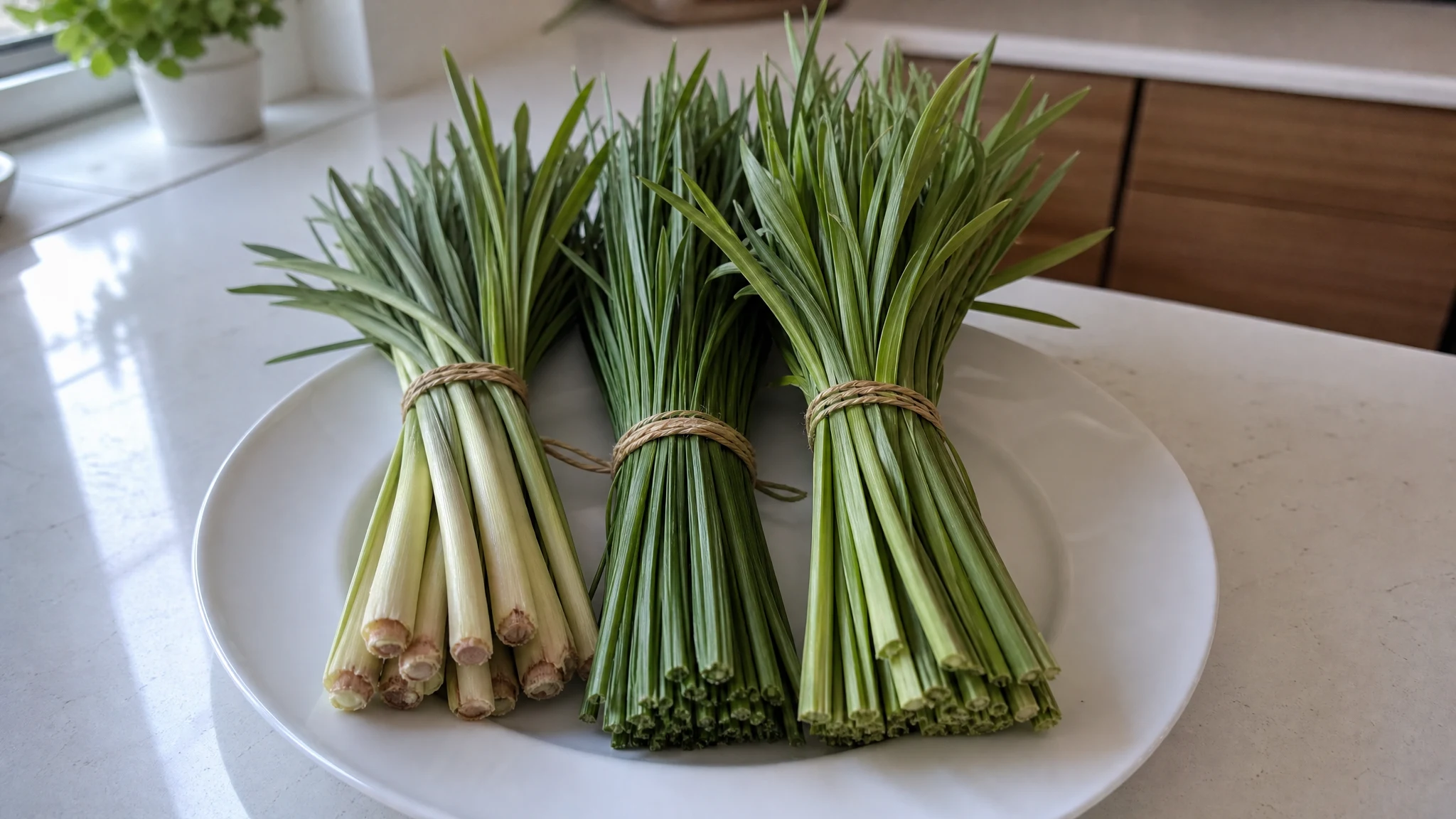
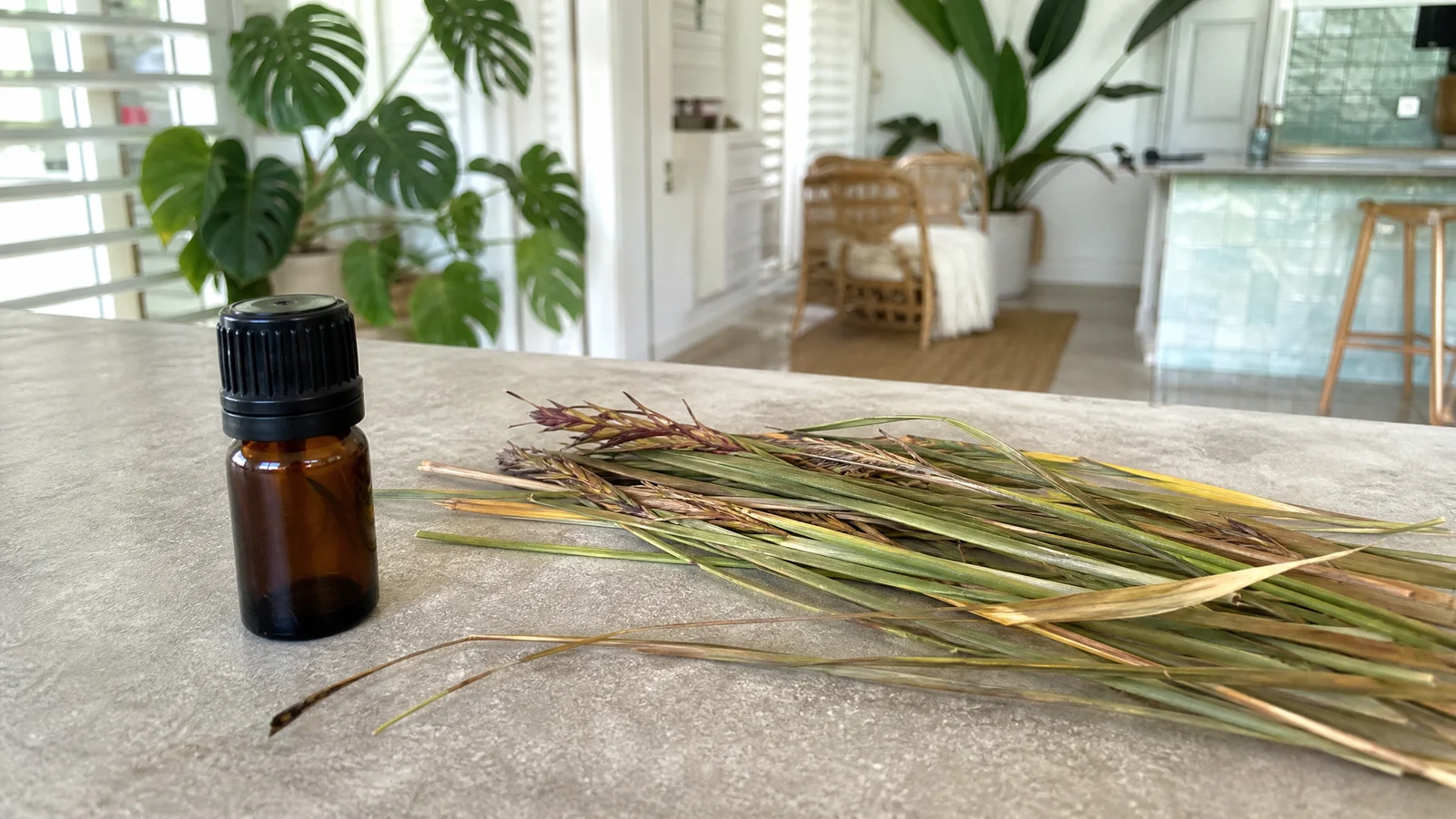
Palmarosa comes from Cymbopogon martinii, a tall grass, and we steam-distill it and sell it neat. IFRA's typical composition for palmarosa oil is 82.4% geraniol (IFRA annex), and geraniol is the molecule that smells of rose. Our shop describes the oil as sweet, rosy and gently green, a middle note.
Tea tree oil comes from Melaleuca alternifolia. A 2016 review lists its major constituents as terpinen-4-ol, gamma-terpinene, 1,8-cineole, alpha-terpinene, alpha-terpineol, p-cymene and alpha-pinene (de Groot and Schmidt, 2016). None of those appears in palmarosa's lead role, and none of palmarosa's lead molecule appears in tea tree's. Different molecules mean different aromas, so it is reasonable to expect two oils that smell nothing alike. You would not swap one for the other in a blend any more than you would swap lavender for lemon.
What each has been studied for
Tea tree is mostly known as a traditional remedy, and the same review calls it a popular remedy for many skin conditions. That reputation shapes how it is sold. We take a different path. Our palmarosa is a cosmetic and fragrance oil, and we make no claim that it does anything for skin conditions or any other health concern. We do not claim any therapeutic effect: palmarosa belongs in perfumery and in skincare formulation.
If you are looking for something to address a skin concern, an oil from either bottle is not the place to start. A pharmacist or dermatologist is the right person to ask, and they can tell you what has actually been tested in people. What we can offer is a plant worth loving for its scent.
What they share: a little respect for oxidation
Here the two oils actually meet. De Groot and Schmidt report that fresh tea tree oil is a weak to moderate sensitizer, and that oxidation increases its allergenic potency. Geraniol behaves similarly. When it is exposed to air, it forms hydrogen peroxide and the aldehydes geranial and neral, and in a mouse assay the oxidized samples had moderate sensitizing capacity where unoxidized geraniol had a weak one (Hagvall et al., 2007). That study was on geraniol itself and not on our oil, but it explains why careful storage matters for both.
The practical habits are the same, and they are good ones for any essential oil:
- Keep the bottle tightly capped, out of direct light and away from heat. Our shelf-life guidance is typically two to three years under those conditions.
- Dilute in a carrier before it goes on skin. For palmarosa we recommend 0.5% to 2%, starting at the low end, and a patch test first.
- Keep it away from eyes, children and pets, and never take it internally.
Keep the bottles apart
If you do end up with both, store them apart and label each one clearly, with the name, the date you opened it and the date you last tested it on your skin. Two small bottles can look identical in a dim cupboard, and a mix-up is easy when you grab one without reading. A tidy shelf makes every recipe more reliable.
So which one belongs on your shelf?
That depends entirely on what you want it for, and the answer is rarely "instead of." Palmarosa is the one for soft, rosy, green scent: a diffuser, a skin-care formulation or a handmade soap or candle. Our scent profile describes what to expect, and our dilution chart helps with the maths when you blend it into a carrier oil. For tea tree, you will find it at a pharmacy or craft shop, since we sell palmarosa only.
A common mix-up
People sometimes reach for tea tree whenever they want something that smells fresh around the house. If a fresh, light scent is what you are after, palmarosa offers a rosy-green version of that feeling, and it blends with geranium, bergamot, lavender and the rest of its friends. If you want something crisp and sharp, tea tree is a different bottle from a different shop. Choose by the scent you want to live with.
It also helps to know palmarosa's limits before you pour. Geraniol is a regulated fragrance allergen, and 2% oil would carry about 1.65% geraniol by the arithmetic in our bottle-size article. We therefore treat 0.5% to 1% as the comfortable range for most leave-on products.
Two oils from two plants, each with a personality of its own. Appreciate each for what it is, and the comparison stops mattering.
Palmarosa Essential Oil
Palmarosa Essential Oil from our own shop, in sizes from 0.5 oz to bulk.
From $10.99
Shop Now →Sources & Further Reading
- Annex on contributions from other sources to the IFRA Standards (IFRA, 51st Amendment, 2023)
- Tea tree oil: contact allergy and chemical composition (de Groot and Schmidt, Contact Dermatitis, 2016)
- Fragrance compound geraniol forms contact allergens on air exposure. Identification and quantification of oxidation products and effect on skin sensitization (Hagvall et al., Chemical Research in Toxicology, 2007)