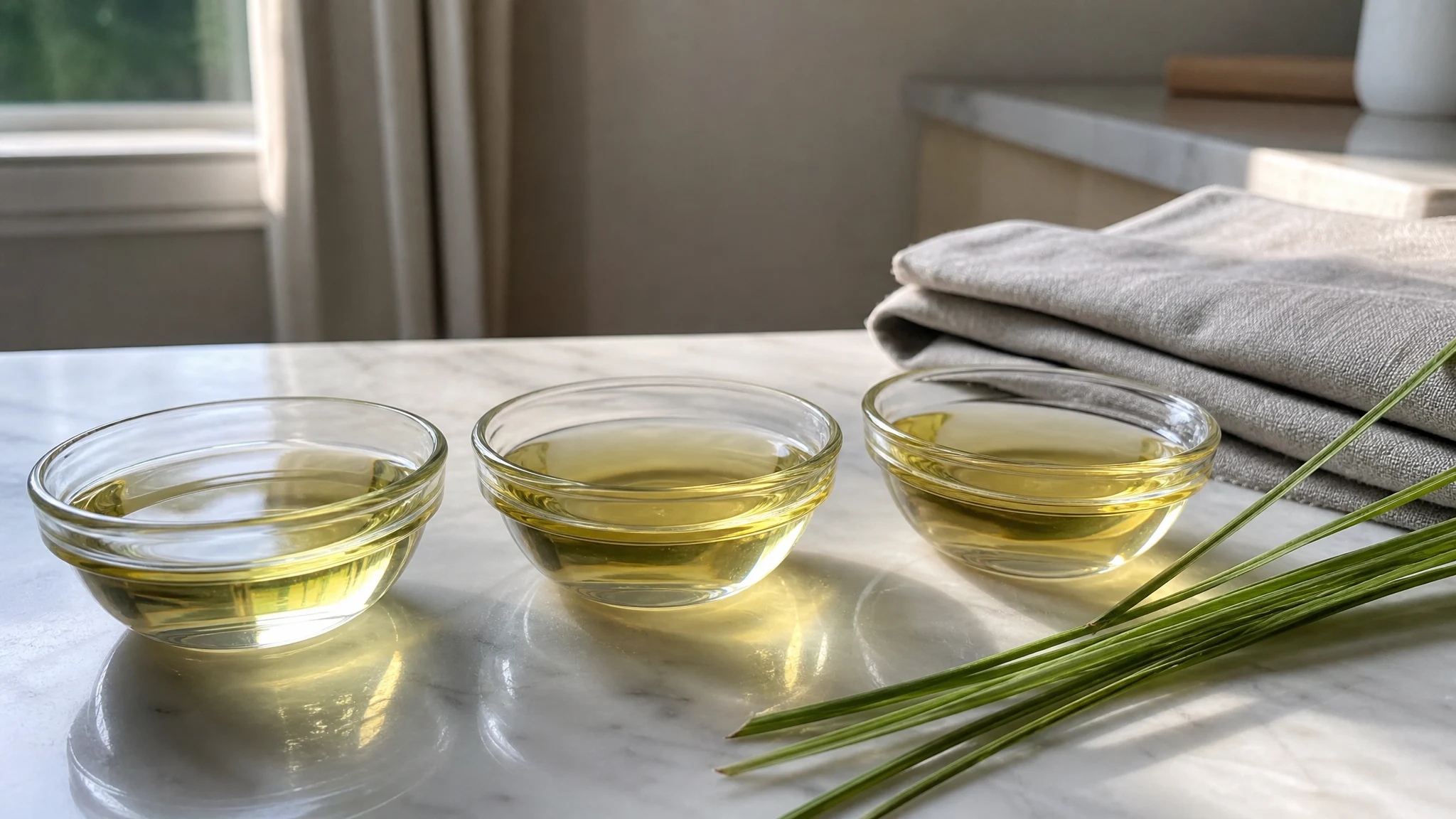
Best Carrier Oils for Palmarosa: How to Choose
Palmarosa oil is the scent; the carrier is everything else in the bottle. Because we sell palmarosa neat, the carrier is your choice, and we suggest making it on three practical grounds: allergies in your household, how long the oil keeps, and how you plan to use the blend. We do not sell carrier oils, so you will find them at a craft or cosmetic-ingredient supplier, a pharmacy or the grocery store.
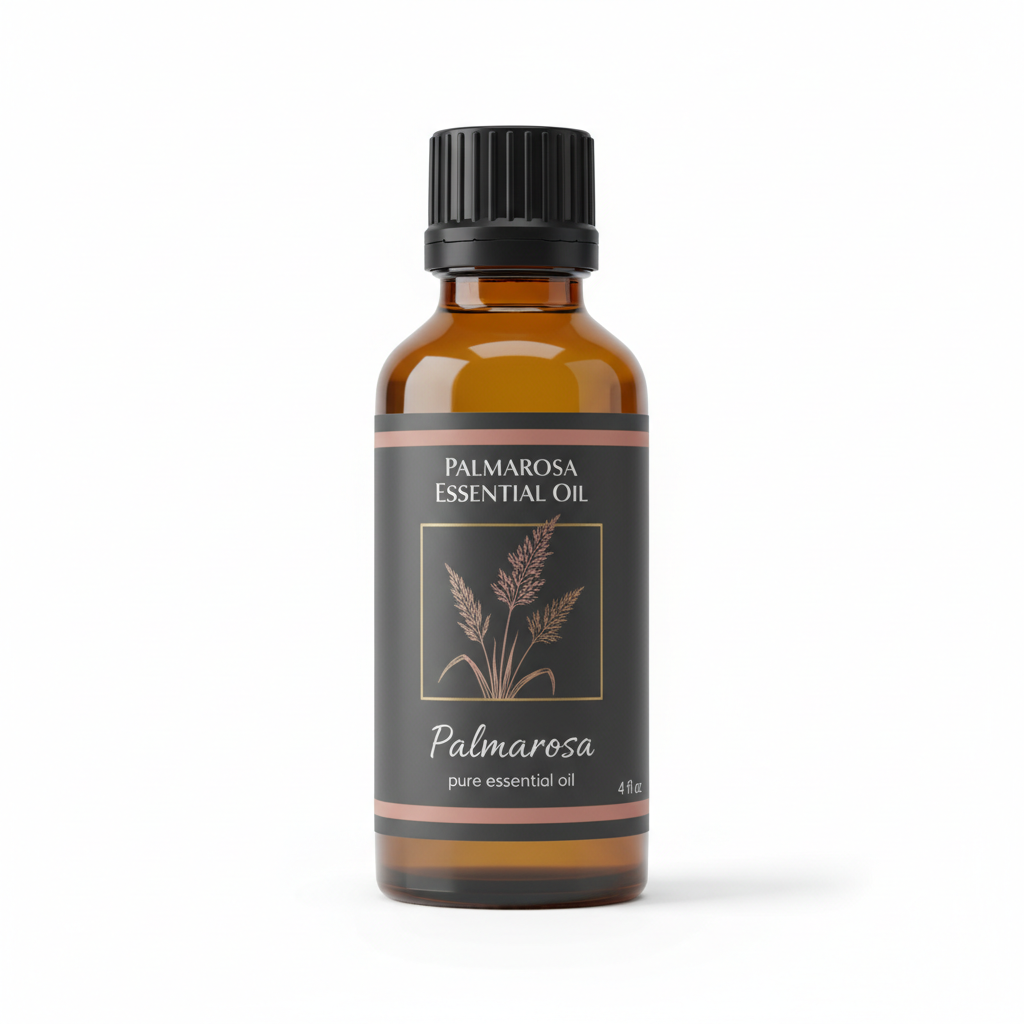
Palmarosa Essential Oil
Our own Palmarosa Essential Oil, in sizes from 0.5 oz to bulk.
From $10.99
Shop Now →Jojoba and sweet almond, the usual pair
Our dilution guidance mentions jojoba and sweet almond, and they are popular for good reasons. Jojoba is technically a liquid wax, mostly wax monoesters with a structure similar to the wax in human skin oils. A 2022 study compared jojoba oil, olive oil and squalene after 60 days at 60 C and measured acid, peroxide and carbonyl values. Jojoba's acid value did not change, its peroxide and carbonyl values were the lowest of the three, and the authors concluded it was the most stable against autoxidation of the three. The same paper found that stability varied between crude jojoba oils from different companies and years, and that refined or deodorised oils had lower antioxidant activity. A hot-storage test is not a shelf-life date, but it is a useful hint that jojoba tends to hold up well.
Sweet almond is a familiar choice for body blends. If you choose it, check the manufacture date, because as a triglyceride oil it is likely to age sooner than a wax; that is our reasoning from the jojoba comparison, not a measured result for almond.
Check allergies first
Almonds appear on the US FDA's list of tree nuts, one of the nine major food allergens. That page concerns food labelling, so it does not settle how almond oil behaves on skin, but it does tell you the question exists. If anyone who will use the blend has a tree nut allergy, ask an allergist before using an almond-derived oil, or simply choose jojoba and sidestep the question.
Why freshness matters with palmarosa
The oil has a clock of its own. Laboratory work on geraniol, palmarosa's main component, found that it reacts with air to form hydrogen peroxide and the aldehydes geranial and neral, and the air-exposed material was a stronger skin sensitiser in a mouse test than purified geraniol. So the sensible habit is small batches, dark bottles kept closed, a date written on the label and a quick sniff before each use. Our storage guide covers the oil itself, which we say typically keeps two to three years when tightly capped, out of direct light and away from heat. A diluted blend is a different thing and is only as durable as its shortest-lived ingredient.
Smell the carrier before you mix
A carrier oil is not a blank page. Open the bottle and smell it by itself first: a fresh jojoba is faint and clean, and a fresh sweet almond is mild and slightly nutty. If you notice anything sharp, crayon-like or stale, the oil is past its best and will carry that note into your blend, however lovely the palmarosa is. Palmarosa's sweet, rosy, gently green scent is delicate, so it deserves a base that stays out of its way.
It is also worth feeling the carrier. Put a few drops on the back of your hand and rub them in: some oils vanish quickly, others sit longer, and that tells you how a finished blend will behave before you add anything else. Pick the feel you would enjoy using every day.
How much oil goes in
Our guidance is 0.5% to 2% in a carrier with a patch test first. IFRA's geraniol limits for finished products are lower at the top: 0.78% geraniol in a facial moisturizer and 1.2% in body lotions and oils. At the typical 82.4% geraniol IFRA lists for palmarosa, that works out to roughly 0.95% oil for the face and 1.46% for the body, our arithmetic and not a measurement of our oil. So we start at 0.5% for the face and 1% for the body, and we would not treat 2% as a safe figure for either. The carrier does not change these numbers, since the limits apply to the finished product.
For 1 oz (29.57 ml) of carrier, using the common rule of thumb of about 20 drops per millilitre (droppers vary, so weighing is better):
| Oil in the blend | Oil in 1 oz | Roughly, in drops |
|---|---|---|
| 0.5% | 0.15 ml | 3 |
| 1% | 0.30 ml | 6 |
| 1.46% | 0.43 ml | 9 |
| 2% | 0.59 ml | 12 |
By weight, 30 g of blend at 0.5% needs 0.15 g of oil, and at 1% 0.30 g. These are suggested formulations worked out from the sources above, so patch test a small batch before you use it widely. Our dilution chart goes further.
Choosing by use
- Nut-allergic household, or the longest keep: jojoba. Ask the supplier for the lot, the best-before date and whether it is crude or refined.
- Light body blend: sweet almond, bought fresh and used promptly, if nuts are not a concern.
- A face blend with other ingredients: see our facial oil post, and check its figures against the limits above.
Whichever you pick, ask the supplier for a data sheet with a date, store the carrier the way its maker advises, and let the palmarosa be the quiet star. For general safety basics, our patch testing guide is a good companion.
Palmarosa Essential Oil
Palmarosa Essential Oil from our own shop, in sizes from 0.5 oz to bulk.
From $10.99
Shop Now →Sources & Further Reading
- Tsuchimoto S et al., 2022. Oxidative Stability and Antioxidant Activity of Crude Jojoba Oil. BPB Reports
- US FDA, The FASTER Act: Sesame Is the Ninth Major Food Allergen
- Hagvall L et al., 2007. Fragrance compound geraniol forms contact allergens on air exposure. Identification and quantification of oxidation products and effect on skin sensitization. Chemical Research in Toxicology
- IFRA, 2023. IFRA Standard: Geraniol, 2023 (Amendment 51)
- IFRA, 2023. Annex on contributions from other sources to the IFRA Standards (51st Amendment)