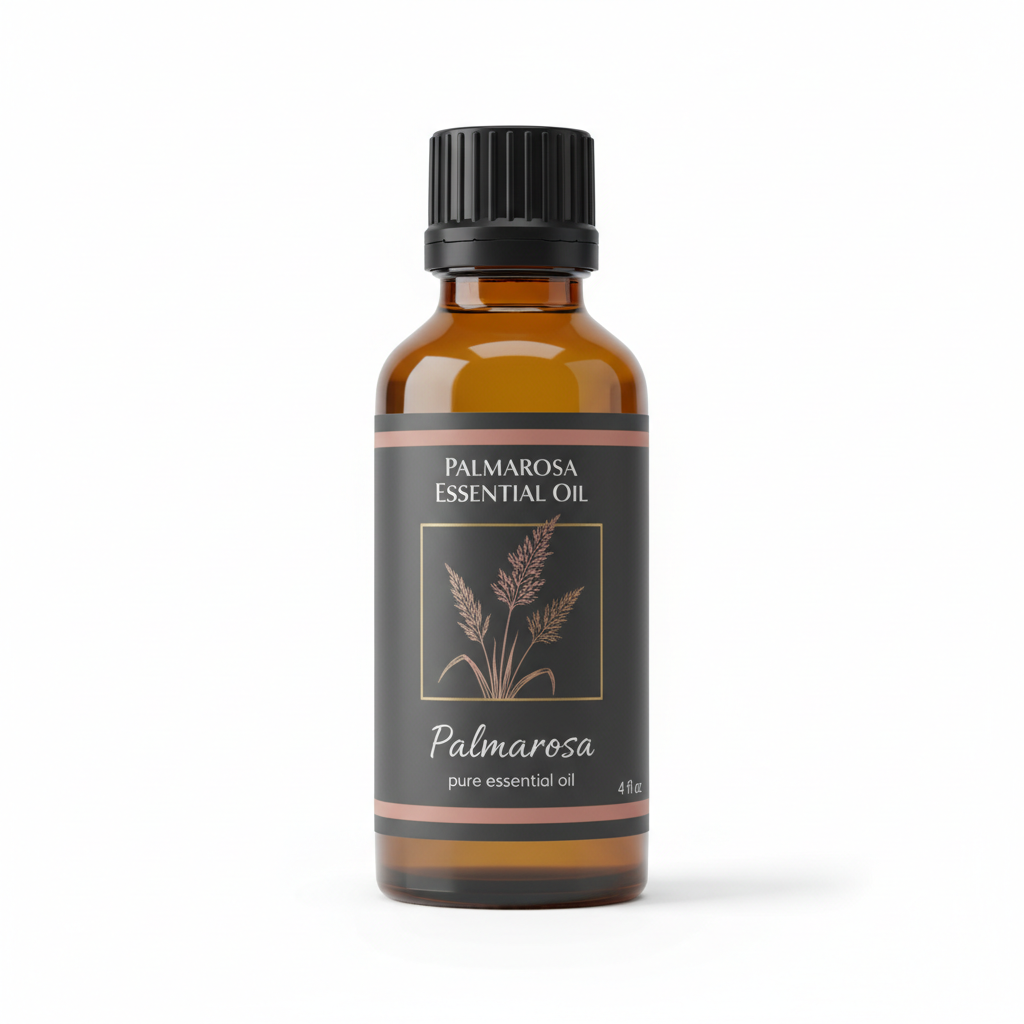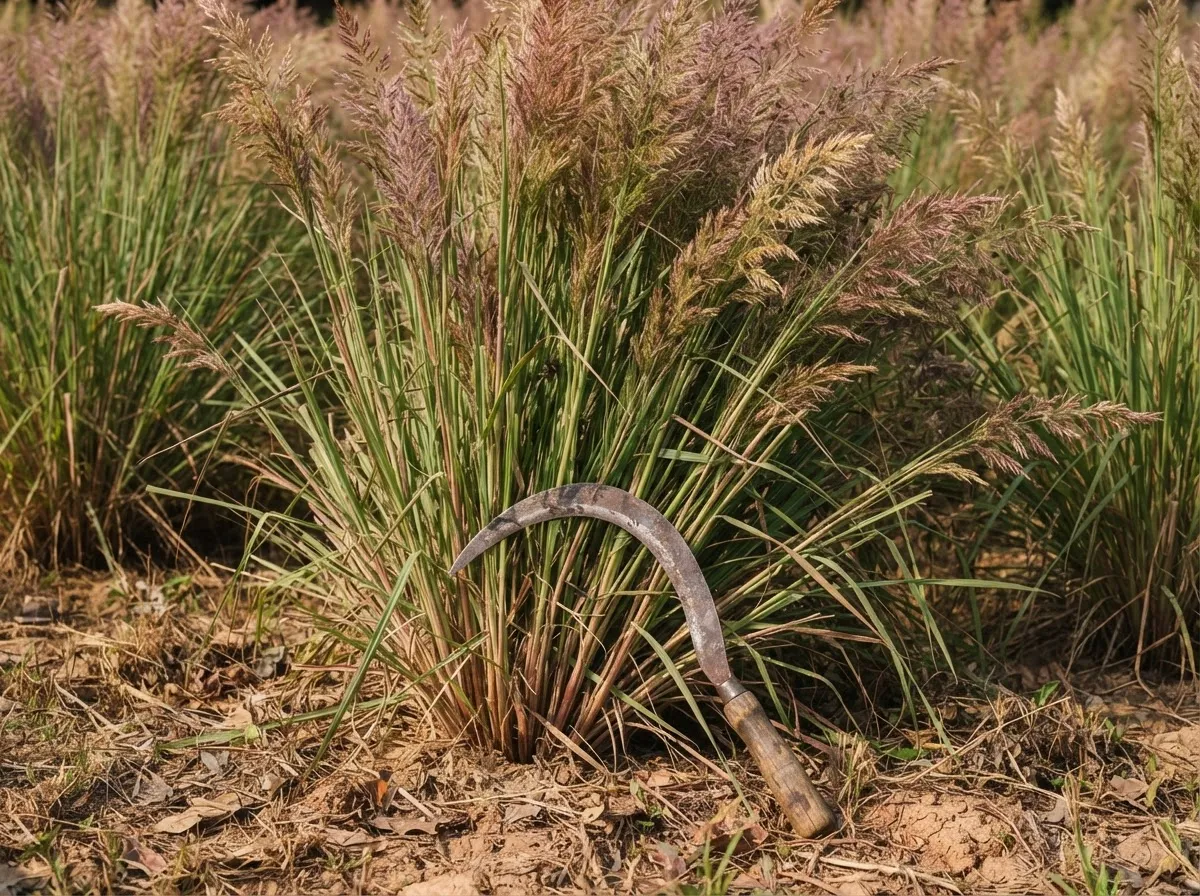
Palmarosa is a tall grass that smells of roses, and it does not need to pretend to be anything else. We buy it in bulk from the growers and run it through our own still.
Cymbopogon martinii is a cousin of lemongrass and citronella, and it grows as tall coarse grass rather than as a bush or a herb.
It is cut when the grass has matured and the seed heads are colouring, because that is when the geraniol content is at its highest. Cut it green and early and you get a fraction of the oil and a much sharper aroma.
The plant does well on dry ground where more delicate crops would fail, which is part of why it has been grown on India's plains for so long.
Palmarosa is used constantly to stretch rose and geranium, and almost never sold proudly under its own name.
That bothers us, because it is a lovely material in its own right. A grass that produces this much natural geraniol is a genuinely useful thing, and treating it only as a cheaper stand-in undersells it.
So we sell it as palmarosa, labelled as palmarosa, at a palmarosa price. It comes in bulk from organic growers across India's drier plains and it is distilled in our own still, which means nobody downstream is quietly relabelling it as something dearer.
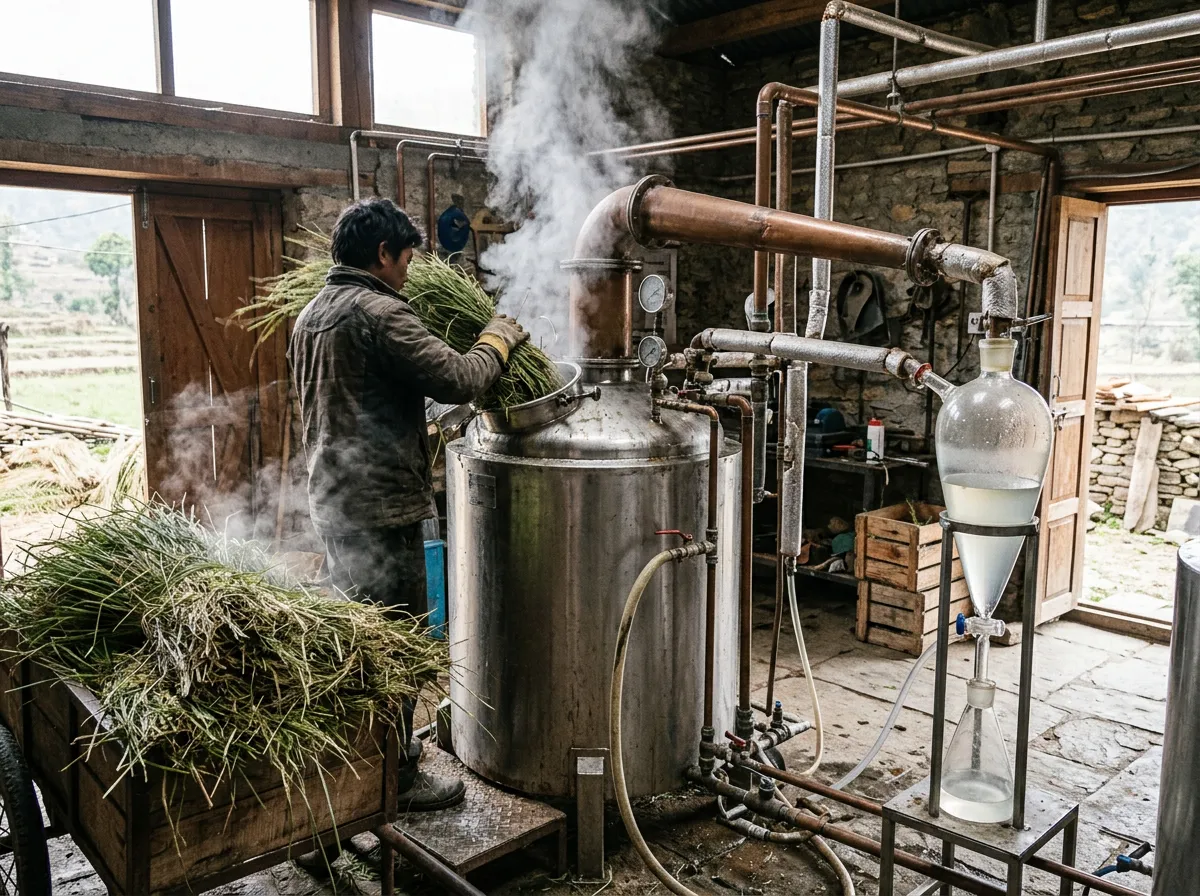
The distillation happens under our roof. For the cheapest rosy material on the market, that is the only way to be sure nothing cheaper still has been mixed in.
Bundles of cut grass are packed into the still and steam is passed through until the material is spent. The oil that separates smells sweet and rosy with a soft lemony whisper beneath it, lighter and airier than rose otto.
As with our other oils, the run finishes when the plant material is exhausted rather than at a set time.
Six things that stay the same across every palmarosa lot.
Harvested once the seed heads colour, when natural geraniol peaks.
Bought in bulk from organic growers on India's drier farmland.
Cut grass to sealed bottle, run through our own still.
Outside laboratory analysis of geraniol on every batch.
Labelled palmarosa, priced as palmarosa, never passed off as rose.
Everything from a sample size upward comes off one run.
Distilled on, bottled on, lot number: all three appear on the label.
Every batch goes to an independent third-party laboratory before we bottle it.
The compound that gives a grass the soul of a rose, quantified rather than described.
The secondary marker, and part of confirming this is martinii of the motia type.
Lab-made geraniol is inexpensive and an obvious way to inflate a weak lot. The analysis looks for it.
Any lot reference gets you its paperwork. Message us on the contact page if that is easier.
We do not claim any therapeutic effect. Palmarosa belongs in perfumery and in skincare formulation, and that is the ground we will argue on.
Always carry it in a base oil for skin work, and check a small area first. It is generally an easy oil to work with, though its rosiness is strong enough that a heavy hand will dominate a blend.
If a season's grass does not analyse the way palmarosa should, we go out of stock instead of buying a lot we cannot stand behind.
Organically grown Cymbopogon martinii, cut at maturity, distilled in our own still, with geraniol confirmed by an outside laboratory.
Try it beside your rose blend.
Shop Palmarosa Oil