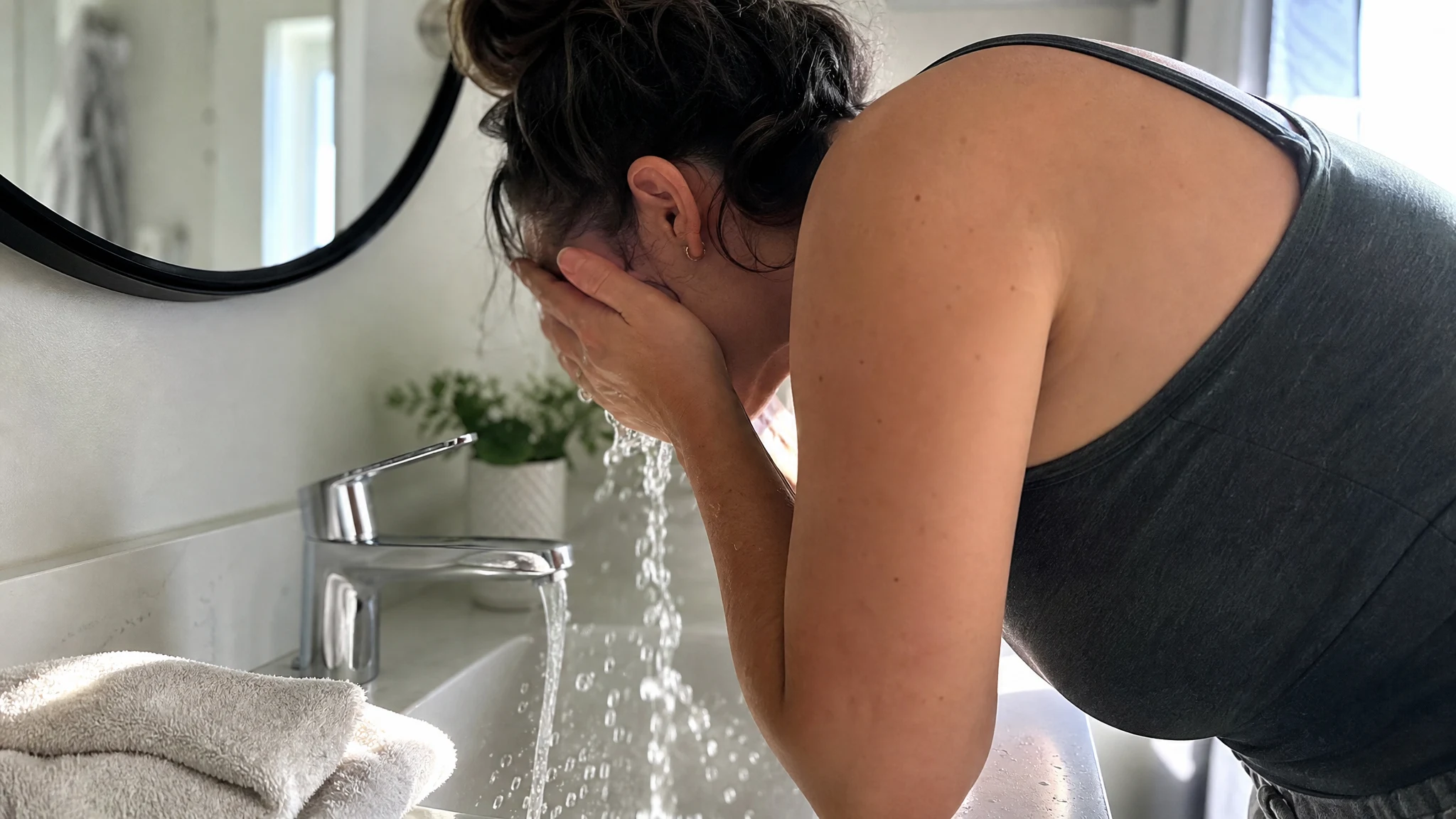
Palmarosa Oil for Oily Skin: Where It Fits and Doesn't
"Balancing" is one of the most appealing words in skincare, and palmarosa often gets it attached. For oily skin, though, it helps to know how oil production actually works, because it shows what a bottle of essential oil can and cannot be asked to do. The answer turns out to be freeing: palmarosa is for enjoying, and the routine that helps oily skin is a simple one.
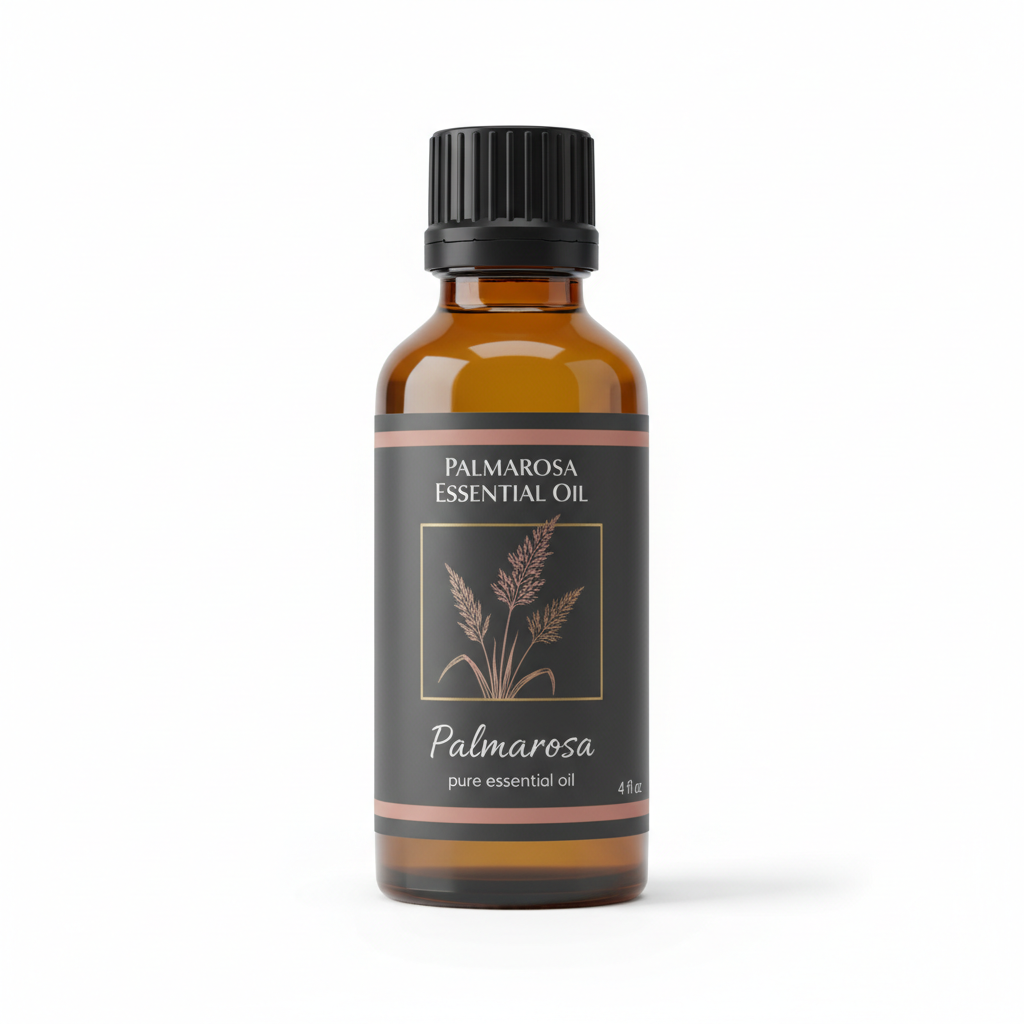
Palmarosa Essential Oil
Our own Palmarosa Essential Oil, in sizes from 0.5 oz to bulk.
From $10.99
Shop Now →Where sebum comes from
A review of sebaceous gland function by Zouboulis explains the basics. The number of sebaceous glands stays roughly the same through life while their size grows with age. Sebum output rises around age 9 and reaches adult levels by about 17. The glands themselves are a site where active androgens are formed, and androgens are well known for driving sebum excretion, with estrogens, glucocorticoids, prolactin and stress signals also taking part. So skin oiliness is largely a hormonal system with its own receptors. A product that rests on the surface for a while and is then washed off is not a natural lever on that system, and we are not aware of any study showing that palmarosa oil changes sebum output. Treat "balancing" as a pleasant adjective, not a measurement.
We find this oddly reassuring. If oil production is mostly a matter of hormones and age, then a shiny forehead at noon says nothing about how well you look after your skin. It is simply how your skin works, and a simple, steady routine is kinder than a hunt for the perfect product.
What the AAD suggests instead
The American Academy of Dermatology's advice for oily skin is gentle and refreshingly short:
- Use a mild, foaming face wash. A wash that is too harsh can irritate skin and trigger more oil production, so stronger is not better.
- Choose products labelled "oil free" and "noncomedogenic", including moisturisers and make-up.
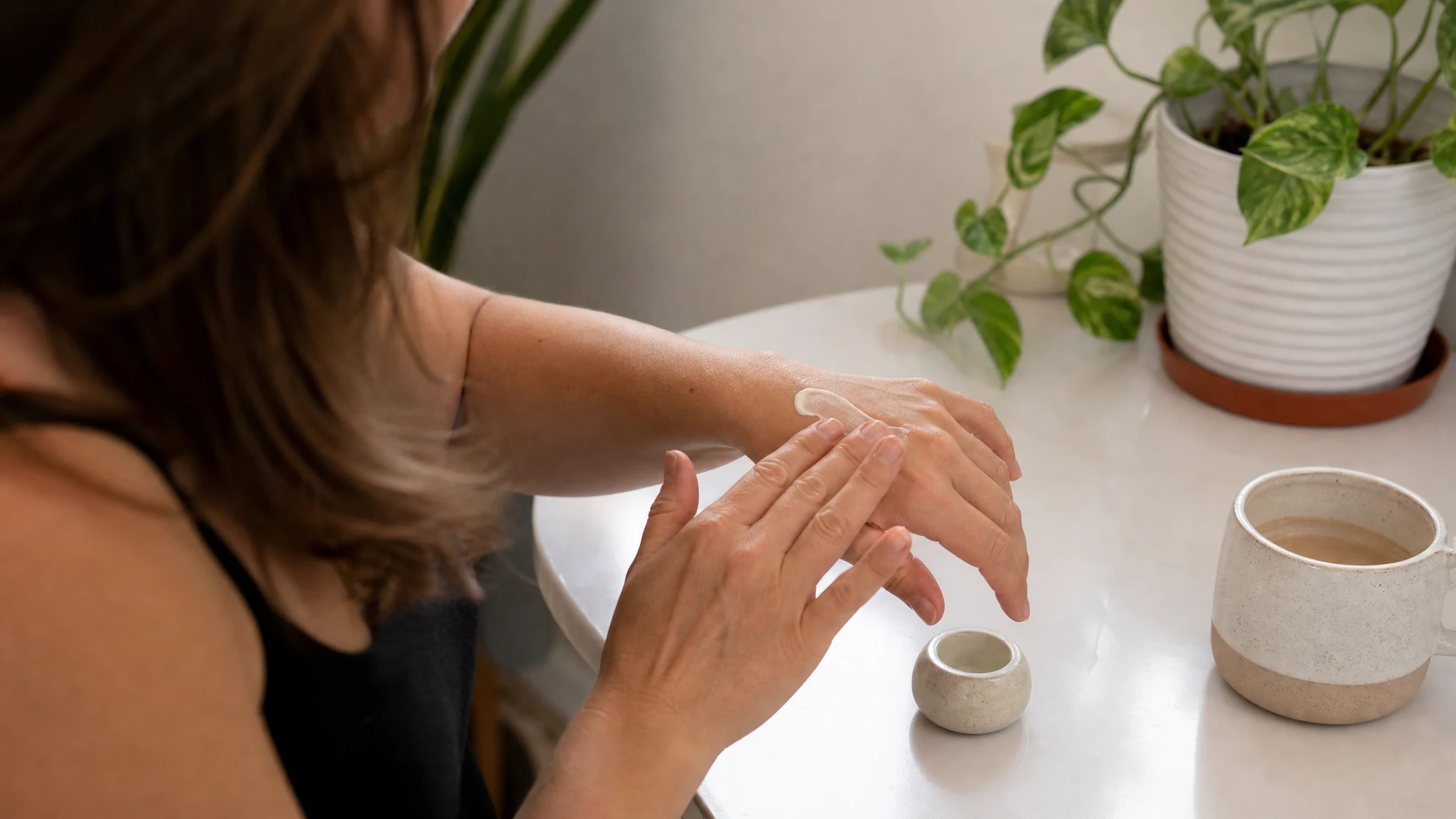
- Moisturise after cleansing, because oily skin still needs hydration.
- See a board-certified dermatologist if you are worried about oiliness, blackheads or acne.
Notice what is missing from that list: anything scented, and anything oil-based. That matters for us honestly. A facial oil is an oil by construction, and fragrance is something that page leans away from. So we would not describe a palmarosa face oil as a step toward less shine. If you enjoy one anyway, it is a scent decision.
If you do use it on your face
We recommend diluting palmarosa to between 0.5% and 2% in a carrier and patch testing first, and on the face we stay at the bottom. IFRA limits geraniol to 0.78% in a face moisturiser, and palmarosa's typical geraniol content is 82.4%, which gives about 0.95% oil as a practical ceiling by our arithmetic. The Tisserand Institute's general range for the face is 0.5% to 1.2%. At 0.5% in an ounce of carrier (29.57 ml) you would use about 3 drops, assuming roughly 20 drops to the millilitre. Our skin routine post and carrier oil guide cover choosing a base.
When you mix a small face blend, use a clean dropper bottle and write the percentage on the label. Smell it before you apply it: palmarosa should read sweet, rosy and gently green, never sharp. If the aroma seems strong, you have used too much for the bottle you are filling, so remake it with less. It is a much gentler lesson than learning it on your face.
Where palmarosa shines
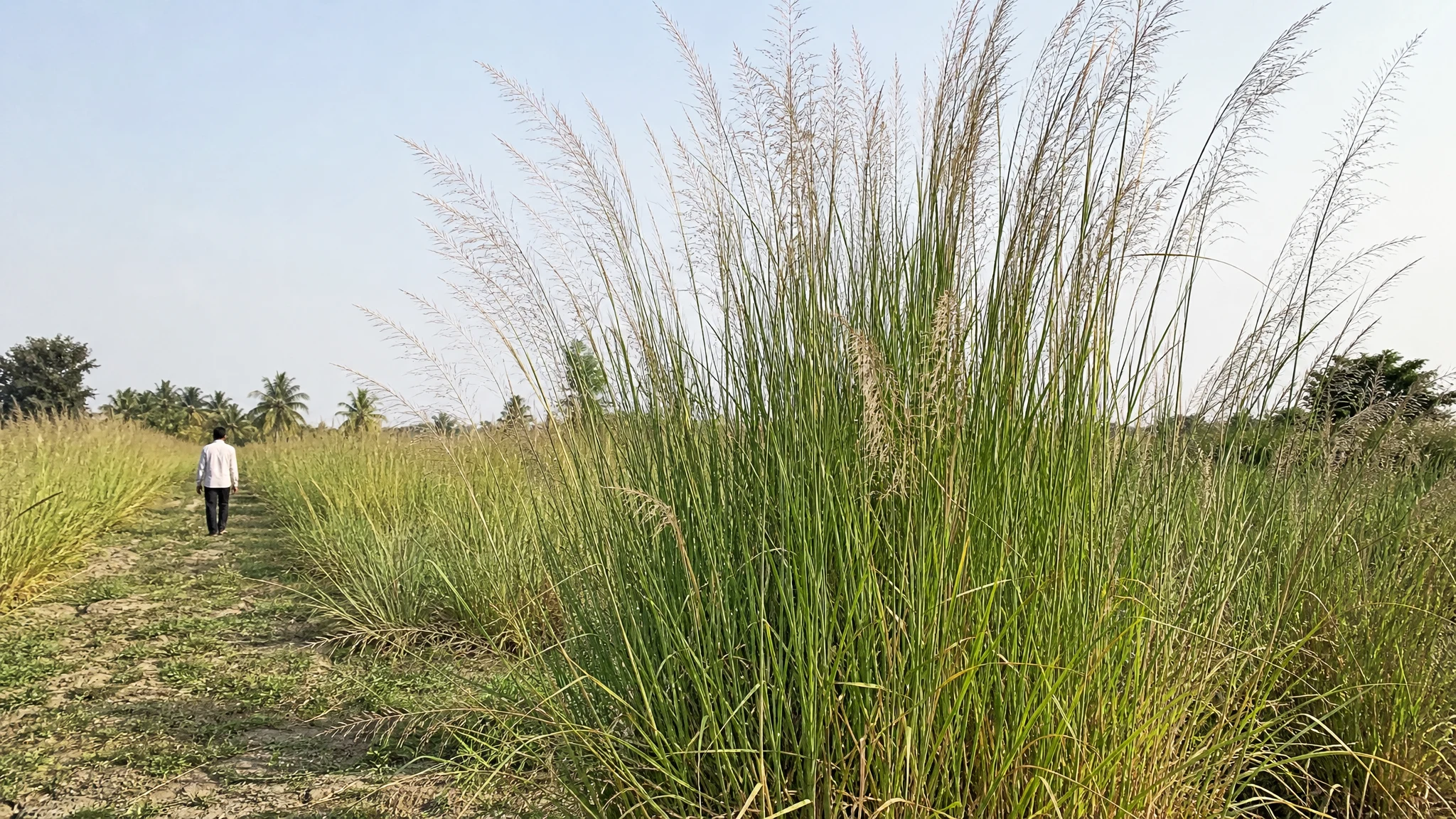
Palmarosa is a bright, rosy oil with a green edge and a soft lemony hint, lighter and airier than true rose otto. It sits happily in the middle of a blend and gets along with geranium (our comparison of the two shows how they differ). That character is at its best where it can fill a space or lather up in your hands, and those happen to be the places where oily skin has nothing to object to.
The places where a rosy oil adds delight without asking anything of your pores:
- Soap. Rinse-off products tolerate more fragrance: Tisserand lists 2% to 4% for wash-off products, and IFRA's geraniol limit for rinse-off body and hand products, 2.8%, works out to about 3.4% oil by the same arithmetic. Our soap and scrub guide goes through it.
- Candles and home fragrance, where nothing touches your skin.
- A diffuser in a room you enjoy spending time in.
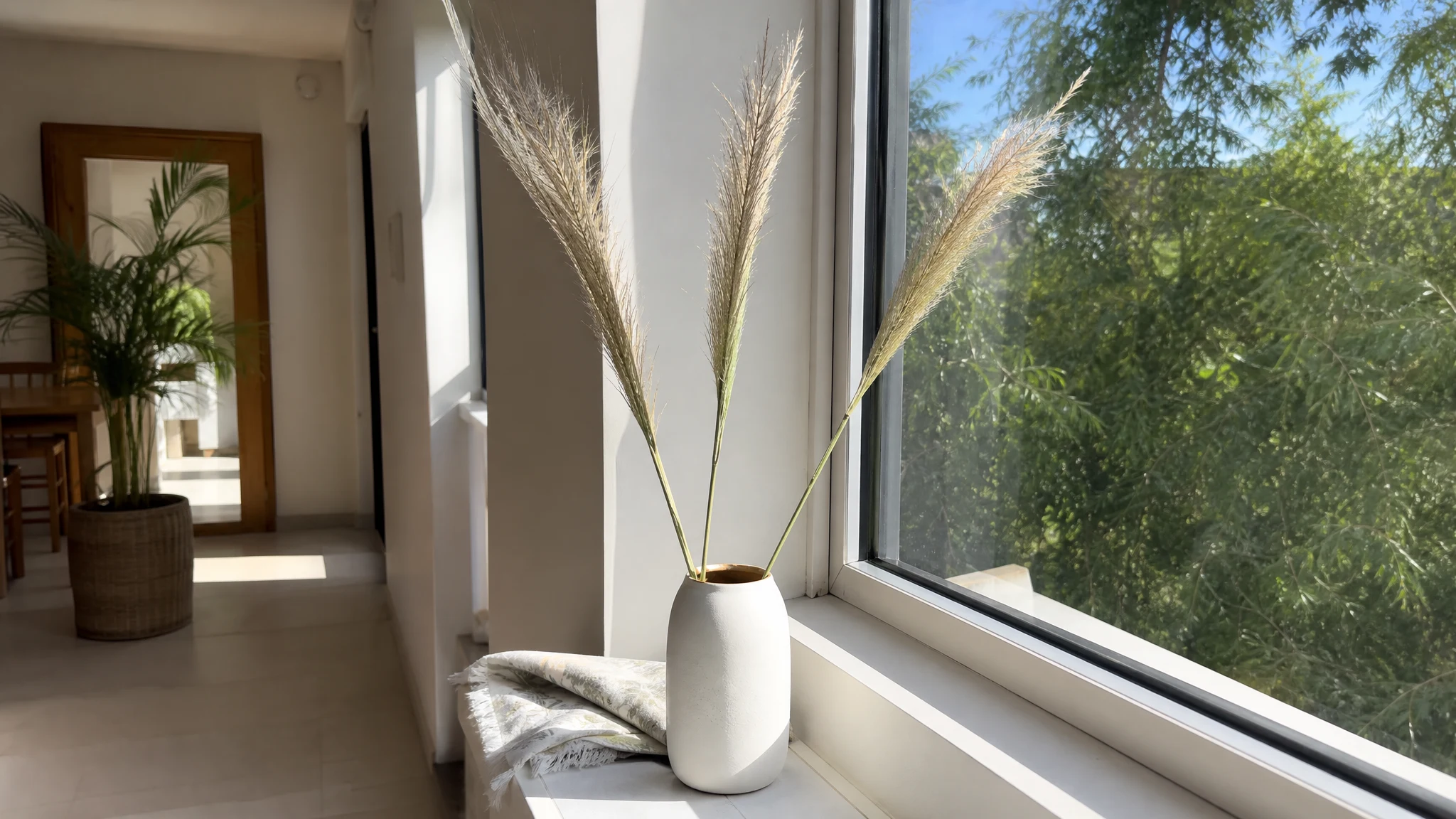
Soap is where a rosy oil feels most natural, because the scent rides on the lather and goes down the drain with the water. Candles and a diffuser let the aroma travel through a room without ever touching your face. If you simply want to smell like a rose-leaning afternoon, those are the easy roads, and they ask nothing of your pores.
It is also worth smelling the oil on a paper strip before you decide where it belongs. A bright, green-edged rose may suit a bar of soap beautifully and still not be what you want near your face on a warm day. Let your nose have a vote.
Our guide to palmarosa and acne reports what laboratory work exists, if that is where your question is heading. For oil control itself, a mild cleanser, an oil-free moisturiser and an appointment if things are stubborn will do far more than any scent.
Keep the oil away from eyes, children and pets, and never take it internally. A pleasant rosy room is a lovely thing, and it does not need to be held to a skin goal.
If you ever want a second opinion on a routine, a dermatologist is the person to ask, and the oil will still be there for the scent afterwards.
Palmarosa Essential Oil
Palmarosa Essential Oil from our own shop, in sizes from 0.5 oz to bulk.
From $10.99
Shop Now →