How Palmarosa Oil Is Made: From Grass to Bottle
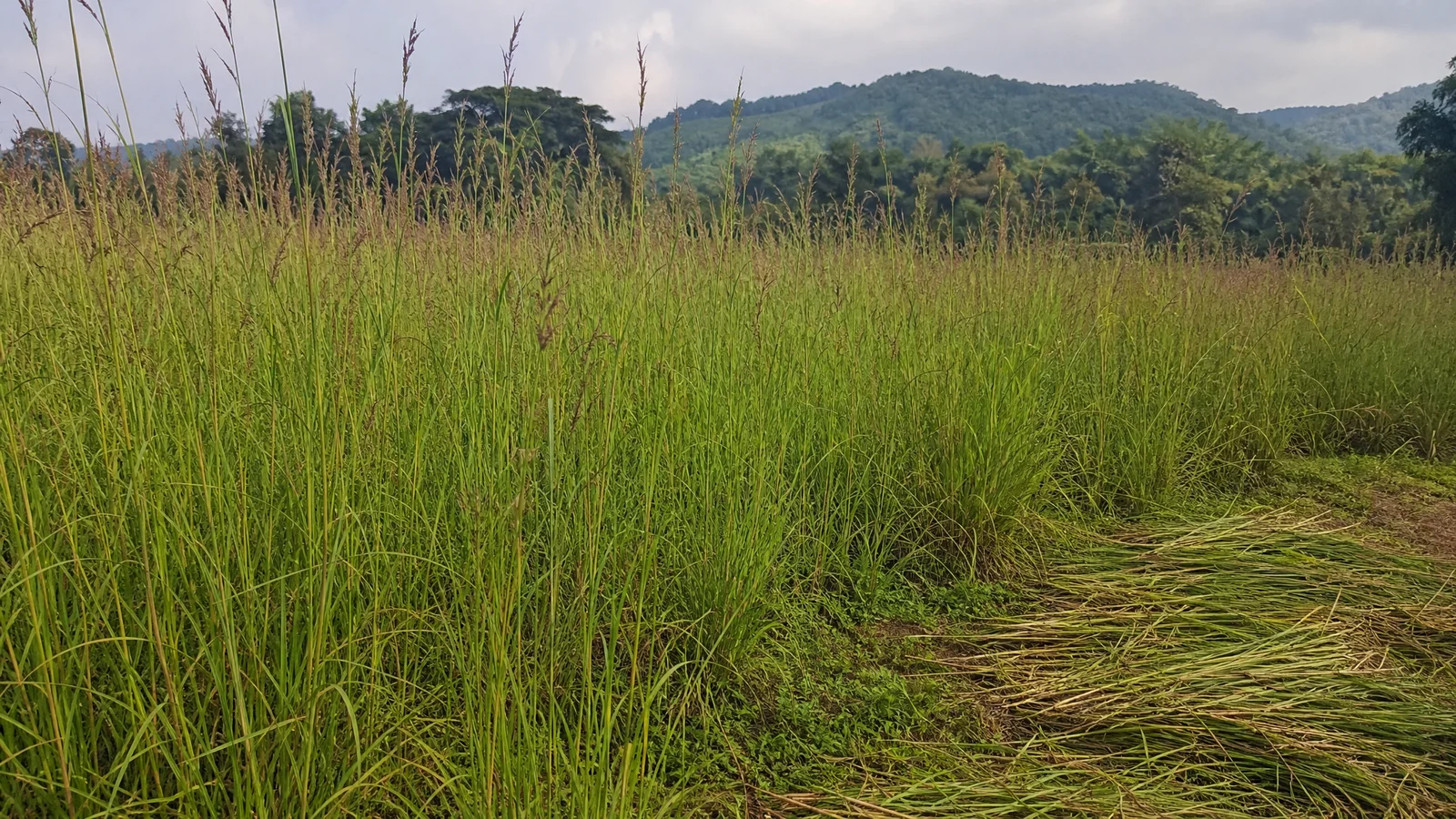
Walk through a field of palmarosa and you would not guess what is inside the grass: a sweet, rosy oil that is mostly geraniol. Getting it out takes steam, a bit of patience, and four decisions that shape every bottle, which are when the grass is cut, how long it waits, what kind of still it goes into, and when the run stops.
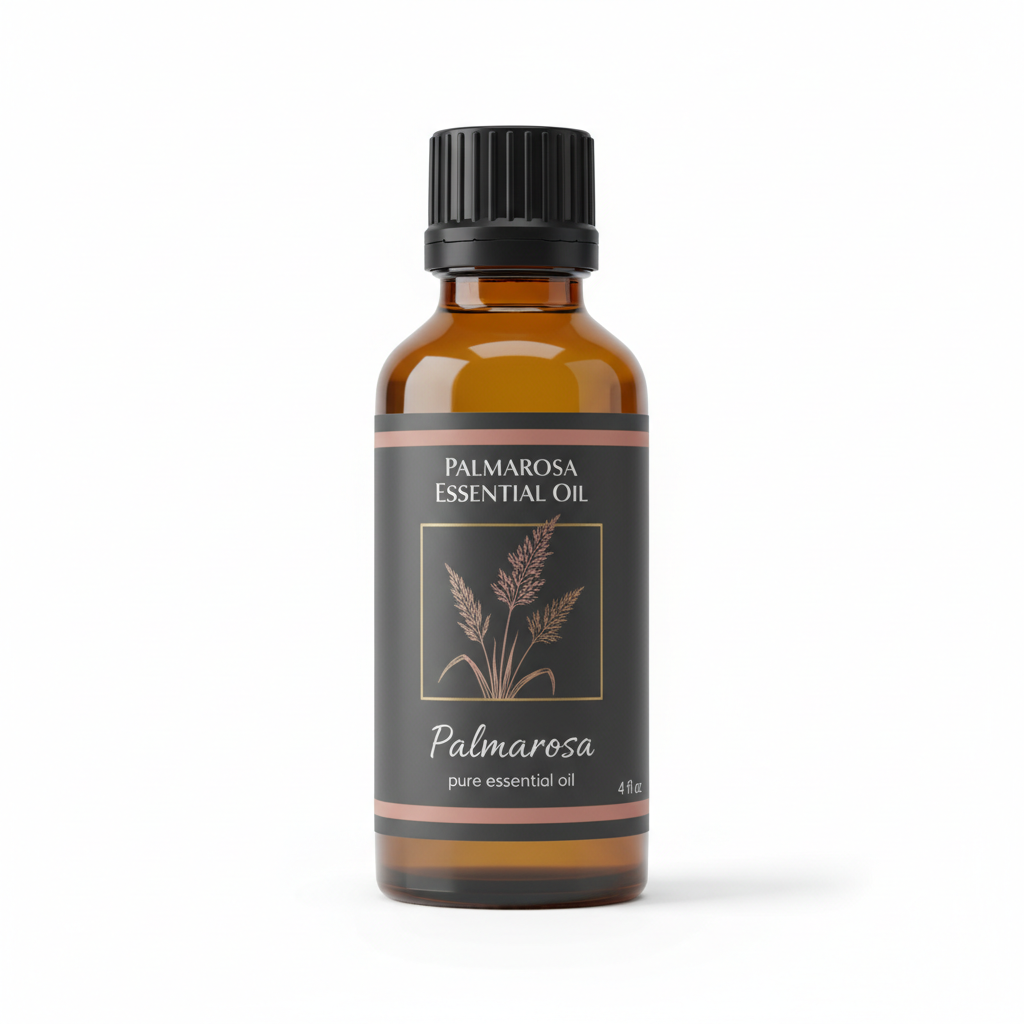
Palmarosa Essential Oil
Our own Palmarosa Essential Oil, in sizes from 0.5 oz to bulk.
From $10.99
Shop Now →The cut
PROSEA, the Plant Resources of South-East Asia handbook, says palmarosa should be harvested when the plants are flowering, with the first cut about six months after planting. Season matters too. Rainy-season harvests give plenty of herbage and oil but a lower geraniol content, while dry-season harvests give less oil with more geraniol (PROSEA, Cymbopogon martini (Roxb.) J.F. Watson). A 2023 distillation study in Santander, Colombia, harvested after flowering and before seed formation (Romero et al., Enhanced Two-Step Extraction from Biomass of Two Cymbopogon Species Cultivated in Santander, Colombia). The sources word the stage a little differently, but they agree on the practical point: the same grass cut in a different season gives a different oil, so a bottle speaks for one harvest rather than for palmarosa in general.
The wait
Cut grass is often not distilled at once. PROSEA describes spreading it in the field for 4 to 6 hours to lose moisture, then keeping it in a cool, shady place for several days with little loss of oil. It notes that grass in India may be stored for up to three weeks before distillation, and that poor storage can cut oil content seriously.
The still
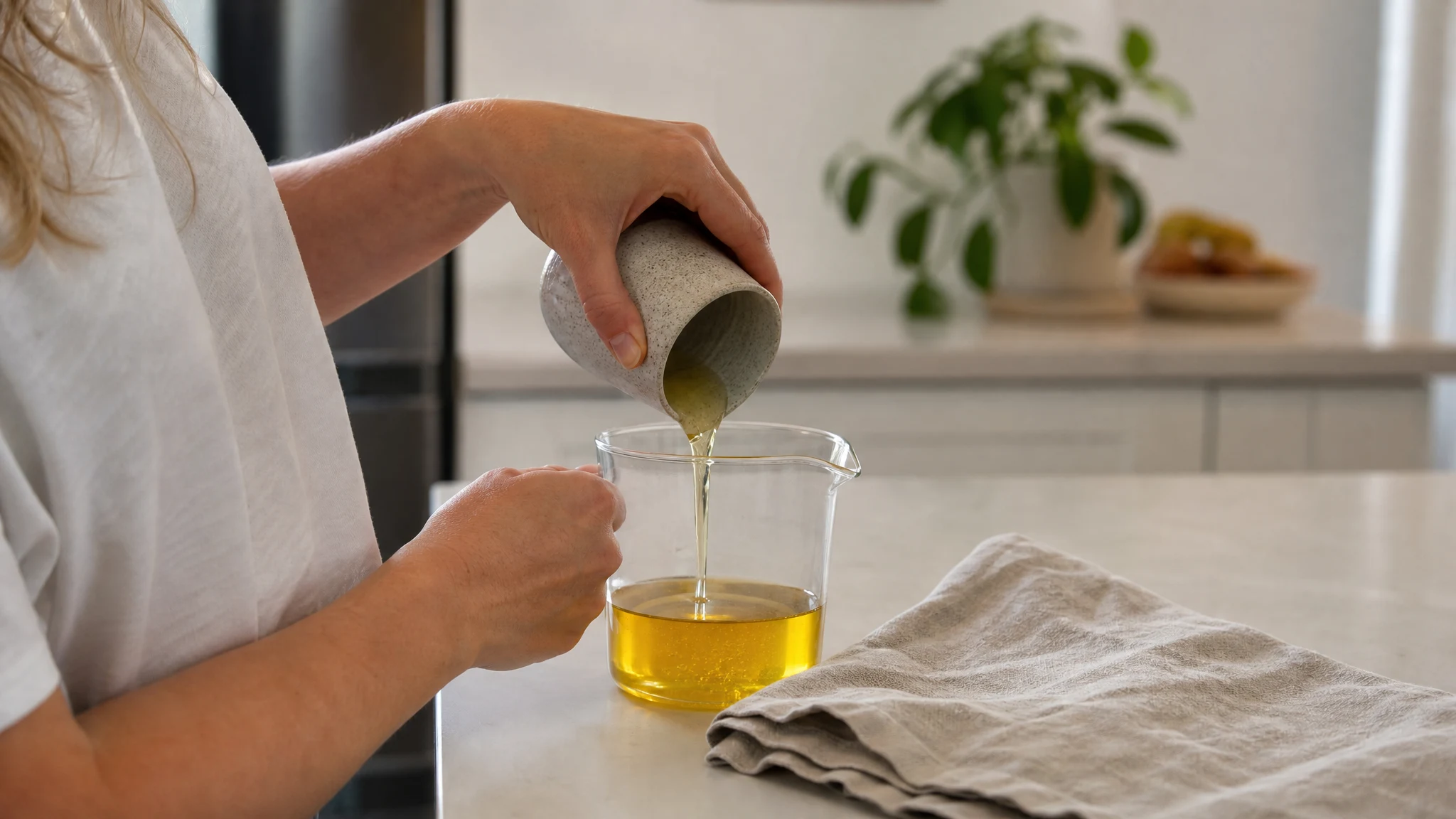
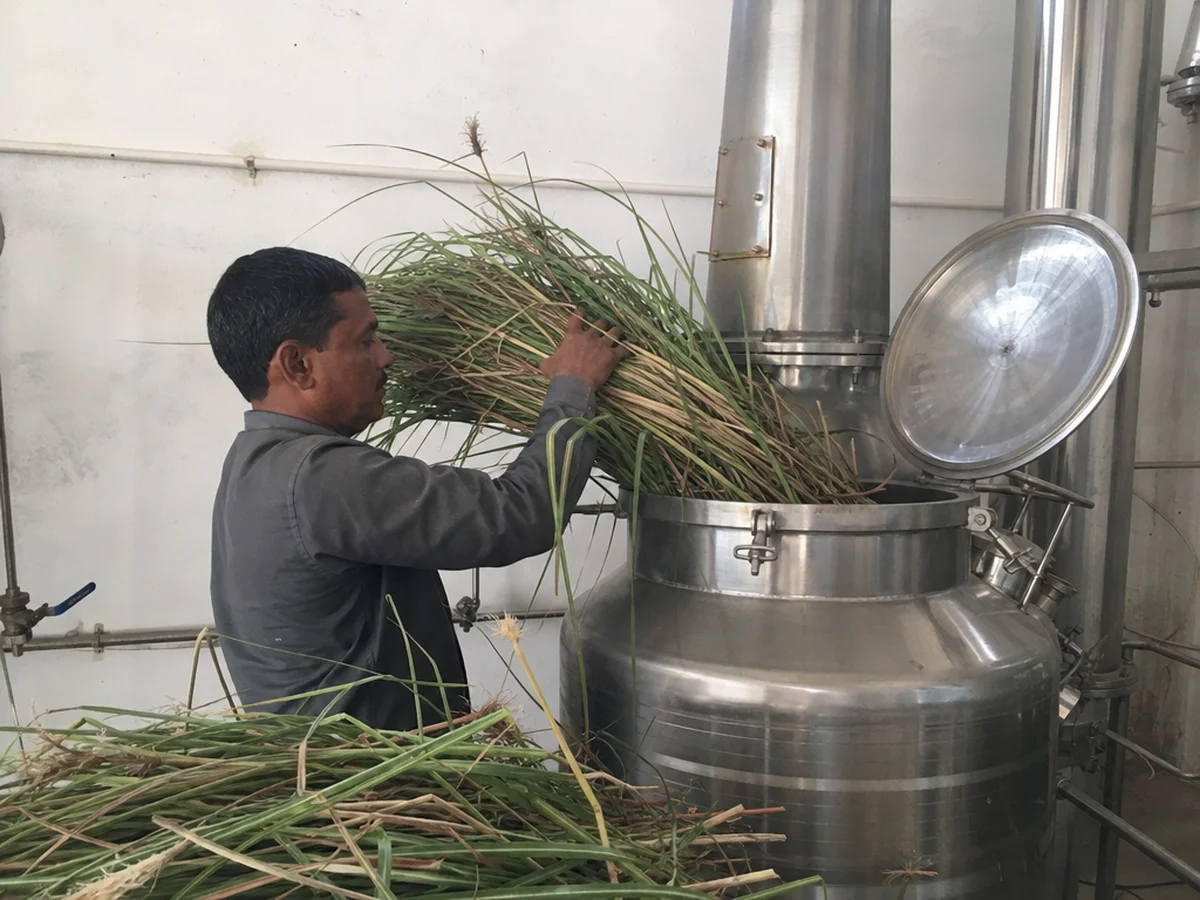
Steam distillation is the heart of it. Bundles of cut grass are packed into the still and steam is passed through them until the plant material is spent. The steam carries the aromatic molecules out of the grass, cools back to liquid, and the oil, which is lighter than water, floats off the top. PROSEA notes that traditional stills in India are often water-distillation stills, where the grass sits in boiling water, while Java and Madagascar use modern steam equipment.
The Colombian study gives a rare look at real numbers. The team packed chopped leaves and stems into a 1 cubic metre stainless steel still at 250 to 300 kg per cubic metre, ran steam from an 80 psi boiler for about two hours, and separated the oil from the water in a Florentine vessel before drying it with sodium sulfate. At the paper's mean yield of 0.41%, a full still would give roughly 1.0 to 1.2 kg of oil, which is our arithmetic. The water that comes over alongside is the hydrosol, a separate product we explain in palmarosa hydrosol versus essential oil.
The finish
A run ends when the plant material is exhausted, not when a clock says so. The Colombian runs lasted about two hours and the paper does not report oil collected hour by hour, and PROSEA gives no standard duration, so there is no universal stopping rule.
What comes out
The Colombian oils were 83 to 87% geraniol, with 4 to 7% geranyl acetate and 1.7 to 3.9% linalool. Palmarosa from elsewhere differs. A study of cultivated plants from eastern Nepal found 76.6% geraniol and 15.2% geranyl acetate in the leaf oil (Dangol et al., Essential Oil Composition Analysis of Cymbopogon Species from Eastern Nepal by GC-MS and Chiral GC-MS, and Antimicrobial Activity of Some Major Compounds), and PROSEA notes that Indonesian oil runs higher in geranyl acetate than Indian oil. That variety is part of palmarosa's charm, and a reason to smell before you commit to a large order.
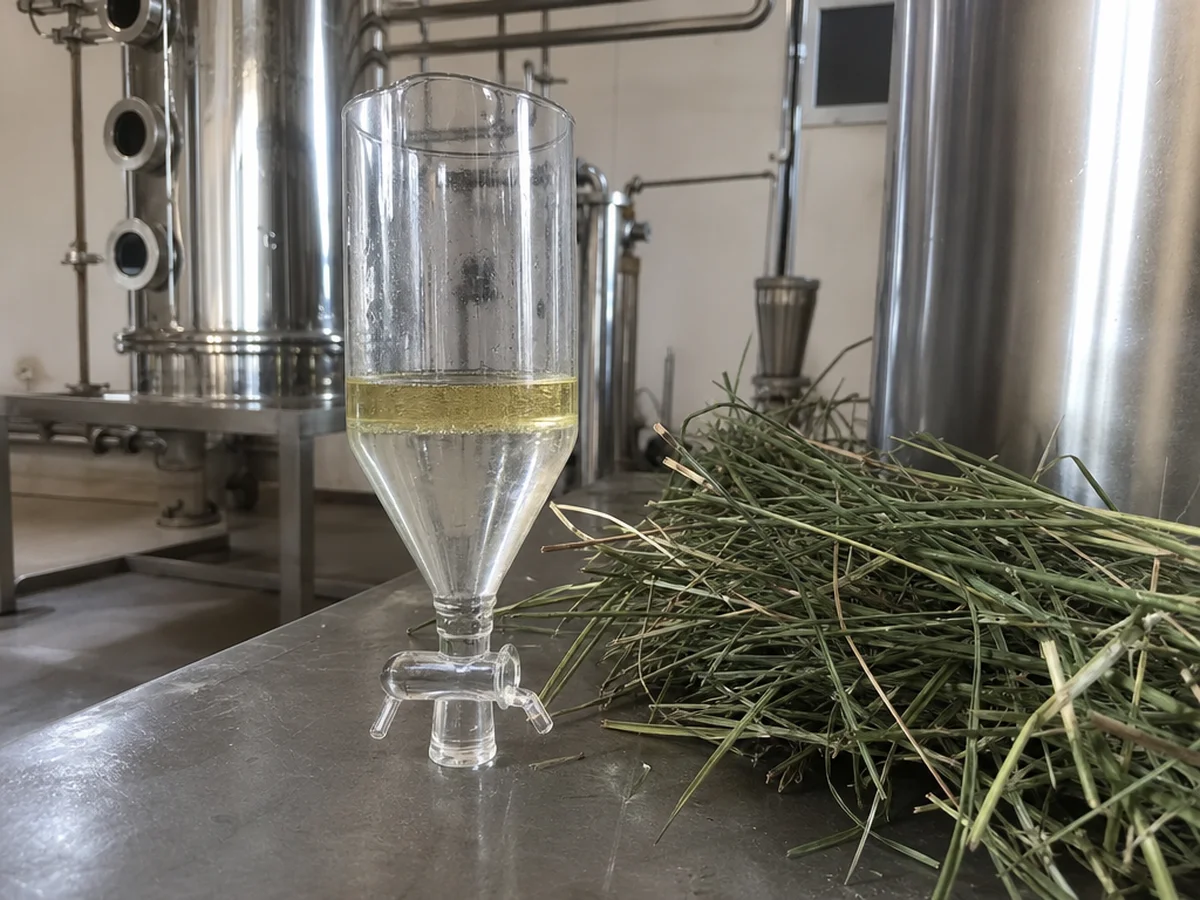
Yield tells the other half of the story. At 0.41%, one kilogram of oil takes about 244 kg of grass; at the 0.2 to 0.3% PROSEA gives for traditional stills, about 333 to 500 kg (our arithmetic). Roughly 98% of the plant material ends up as by-product, which the Colombian authors note goes to compost, fuel or disposal.
What a cut field smells like
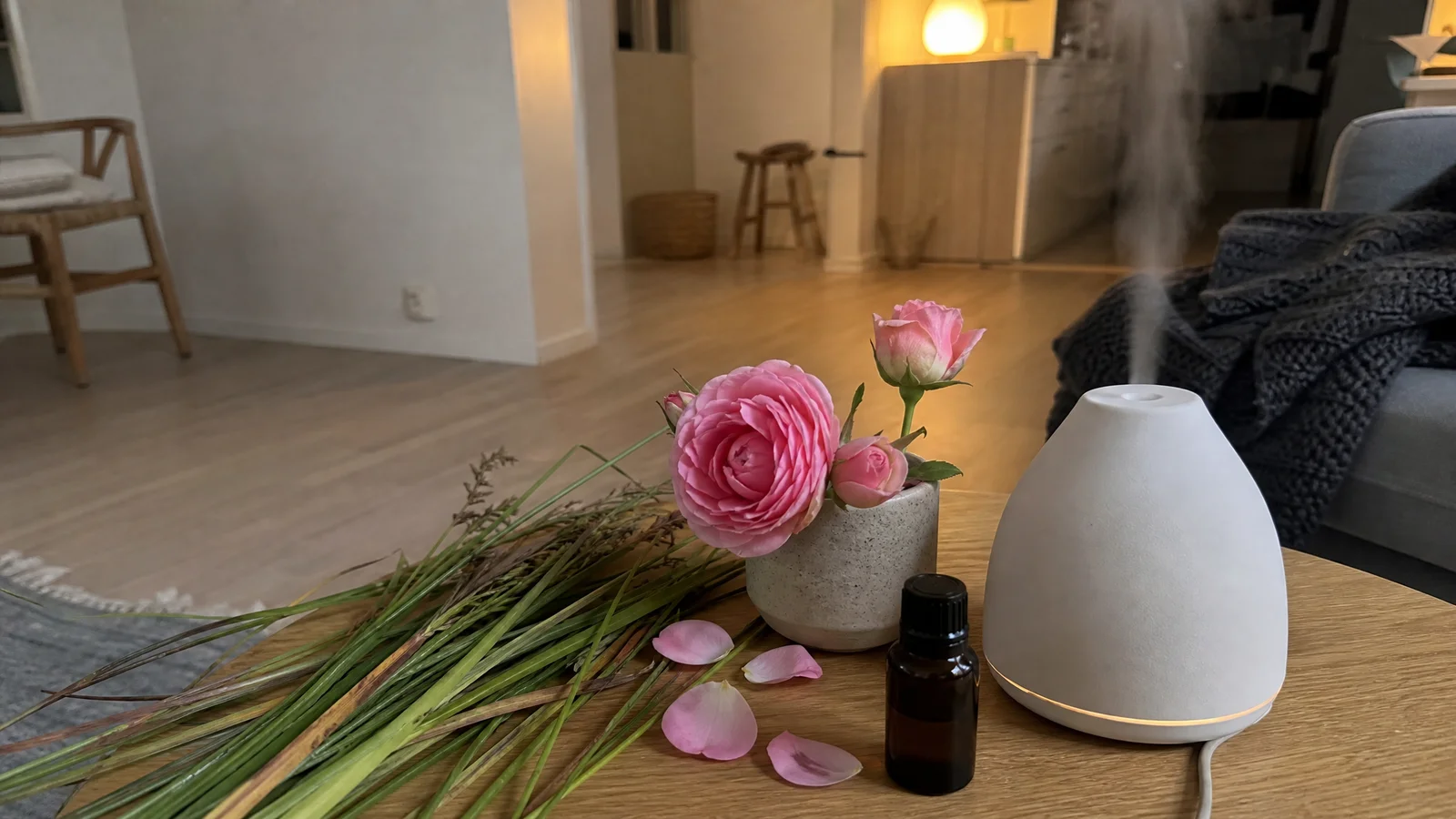
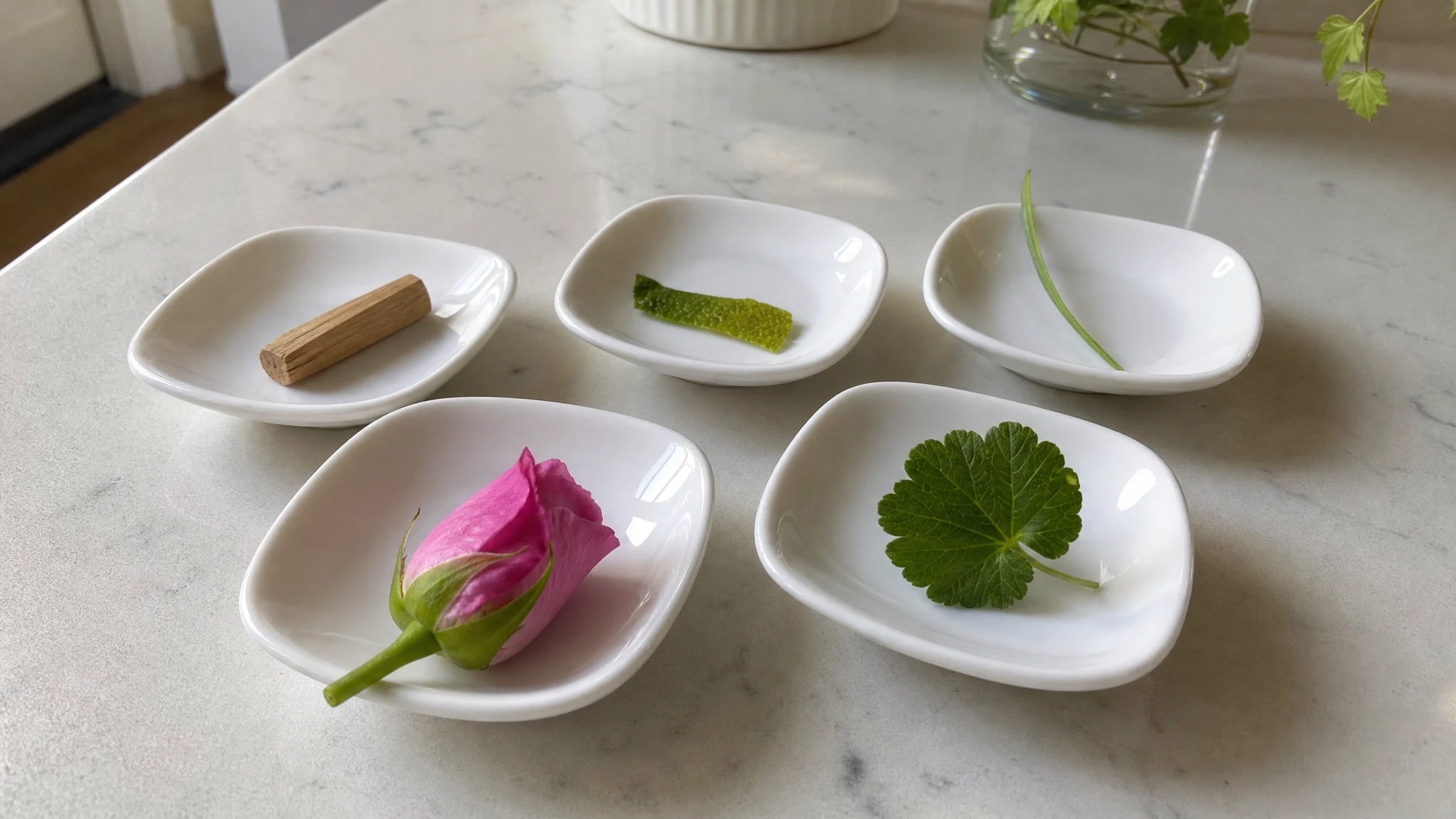
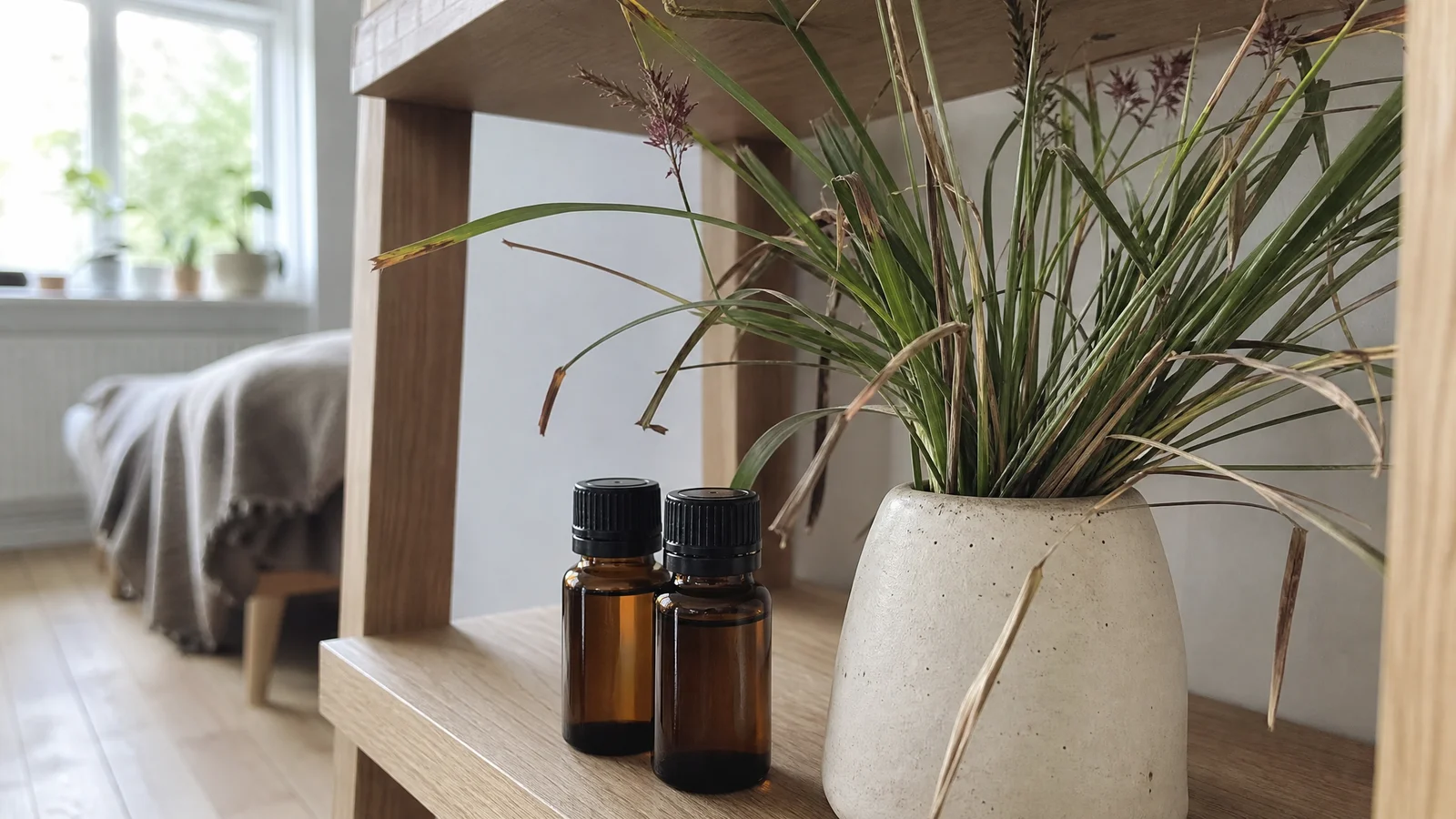
The story of palmarosa is easier to picture once you have met the plant itself: tall, narrow blades that give off a green, slightly sweet scent when they are bruised, long before any still gets near them. Distillation captures a refined version of that. When you open a bottle, you can often pick out the green, grassy first impression and then the rosy sweetness underneath, with a faint lemony edge. It is a good exercise to smell the oil on a strip of paper and again after a few minutes, as the lighter notes fade and the rosy heart stays.
Why a little process knowledge helps
We think knowing the process makes you a better buyer and a better maker. It explains why one bottle can be a touch sweeter than another, why a seller can honestly say "it depends on the harvest", and why a question about the lot is a perfectly normal thing to ask. If you remember only one thing from this page, let it be that an essential oil comes from a particular grass, cut at a particular moment, and run through a particular still.
Our oil
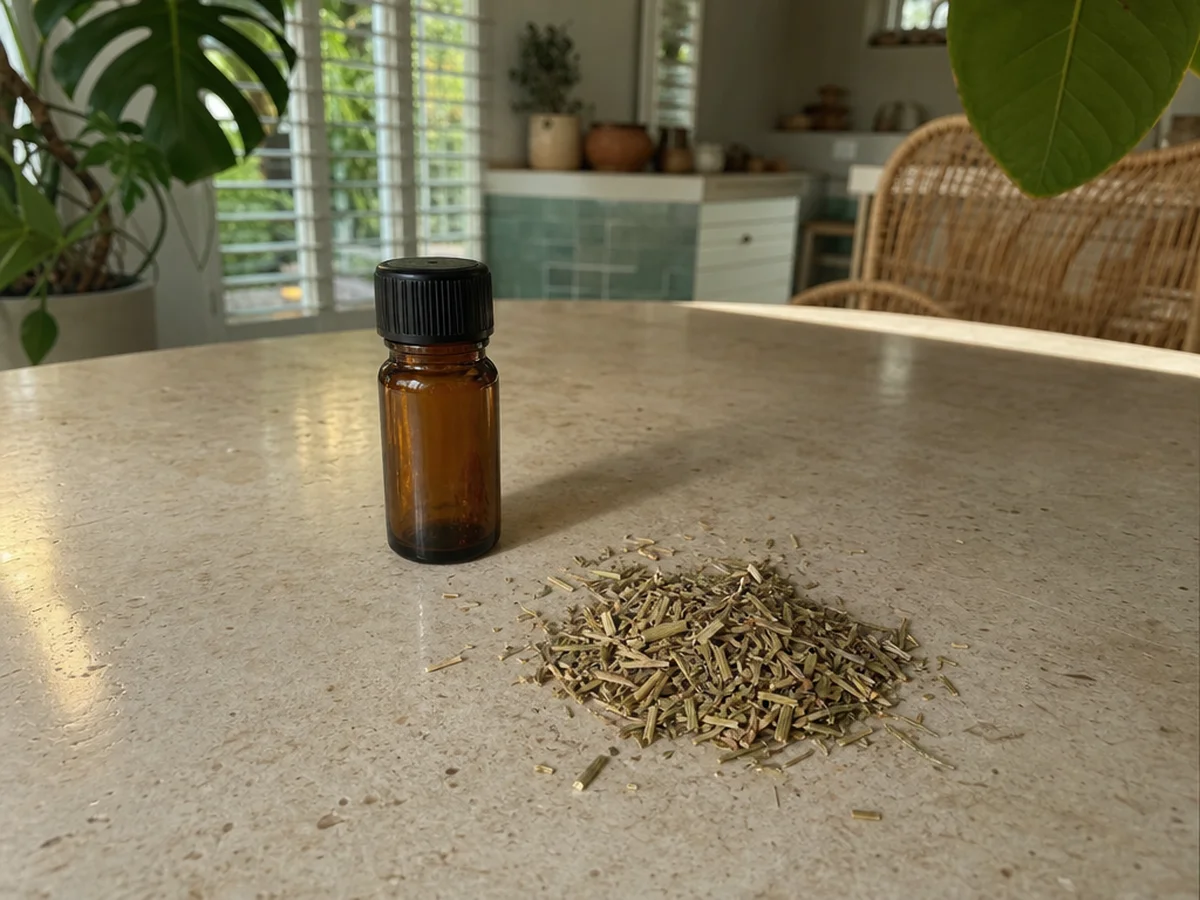
We sell one palmarosa oil, steam-distilled Cymbopogon martinii, sold neat from a 0.5 oz bottle up to a 400 lb drum. The Certificate of Analysis we publish for one batch lists the extraction method as steam distilled and the part used as leaves, with a density of 0.888, a refractive index of 1.473 and an optical rotation of +0.12 degrees, each inside the range printed beside it. It carries no constituent figures, so if you need a geraniol or GC-MS report, or a harvest season, ask us in writing through the contact page before ordering. Our How It's Made page describes the process in more detail, and our quality-checks post is a good companion read.
Next time you smell a bottle of palmarosa, picture a cut field, a few days of waiting, and a still full of steam. It makes the rosy note feel earned.
Palmarosa Essential Oil
Palmarosa Essential Oil from our own shop, in sizes from 0.5 oz to bulk.
From $10.99
Shop Now →Sources & Further Reading
- PROSEA. Cymbopogon martini (Roxb.) J.F. Watson. prosea.prota4u.org
- Romero AK et al., 2023. Enhanced Two-Step Extraction from Biomass of Two Cymbopogon Species Cultivated in Santander, Colombia. Molecules 28(17):6315. Europe PMC, PMC10488661
- Dangol S et al., 2023. Essential Oil Composition Analysis of Cymbopogon Species from Eastern Nepal by GC-MS and Chiral GC-MS, and Antimicrobial Activity of Some Major Compounds. Molecules 28(2):543. Europe PMC, PMC9863348