Palmarosa Oil and Children: Where to Store It
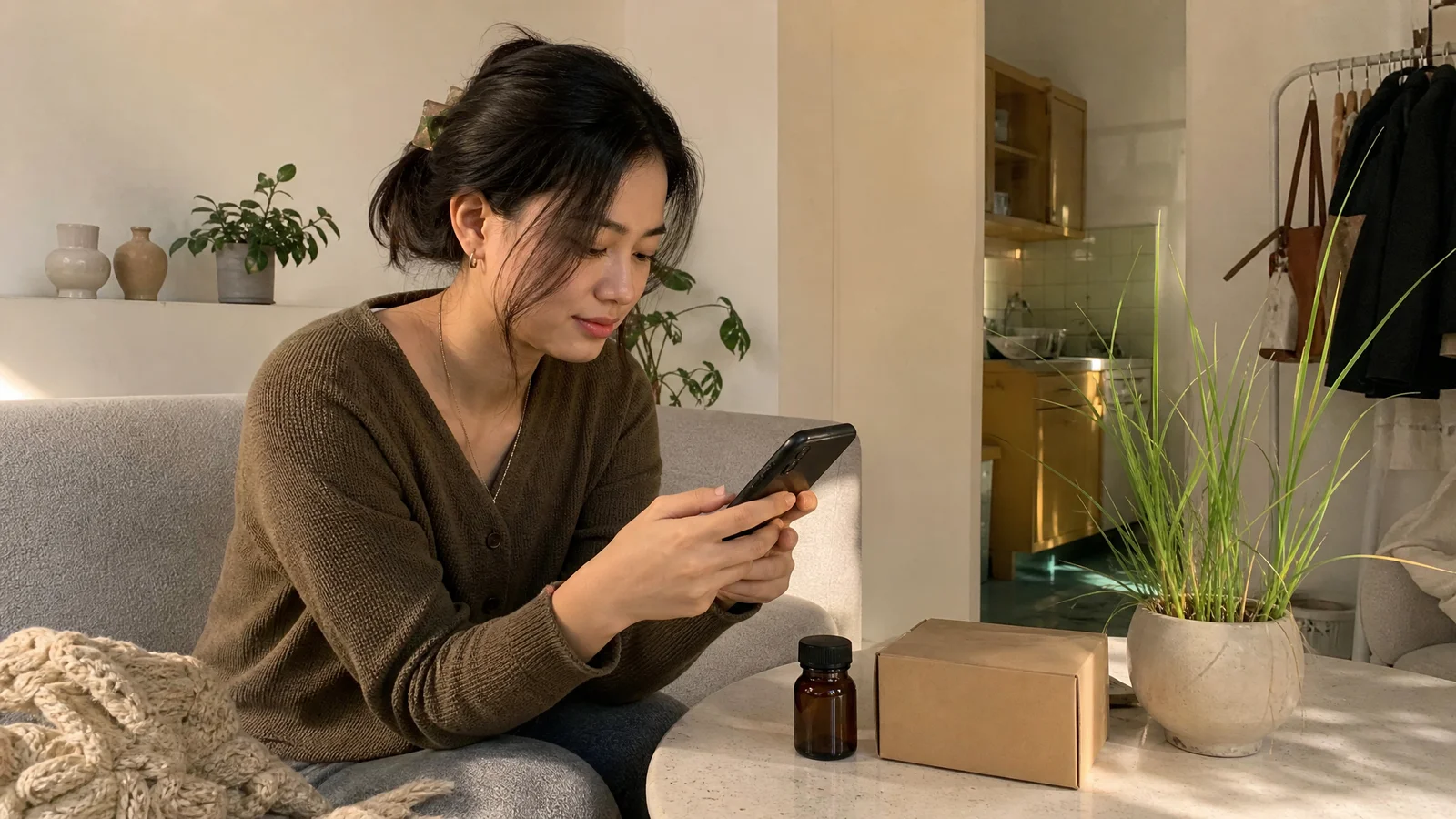
With any essential oil in a home with children, the thing to plan for is not the diffuser or the dilution percentage. It is the bottle. A curious toddler who finds it and tastes it, or tips it over onto skin, is the situation that poison centres actually see. So the single most useful thing we can say about palmarosa and children is where to put it.
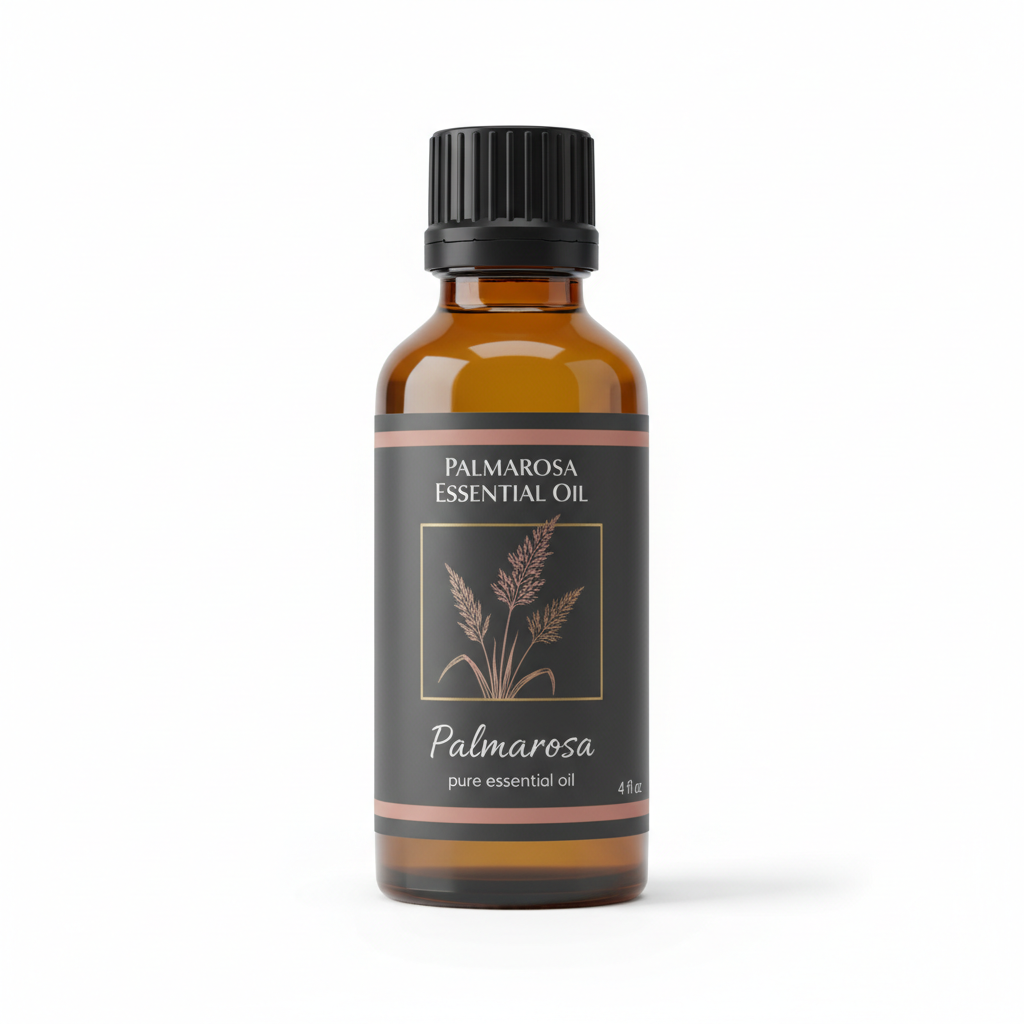
Palmarosa Essential Oil
Our own Palmarosa Essential Oil, in sizes from 0.5 oz to bulk.
From $10.99
Shop Now →What the numbers show
A review of calls to the New South Wales Poisons Information Centre in Australia between July 2014 and June 2018 found 4,412 essential oil exposures. Nearly two thirds involved someone under 15, about 80% were accidental, and almost a third of callers already had symptoms when they rang. The oils most often involved were common ones such as eucalyptus and tea tree. One of the authors pointed out that many of these products come without child-resistant closures and flow restrictors, and recommended storing oils out of children's reach and apart from oral medicines (Essential oil poisoning calls on the rise, children most affected - The University of Sydney). Palmarosa wasn't among the top oils reported, which mostly reflects what households own.
In the United States, Poison Control says children have thin skin and immature livers, which might make them more susceptible to toxic effects than adults, and that bottles must be locked up, out of the sight and reach of children and pets. It also suggests discarding bottles you no longer use when young children are in the house (Essential oils: Poisonous when misused | Poison Control).
Where we would keep it
Our own guidance is to keep palmarosa away from children and pets, and never to take it internally. For a household, that translates into a few easy habits:
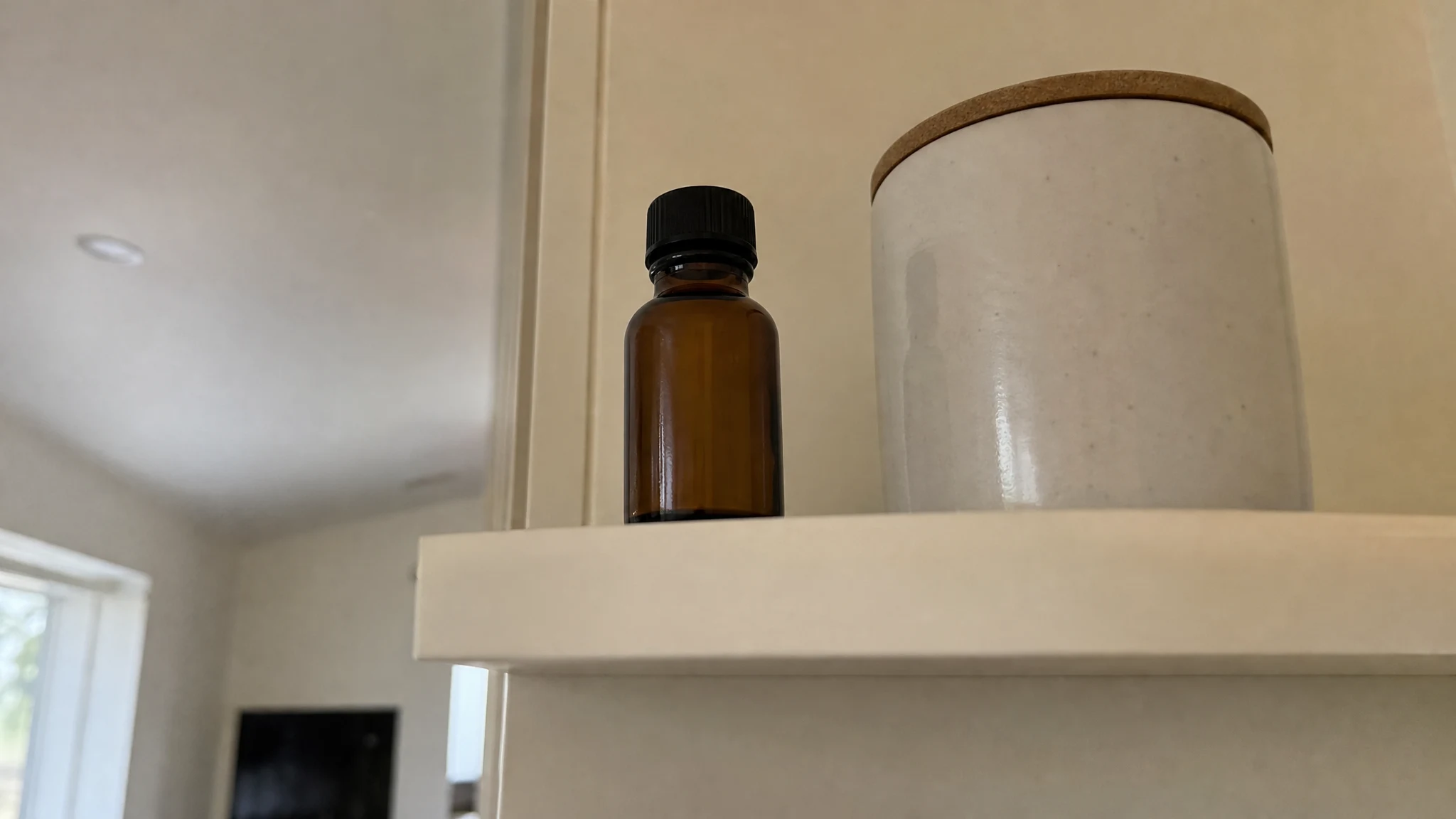
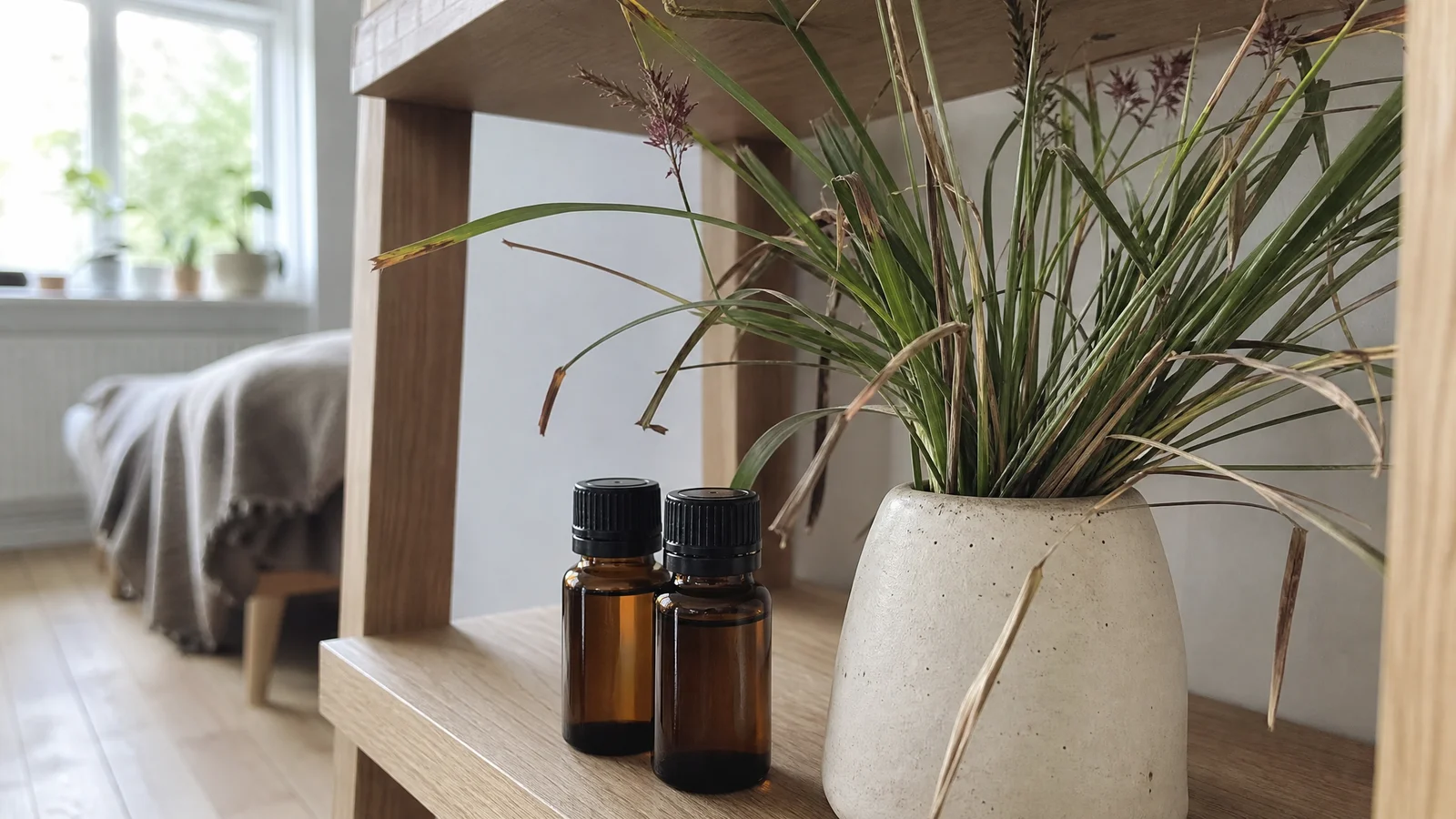
- Put the bottle in a locked box or a high cupboard, not on a bathroom counter or nightstand.
- Keep it apart from medicines and drink bottles, since mix-ups feature in poison centre data.
- If you decant a working amount into a smaller bottle, label it as clearly as the original.
- Check the cap in your hand. Don't assume any essential oil bottle has a child-resistant closure; a lock is the surer plan.
The Tisserand Institute, which teaches essential oil safety, says oils belong where young children cannot reach them and should be sold with child-proof caps (How to Use Essential Oils Safely). Larger sizes follow the same rule with more urgency: a 16 oz container holds about 470 ml, and a workroom shelf with a lock is the right home for it.
Walking through your own home
An easy way to get this right is to walk through each room as if you were three feet tall. Look at the bathroom counter, the nightstand, the bag on the hall floor, the shelf by the sofa. Anything you can see from that height is within reach, and anything you can reach is within a curious toddler's reach too.
Then think about who else visits. Grandparents, babysitters and friends may leave a bag on a low chair, so it helps to have one dependable place for the oil that everyone in the house knows about. A lockable box in a high cupboard is easy to set up and easy to remember.
Skin and diffusers
Our palmarosa is a concentrated, neat oil, so it always goes into a carrier before it touches skin, away from the eyes. We don't offer an age based dilution table, since a child's skin and body weight call for a paediatrician's judgment, and the published fragrance limits are written for adult consumer products. For a sense of how seriously the industry takes small bodies, the IFRA geraniol standard sets 0.26% geraniol for baby creams, oils and talc, against 0.78% for adult face moisturizer (IFRA Standard, Geraniol, 2023 (Amendment 51)). That is an industry code for finished products, and not a recommendation to put our oil on a baby.
With diffusers, the liquid is the hazard, whether a reservoir or a reed diffuser's bottle, so treat it like the bottle itself. Poison Control notes that reed diffuser liquid should be kept out of children's reach. Whether a young infant, or a child with asthma, should share a room with a diffuser at all is a conversation for your child's doctor.
A good habit when you are using it
Work with the oil when little ones are asleep or elsewhere, and put it away before you do anything else. Don't leave an open bottle on the counter while you answer the door. Closing the cap and returning the bottle to its place is a ten-second job that makes the whole system work.
If something goes wrong
- Call Poison Help on 1-800-222-1222 in the United States, or use the tool at poison.org. It is free, confidential and open 24 hours a day. Have the bottle in your hand.
- For skin contact with a rash or reaction, stop using it and wash it off.
- For choking, collapse or breathing difficulty, call emergency services first.
Outside the US, use your national poison line. For a rash that lingers, ask the child's doctor or pharmacist.
Our dilution chart covers adult percentages, the pets post applies the same storage rule to animals, and if you are pregnant, see our pregnancy post.
A high shelf, a lock and a clearly labelled bottle cost almost nothing, and they matter far more than any rule about drops. Everything else follows from that.
Palmarosa Essential Oil
Palmarosa Essential Oil from our own shop, in sizes from 0.5 oz to bulk.
From $10.99
Shop Now →Sources & Further Reading
- The University of Sydney. Essential oil poisoning calls on the rise, children most affected. sydney.edu.au
- Poison Control. Essential oils: Poisonous when misused. poison.org/articles/essential-oils
- Tisserand Institute. How to Use Essential Oils Safely. tisserandinstitute.org/safety/safety-guidelines
- IFRA Standard, Geraniol, 2023 (Amendment 51). IFRA_STD_037.pdf