Palmarosa Candle Scent: A Maker's Starting Guide
Candle making is the one place where palmarosa's most talked-about trait, its high geraniol content, mostly stops being a limit you have to work around. That frees you to think about the things that actually decide whether a candle smells good: the wax, the wick, the temperature you add scent at and the load you choose. Here is how we would approach it.
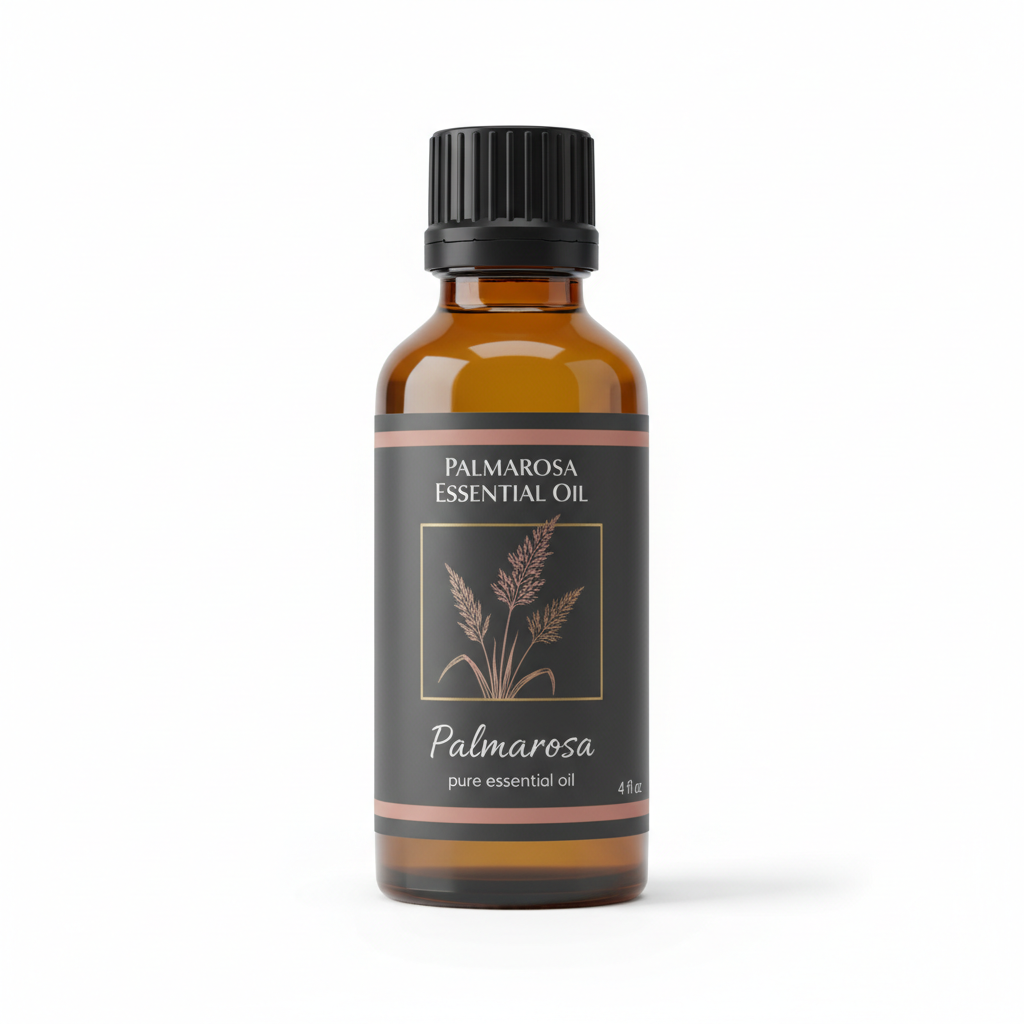
Palmarosa Essential Oil
Our own Palmarosa Essential Oil, in sizes from 0.5 oz to bulk.
From $10.99
Shop Now →Why the skin limits relax in a candle
Palmarosa oil is mostly geraniol, and IFRA's standard for geraniol caps it in almost every product category, from face creams to body sprays. The exception is Category 12, which carries no restriction (IFRA, Geraniol standard, 51st Amendment). IFRA's guidance puts candles of all types in that category, reasoning that skin exposure from a candle is negligible, so the concentration of a fragrance ingredient is not restricted (IFRA, Guidance for the use of IFRA Standards).
That reasoning is about skin, so it holds for a candle that stays a candle. A massage candle or anything poured onto the body is a skin product, and the percentages in our dilution chart apply instead.
Let your wax maker set the load
Every wax behaves differently, and the people who sell it publish the temperature at which to add fragrance, the maximum fragrance load and the cure time that suit it. Those instructions are the best guide to a first candle, and they are written for the wax in your hands. We would take the load from them, and treat the oil as a flammable liquid in your pouring pitcher, well away from open flame.
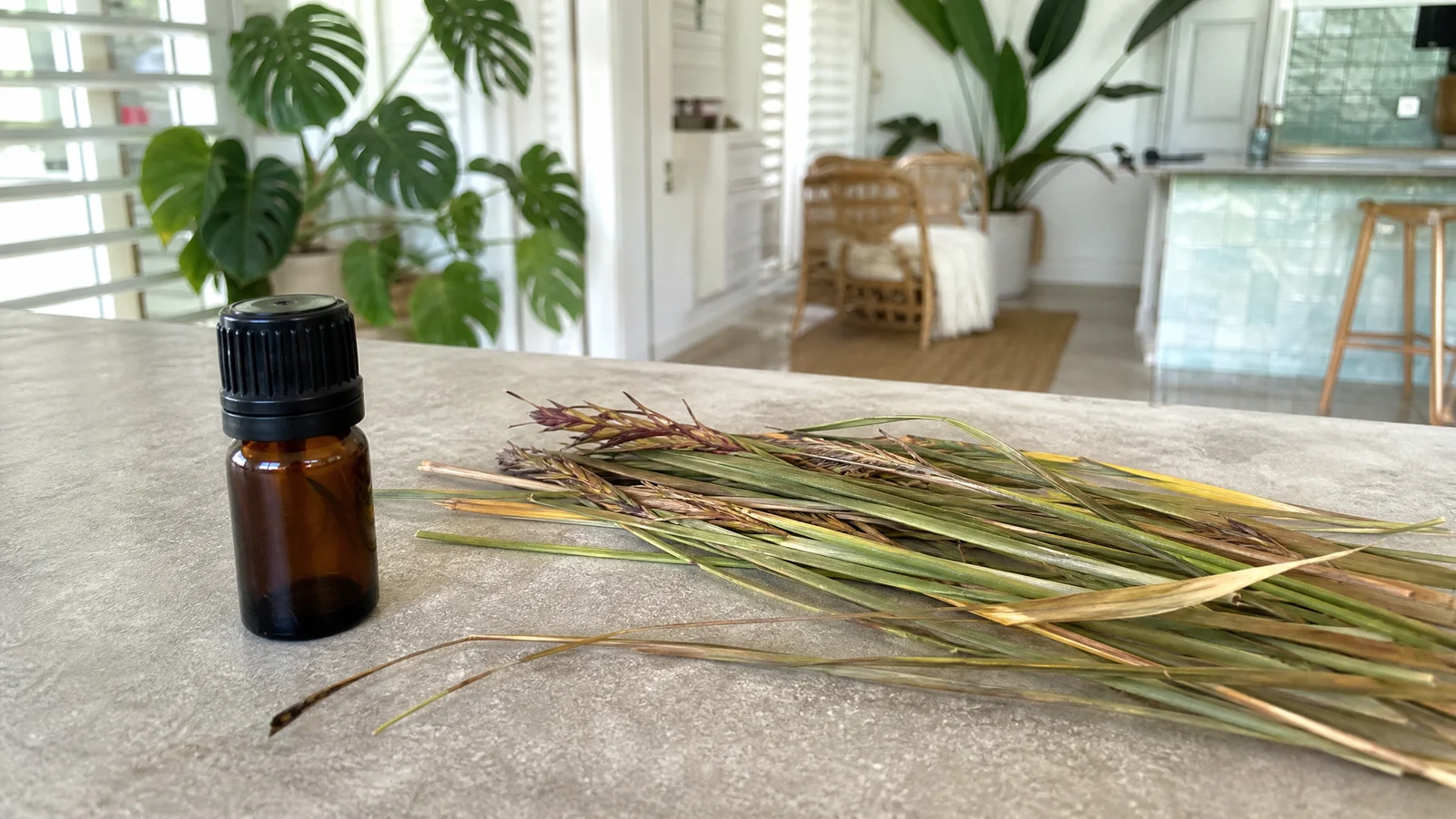
What we can add is the conversion from a load to a weight. The batch on the Certificate of Analysis we publish measured a relative density of 0.888, so 1 ml of that batch weighs about 0.888 g. These loads are worked examples for the arithmetic, not recommendations:
| Load by weight (example) | Oil in 100 g of wax | Volume at 0.888 g/ml |
|---|---|---|
| 3% | 3 g | about 3.4 ml |
| 6% | 6 g | about 6.8 ml |
| 9% | 9 g | about 10.1 ml |
Weigh the oil rather than counting drops. At the usual rough convention of 20 drops to a millilitre, 3 g would be around 68 drops, and droppers vary. A kitchen scale that reads to 0.1 g makes the whole job easier. Wax, wicks, jars and scales come from a craft or candle-supply shop, since we sell the oil alone.
What scent adds to the air
Any scented candle is also a small source of airborne particles, and it is worth knowing how that works. A 2025 pilot study in three Seoul homes measured the air after one scented candle burned for five minutes. Larger particles at the candle peaked at about one and a half times baseline, and the authors recommend ventilation (Yun et al., Impact of scented candle use on indoor air quality and airborne microbiome). A second 2025 study looked at flame-free scented wax melts in a test house and found that scent compounds react with indoor ozone to form nanoparticles, at levels comparable to scented candles and gas stoves. The authors say the role of specific compounds still needs study (Patra et al., Flame-Free Candles Are Not Pollution-Free).
Neither study used palmarosa, and both are small, so they tell us about scented candles in general rather than about this oil. The practical lessons are simple and apply to every scented candle: burn in a ventilated room, trim the wick, keep the flame out of drafts and keep it away from children and pets. If you or someone in your home has asthma or another breathing condition, ask your physician before burning scented candles.
Keep a pour log
A candle maker's best tool is a notebook. For every pour, write down the wax, the jar, the wick, the load by weight, the temperature you added the oil at, the date poured and the day you first lit it. When a candle turns out lovely you will know exactly how to repeat it, and when it does not, the page tells you what to change first. Number your test candles and change only one line of the log at a time.
Sniffing a cold candle and a lit one
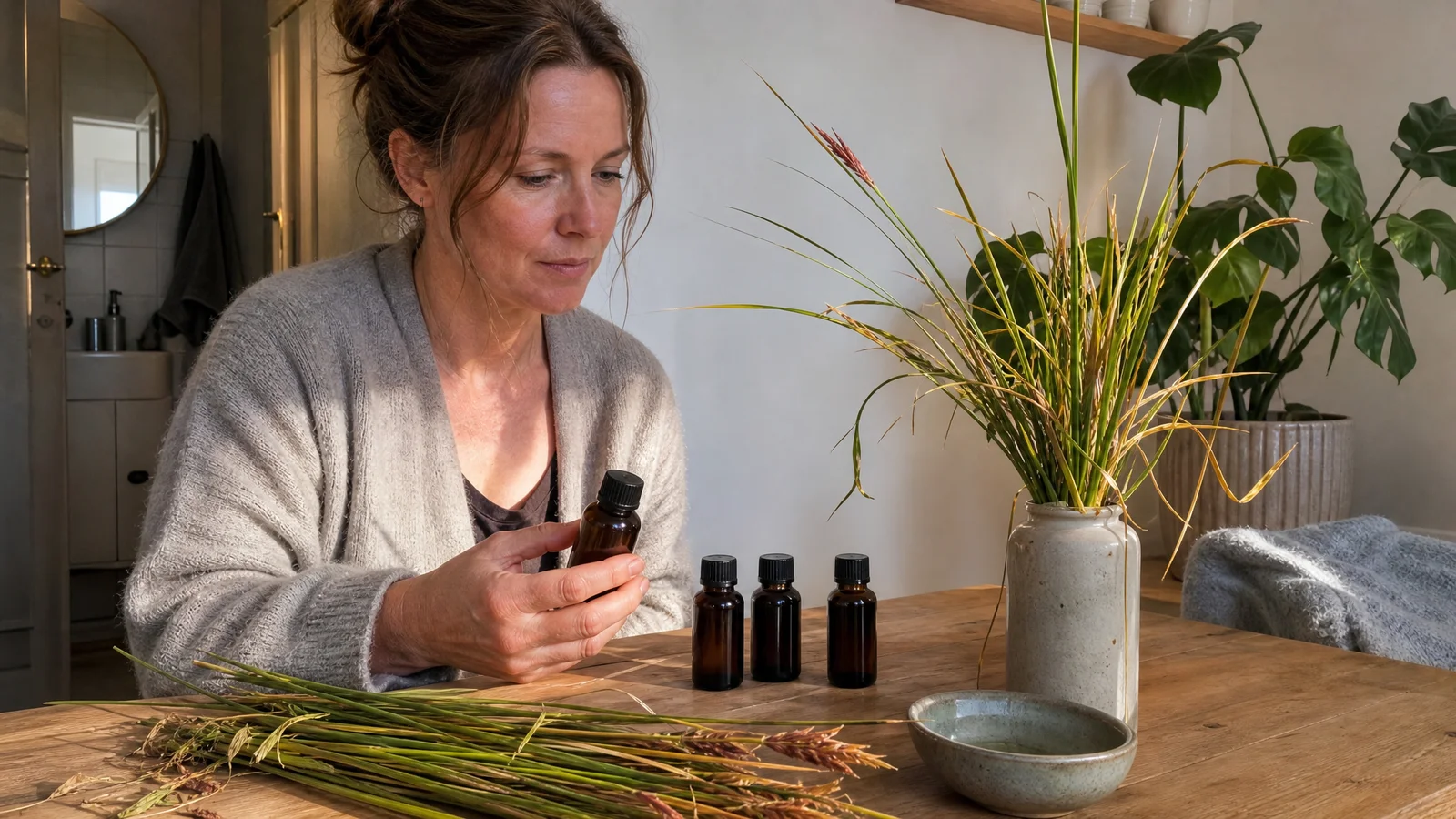
Take a moment with the cold candle first. Lift the lid, breathe in gently and notice whether the sweet, rosy palmarosa note is there or whether the wax smells louder than the oil. Then light it and check again after a few minutes in a ventilated room, from across the room rather than with your nose over the flame. The two smells are rarely identical, and that gap is the thing you are tuning. Let each candle cool fully and rest before you judge it against the next pour.
Running a fair scent test
A candle's scent changes between the pitcher, the cooled wax and the lit jar, so the way to learn what palmarosa does in your wax is to change one thing at a time. Keep the wax, jar and wick the same, weigh the oil, and change only the load or the cure time. Write down the date poured and the date first burned, and follow your wax supplier's guidance on cure time. Smell the candle from a set distance, cold and lit, and keep one unscented candle beside it so you can tell wax from oil.
Palmarosa's rosy, gently green character is easy to over-do, so it often works well as one part of a scent. Our pairing guide covers partners that suit it. Our guide to storing palmarosa oil helps keep it fresh between pours.
Palmarosa and a good wax make a lovely pair, and a few careful test candles will tell you far more than any number can.
Palmarosa Essential Oil
Palmarosa Essential Oil from our own shop, in sizes from 0.5 oz to bulk.
From $10.99
Shop Now →Sources & Further Reading
- IFRA. Geraniol standard, 51st Amendment
- IFRA. Guidance for the use of IFRA Standards, 51st Amendment
- Yun H, Seo JH, Kim YG, Yang J, 2025. Impact of scented candle use on indoor air quality and airborne microbiome. Sci Rep
- Patra SS, Jiang J, Liu J, Steiner G, Jung N, Boor BE, 2025. Flame-Free Candles Are Not Pollution-Free: Scented Wax Melts as a Significant Source of Atmospheric Nanoparticles. Environ Sci Technol Lett