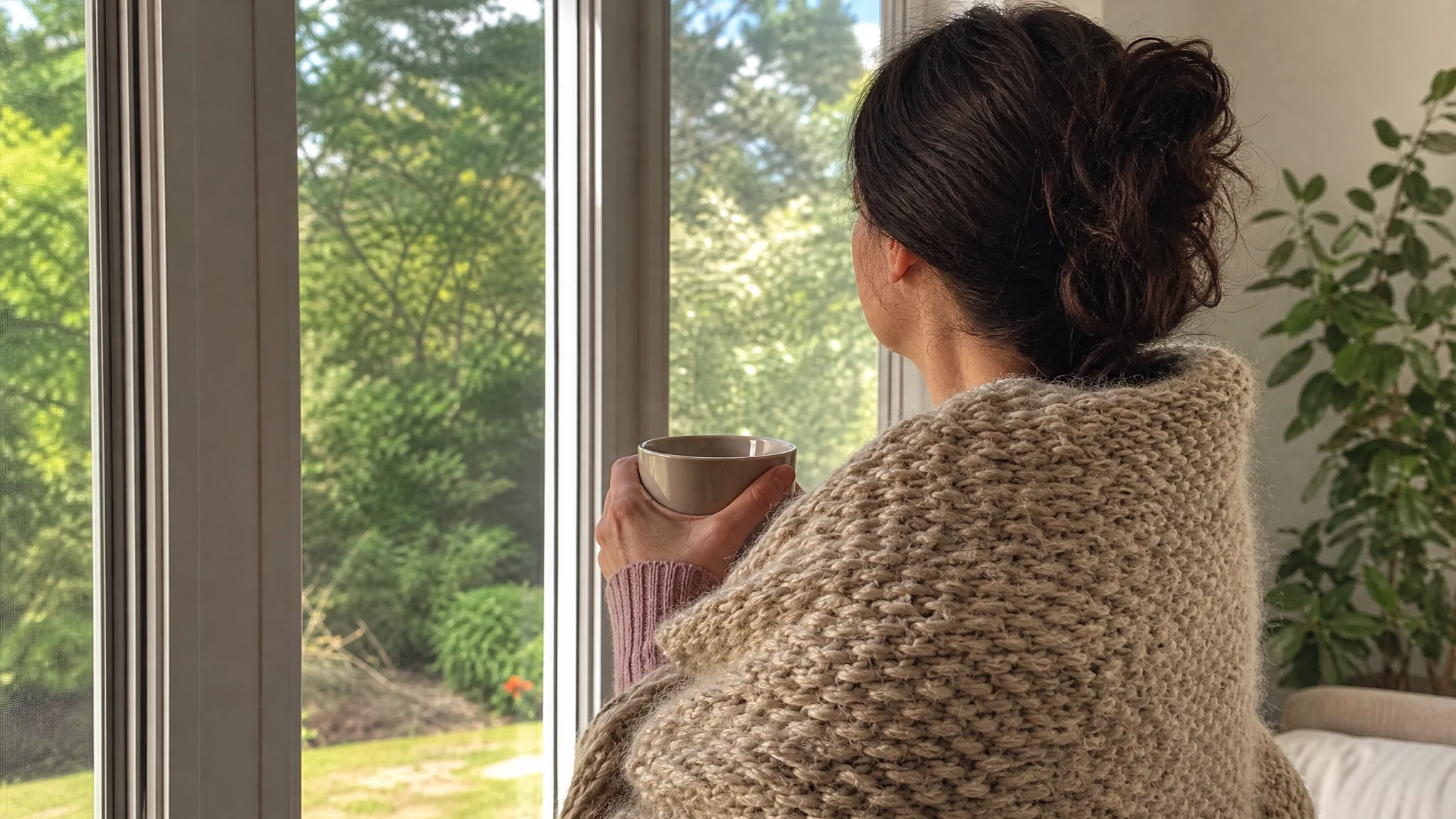
Scent, Memory and Palmarosa: Building Your Own Ritual
Most of us can name a smell that takes us somewhere: a grandmother's garden, a favourite shop, a summer evening. That is the interesting part of scent and stress, and it is more about you than about the oil. Palmarosa has a lovely rose-and-lemon aroma, and what it comes to mean in your day is something you build.
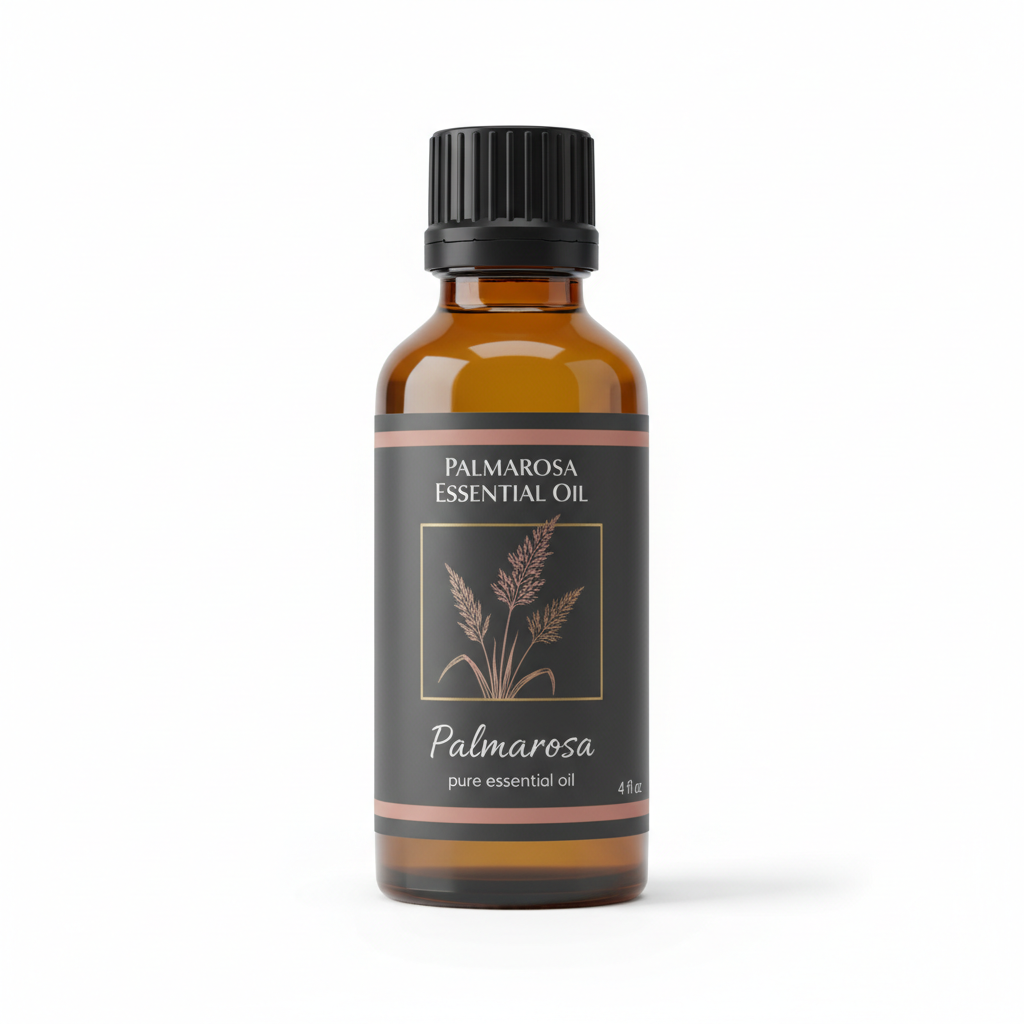
Palmarosa Essential Oil
Our own Palmarosa Essential Oil, in sizes from 0.5 oz to bulk.
From $10.99
Shop Now →What research says about scent and feelings
Rachel Herz's systematic review of scent and mood analysed 18 studies in detail. It found credible evidence that odours can affect mood, physiology and behaviour, and it concluded that a psychological explanation, built on association, expectation and memory, fits the data better than a pharmacological one. We find that a helpful way to think. A scent you like, paired with a moment you enjoy, becomes a cue. The oil supplies the aroma and you supply the meaning.
The National Center for Complementary and Integrative Health sounds a note of balance. It describes a study of two contrasting scents, lemon and lavender, in people under stress: lemon had a positive effect on mood, yet neither scent changed stress indicators or biochemical markers. Feeling better and measurable stress physiology are different things, and it is worth keeping them apart when you read claims about any oil.
We like this framing because it takes the pressure off the bottle. You do not have to wonder whether the oil is working; you only have to notice whether you like the moment it belongs to. A favourite scent used on a day you enjoyed is simply a good memory in the making.
The geraniol headline
You may have seen it said that geraniol, palmarosa's main component, reduces anxiety. That traces to a 2024 rat study in which purified geraniol was given in milligrams per kilogram of body weight after a single electric foot shock, compared with diazepam. It is early-stage science on one isolated compound in animals, and the dose is measured by body weight, so it cannot be turned into drops in a diffuser. A pooled analysis of 32 randomised trials of aromatherapy found lower anxiety scores overall, but the analysis covers many oils, and it noted that proper dosage still needs research. We know of no human trial of palmarosa oil on its own for anxiety. We offer our oil as a fragrance, and we draw no conclusion from any of this other than that scent is personal.
Smelling palmarosa the way a perfumer would
Open the bottle and wave a paper strip under your nose rather than putting the bottle right up to it. You'll notice a sweet, rosy note first, then a green edge, then a soft lemony hint at the end. It is a light yellow liquid that pours almost like water, so tip the bottle gently; one drop is plenty. Try the strip again after a few minutes, since a middle note keeps changing as it settles.
Palmarosa blends well with geranium, bergamot, ylang ylang, sandalwood, lavender and patchouli. We sell only palmarosa, so those come from a perfumery-supplies or craft seller. Pick one companion at first. Two oils are easier to read than five, and you will learn what each is contributing.
Making a scent ritual of your own
If you enjoy palmarosa, here are ways to make it part of an ordinary day:
- Diffuse a few drops while you cook or wash up, with a window slightly open. Our diffuser guide gives amounts and cycles.
- Choose a regular moment, because repetition is what builds an association.
- Blend it with a second aroma you love; our aromatherapy overview has pairing ideas.
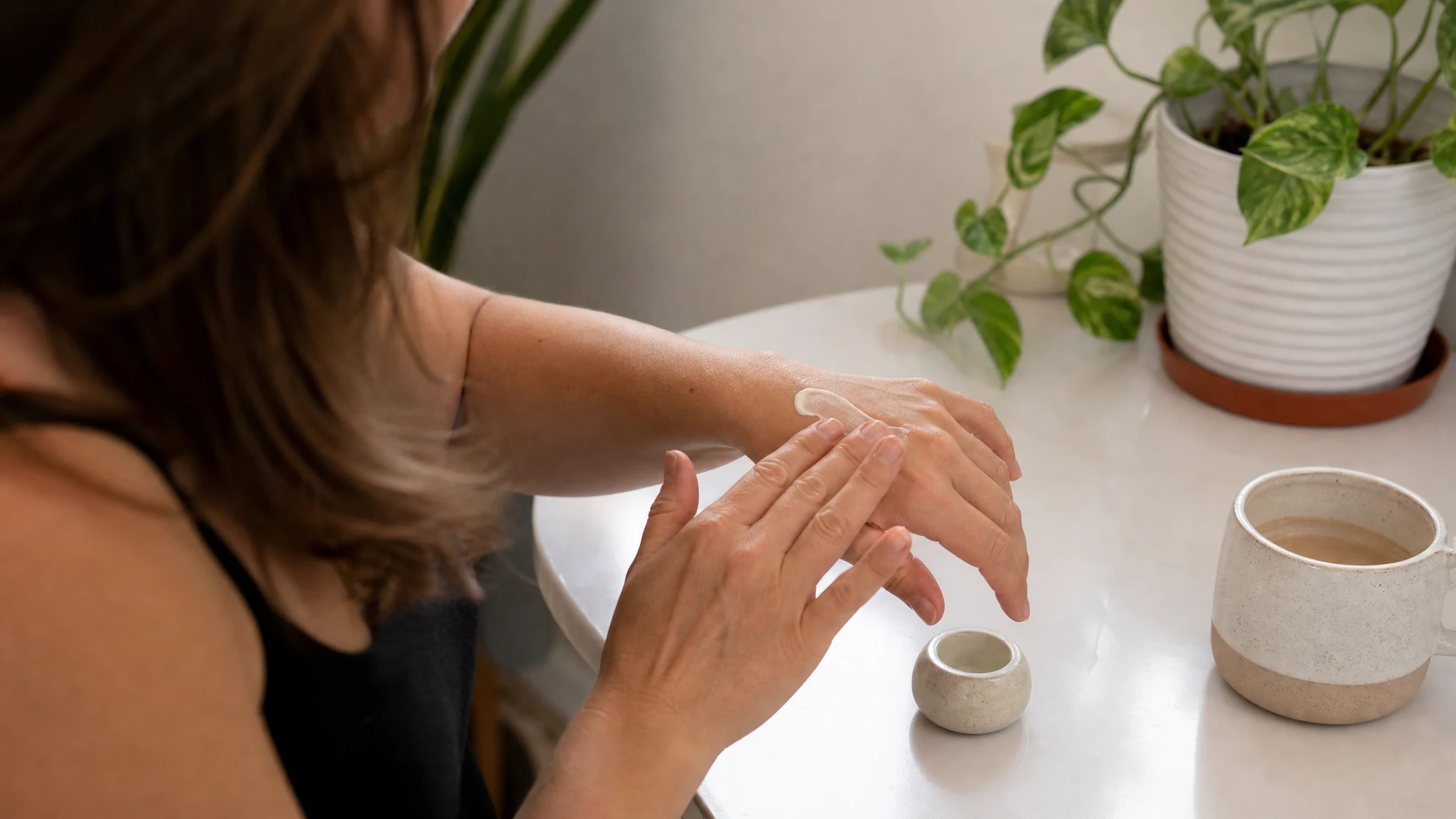
- For skin, we recommend 0.5% to 2% in a carrier with a patch test first, and we start low because IFRA's geraniol limits work out, by our arithmetic from a typical 82.4% geraniol content, to roughly 0.95% oil in a face product and 1.46% in a body product. Our dilution chart has the details.
The best rituals are almost embarrassingly small: switching on the diffuser while the kettle boils, or opening the bottle for one slow sniff before you start the washing up. Small and regular beats grand and occasional, because repetition is what turns a smell into a memory.
Keep the oil away from eyes, children and pets, and never take it internally.
When stress is more than a busy week
A pleasant scent is a small comfort, and big feelings deserve real support. The NHS says to see a GP if you think you might have generalised anxiety disorder, or if you have been diagnosed and treatment is not helping, and it describes talking therapies such as CBT, medication and self-help like exercise, good sleep and limiting caffeine. In the United States, the National Institute of Mental Health says that anyone struggling or having thoughts of suicide can call or text 988, the Suicide & Crisis Lifeline, and that 911 is for emergencies. Trouble sleeping often comes alongside worry, and our post on palmarosa and sleep looks at what guidelines put first there.
A rosy aroma is a small thing, and small things can make a day a little more your own.
Whatever the day brings, the bottle will be there on the shelf, tightly capped and ready for the next small moment you decide is worth scenting.
Palmarosa Essential Oil
Palmarosa Essential Oil from our own shop, in sizes from 0.5 oz to bulk.
From $10.99
Shop Now →Sources & Further Reading
- Aromatherapy facts and fictions: a scientific analysis of olfactory effects on mood, physiology and behavior.
- Aromatherapy
- Geraniol mitigates anxiety-like behaviors in rats by reducing oxidative stress, repairing impaired hippocampal neurotransmission, and normalizing brain cortical-EEG wave patterns after a single electric foot-shock exposure.
- Effects of aromatherapy on anxiety: A meta-analysis of randomized controlled trials.
- Generalised anxiety disorder (GAD) - NHS
- Anxiety Disorders - National Institute of Mental Health (NIMH)
- IFRA Standard: Geraniol (CAS-No. 106-24-1), 51st Amendment