How to Compare Palmarosa Oil Prices, Listing by Listing
Two bottles of palmarosa oil can carry very different prices and still be the same value, or the same price and very different value. We leave actual prices to our shop page, since they change, and give you the method we would use to compare any two listings: put both on price per millilitre, check what is in the bottle, and then work out what the oil costs inside a finished blend.
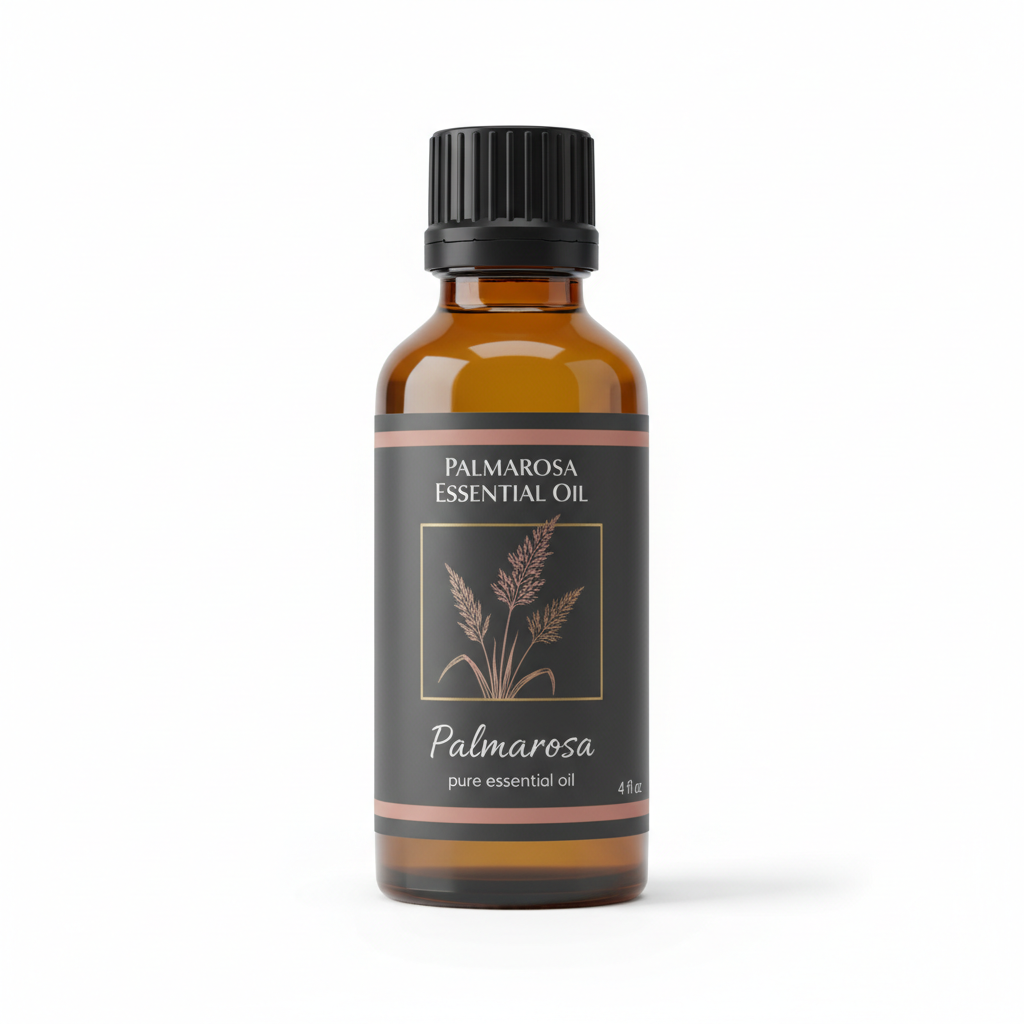
Palmarosa Essential Oil
Our own Palmarosa Essential Oil, in sizes from 0.5 oz to bulk.
From $10.99
Shop Now →Put every listing on one unit
Sellers quote fluid ounces, millilitres, grams or pounds. Convert everything to millilitres of liquid. A fluid ounce is 29.57 ml. Weights need a density, and the Certificate of Analysis we publish gives 0.888 at 20 C for one batch (printed range 0.880 to 0.894), so 1 g is about 1.13 ml. That leaves three divisors:
| Listed in | Divide the price by |
|---|---|
| Fluid ounces | 29.57 x the number of ounces |
| Grams | grams / 0.888 |
| Pounds | about 511 x the number of pounds |
Watch for a listing that says "1 oz" without saying fluid or weight. An ounce of weight is 28.35 g, while a fluid ounce of that batch weighs about 26.3 g, so the two differ by roughly 8%. Skip drops as a unit altogether, since droppers and oils vary; weigh or measure instead.
Check that it is all oil
A low price per millilitre can be an ordinary price for a diluted product. Palmarosa is sold neat, as ours is, and also pre-diluted in a carrier such as jojoba in roller bottles. Both are fine when the label says which. A US cosmetic label lists ingredients in descending order of predominance, so a roller bottle should name the carrier first. A bottle that says only "palmarosa" at a surprisingly low price deserves a question before a purchase. A 2021 study of neroli, mandarin and bergamot oils bought mostly online reported that more than 19% had been diluted with materials such as glycols, triethyl citrate or vegetable oil, and that simply buying the most expensive oil did not solve it. Palmarosa was not in that study, but it shows why price alone does not rank quality in either direction.
Price the blend, not the bottle
For a skin product, the number that matters is the cost of the oil in one finished bottle. At 0.95% oil, our arithmetic for a facial product from IFRA's geraniol limit (worked through in the dilution chart), a 1 oz bottle of blend holds about 0.28 ml of palmarosa. Multiply that by the price per millilitre and you have the oil cost per bottle. If one seller's oil costs twice as much per millilitre, your oil cost doubles too, while the carrier, the bottle and your time stay put. For many home blends, the oil is the smallest line on the bill.
It works the other way for big bottles. Larger sizes usually cost less per millilitre, but the saving is only real if you use it up. A 0.5 oz bottle makes about 53 one-ounce blends at that percentage (see our bottle size guide), so a 4 oz bottle pays off only if you will make hundreds within the two to three years we give for oil kept tightly capped, away from light and heat.
A note for anyone who mixes now and then rather than every day: do the sum for the way you really work. If you make one jar of body butter a month, you need a small bottle, and the per-millilitre price of a big drum is a distraction. If you pour candles every week, the sum changes. Be honest about your own rhythm before you chase the lowest number.
Why palmarosa is so much cheaper than rose
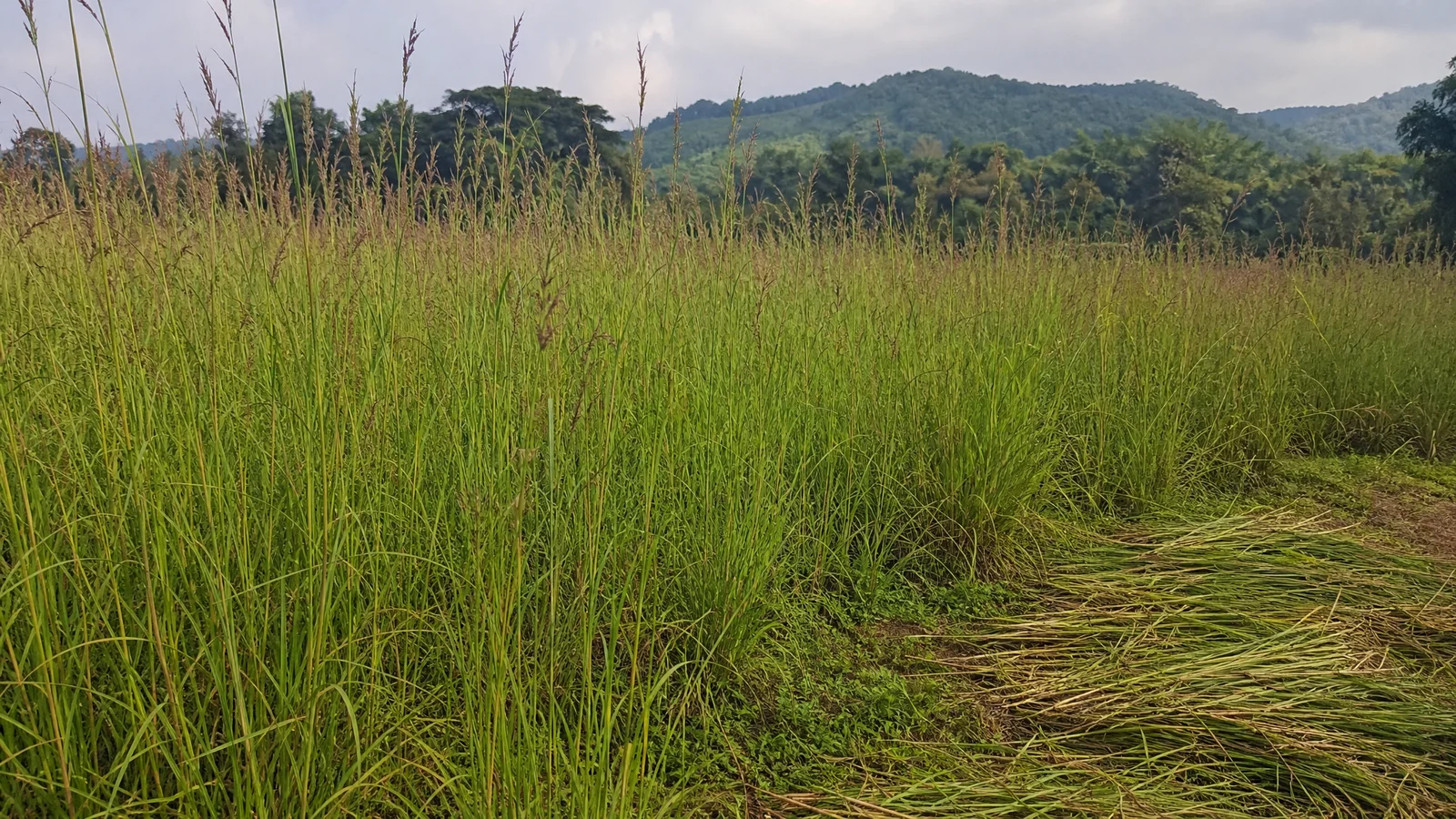
It starts in the field. A 2023 rose-oil study puts rose yield at about 0.02%, which means 3.5 to 4 tons of flowers for a kilogram of oil. In a Colombian distillation trial, palmarosa grass gave about 0.41% oil, and a Rajasthan study measured 0.35%, 0.73% or 0.53% of fresh herb depending on growth stage. By our arithmetic that is roughly 140 to 290 kg of grass for a kilogram of oil, against 3,500 to 4,000 kg of rose flowers, a gap of something like ten to thirty times. These are laboratory and trial yields from different plants and methods, so treat them as an illustration of scale rather than a description of any commercial still.
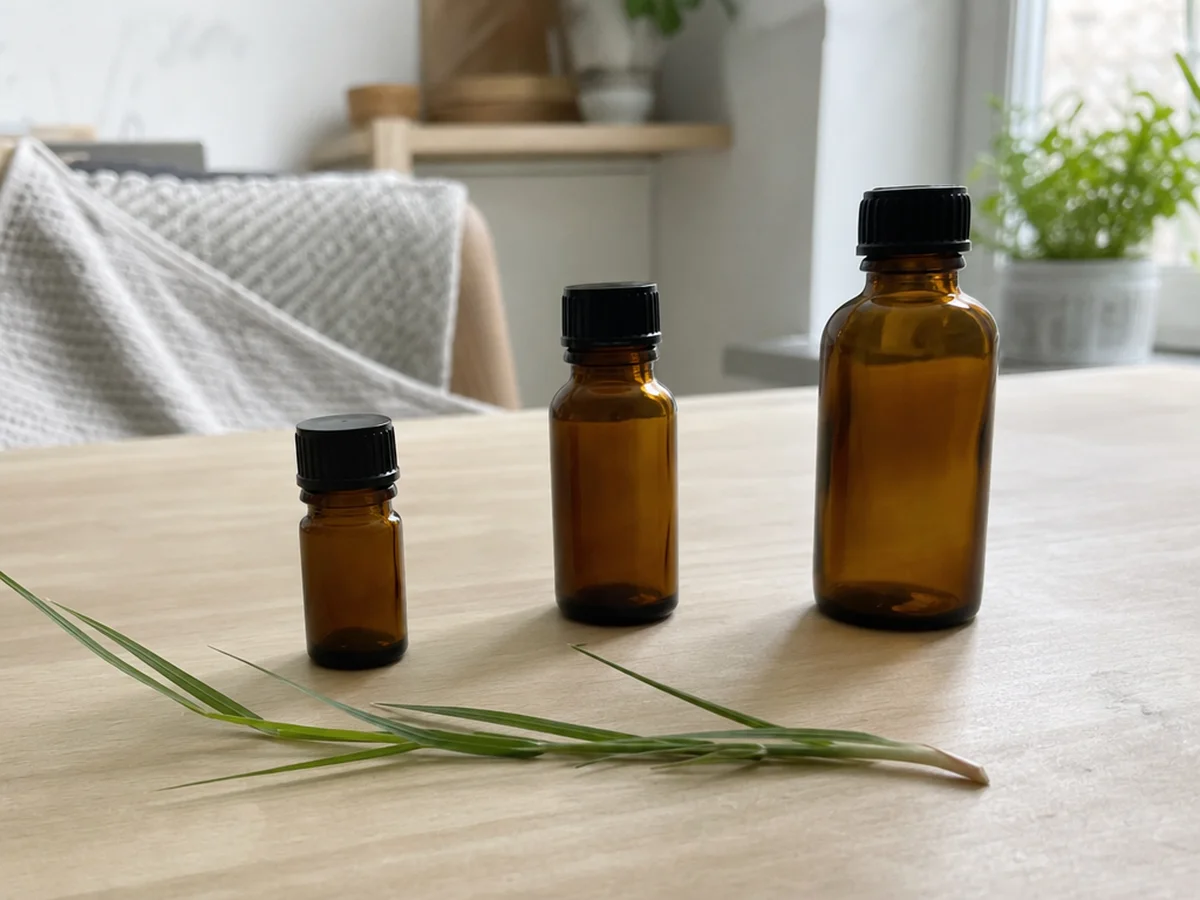
That gap is why palmarosa sits in a different price tier, and why you can enjoy a rosy scent without rose-oil money. It is also why a bottle sold as "rose" at a bargain price should make you look twice. If you are choosing between the two, our palmarosa and rose comparison goes into it.
A worksheet to copy
- Seller, size as listed, and whether the size is fluid or weight.
- Price, then price per ml using the divisors above, with shipping and any minimum order included.
- Ingredient line: palmarosa leaf oil alone, or with a carrier?
- Botanical name and CAS number, as covered in our label guide.
- Documents offered: a report for your lot, or only a general sheet? Our quality checks list what a useful one contains.
Add one more column for how the oil smells when it arrives. Open each bottle, smell it on a paper strip and jot down a few words in your own language. Palmarosa should read as sweet, rosy and gently green. Price tells you what you paid; your nose tells you whether you like what you got.
Fill in a row for each seller, ours included, and let the columns do the arguing. The Certificate of Analysis we publish covers one batch and gives density, refractive index and optical rotation, so if you want a geraniol figure for your lot, ask us in writing and compare it with any other seller's answer.
Palmarosa Essential Oil
Palmarosa Essential Oil from our own shop, in sizes from 0.5 oz to bulk.
From $10.99
Shop Now →Sources & Further Reading
- Legal Information Institute, 21 CFR 701.3 - Designation of ingredients
- Pierson M, Fernandez X, Antoniotti S, 2021. Type and magnitude of non-compliance and adulteration in neroli, mandarin and bergamot essential oils purchased on-line: potential consumer vulnerability. Scientific Reports
- Raeber J, Favrod S, Steuer C, 2023. Determination of Major, Minor and Chiral Components as Quality and Authenticity Markers of Rosa damascena Oil by GC-FID. Plants
- Romero et al., 2023. Enhanced Two-Step Extraction from Biomass of Two Cymbopogon Species Cultivated in Santander, Colombia. Molecules
- Sonigra P, Meena M, 2025. Influence of growth stage on the chemical composition, antimicrobial, and antioxidant potential of Cymbopogon martinii (Roxb.) Wats. essential oil. Frontiers in Plant Science