Has Your Palmarosa Oil Gone Off? How to Tell
Most of us have a bottle like it: bought for one project, pushed to the back of a cupboard, rediscovered a year or two later. Before you decide it has spoiled, or that it is fine, it helps to know what actually changes inside a bottle of palmarosa oil and what you can check with nothing more than your nose and a second look.
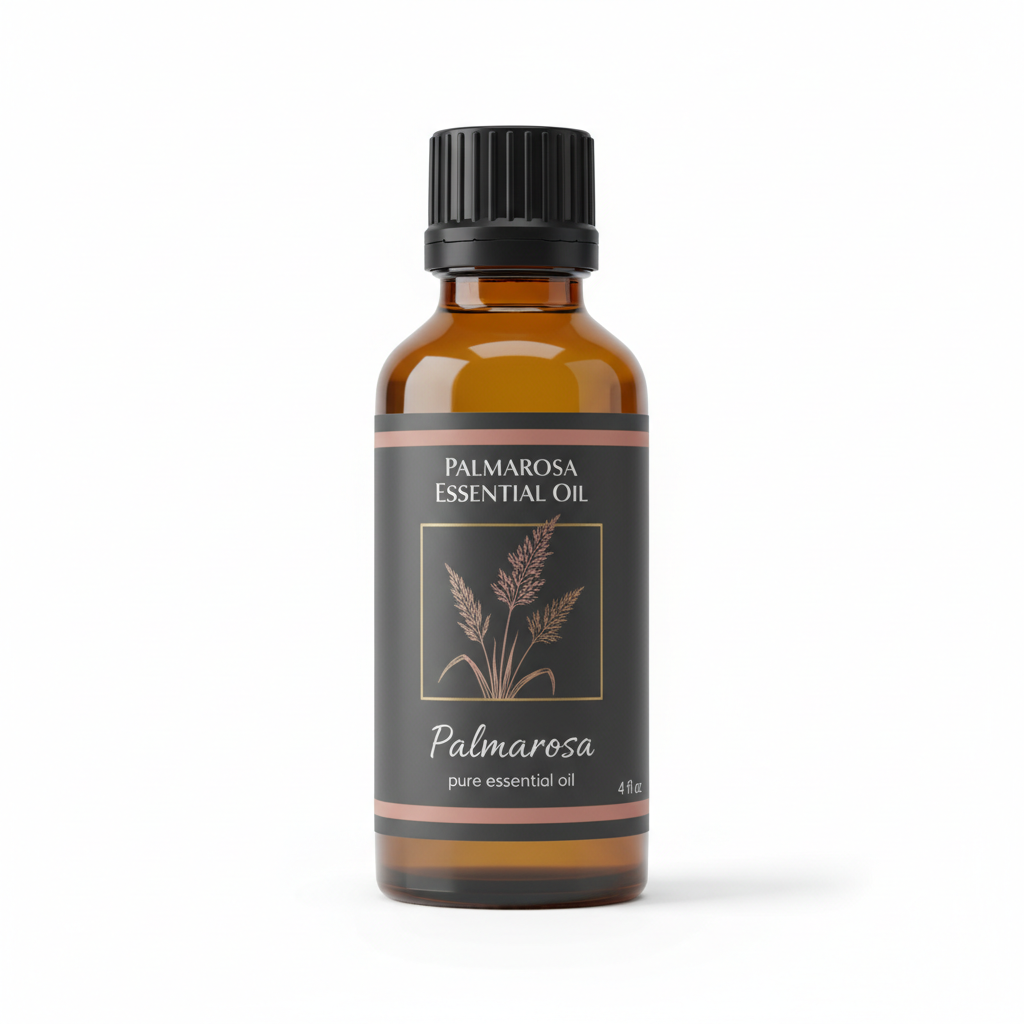
Palmarosa Essential Oil
Our own Palmarosa Essential Oil, in sizes from 0.5 oz to bulk.
From $10.99
Shop Now →What is happening in the bottle
Palmarosa is mostly geraniol. IFRA's annex on natural materials lists a typical 82.4% geraniol for palmarosa oil. Geraniol reacts with oxygen. A Swedish research group exposed it to air and found two oxidation routes, producing hydrogen peroxide and the aldehydes geranial and neral, plus a small amount of hydroperoxide. In a mouse skin test the air-exposed samples were moderate sensitisers, noticeably different from fresh geraniol. That work was on the isolated compound, not on a bottle of oil, so applying it here is our reasoning, but it is reasonable reasoning for an oil that is mostly that compound.
A 2024 review of fragrance contact allergy describes geraniol as both a prehapten and a prohapten, meaning air or light can turn it into something more likely to provoke a skin reaction. The practical reading is simple. An oxidised bottle is not just a flat-smelling bottle. It is one you would rather keep off skin.
Age on the calendar matters less than air
Our guidance is that palmarosa typically keeps for 2 to 3 years when tightly capped, out of direct light and away from heat. Treat that as the upper end for a well-kept bottle. The Tisserand Institute is more cautious as a general rule: most essential oils keep well for at least 1 to 2 years before oxidation starts to take effect, and using oils within 6 to 12 months of purchase makes oxidation mostly a non-issue. It also advises starting the clock when you buy the oil.
Those numbers are guides. A bottle opened every week with a half-empty headspace ages faster than a full one opened twice. When you are deciding, ask how much air, warmth and light the bottle has had, as well as how old it is.
The checks, in the order we would do them
1. Smell it against something fresh
Tisserand's page says oxidation alters the perceptible odour of the oil, and that the loss of brightness can be hard to notice unless you compare. Fresh palmarosa is, as we describe it, sweet, rosy and gently green with a soft lemony hint. If you have a newer bottle, smell both from a blotter or the cap. If you do not, go by memory: does the old one smell thinner, sharper, flatter or oddly off? We cannot promise the change runs in any one direction, which is why a side-by-side is worth the minute.
2. Look at the colour and clarity
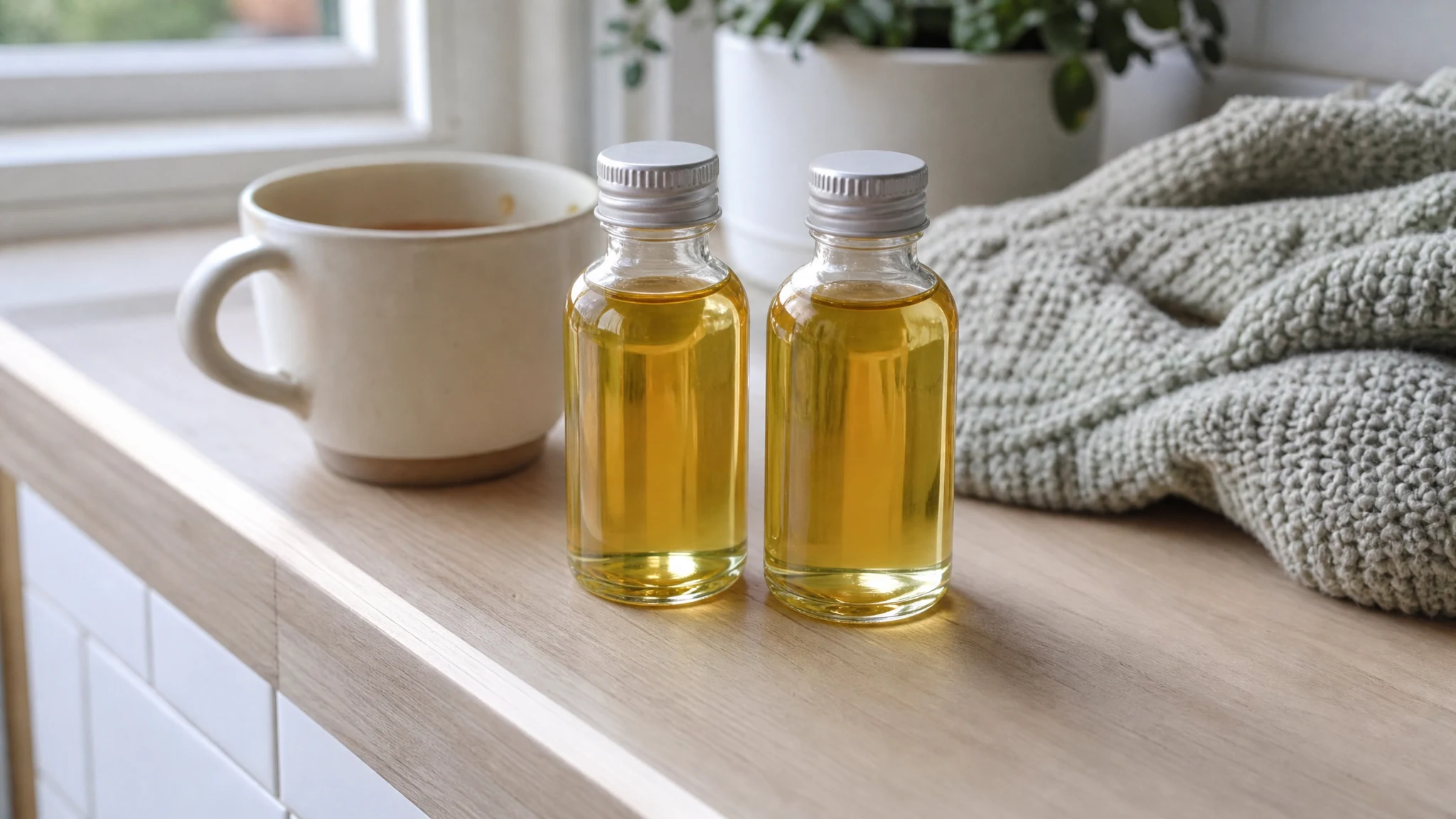
We describe palmarosa as a light yellow liquid. Tisserand notes that citrus oils can turn cloudy as they oxidise; if a palmarosa bottle clouds, or has visibly darkened next to a fresh one, we would take that as a reason to stop and treat the oil with suspicion.
3. Check how it pours
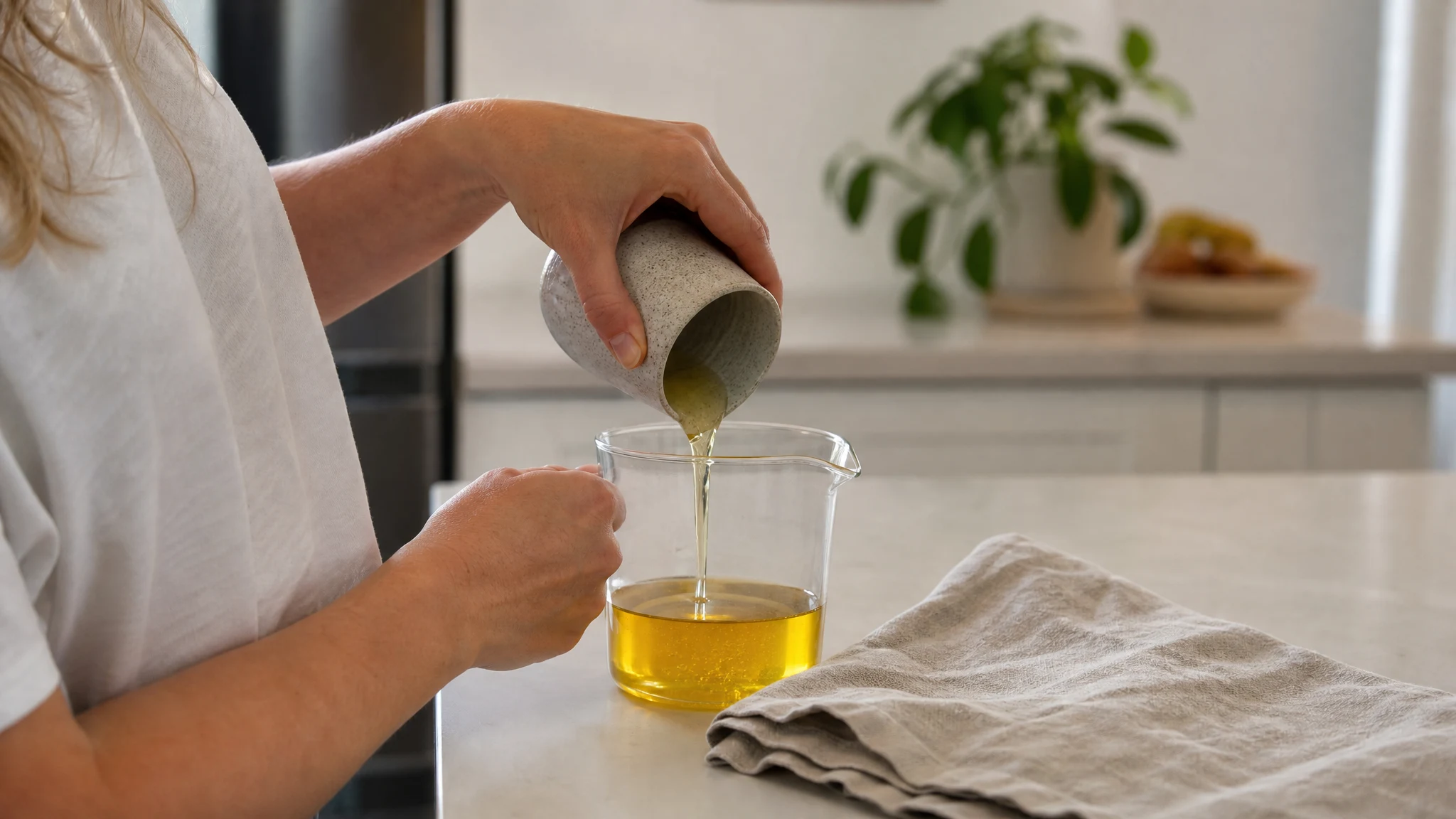
Fresh palmarosa pours almost like water. Tisserand says very old oils may become more viscous and eventually solidify, though that usually takes several years. A tacky film around the cap is worth a wipe and a second look, although it can also just be old drips. By itself that is circumstantial, not proof.
Making the call
If the smell has clearly changed, the oil looks cloudy or darker, or it has turned syrupy, retire it from anything that touches skin. That includes face oils, body oils, roll-ons, soaps and scrubs. Tisserand's page says oxidation products tend to be slightly toxic and to increase the risk of adverse skin reactions, and that is the sentence we would keep in mind.
If the bottle passes all three checks and is within the range above, it is reasonable to keep using it at your usual dilution, with a patch test on the first use of an old bottle if you have reactive skin. For a doubtful bottle, we would not use it on skin at all. For disposal, ask your local waste service how it wants small amounts of essential oil handled rather than pouring it away.
Slowing it down next time
You will find the full routine in our guide to storing palmarosa oil. In short: cap it straight away, keep it cool and dim, decant a small working bottle from a large one so the main stock stays sealed, and write the opening date on the bottle. Tisserand also says refrigeration will about double an oil's useful life; if you try it, let the bottle reach room temperature before you open it so moisture does not condense inside. If skin is your main concern, our article on palmarosa and sensitive skin explains why geraniol is the compound to respect.
Oils are not milk, and most bottles do not turn on a single day. They fade gradually, and your nose is a better early warning than the date on a calendar.
Palmarosa Essential Oil
Palmarosa Essential Oil from our own shop, in sizes from 0.5 oz to bulk.
From $10.99
Shop Now →Sources & Further Reading
- Is my bottle of essential oil oxidized or no longer good to use? - Tisserand Institute
- Fragrance compound geraniol forms contact allergens on air exposure. Identification and quantification of oxidation products and effect on skin sensitization
- Fragrance Contact Allergy - A Review Focusing on Patch Testing
- Annex on contributions from other sources to the IFRA Standards