Does Palmarosa Oil Stain Fabric? What to Do If It Does
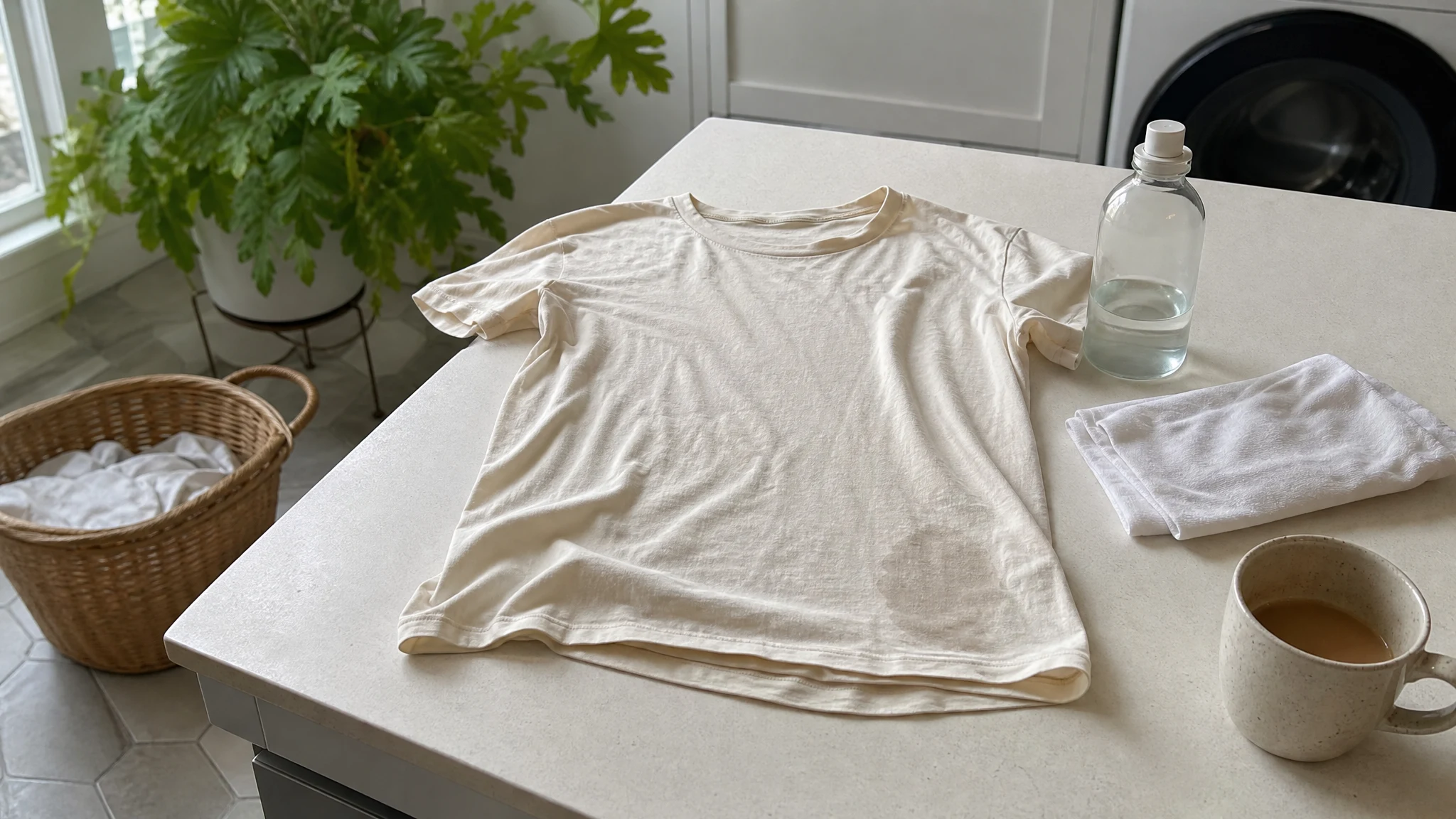
You are scenting a linen spray, the cap slips, and a drop of palmarosa lands on your favourite cotton shirt. The oil sinks in and leaves a darker, slightly glossy patch. Is it ruined? Almost certainly not, as long as you treat it as what it is: a grease mark, not a dye.
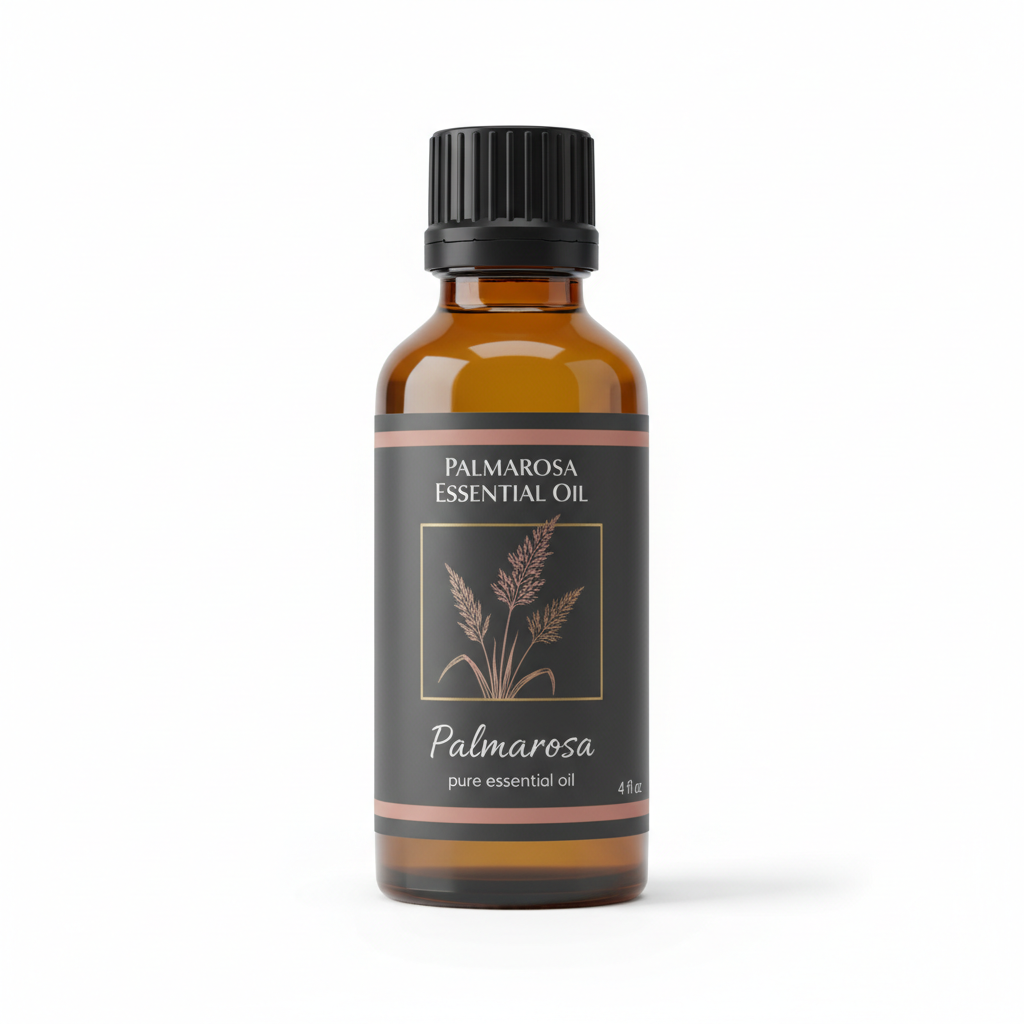
Palmarosa Essential Oil
Our own Palmarosa Essential Oil, in sizes from 0.5 oz to bulk.
From $10.99
Shop Now →What kind of mark to expect
Essential oils are oils. Whatever else they do, they behave on cloth the way a smear of cooking oil does: they wick into the fibres and leave a translucent, greasy patch that looks darker while wet. We describe palmarosa as a light yellow liquid with a viscosity close to water, so it spreads quickly and the colour contribution is slight on white or pale cotton. We would not promise it will never show, and we would not count on it vanishing by itself on a dark or delicate fabric.
It is worth noting where the mark mostly comes from. If you blended palmarosa into a carrier oil at our suggested 0.5% to 2%, the stain you are fighting is nearly all carrier oil, which is thicker and lingers longer than the essential oil. Neat oil from the bottle spreads further but there is less of it. Either way, the treatment is the same.
A treatment for ordinary washable fabric
Here is a sequence adapted from University of Georgia Extension's guidance on oil-based stains. Their page is written for foods such as butter and margarine, but the chemistry of lifting oil from cloth is the same, and it is the best extension source we found on the subject.
- Read the care label first. The Extension page is blunt about it: always read the care label before trying any stain removal method.
- Blot, do not rub. Press a clean cloth or paper towel onto the patch to lift whatever is still sitting on top. Rubbing spreads a greasy mark wider. This step is our reasoning rather than the Extension's wording.
- Work detergent into the dampened stain. A little liquid laundry detergent, or a pre-wash stain remover, pressed into the damp patch is the heart of the method. Detergent is a surfactant: it lets water carry oil away.
- Launder with plenty of detergent. Extension suggests hot water if the fabric tolerates it. Use the warmest water the care label allows.
- Check before the dryer. If a faint shadow is left, treat it again and let it air-dry; the Extension sequence has you air-dry between rounds. Our reading is that a hot dryer on an oily mark is a gamble you do not need to take.
If the stain persists after laundering, the Extension page suggests sponging with a safe dry-cleaning solvent and rinsing. Test that on a hidden seam before you use it on the shirt, since solvents can lift dye too.
Fabrics that belong with a professional
Silk, wool, leather, suede, velvet and anything marked dry-clean-only are not for kitchen experiments. Blot gently, do not add water, and take the item to a dry cleaner promptly, telling them what spilled. Tell them it is an essential oil, and bring the care label if you can.
Surfaces and upholstery
Wipe a spill on sealed worktops or tiles with a cloth and a drop of dish detergent in warm water. On unsealed wood, stone, painted furniture and upholstery, blot first, then test a cleaner on a hidden corner. Finishes and plastics vary, so a quick wipe-up and a hidden-spot test are the sensible habits. If a good sofa is involved, a professional upholstery cleaner is a better call than guessing.
Keeping it off the fabric to begin with
- Pour over a tray or towel, not over clothing or the arm of a chair.
- For sprays that meet fabric, such as our linen spray recipe or the porch spray for cushions, hold the bottle at arm's length and test on a hidden corner first. The alcohol in those recipes evaporates, but it leaves the oil behind.
- In a diffuser, place the unit on a hard surface away from curtains and upholstery. Our diffuser guide covers timing and drops.
- Keep a small bottle capped and upright, ideally in a lidded box. Our storage article, how to store palmarosa oil, goes into it.
Even the most careful maker spills sometimes. Blot first, wash with plenty of detergent, keep it out of the dryer until the shadow is gone, and give anything delicate to a dry cleaner.
Palmarosa Essential Oil
Palmarosa Essential Oil from our own shop, in sizes from 0.5 oz to bulk.
From $10.99
Shop Now →