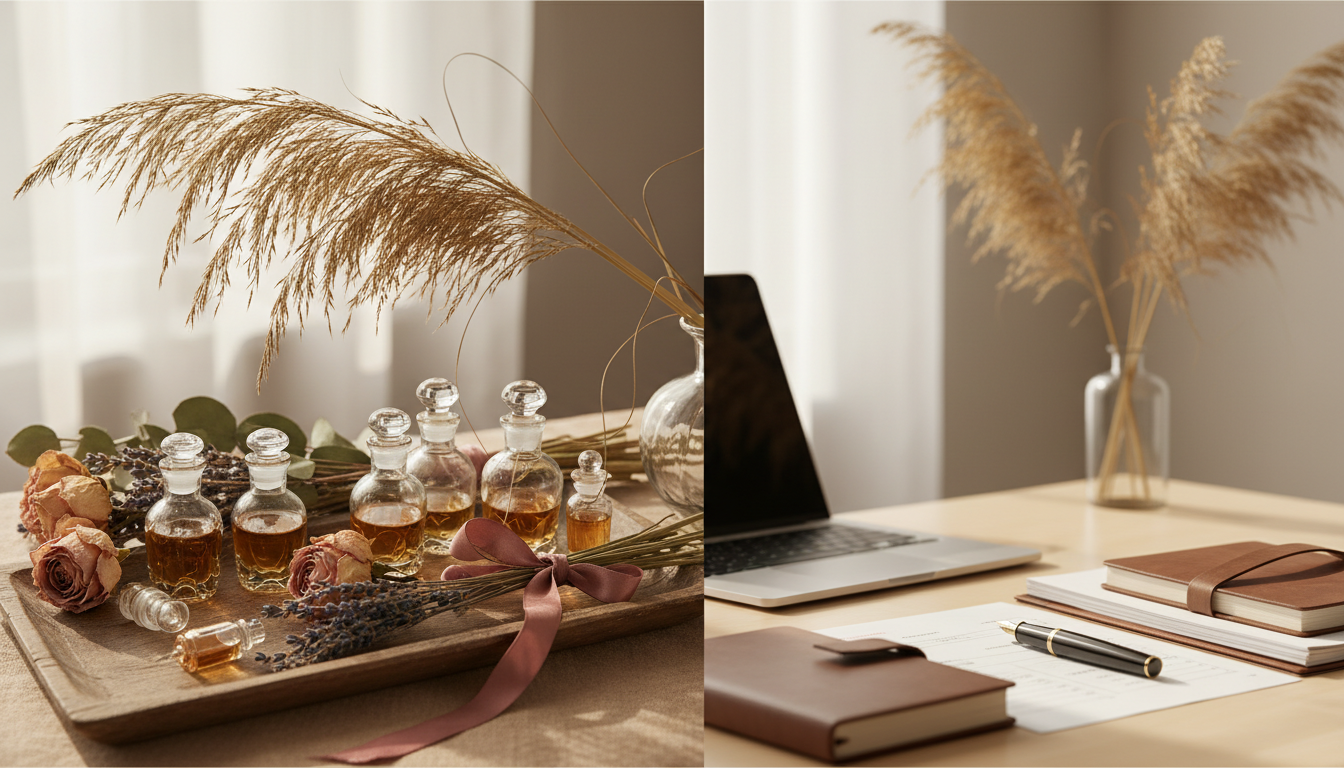
Palmarosa in Natural Perfumery: An Affordable Heart Note for Home Blenders
Palmarosa essential oil occupies a strange and wonderful position in the world of natural fragrance. It smells unmistakably rosy, with a soft grassy freshness underneath, yet it costs a fraction of what Bulgarian rose otto commands. For anyone building a home perfumery practice, that combination is difficult to ignore. The oil sits beautifully in the heart of a blend, where it rounds out sharper notes above it and gives warmer base notes something luminous to anchor against.
This guide walks through the full process of working with palmarosa as a heart note: the materials you need, how to structure a simple natural perfume, and the blending decisions that will shape your final scent. No prior perfumery experience is required, though even seasoned home blenders may find useful detail in the ratio discussion and fixative section below.
Why Palmarosa Works as a Heart Note
In classical perfumery structure, a fragrance is built in three tiers. Top notes are what you smell immediately: bright, volatile, and quick to fade. Heart notes emerge once the top notes lift and carry the emotional core of the scent. Base notes are the slowest to evaporate and provide depth and staying power.
Palmarosa fits the heart tier because of its moderate evaporation rate and its ability to bridge. Its geraniol-rich character (geraniol is the primary aromatic compound) reads as floral without being heavy. It can connect a citrus top note to a woody or resinous base without creating an awkward gap. Think of it as a skilled collaborator rather than a soloist.
Its price point matters too. True rose otto can cost hundreds of dollars per milliliter. A quality palmarosa from a reputable distiller runs between fifteen and forty dollars for five to ten milliliters, depending on the supplier. For a home blender working through multiple trial batches, that accessibility changes everything.
If you want to understand how palmarosa behaves outside of fragrance work, the overview at how to use palmarosa oil in skin care and home fragrance gives helpful context for the oil's broader character.
Materials You Will Need
Before you begin blending, gather everything on this list. Working with incomplete materials leads to improvised decisions mid-process, and in perfumery, those shortcuts rarely serve the final scent.
- Palmarosa essential oil: 1 to 3 milliliters for initial trials. Source from a supplier who provides GC/MS testing reports and discloses the country of origin. Indian and Vietnamese distillations each have a slightly different character; Indian tends to be softer and more floral, while Vietnamese can run greener.
- A carrier or dilution base: Perfumer's alcohol (SD 40-B or 200-proof cane alcohol) for an eau de parfum or cologne format. Fractionated coconut oil or jojoba for an oil-based perfume.
- Supporting essential oils: See the suggested accord below.
- Amber or cobalt glass bottles: 5-milliliter and 10-milliliter sizes with orifice reducers or droppers. Avoid plastic, which can absorb aromatic compounds.
- Glass stirring rods or wooden coffee stirrers: One per trial blend, kept separate to avoid cross-contamination.
- A digital scale: One that reads in 0.01-gram increments. Drops are inconsistent between different viscosity oils; weight is more reliable.
- Scent strips (perfumer's blotters): At least 30 to 50. You will use more than you expect.
- A blending notebook: Paper, not digital, for recording each formula alongside your written impressions.
- Nitrile gloves: Essential oils can sensitize skin with repeated undiluted contact.
Safety note: All finished perfumes applied to skin should be properly diluted. For an eau de parfum worn on the body, the typical concentration is 15 to 20 percent aromatic materials in alcohol. For oil-based perfumes, 2 to 5 percent is the standard guideline for most essential oils. Always perform a patch test on a small area of skin and wait 24 hours before broader use. If you are pregnant, nursing, or managing a health condition, consult a qualified healthcare provider before working with essential oils.
Understanding a Simple Three-Tier Structure
Before getting into numbered steps, a brief structural map will help you make blending decisions with intention.
| Tier | Role | Evaporation | Example Oils |
|---|---|---|---|
| Top | First impression, brightness | Fast (30 min to 2 hrs) | Bergamot, lemon, petitgrain, pink pepper |
| Heart | Core character, emotional center | Moderate (2 to 6 hrs) | Palmarosa, geranium, ylang ylang, neroli |
| Base | Depth, fixation, longevity | Slow (6+ hrs to days) | Sandalwood, cedarwood, vetiver, benzoin |
A workable starting ratio for a three-tier structure is 30 percent top, 50 percent heart, 20 percent base, all measured within your aromatic concentrate before diluting into your carrier. Palmarosa will occupy part or all of that heart percentage, depending on how central you want the rose note to be.
A Suggested Starter Accord
If you want a clear reference point before experimenting freely, start with this simple palmarosa perfume accord. It is designed to let palmarosa carry the center without burying it.
- Palmarosa: 40 percent of your aromatic concentrate
- Bergamot (bergapten-free for skin safety): 25 percent
- Geranium Bourbon: 10 percent
- Cedarwood Atlas: 15 percent
- Benzoin resinoid: 10 percent
Bergamot opens with that characteristic citrus-floral lift. Geranium Bourbon supports palmarosa's rosy quality without doubling it (geranium reads more green and slightly minty). Cedarwood adds a dry, pencil-shaving warmth in the base. Benzoin, a slow-moving vanilla-balsamic resinoid, softens the cedar and helps the whole composition persist on skin.
This accord works equally well as a rose note perfume DIY in alcohol or as a body oil blend. The carrier will change the projection and skin feel, not the fundamental character.
Step-by-Step: Blending a Palmarosa Perfume
-
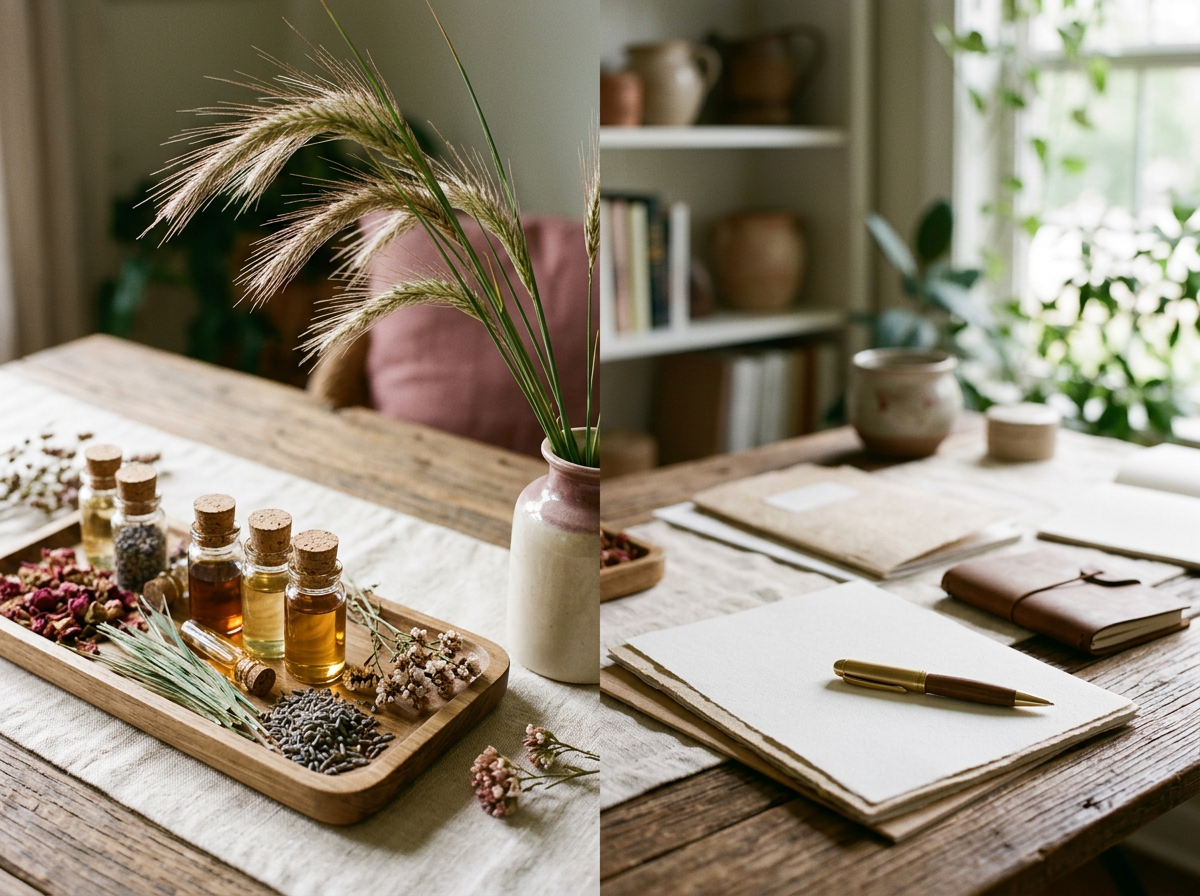
Set Up Your Workspace
Work in a well-ventilated room away from direct sunlight and strong competing aromas (coffee, cooking smells, cleaning products). Clear your surface, lay out your bottles, label everything before you open anything. Cold noses are more accurate: if you have been cooking or wearing another fragrance, wait an hour before blending sessions.
-
Decide on Your Target Volume and Format
For a first trial, a 5-milliliter batch is a practical size. It gives you enough to evaluate on skin over several days without wasting expensive materials if the formula needs revision. Decide at this stage whether you are making an alcohol-based eau de parfum (15 to 20 percent concentrate) or an oil-based perfume (2 to 5 percent concentrate). Write this decision in your notebook before opening any bottles.
-
Calculate Your Weights
Work backward from your target. For a 5-milliliter alcohol-based eau de parfum at 20 percent concentration, your aromatic concentrate will be 1 milliliter, and the remaining 4 milliliters will be alcohol. Within that 1-milliliter concentrate, calculate each oil's share based on the percentages in your accord. Keep the numbers in your notebook. This record becomes your formula, and you will need it when you want to recreate or adjust the blend.
-
Blend the Aromatic Concentrate First
Using your scale and a clean glass bottle, weigh out your base note oils first, then heart, then top. Adding in this order (slow-moving to fast-moving) makes it easier to smell the developing blend without the volatile tops overwhelming everything. Swirl gently after each addition. Do not stir vigorously, which introduces air bubbles and can subtly affect how resinoids integrate.
After combining all aromatic components, smell the concentrate on a blotter. Label the blotter with the date and formula reference number. Set it aside. Your first impression will change as the top notes lift over the next five to fifteen minutes.
-
Allow the Concentrate to Rest
This step is one most beginners skip, and it significantly affects the result. Cap your concentrate bottle and set it in a cool, dark drawer for a minimum of 48 hours, ideally a week. During this resting period, the aromatic compounds begin to interact and integrate. A blend that smells slightly harsh or disjointed on day one often smooths considerably by day seven. Palmarosa in particular seems to soften and deepen with short macerations.
-
Dilute into Your Carrier
After resting, weigh your concentrate and combine it with your chosen carrier (alcohol or oil) in the correct ratio. For alcohol, use perfumer's alcohol rather than rubbing alcohol, which contains additives that affect scent. Swirl to combine. Cap and label with the full formula, date, and dilution percentage.
-
Evaluate on Skin
Apply a small amount to the inside of your wrist. Smell immediately for the top notes, then again at 30 minutes, one hour, and three hours. Note what you observe at each stage. Does palmarosa emerge clearly in the heart? Is the rose note balanced against the citrus opening? Does the base support without overpowering? Write all of this down before adjusting anything.
A completed rose note perfume DIY should, if the blend is well-proportioned, show a bright citrus opening that gives way to a soft, green-floral center, then settles into a warm, slightly resinous dry-down. That middle phase is where your palmarosa does its work.
-
Revise and Iterate
If the heart note reads too faint, increase palmarosa to 50 percent of the concentrate and reduce geranium. If the base feels too prominent too early, lower cedarwood by 5 percent and add that percentage to bergamot. Make one change at a time. Multiple simultaneous adjustments make it impossible to trace which change produced which result. Rest each revised concentrate for at least 48 hours before evaluating.
Tips and Common Mistakes
Do Not Rush the Rest Period
Impatience at this stage is the single most common reason home blenders conclude that a formula does not work. Evaluate too early and you are smelling ingredients in proximity, not a finished blend. Give palmarosa and benzoin in particular the time they need to harmonize.
Source Matters More Than Most Guides Acknowledge
Palmarosa in natural perfumery varies noticeably by origin and distillation method. A lower-grade oil distilled from partially dried grass will smell flatter and more linear than a carefully tended first distillation. Request GC/MS data from your supplier and look for geraniol content above 75 percent as a general quality indicator. The difference in blending behavior between a quality oil and a mid-grade one is significant enough to affect your entire formula.
Benzoin Resinoid Requires Gentle Warming
Benzoin is thick and slow-moving at room temperature. Before measuring, place the bottle in a small bowl of warm (not hot) water for two to three minutes to improve flow. Do not overheat, which can alter the aromatic profile.
Keep Your Nose Fresh
After smelling four or five strips, your olfactory perception fatigues. Rest for ten minutes, smell the back of your hand (a neutral skin reference), or step outside briefly. Continuing to evaluate with a fatigued nose produces unreliable impressions that lead to poor adjustments.
Label Everything, Always
An unlabeled bottle sitting next to a labeled one looks identical in a week. Date, formula reference, and dilution percentage on every bottle, every time. Reconstruct a formula from memory and you will almost certainly produce something different.
Expanding Your Palmarosa Palette
Once you are comfortable with the starter accord, palmarosa in natural perfumery opens into a wide set of possible directions. The oil pairs particularly well with the following:
- Petitgrain: Adds a dry, woody-green quality that contrasts palmarosa's soft florality without competing with it.
- Ylang ylang (use sparingly): At 2 to 4 percent of the concentrate, ylang ylang deepens the floral richness. Above that, it tends to dominate and can read as cloying in combination with palmarosa's geraniol.
- Vetiver: A smoky, earthy base note that grounds a palmarosa heart in a very different direction than cedarwood. The contrast between palmarosa's lightness and vetiver's depth produces a compelling tension.
- Frankincense (Boswellia carterii): A slow-drying resinous note with a slightly citrus-resin character that can replace or supplement benzoin for a drier, more austere dry-down.
Palmarosa also performs beautifully in oil-based body perfumes. If you are already exploring how to incorporate palmarosa into daily routines, the blend concepts in palmarosa oil for skin: a balancing routine for face and body may give you useful context for how the oil behaves on skin over time. For a focused facial application, DIY palmarosa facial oil: a rosy balancing blend walks through a complementary formulation approach.
What to Expect From Your Finished Blend
A well-balanced palmarosa perfume, properly diluted and rested, may offer a soft, rosy-green presence that reads as distinctly floral without the heaviness of a traditional rose soliflore. People who wear these blends often report that others perceive the scent as fresh and subtly botanical, sometimes asking about the rose note without quite being able to place it. That ambiguity is part of palmarosa's particular charm as a perfumery material.
Longevity on skin will depend heavily on your dilution, your carrier choice, and individual skin chemistry. Alcohol-based formulas tend to project more in the opening hour; oil-based versions often linger closer to skin for a longer period. Neither is superior. They are simply different experiences of the same composition.
Natural perfumery built around ingredients like palmarosa rewards patience and curiosity in roughly equal measure. Start with small batches, keep careful records, and resist the urge to adjust too quickly. The blend you are building is worth the time it takes to understand it properly.