Palmarosa in Summer: Light Rosy Blends for Warm-Weather Homes
Summer changes how we want our homes to smell. The heavy, resinous blends that felt welcome in January start to feel dense and airless once the heat arrives. What most people reach for instead is something fresher, lighter, and a little green around the edges. Palmarosa essential oil sits right in that sweet spot.
Distilled from a tropical grass rather than a true rose, palmarosa carries a rosy-green character that reads as genuinely summery. It is bright without being sharp, floral without being powdery, and it blends with an ease that makes it ideal for seasonal reformulations of your home fragrance routine. If you have been keeping palmarosa tucked away as a skin care ingredient, summer is a good reason to bring it out to the diffuser.
Why Palmarosa Works Especially Well in Summer
Part of what makes palmarosa oil so suited to summer diffuser blends is its natural geraniol content. Geraniol is the aromatic compound most associated with fresh, rosy scent profiles, and palmarosa contains it in notably high concentrations, often between 75 and 90 percent depending on the origin and distillation quality. That high geraniol level gives palmarosa its characteristic brightness without the heavier, waxier undertones you find in actual rose absolute.
In practical terms, this means palmarosa lifts. In a diffuser, it rises quickly into a room and does not linger with the tenacious weight of a resin or a base-note wood. It is the olfactory equivalent of opening a window. On warm mornings when the air in your home feels close, that lift is exactly what a blend needs.
There is also a humidity factor worth mentioning. In summer, especially in humid climates, heavier essential oils can smell almost fermented when diffused into warm, moist air. Palmarosa does not suffer this way. Its clean, grassy-rosy profile stays pleasant and legible even when the air is thick.
A Note on Quality Before You Blend
Summer blending is a good time to audit the palmarosa oil you are working with. A quality palmarosa should smell fresh and faintly green, with a clear rosy sweetness and no harsh chemical top note. If yours smells predominantly of industrial solvent or has a flat, synthetic rose character, it may be adulterated with synthetic geraniol or lemongrass isolates, both of which are common adulterants in lower-grade stocks.
Look for oils that list the botanical name (Cymbopogon martinii var. motia) and the country of origin. India remains the primary and most reputable source. GC/MS testing reports, when available from the supplier, are the clearest indicator of an unadulterated oil. For more on how to evaluate palmarosa for both skin care and home fragrance purposes, the guide on how to use palmarosa oil in skin care and home fragrance covers sourcing and usage in useful depth.
The Summer Blending Palette: What Pairs With Palmarosa
Palmarosa is one of the more cooperative oils in a blender's kit. It does not overpower, and it rarely clashes. Still, summer calls for specific pairings that keep blends feeling airy rather than dense.
Citrus Notes
Bergamot, lime, and grapefruit are the natural summer partners for palmarosa. Bergamot in particular shares a faint floral quality with palmarosa, so the two reinforce each other rather than simply sitting side by side. Grapefruit adds a tart, slightly bitter brightness that keeps a rosy blend from reading as too sweet or too feminine in a traditional sense.
Green and Herbal Notes
Litsea cubeba (sometimes called may chang) brings a lemon-verbena brightness that makes palmarosa blends feel crisp and outdoor-inspired. Basil ct. linalool is worth experimenting with in small amounts: it adds an herbal complexity that grounds a blend without pulling it toward the heavy end of the spectrum. Petitgrain, distilled from the leaves of the bitter orange tree, is another excellent pairing. It is green, faintly woody, and keeps rosy blends from becoming cloying.
Soft Florals
Geranium is the obvious companion to palmarosa since both oils share geraniol as a primary constituent. Together they create a layered rose effect that is fuller than either oil alone. Ylang ylang can work in very small amounts (no more than one drop in a typical diffuser blend) but requires a careful hand in summer; too much and a blend tips toward something heavier and more nocturnal than summery.
Light Woods and Grasses
Ho wood and cedarwood Atlas both add quiet depth without density. Vetiver, which is also a grass, creates a surprisingly interesting pairing with palmarosa, the two sharing a botanical kinship while occupying opposite ends of the scent spectrum. Use vetiver very sparingly in summer blends. One drop to every six or eight of palmarosa is usually plenty.
Five Summer Diffuser Blends to Try
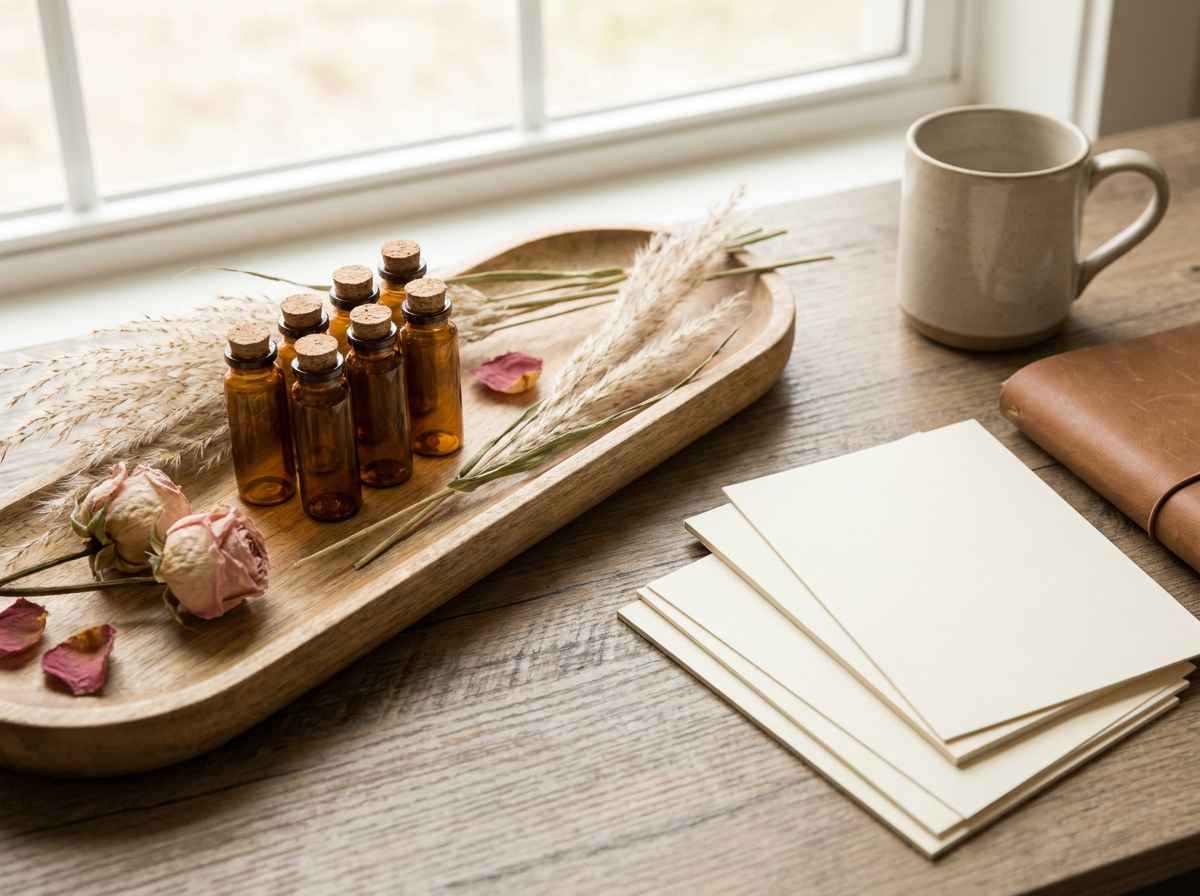
These blends are sized for a standard 100 ml ultrasonic diffuser. Adjust proportionally if your diffuser uses a different water volume. Always follow your diffuser manufacturer's guidance on the number of drops to add, and ventilate the room well, particularly in smaller spaces.
1. Open Window
Fresh, green, and clean. This is the blend for mornings.
- 4 drops palmarosa
- 3 drops bergamot
- 2 drops petitgrain
- 1 drop litsea cubeba
2. Rosy Afternoon
A fuller floral blend that suits an open living area on a warm afternoon.
- 4 drops palmarosa
- 3 drops geranium
- 2 drops grapefruit
- 1 drop cedarwood Atlas
3. Citrus Grass
Lighter and more tart. Good for kitchens and hallways where you want a fresh greeting scent.
- 3 drops palmarosa
- 4 drops lime (steam distilled, not expressed, if diffusing in sunlit rooms)
- 2 drops lemon
- 1 drop basil ct. linalool
4. Garden at Dusk
For evenings when the temperature drops slightly and you want something a little more enveloping. This blend also works well as a basis for a calm bedtime wind-down atmosphere. For a fuller set of evening-focused recipes, see a rosy evening ritual: palmarosa diffuser recipes.
- 4 drops palmarosa
- 2 drops geranium
- 2 drops bergamot
- 1 drop ylang ylang
- 1 drop vetiver
5. Greenhouse Rose
A more complex rosy blend with a faintly green, humid-greenhouse quality. This one is particularly interesting if you enjoy wearing home fragrance as a kind of ambient personal scent while working from home in summer.
- 5 drops palmarosa
- 2 drops geranium
- 2 drops ho wood
- 1 drop petitgrain
Palmarosa in Summer Linen Sprays
The diffuser is not the only way to bring palmarosa into your warm-weather home. A simple linen spray is one of the most underrated seasonal home fragrance tools, and palmarosa performs beautifully in one.
A basic formula: combine 10 drops of essential oil (using any of the blend ratios above, scaled up proportionally) with 1 teaspoon of high-proof alcohol (such as perfumer's alcohol or plain vodka at 40 percent or higher), then top with 100 ml of distilled water in a fine-mist spray bottle. Shake before each use.
Spray onto bedding, curtains, or fabric cushions in the morning so the alcohol disperses before the fabric is in contact with skin. Keep citrus-heavy versions away from light-colored fabrics, as expressed citrus oils can occasionally leave marks. Steam-distilled citrus oils are safer on fabrics than cold-pressed versions.
Patch test reminder: If your linen spray will contact skin (pillowcases, for instance), patch test first and keep essential oil concentration below 1 percent for fabrics that will be against skin for extended periods.
Palmarosa as a Perfumery Bridge Note in Summer Blends
Beyond the diffuser, summer is when many home perfumers turn to lighter formulations for personal fragrance. Palmarosa has an interesting structural role in natural perfumery: it works as a heart note that connects lighter citrus top notes to softer, warmer base notes without the density of traditional floral absolutes.
In summer, this bridge function is especially valuable because the season's preferred fragrance profiles tend to be linear and airy rather than the multi-layered, evolving constructions you might enjoy in cooler months. Palmarosa's rosy warmth reads clearly at every stage of a blend's development without demanding attention.
If you want to go deeper into how palmarosa functions structurally in natural perfume work, the article on palmarosa in natural perfumery: an affordable heart note covers its role in more technical detail, including starting point usage rates for eau de cologne and eau de toilette concentrations.
Seasonal Variation: Adjusting Blends Through the Summer Months
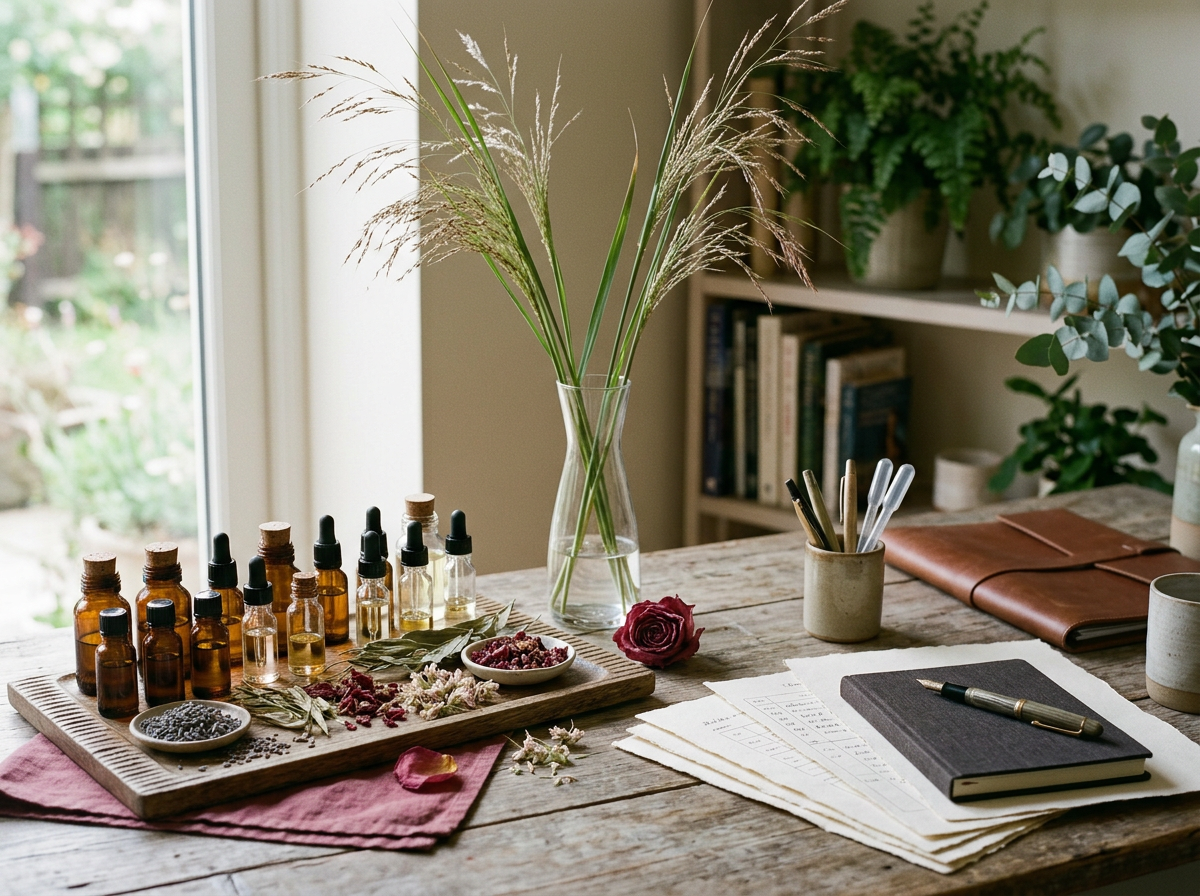
Early summer and late summer have different fragrance moods. In June, the atmosphere often still carries some freshness from spring, and blends can lean greener and brighter. The Citrus Grass blend and the Open Window blend are well suited to this period.
By August, when heat has settled in fully and evenings feel slower and more languid, richer palmarosa blends like Garden at Dusk feel more appropriate. The slight sweetness of ylang ylang, which might feel excessive in June, becomes welcome in late summer evenings.
If you live in a climate with a pronounced monsoon or humid-season shift within summer, this is worth factoring into your oil choices as well. During intensely humid periods, lean toward blends with more citrus and petitgrain, which tend to stay cleaner in heavy air. Hold back on the more resinous or wood-heavy additions until the air has more movement again.
Practical Storage During Hot Months
A brief note on keeping your palmarosa stock in good condition through summer. Heat and UV exposure degrade essential oils, and if your oils are stored on a windowsill or in a car for any length of time in summer, the quality will drop noticeably. Store palmarosa in a cool, dark location in amber or cobalt glass. A dedicated drawer or a small insulated bag in a shaded area of your home is sufficient for most home users.
Opened bottles used regularly are generally fine for 12 to 18 months. If your palmarosa has started smelling sharper, more chemical, or noticeably flatter than when you first opened it, the oil may have begun to oxidize. Oxidized oils are best retired from skin contact uses, though they can still be used in diffuser blends where the oil will not contact skin.
Getting Started This Week
If you already have palmarosa on your shelf and a bottle each of bergamot and geranium, you have everything needed for the Rosy Afternoon blend above. Start there. Run it for a single diffuser session on a warm afternoon and note how the scent changes as the room temperature rises and the water in the diffuser gradually disperses.
Palmarosa rewards attention. It is not a single-note oil that announces itself loudly. It works through the blend, connecting other notes and adding a rosy warmth that is easier to notice once it is absent. This summer, it deserves a more prominent place in your diffuser rotation.