Palmarosa Oil and Stretch Marks: What Reviews Found
If you are hoping a rose-scented oil will keep stretch marks away, here is the kinder truth first: nothing in a bottle has been reliably shown to do it, for any ingredient, so palmarosa is in good company. What a body oil can be is a pleasant daily habit, and palmarosa makes a lovely one. Knowing the difference lets you enjoy it without disappointment.
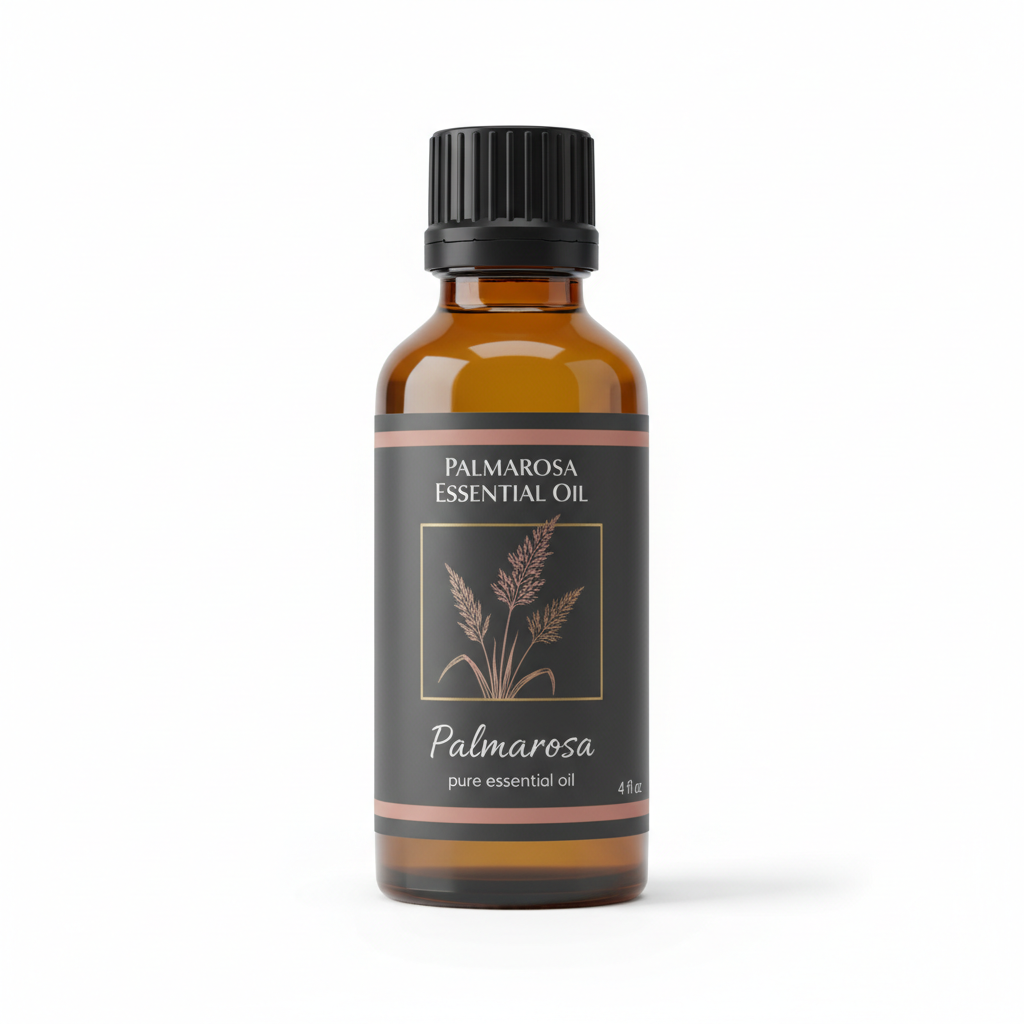
Palmarosa Essential Oil
Our own Palmarosa Essential Oil, in sizes from 0.5 oz to bulk.
From $10.99
Shop Now →What the best review found
A Cochrane review looked at topical preparations used to prevent stretch marks in pregnancy, a time when somewhere between 50% and 90% of women develop them. It pooled six trials involving 800 women and found no statistically significant difference in whether stretch marks developed, compared with placebo or no treatment. The authors found no high-quality evidence that any topical preparation worked and called for better trials. The review dates from 2012 and does not mention palmarosa. Still, it sets a fair standard for any product: when someone measures, does the result show up?
The American Academy of Dermatology says something similar in a friendlier voice. Stretch marks appear when skin stretches or shrinks quickly, hormones can play a part, and family history matters. In studies, massaging almond oil, cocoa butter, olive oil or vitamin E into the skin did not prevent stretch marks and did not fade them. The page notes that products containing centella or hyaluronic acid may help prevent them, that treatment can make mature marks less noticeable but no single treatment works for everyone, and that a dermatologist can discuss options. Those named oils are carriers, not palmarosa, but they are a useful reminder that reputation and results are different things.
The pleasure of a body oil
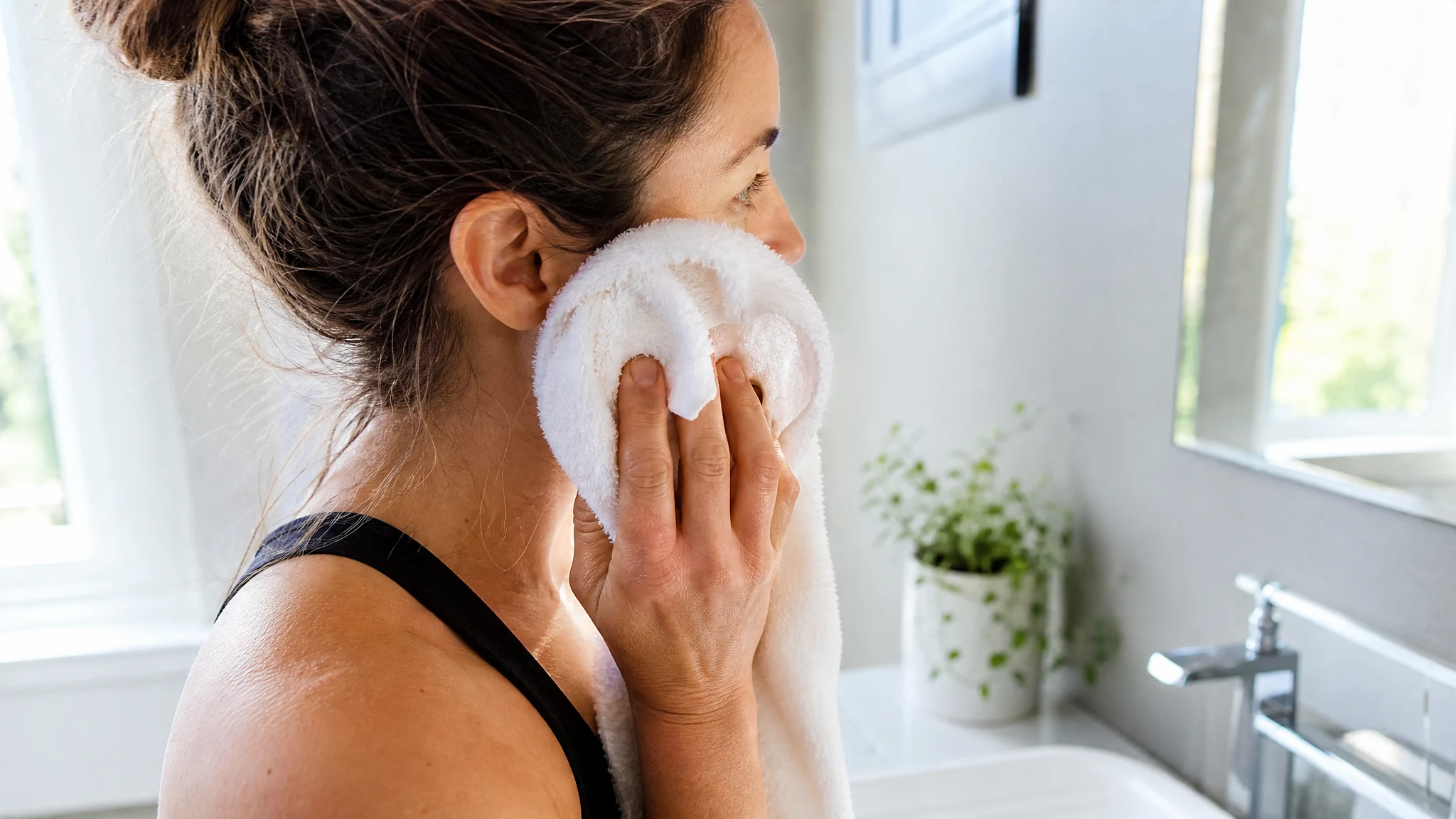
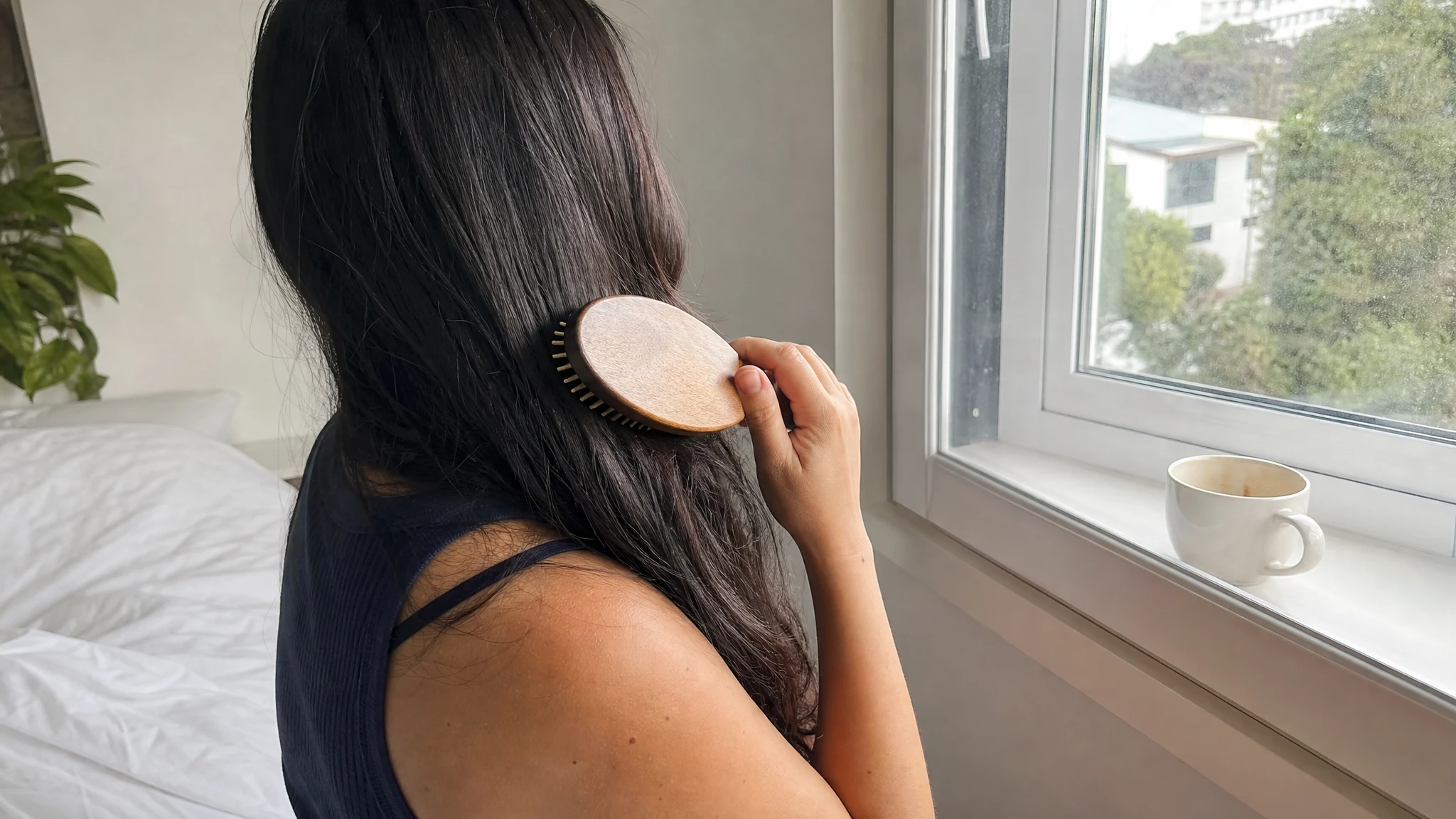
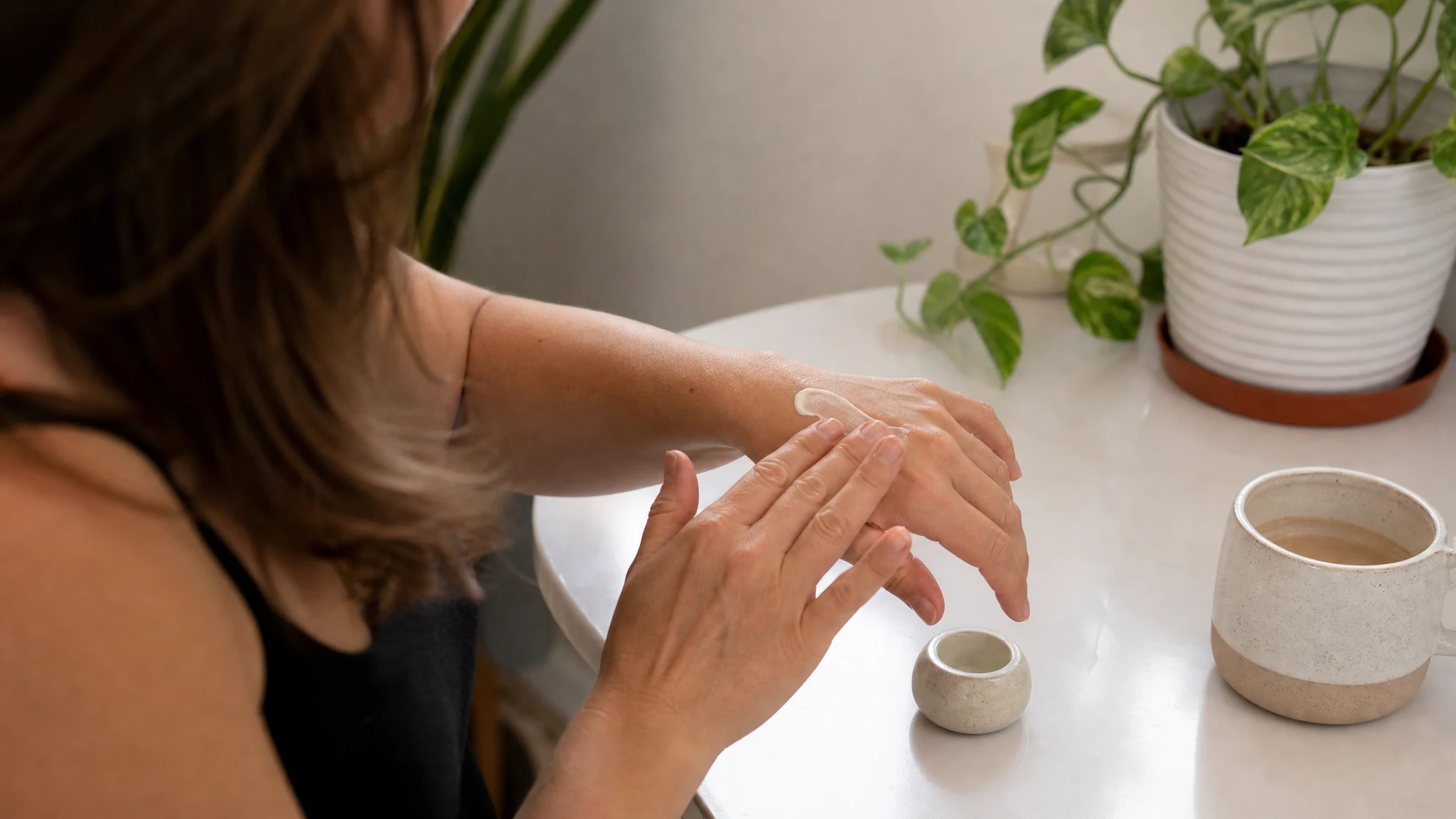
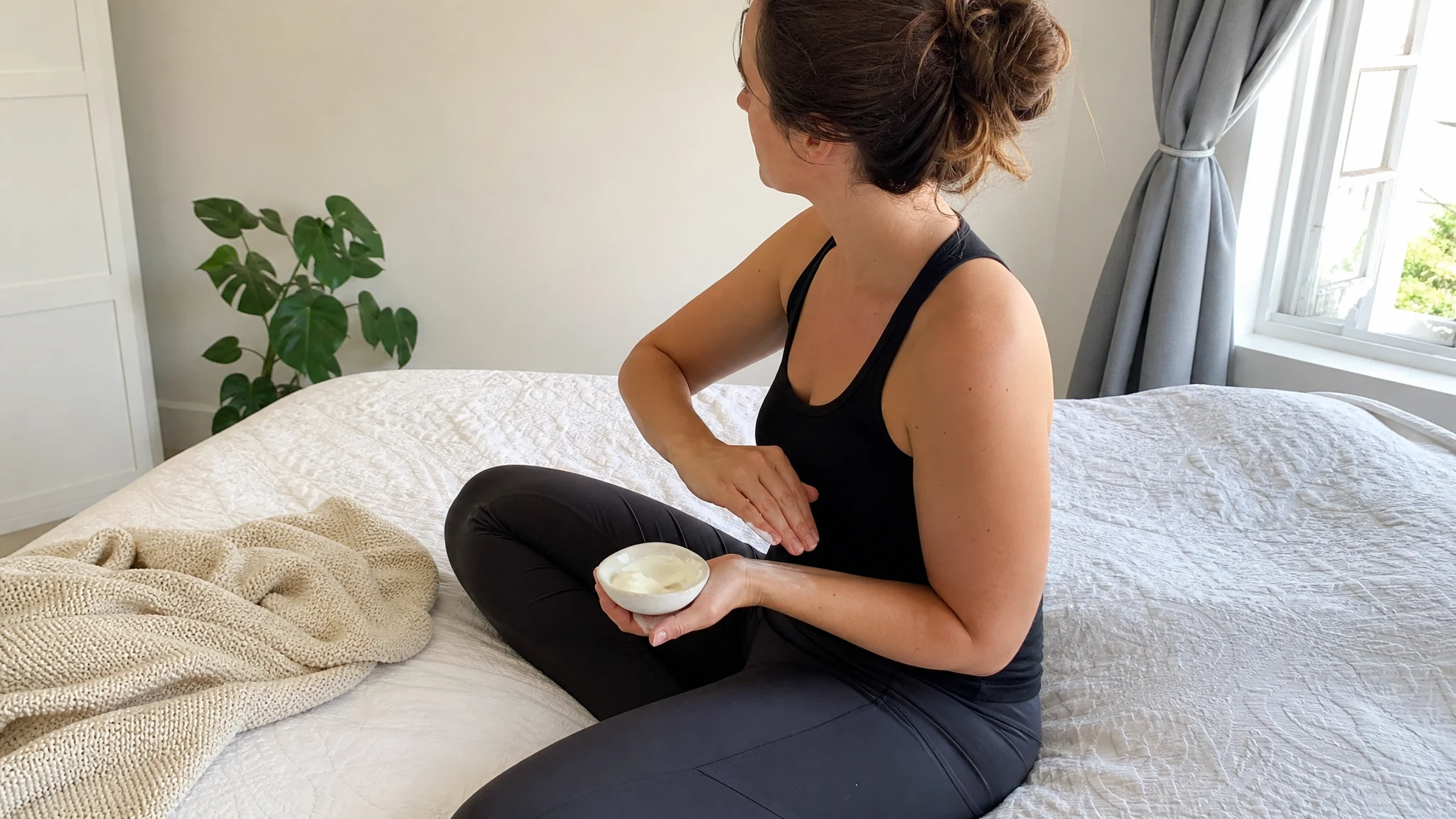
Massaging an oil into skin after a bath is relaxing in its own right, and nothing about that needs a claim attached. Warm skin, a few unhurried minutes and a scent you like make the habit stick. Palmarosa is good at the last part. Our oil is sweet, rosy and gently green with a hint of lemon, and it blends easily with geranium, lavender or bergamot. If you make your own body oil, a carrier from a grocery store or craft supplier is the base, and the oil is the perfume.
What you'll notice when you make one
Measure your carrier into a clean bottle first, then add the palmarosa and swirl gently. Smell it before it goes on your skin: sweet, rosy, gently green, and softer in a bottle of body oil than it was at the neck of the bottle. Put a label on it with the date and the percentage. A label saves you from guessing next month.
How much to use
We recommend diluting palmarosa to between 0.5% and 2% in a carrier and patch testing before wider use. For body oils, the Tisserand Institute gives 1% to 3% as a general range, and IFRA limits geraniol to 1.2% in body creams, oils and lotions. Palmarosa has a typical geraniol content of 82.4%, so by our arithmetic a practical ceiling is about 1.46% oil. That is a typical-composition figure, not a measurement of our bottle, and it is why we begin at 0.5% to 1% for a body oil and see the 2% in our range as an upper edge. In an ounce of carrier (29.57 ml), 0.5% is roughly 3 drops and 1% roughly 6, using the rough convention of 20 drops per millilitre. Our dilution chart has the rest of the table.
Start at the lower end the first few times and see how you like the scent on warm skin, since warmth can make a fragrance seem stronger than it did in the bottle. You can always add a drop more to the next batch, but you cannot take one out of this one.
Being kind to yourself
Stretch marks are common, and they say nothing about how well you look after your skin. If the conversation around them feels heavy, it is fine to put the focus on what you can enjoy: the quiet minutes, the smell, the habit. That is a perfectly good reason to own a bottle of rosy oil.
Pregnancy, and skin that is not intact
Pregnancy is when most people ask this question, and it is also when we step back. The AAD advises anyone who is pregnant or breastfeeding to check with a doctor before treating stretch marks, since some products contain ingredients that can harm a baby. We sell an external fragrance oil, not a pregnancy product, and our pregnancy article reports what the authorities say. The same caution applies to broken or healing skin: leave scent off it, and ask a clinician. A mark on the skin that is new or changing is also a reason to see a dermatologist, who is the right person to talk about options for scars and marks of any kind.
Keep the oil away from eyes, children and pets, and never take it internally. If you want company in the bathroom routine, our skin routine post has more on using palmarosa from head to toe.
Enjoy the oil for what it gives you in the moment, a warm, rosy few minutes that belong to you.
Wherever the routine takes you, keep the bottle tightly capped and out of reach of children, and let the oil stay what it is, a pleasure and nothing more.
Palmarosa Essential Oil
Palmarosa Essential Oil from our own shop, in sizes from 0.5 oz to bulk.
From $10.99
Shop Now →