Scenting Hair Oil with Palmarosa: How Many Drops?
A hair oil is, by volume, almost entirely carrier. The essential oil is the perfume, a few drops in a bottle that is otherwise sunflower, coconut, jojoba or whatever you prefer. Seeing it that way makes decisions easy: choose the base for what you want it to do, and choose palmarosa for how it makes the whole bottle smell.
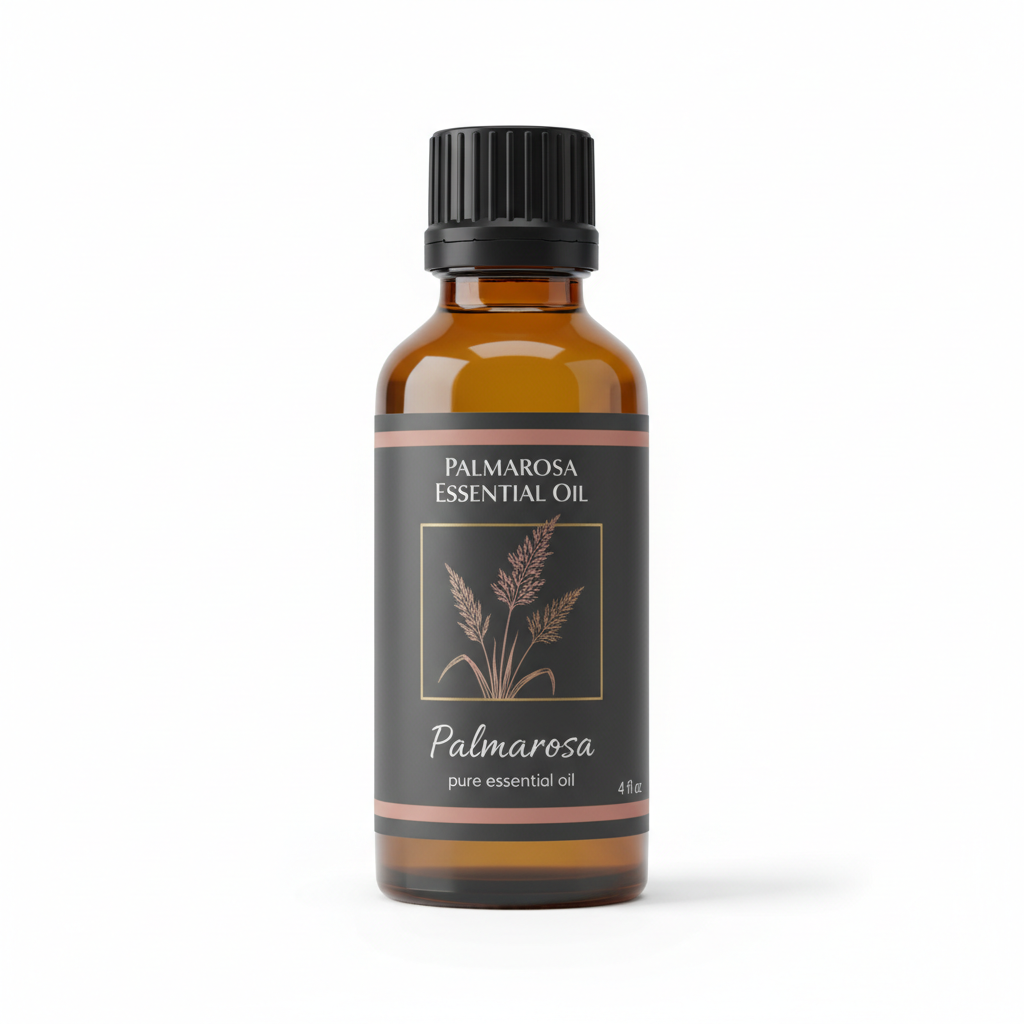
Palmarosa Essential Oil
Our own Palmarosa Essential Oil, in sizes from 0.5 oz to bulk.
From $10.99
Shop Now →The base is the oiling
The best-known comparison of hair oils looked at carriers, not essential oils. In a 2003 study published in the Journal of Cosmetic Science, researchers compared coconut, sunflower and mineral oil on protein loss from hair, using laboratory and in vivo tests across several hair types. Coconut oil was the only one that clearly reduced protein loss, on undamaged and damaged hair, before or after washing. The authors credited its makeup: coconut oil is rich in lauric acid, with a small, straight molecule that can enter the hair shaft, while mineral oil has no affinity for hair protein. The study measured combing damage, not anything about growth, and it is more than twenty years old, but it makes a good practical point. Whatever oiling does for the hair, the carrier is doing it. We do not sell carrier oils, so you will find them at a grocery store, pharmacy or craft supplier, and our carrier oil guide compares options.
What palmarosa adds
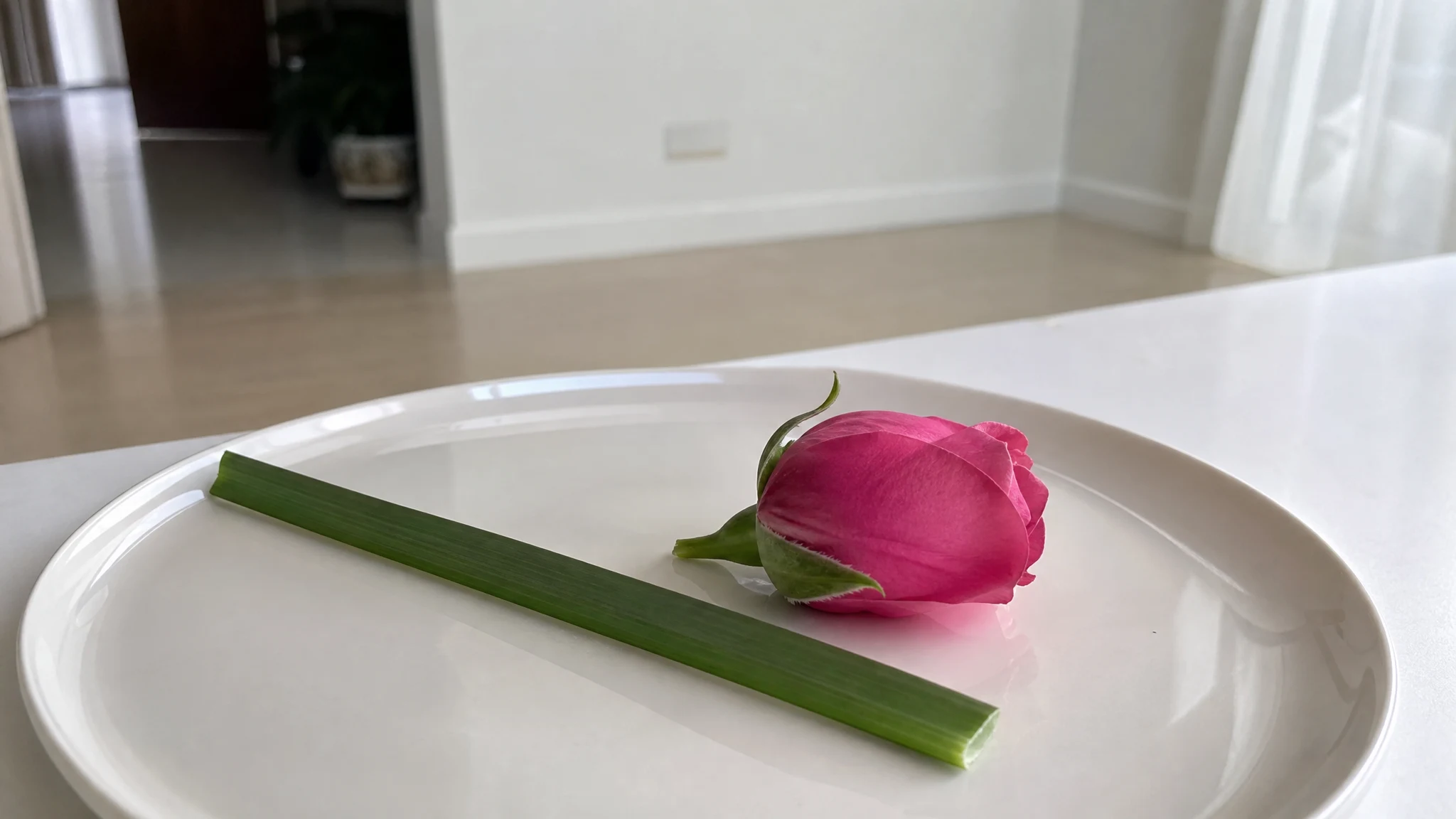
A sweet, rosy, gently green fragrance, with a lemony lift. It is a middle note, lighter than rose and happy beside geranium, bergamot or lavender. In a hair oil, that means you smell something pretty when you comb it through, and a little goes a long way.
Smelling the finished oil
Remember that the carrier has a smell of its own, and palmarosa has to share the bottle with it. Coconut, sunflower and jojoba all smell different, so the same number of drops will read differently in each. When you open a new batch, you'll notice the base first and the sweet rosy note a moment later. Give it a day and smell it again before you decide it needs more.
How much, in numbers
We recommend diluting palmarosa to between 0.5% and 2% in a carrier, with a patch test first. For anything left on hair, we choose the low end. IFRA, the fragrance industry's standard-setter, limits geraniol in leave-on hair products such as sprays to 0.78% (its category 7B). Palmarosa oil has a typical geraniol content of 82.4%, so dividing gives about 0.95% oil as a practical ceiling. That is our arithmetic from a typical composition, and 2% would be well above it. The Tisserand Institute gives 0.2% to 1% for sensitive skin and 0.5% to 1.2% for the face, general ranges that point the same direction.
| Share of oil | Drops in 1 oz (29.57 ml) of carrier | Notes |
|---|---|---|
| 0.5% | about 3 | Where we start; a gentle fragrance |
| 1% | about 6 | Fuller rose; within the IFRA-derived figure |
| 2% | about 12 | Top of our range; above the IFRA-derived figure for leave-on hair products |
Drop counts assume roughly 20 drops per millilitre, and droppers differ, so a small scale is better. These are formulation sums, not a tested recipe. Our hair oil formulation applies the same numbers step by step.
Where to put it
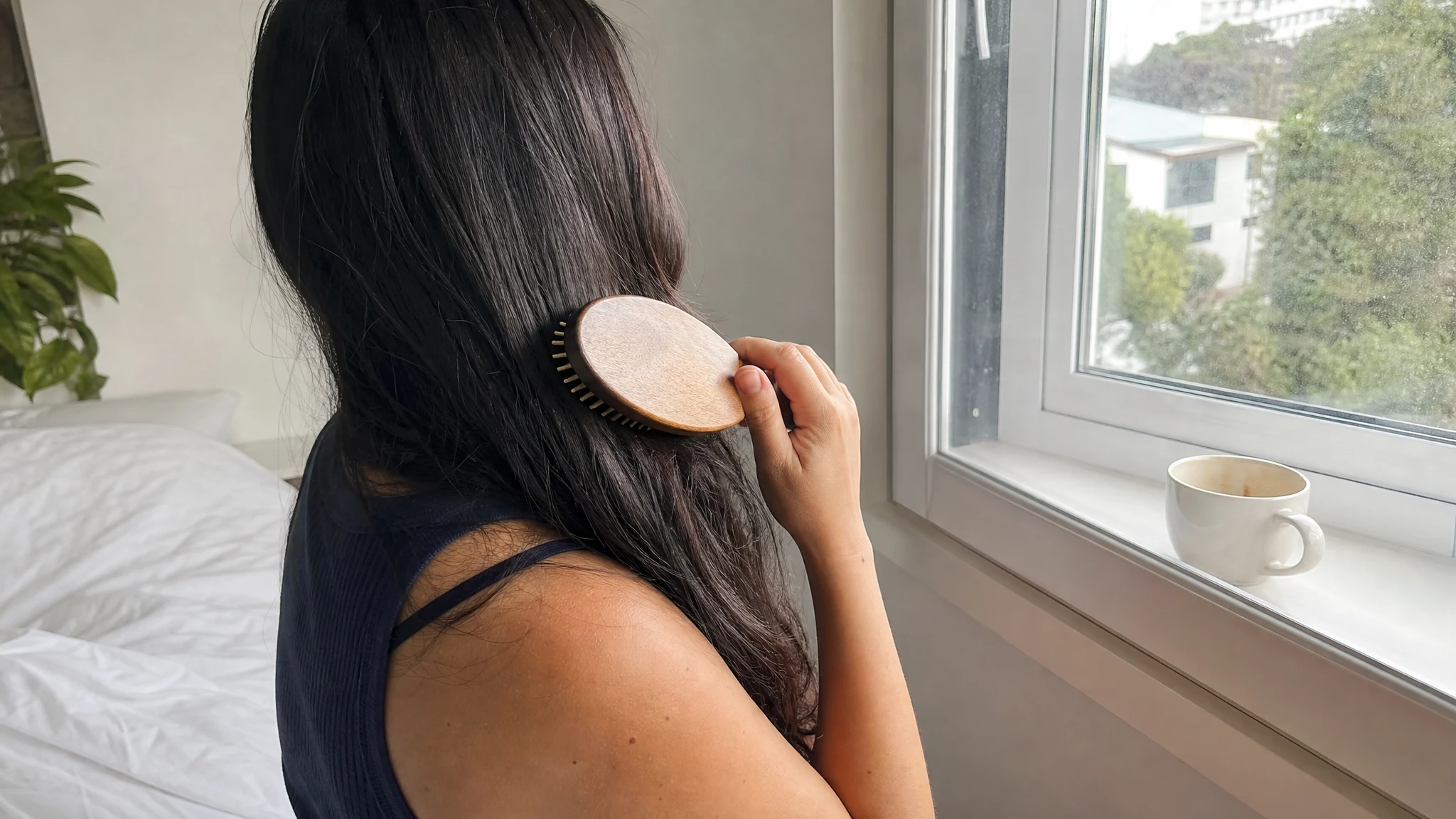
Because a hair oil is mostly a finishing touch, many people work a little through the lengths and ends and keep it off the roots. That is a suggestion and not a rule from any study, but it keeps the scent where you will notice it when you move your head and puts less of the oil against scalp skin. A few drops warmed between the palms go a long way, and a lighter hand on the first day tells you how much fragrance you want. Wash it out the way you normally would, and store the finished blend in a closed bottle somewhere cool and dark so the scent stays fresh.
Making a small bottle
We recommend making a small bottle, something like 30 ml, so the oil is used up while it still smells its best. A dark glass bottle with a dropper from a craft shop or pharmacy works well. Write the strength and the date on the label, and add the drops last so you can see exactly how much carrier went in.
Keep it off the fabric
Oil leaves marks, so put a towel round your shoulders while you work it through, and let it settle for a few minutes before you dress or lie down on a pillow. Wash towels and pillowcases the way you usually would. It is a small thing, but it keeps a pleasant ritual from turning into a laundry chore.
Looking after your scalp
Scalp skin is skin, and it holds oil beneath hair for hours. The American Academy of Dermatology notes that a reaction to hair products can cause an itchy scalp with a rash, and that a dermatologist can help work out which product is responsible. So patch test first on the inside of your forearm. Keep the oil away from eyes. If your scalp is flaking, itchy or sore, or you are noticing more shedding than usual, a dermatologist is the person to ask; an oil is not a substitute for finding the cause. Our post on dandruff covers flaking from the research side, and the dilution chart gives the wider numbers.
A well-chosen carrier, a few drops of rose, and a comb is a lovely small ritual, and it costs very little.
Palmarosa Essential Oil
Palmarosa Essential Oil from our own shop, in sizes from 0.5 oz to bulk.
From $10.99
Shop Now →Sources & Further Reading
- Effect of mineral oil, sunflower oil, and coconut oil on prevention of hair damage.
- 10 reasons your scalp itches and how to get relief
- IFRA Standard: Geraniol (CAS-No. 106-24-1), 51st Amendment
- IFRA 51st Amendment, Annex on contributions from other sources
- Dilution for essential oils - Tisserand Institute